



A Streetcar Named Desire (1951)
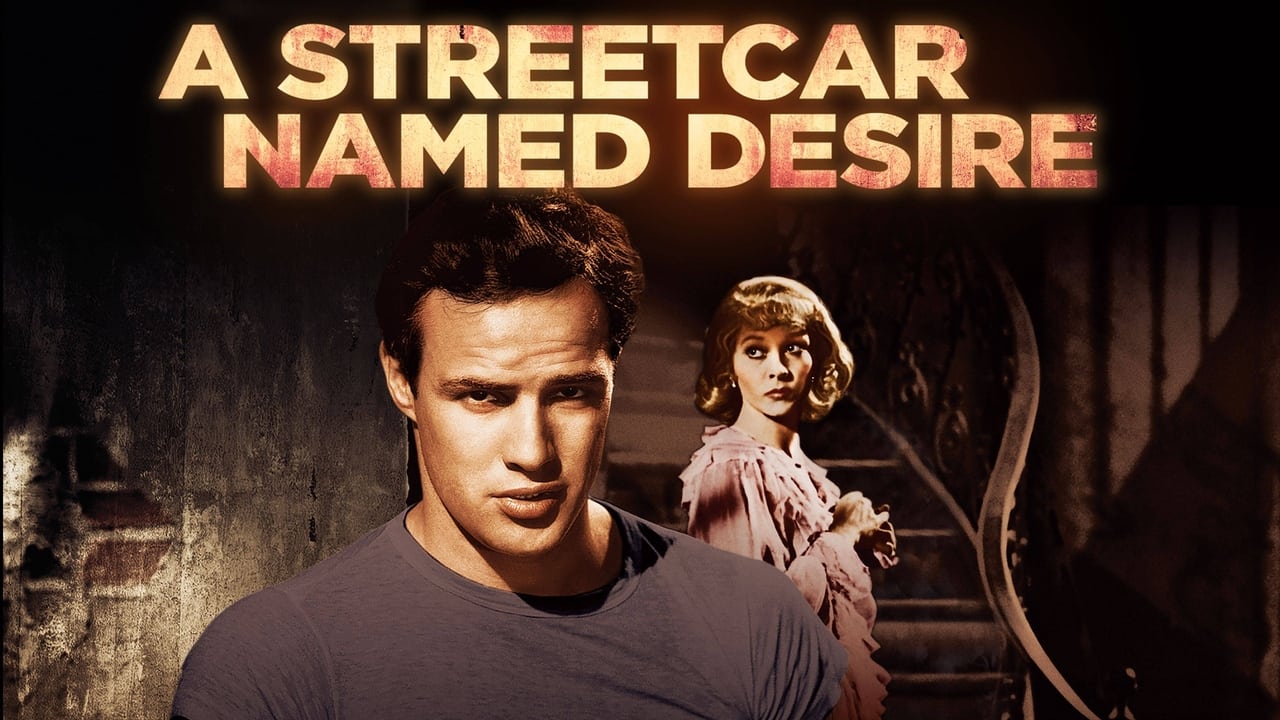
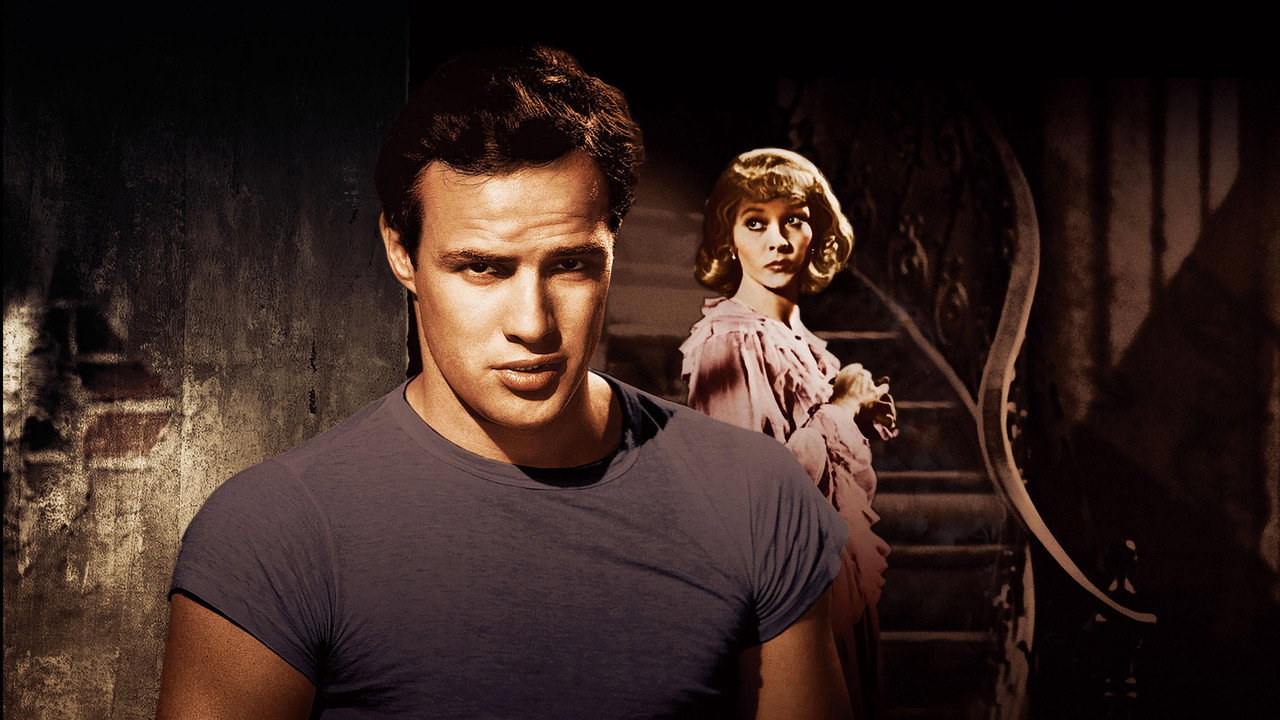
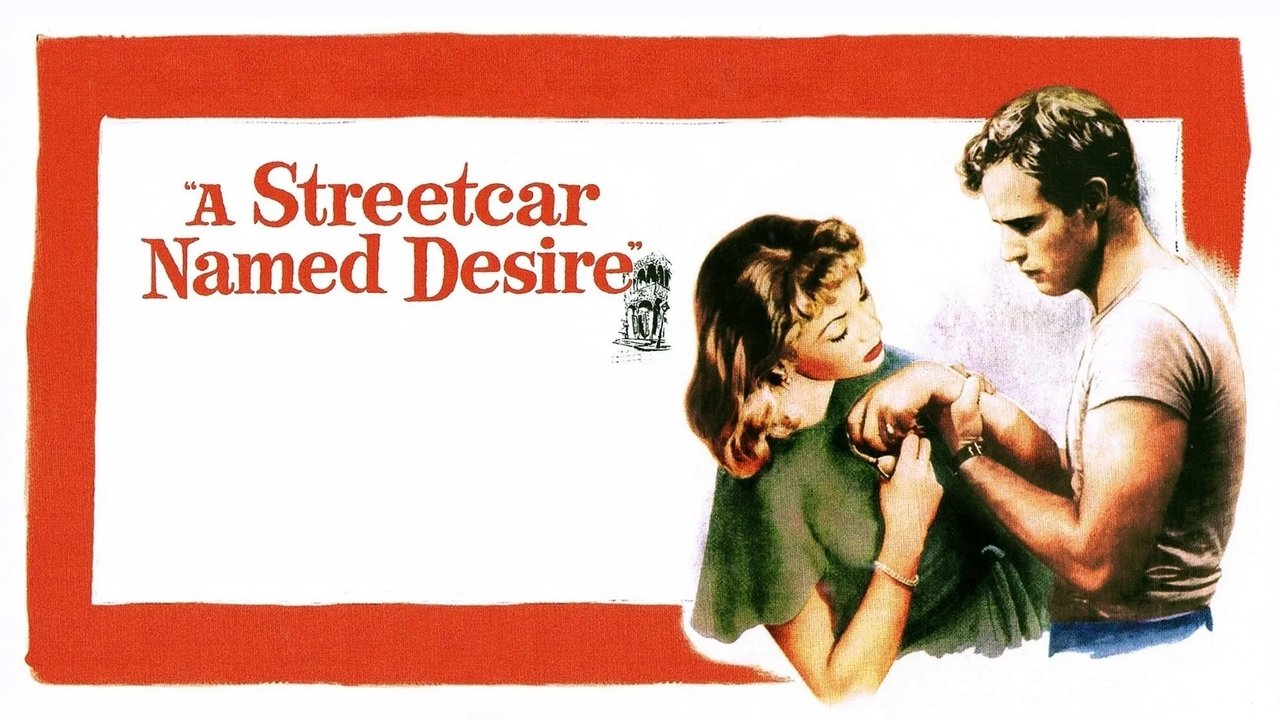
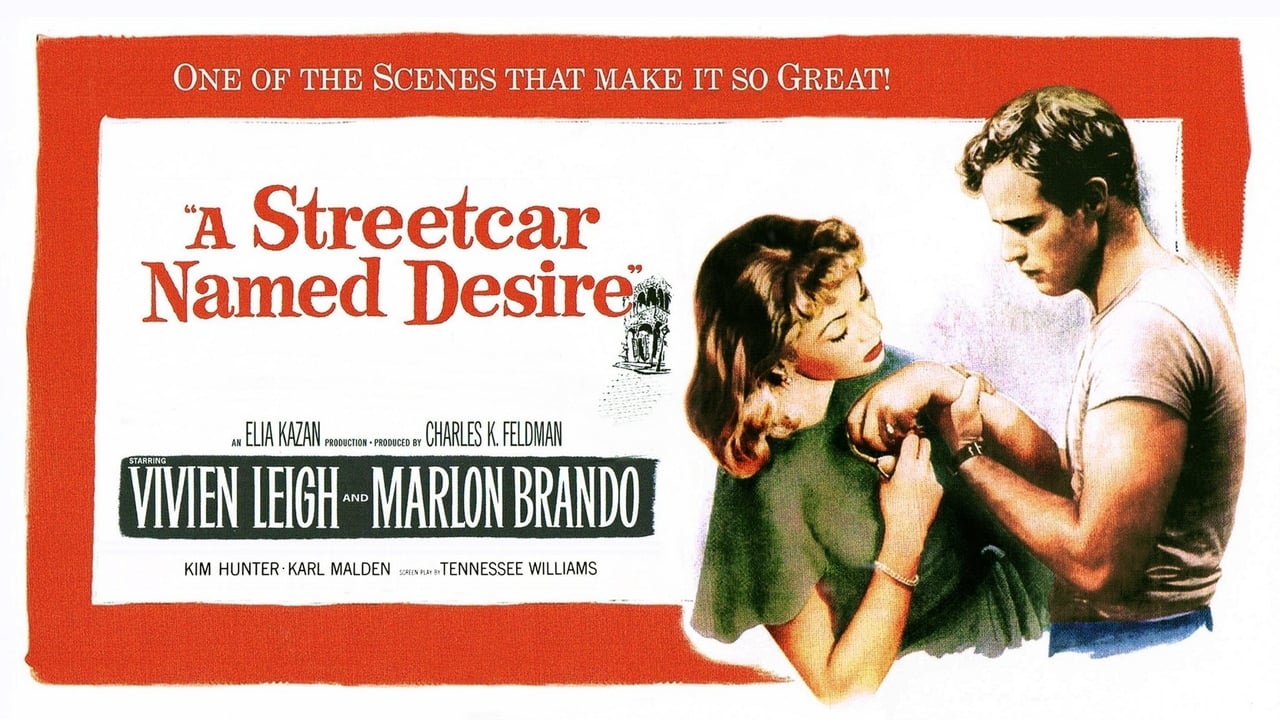
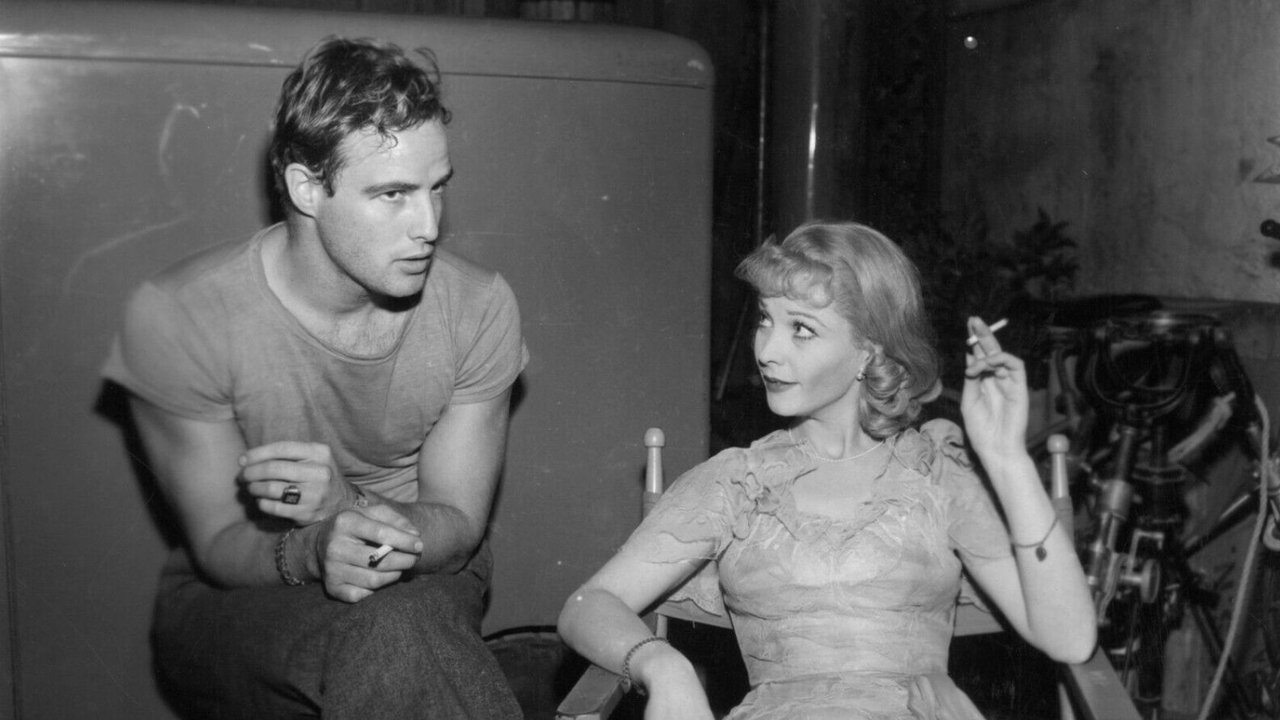
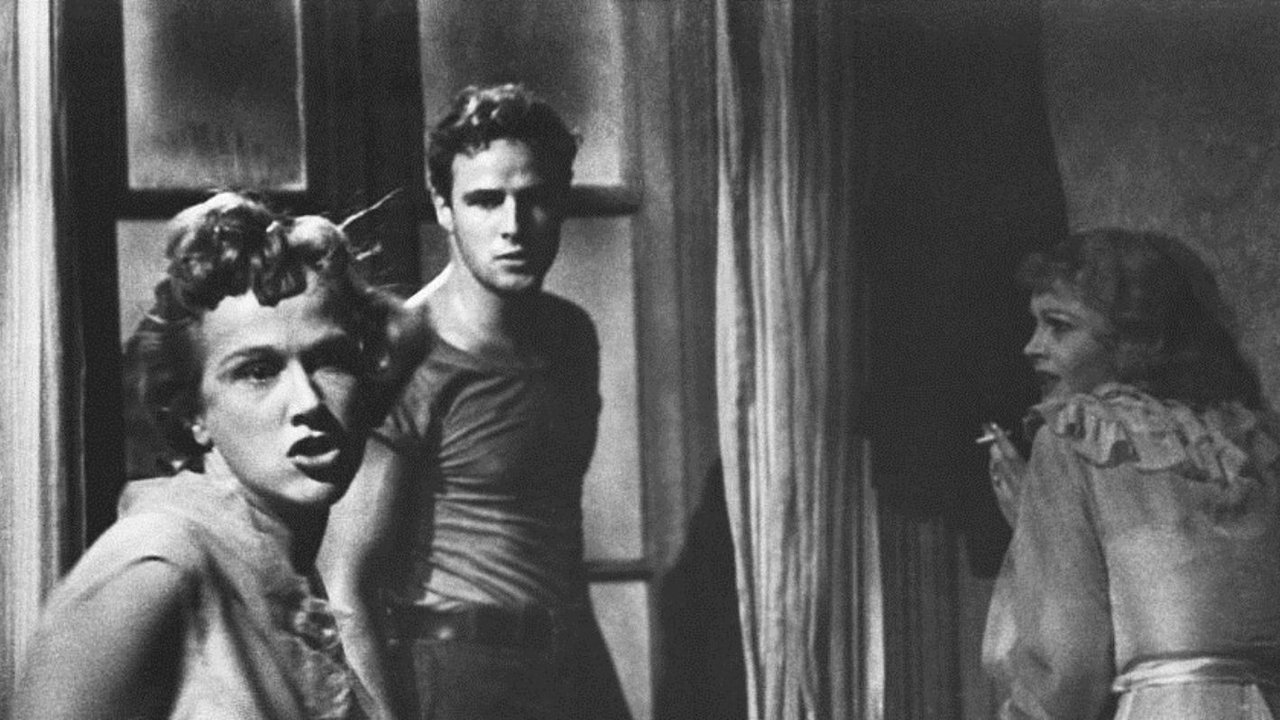
A Streetcar Named Desire (1951), directed by Elia Kazan, starring Vivien Leigh and Marlon Brando.
score
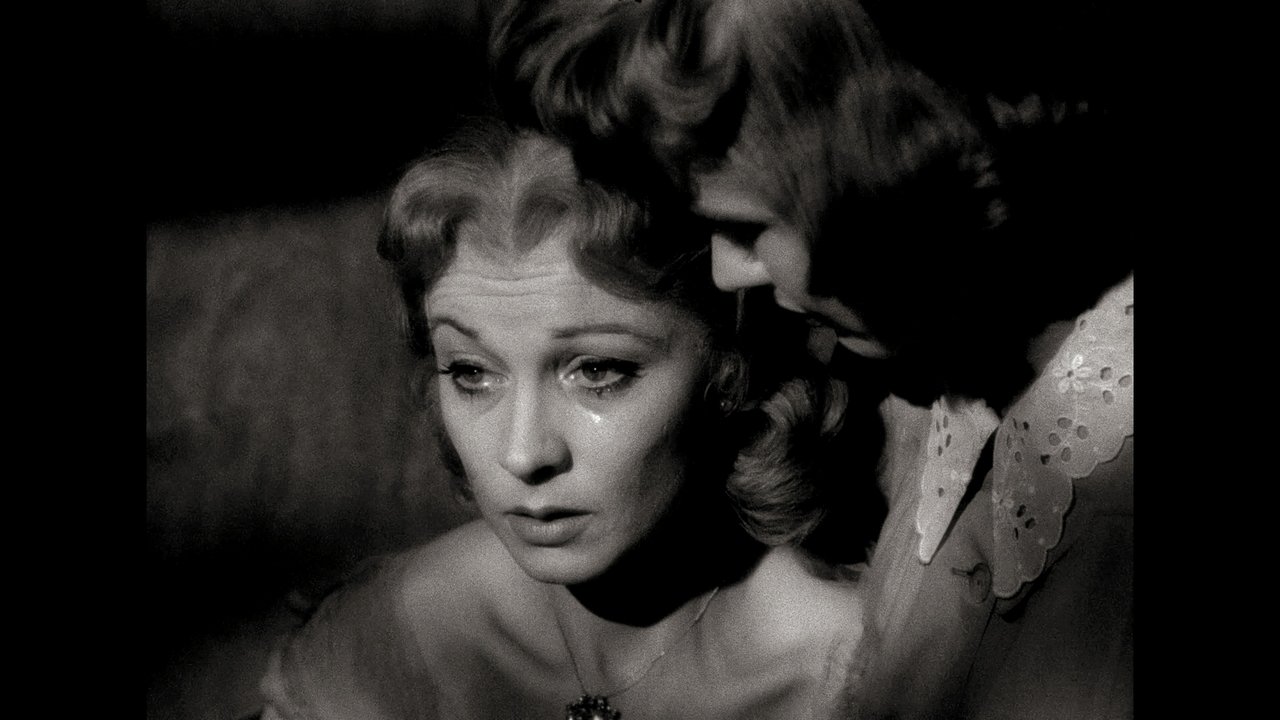
...Blanche, who wanted so much to stay a lady...
Synopsis
A disturbed, aging Southern belle moves in with her sister for solace — but being face-to-face with her brutish brother-in-law accelerates her downward spiral.
What the catalogue says about this film
- Box office rank 4 of 26 for 1951 in the catalogue
- Made back 4.4 times its budget
- Film 7 of 19 by Elia Kazan in the catalogue
- Vivien Leigh and Marlon Brando share the screen in 7 films in the catalogue
Every comparison is within the CineQuiz catalogue, not cinema as a whole.
- Harry Stradling Sr.Cinematography
- Elia KazanDirector
- David WeisbartEditing
- Charles K. FeldmanProducer
About the film
A Streetcar Named Desire is a 1951 American Southern Gothic drama film adapted from Tennessee Williams's Pulitzer Prize-winning play of the same name. Directed by Elia Kazan, it stars Vivien Leigh, Marlon Brando, Kim Hunter, and Karl Malden. The film tells the story of a Mississippi Southern belle, Blanche DuBois (Leigh), who, after encountering a series of personal losses, seeks refuge with her sister (Hunter) and brother-in-law (Brando) in a dilapidated New Orleans apartment building. The original Broadway production and cast was converted to film, albeit with several changes and sanitizations related to censorship.
Tennessee Williams collaborated with Oscar Saul and Elia Kazan on the screenplay. Kazan, who directed the Broadway stage production, also directed the black-and-white film. Brando, Hunter, and Malden all reprised their original Broadway roles. Although Jessica Tandy originated the role of Blanche DuBois on Broadway, Vivien Leigh, who had appeared in the London theatre production, was cast in the film adaptation for her star power. The film brought Brando, previously virtually unknown, to prominence as a major Hollywood film star, and earned him the first of four consecutive Academy Award nominations for Best Actor; Leigh won her second Academy Award for Best Actress for her portrayal of Blanche. It received Oscar nominations in ten other categories (including Best Picture, Best Director, and Best Adapted Screenplay), and won Best Supporting Actor (Malden), Best Supporting Actress (Hunter), and Best Art Direction (Richard Day, George James Hopkins), making it the first film to win in three of the acting categories. The film won the Grand Jury Prize and Leigh won the Volpi Cup for Best Actress at the 12th Venice International Film Festival.
The film earned an estimated $4,250,000 at the US and Canadian box office in 1951, making it the fifth biggest hit of the year. In 1999, A Streetcar Named Desire was selected for preservation in the United States National Film Registry by the Library of Congress as being "culturally, historically, or aesthetically significant".
Read the full article (13k characters)
A Streetcar Named Desire is a 1951 American Southern Gothic drama film adapted from Tennessee Williams's Pulitzer Prize-winning play of the same name. Directed by Elia Kazan, it stars Vivien Leigh, Marlon Brando, Kim Hunter, and Karl Malden. The film tells the story of a Mississippi Southern belle, Blanche DuBois (Leigh), who, after encountering a series of personal losses, seeks refuge with her sister (Hunter) and brother-in-law (Brando) in a dilapidated New Orleans apartment building. The original Broadway production and cast was converted to film, albeit with several changes and sanitizations related to censorship.
Tennessee Williams collaborated with Oscar Saul and Elia Kazan on the screenplay. Kazan, who directed the Broadway stage production, also directed the black-and-white film. Brando, Hunter, and Malden all reprised their original Broadway roles. Although Jessica Tandy originated the role of Blanche DuBois on Broadway, Vivien Leigh, who had appeared in the London theatre production, was cast in the film adaptation for her star power. The film brought Brando, previously virtually unknown, to prominence as a major Hollywood film star, and earned him the first of four consecutive Academy Award nominations for Best Actor; Leigh won her second Academy Award for Best Actress for her portrayal of Blanche. It received Oscar nominations in ten other categories (including Best Picture, Best Director, and Best Adapted Screenplay), and won Best Supporting Actor (Malden), Best Supporting Actress (Hunter), and Best Art Direction (Richard Day, George James Hopkins), making it the first film to win in three of the acting categories. The film won the Grand Jury Prize and Leigh won the Volpi Cup for Best Actress at the 12th Venice International Film Festival.
The film earned an estimated $4,250,000 at the US and Canadian box office in 1951, making it the fifth biggest hit of the year. In 1999, A Streetcar Named Desire was selected for preservation in the United States National Film Registry by the Library of Congress as being "culturally, historically, or aesthetically significant".
Plot
Blanche DuBois, a middle-aged high school English teacher from Auriol, Mississippi, arrives in New Orleans. She takes a streetcar designated "Desire" to the French Quarter, where her sister Stella and Stella's husband Stanley Kowalski live in a small, dilapidated tenement apartment. Blanche claims to be on leave from her job due to anxiety. Blanche's demure manner is a stark contrast to Stanley's crude behavior, making them mutually wary and antagonistic. Stella welcomes having her sister as a guest, but Stanley patronizes and criticizes her.
Blanche reveals that the DuBois family estate, Belle Reve, was lost to creditors. She was widowed at a young age after her husband's suicide. When Stanley suspects Blanche may be hiding an inheritance, she shows him proof of the foreclosure. Looking for further proof, he knocks some of Blanche's private papers to the floor. Weeping, she gathers them, saying they are poems from her dead husband; Stanley explains he was only looking out for his family, and then announces that Stella is pregnant.
Blanche meets Stanley's friend Mitch, whose courteous manner and sensitivity is in sharp contrast to Stanley and his other friends, and the two fall in love. During a poker night with his friends, Stanley explodes in a drunken rage, striking Stella; Blanche and Stella flee upstairs to neighbor Eunice Hubbell's apartment. After his anger subsides, Stanley remorsefully bellows for Stella from the courtyard below. Stella is drawn downstairs by her attraction to Stanley, and they go to bed together. The next morning, Blanche urges Stella to leave Stanley, calling him a sub-human animal.
As time passes, tension mounts between Blanche and Stanley. Blanche is hopeful about her relationship with Mitch, but anxiety and alcoholism have her teetering on mental collapse while anticipating a marriage proposal. Meanwhile, Stanley discovers that Blanche had been fired for sleeping with an underage student. He passes this news on to Mitch. Stella angrily blames Stanley for this catastrophic revelation, but their fight is interrupted when she goes into labor.
Later, Mitch arrives and confronts Blanche about Stanley's claims. She pleads for forgiveness, but Mitch, hurt and humiliated, ends their relationship. Later that night, while Stella's labor continues, Stanley returns from the hospital to sleep, dressed in a tattered gown. Blanche lies that she is departing on a cruise with an old admirer. Stanley berates her for lying and disrespecting him. The two fight and it is implied that he rapes her.
Weeks later, during another poker game at the apartment, doctors arrive to take a dissociated Blanche to a mental hospital. Blanche has told Stella what happened, but Stella cannot bring herself to believe it. On seeing the doctor and nurse, Blanche resists at first, but the doctor talks to her gently and she goes with them willingly. Mitch tries to attack Stanley but is pulled away by the other poker players. A distressed Blanche is again calmed by the doctor, and reflects that she has "always depended on the kindness of strangers". As Blanche is led away, Stella flees with her baby to Eunice's apartment, determined to leave Stanley.
Cast
Production
A Streetcar Named Desire was adapted directly from the successful 1947 Broadway production of the play, which won the New York Drama Critics' Circle Award for Best Play and the Pulitzer Prize for Drama. Many of the cast and crew were ported over from the stage production, including director Elia Kazan and actors Marlon Brando, Kim Hunter, Karl Malden, Rudy Bond, Nick Dennis, Peg Hillias, Ann Dere, Edna Thomas, and Richard Garrick. Kazan intended for Jessica Tandy, who had won a Tony Award for her portrayal of Blanche, to reprise her role on film, but producer Charles K. Feldman insisted on casting an actress with more box office appeal. Bette Davis and Olivia de Havilland were offered the role, but both declined. Vivien Leigh, who had already played Blanche in Streetcar's London production (directed by then-husband Laurence Olivier), was eventually cast. In Brando's autobiography, he praised Tandy but felt that Leigh "was Blanche."
Aside from the opening and closing scenes, which were shot on location in New Orleans, A Streetcar Named Desire was filmed entirely on soundstages at the Warner Bros. Studios in Burbank, California. The Kowalski apartment was designed to gradually appear smaller over the course of the film, in order to reflect the tension between the characters.
For the opening scene, #922 was chosen to be the streetcar that dropped off Blanche. As of 2022, this streetcar was still in service on the St. Charles Streetcar Line.
Censorship
Several scenes were cut after filming was completed in order for the film to conform to the Hays Code and avoid condemnation by the National Legion of Decency. In 1993, after Warner Bros. rediscovered the censored footage during a routine inventory of archives, an "original director's version" video re-release restored it.
Music
The jazz-infused score by Alex North was written in short cues that reflected the psychological dynamics of the characters. It was one of the first jazz scores composed for a mainstream feature film, and earned North an Oscar nomination for Best Original Score.
Comparison to source material
The play was set entirely at the Kowalski apartment, but the story's visual scope is expanded in the film, which depicts locations only briefly mentioned or non-existent in the stage production, such as the train station, streets in the French Quarter, the bowling alley, the pier of a dance casino, and the factory where Stanley and Mitch work.
Dialogue presented in the play is abbreviated or cut entirely in various scenes in the film, including, for example, when Blanche tries to convince Stella to leave Stanley and when Mitch confronts Blanche about her past.
The name of the town where Blanche was from was changed from the real-life town of Laurel, Mississippi, to the fictional "Auriol, Mississippi".
The screenplay was modified to comply with the Hays Code. In the original play, Blanche's husband died by suicide after he was discovered having a homosexual affair. This reference was removed from the film; Blanche says instead that she showed scorn at her husband's sensitive nature, driving him to suicide. She does, however, make a vague reference to "his coming out".
The scene involving Stanley raping Blanche is cut short in the film, instead ending dramatically with Blanche smashing the mirror with the broken bottle.
At the end of the play, Stella, distraught at Blanche's fate, mutely allows Stanley to console her. In the film, this is changed to Stella blaming Stanley for Blanche's fate, and resolving to leave him.
In the film, Blanche is shown riding in the titular streetcar, which was only mentioned in the play. By the time the film was in production, however, the Desire streetcar line had been converted into a bus service; the production team had to gain permission from the authorities to hire out a streetcar with the "Desire" name on it.
Reception
Box office
In the months after its release in September 1951, A Streetcar Named Desire grossed $4.2 million in the United States and Canada, with 15 million tickets sold against a production budget of $1.8 million. A reissue of the film by 20th Century Fox in 1958 grossed an additional $700,000.
Critical response
Upon release, the film drew very high praise. The New York Times critic Bosley Crowther stated that "inner torments are seldom projected with such sensitivity and clarity on the screen" and commending both Vivien Leigh's and Marlon Brando's performances. Film critic Roger Ebert has also expressed praise for the film, calling it a "great ensemble of the movies." The film has a 97% rating on Rotten Tomatoes based on 62 reviews, with an average rating of 8.60/10. The website summarizes the critical consensus as, "A feverish rendition of a heart-rending story, A Streetcar Named Desire gives Tennessee Williams's stage play explosive power on the screen thanks to Elia Kazan's searing direction and a sterling ensemble at the peak of their craft." At Metacritic, which assigns a normalized rating to reviews, the film received a score of 97 out of 100, based on 20 reviews, indicating "universal acclaim".
In his 2020 autobiography Apropos of Nothing, director Woody Allen praised the film: The movie Streetcar is for me total artistic perfection... It's the most perfect confluence of script, performance, and direction I’ve ever seen. I agree with Richard Schickel, who calls the play perfect. The characters are so perfectly written, every nuance, every instinct, every line of dialogue is the best choice of all those available in the known universe. All the performances are sensational. Vivien Leigh is incomparable, more real and vivid than real people I know. And Marlon Brando was a living poem. He was an actor who came on the scene and changed the history of acting. The magic, the setting, New Orleans, the French Quarter, the rainy humid afternoons, the poker night. Artistic genius, no holds barred.
The Japanese filmmaker Akira Kurosawa cited this movie as one of his 100 favorite films.
Filmink argued that the censor-driven changes did not fundamentally change the meaning of Williams' play, in contrast to other adaptations of his work.
Accolades
A Streetcar Named Desire won 4 Academy Awards, setting an Oscar record when it became the first film to win in three of the acting categories, a feat subsequently matched by Network in 1976 and Everything Everywhere All at Once in 2022. It was also the first time since 1936 (Anthony Adverse) that a Warner Bros. production had won four or more Oscars.
American Film Institute recognition
1998 AFI's 100 Years... 100 Movies No. 45
2002 AFI's 100 Years... 100 Passions No. 67
2005 AFI's 100 Years... 100 Movie Quotes:
"Stella! Hey, Stella!" No. 45
"I've always depended on the kindness of strangers." No. 75
2005 AFI's 100 Years of Film Scores No. 19
2007 AFI's 100 Years... 100 Movies (10th Anniversary Edition) No. 47
References
External links
A Streetcar Named Desire at the AFI Catalog of Feature Films
A Streetcar Named Desire at IMDb
A Streetcar Named Desire at the TCM Movie Database (archived)
A Streetcar Named Desire at AllMovie
A Streetcar Named Desire at Rotten Tomatoes
Werner, Stephen A., “In Search of Stanley Kowalski” St. Louis Cultural History Project (Summer 2022).
Text from A Streetcar Named Desire (1951 film) on Wikipedia, licensed CC BY-SA 4.0. https://en.wikipedia.org/wiki/A_Streetcar_Named_Desire_(1951_film)
Iconic quotes
Stella! Hey, Stella!
— Stanley Kowalski (Marlon Brando)I have always depended on the kindness of strangers.
— Blanche DuBois (Vivien Leigh)
Trivia
- It cost US$ 1.8 million and grossed US$ 8.0 million in theaters — 4.4 times its budget.
- It premiered on September 18, 1951, a Tuesday.
- It runs 2h05 — a typical feature length.
- It won 6 award(s) and received 12 nomination(s) on record at Wikidata — Academy Award for Best Actress among them.
- As of September 20, 2026, it is available in Brazil by subscription on Looke.
- This film's quiz has 20 questions — enough to play more than once without repeats.
Production
- StudiosCharles K. Feldman Group, Warner Bros. Pictures
- CountriesUnited States
- LanguagesEnglish
- BudgetUS$ 1,800,000
- Box officeUS$ 8,000,000
- StatusReleased
More about this film
Awards
- Academy Award for Best Actress 1952
- Academy Award for Best Supporting Actor 1952
- Academy Award for Best Supporting Actress 1952
- Academy Award for Best Art Direction, Black and White 1952
- Grand Jury Prize of the Venice Film Festival 1951
- National Board of Review: Top Ten Films
Nominations
- Academy Award for Best Picture 1952
- Academy Award for Best Director 1952
- Academy Award for Best Actress 1952
- Academy Award for Best Actor 1952
- Academy Award for Best Supporting Actor 1952
- Academy Award for Best Supporting Actress 1952
- Academy Award for Best Writing, Adapted Screenplay 1952
- Academy Award for Best Sound 1952
- Academy Award for Best Cinematography, Black-and-White 1952
- Academy Award for Best Costume Design, Black-and-White 1952
- Academy Award for Best Art Direction, Black and White 1952
- Academy Award for Best Original Dramatic or Comedy Score 1952
Based on
- A Streetcar Named Desire
- A Streetcar Named Desire
Filming locations
- New Orleans
Set in
- New Orleans
Where to watch
Videos
Photos


Cast
-
 Vivien Leigh
Blanche DuBois
Vivien Leigh
Blanche DuBois -
 Marlon Brando
Stanley Kowalski
Marlon Brando
Stanley Kowalski -
 Kim Hunter
Stella Kowalski
Kim Hunter
Stella Kowalski -
 Karl Malden
Harold Mitchell
Karl Malden
Harold Mitchell -
 Rudy Bond
Steve
Rudy Bond
Steve -
 Nick Dennis
Pablo Gonzales
Nick Dennis
Pablo Gonzales -
 Peg Hillias
Eunice
Peg Hillias
Eunice -
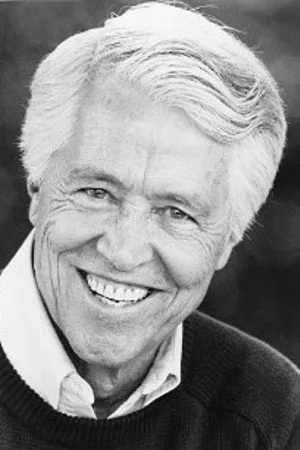 Wright King
A Collector
Wright King
A Collector -
 Richard Garrick
A Doctor
Richard Garrick
A Doctor - Ann Dere The Matron
- Edna Thomas The Mexican Woman
-
 Mickey Kuhn
A Sailor
Mickey Kuhn
A Sailor - Mel Archer Foreman (uncredited)
- Walter Bacon Club Patron (uncredited)
-
 Dahn Ben Amotz
Minor Role (uncredited)
Dahn Ben Amotz
Minor Role (uncredited) -
 Marietta Canty
Giggling Woman with Eunice (uncredited)
Marietta Canty
Giggling Woman with Eunice (uncredited) -
 John George
Passerby (uncredited)
John George
Passerby (uncredited) - John Gonetos Vendor (uncredited)
- Chester Jones Street Vendor (uncredited)
-
 Lyle Latell
Policeman (uncredited)
Lyle Latell
Policeman (uncredited)
Quiz about this movie
Questions from the whole catalogue.
Play nowIf you liked this one
-
Gata em Teto de Zinco Quente Drama from the 1950s
 7.6
7.6
-
Blue Jasmine
 7.0
7.0
-
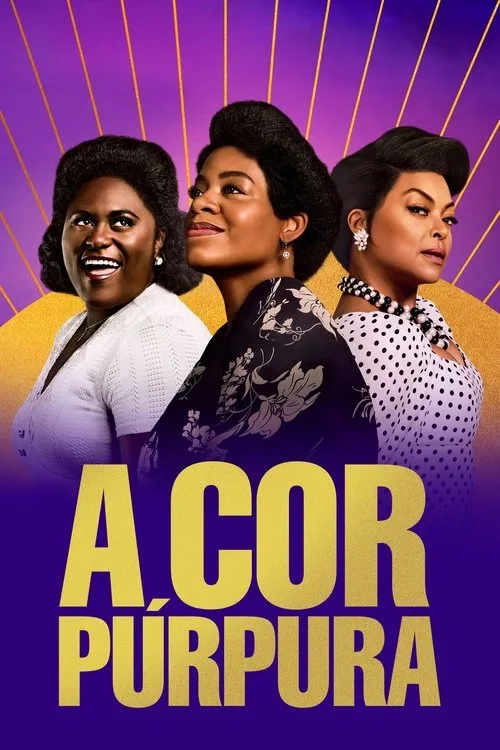
A Cor Púrpura
 7.0
7.0
-
O Sol é Para Todos
 8.0
8.0
-
Sleepwalking
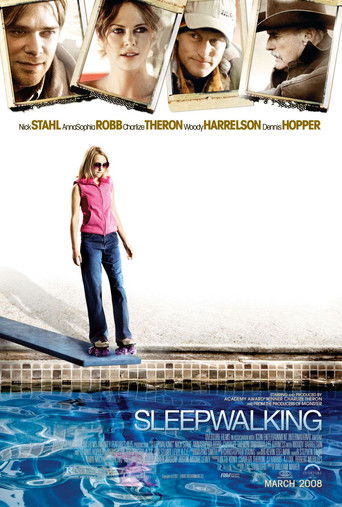 6.1
6.1
-
O Sonho de Cassandra
 6.3
6.3
-
Interiores
 6.8
6.8
-
Jonathan
 5.9
5.9
-
A Sombra de uma Dúvida
 7.5
7.5
-
O Presente
 6.7
6.7
-
As Filhas de Marvin
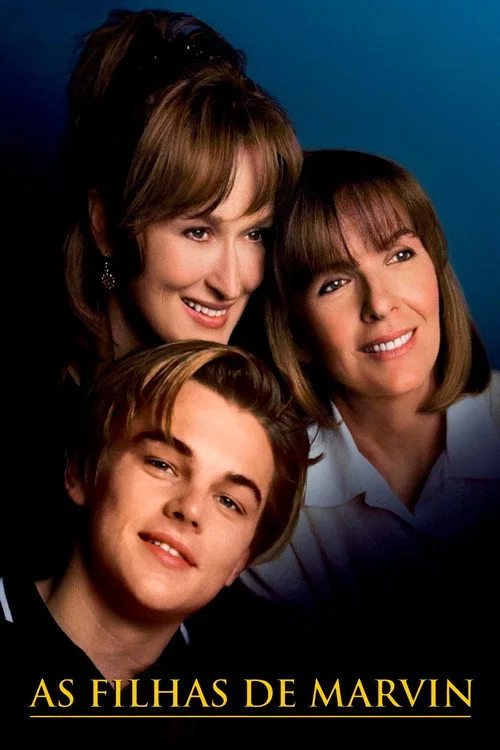 6.7
6.7
-
A Morte Passou Por Perto Drama from the 1950s
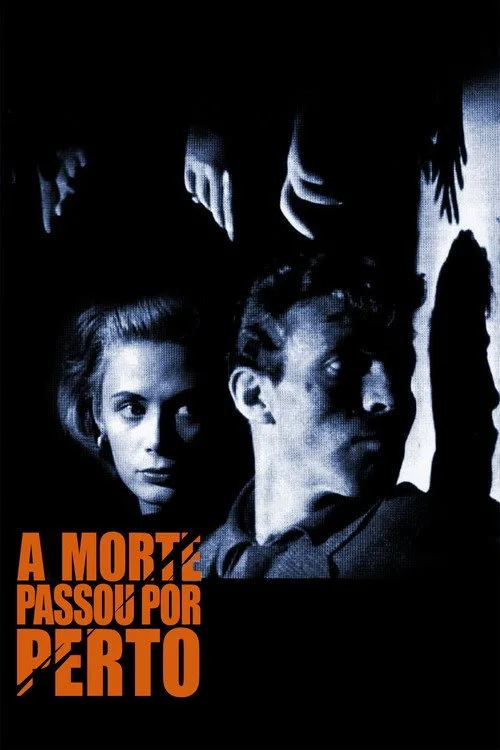 6.3
6.3
Tags
Crew
- Harry Stradling Sr. Cinematography
- Elia Kazan Director
- David Weisbart Editing
- Charles K. Feldman Producer
- Alex North Original music
- Oscar Saul Screenplay
- Tennessee Williams Screenplay
Questions about this film
What is A Streetcar Named Desire about?
A Streetcar Named Desire: A disturbed, aging Southern belle moves in with her sister for solace — but being face-to-face with her brutish brother-in-law accelerates her downward spiral.
Who directed A Streetcar Named Desire?
A Streetcar Named Desire was directed by Elia Kazan in 1951.
Who stars in A Streetcar Named Desire?
The cast of A Streetcar Named Desire includes Vivien Leigh, Marlon Brando, Kim Hunter, Karl Malden and Rudy Bond.
How long is A Streetcar Named Desire?
A Streetcar Named Desire runs for 125 minutes, or 2h05.
How much did A Streetcar Named Desire cost and how much did it make?
A Streetcar Named Desire had a budget of US$ 1,800,000 and took US$ 8,000,000 at the box office — 4.4 times its cost.
Where can I watch A Streetcar Named Desire?
A Streetcar Named Desire is available on Looke, Looke Amazon Channel, Amazon Video and Google Play Movies. Availability changes often: the list on this page is the most recent we received.
What is A Streetcar Named Desire based on?
A Streetcar Named Desire is based on A Streetcar Named Desire and A Streetcar Named Desire.
What awards did A Streetcar Named Desire win?
A Streetcar Named Desire has 6 recorded awards, among them Academy Award for Best Actress, Academy Award for Best Supporting Actor, Academy Award for Best Supporting Actress, Academy Award for Best Art Direction, Black and White and Grand Jury Prize of the Venice Film Festival.
Similar films
 8.4
8.4
 8.1
8.1
 8.5
8.5
 7.8
7.8
 8.2
8.2
 8.2
8.2
 7.9
7.9
 8.0
8.0
 8.4
8.4
 8.2
8.2
 7.2
7.2
 7.4
7.4
Page updated on 09/08/2026.
Back to the catalogue