

Bicycle Thieves (1948)
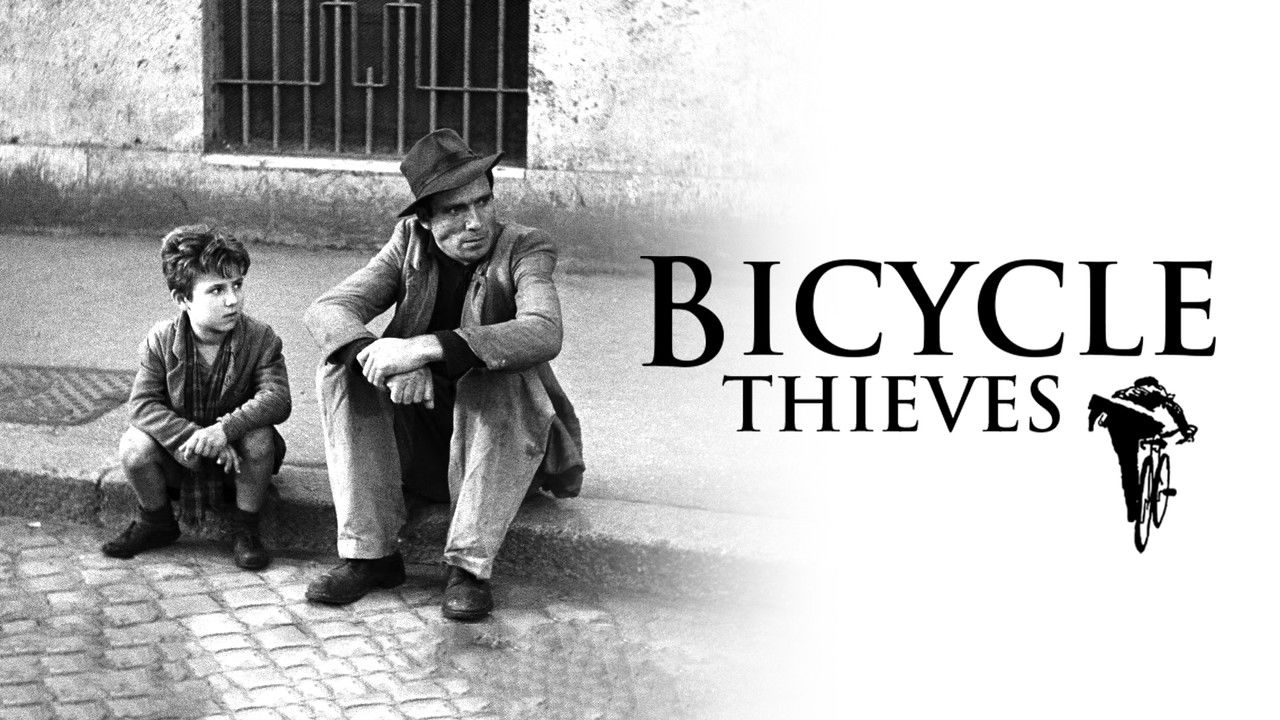
Bicycle Thieves (1948), directed by Vittorio De Sica, starring Lamberto Maggiorani and Enzo Staiola.
score
The Prize Picture They Want to Censor!
Synopsis
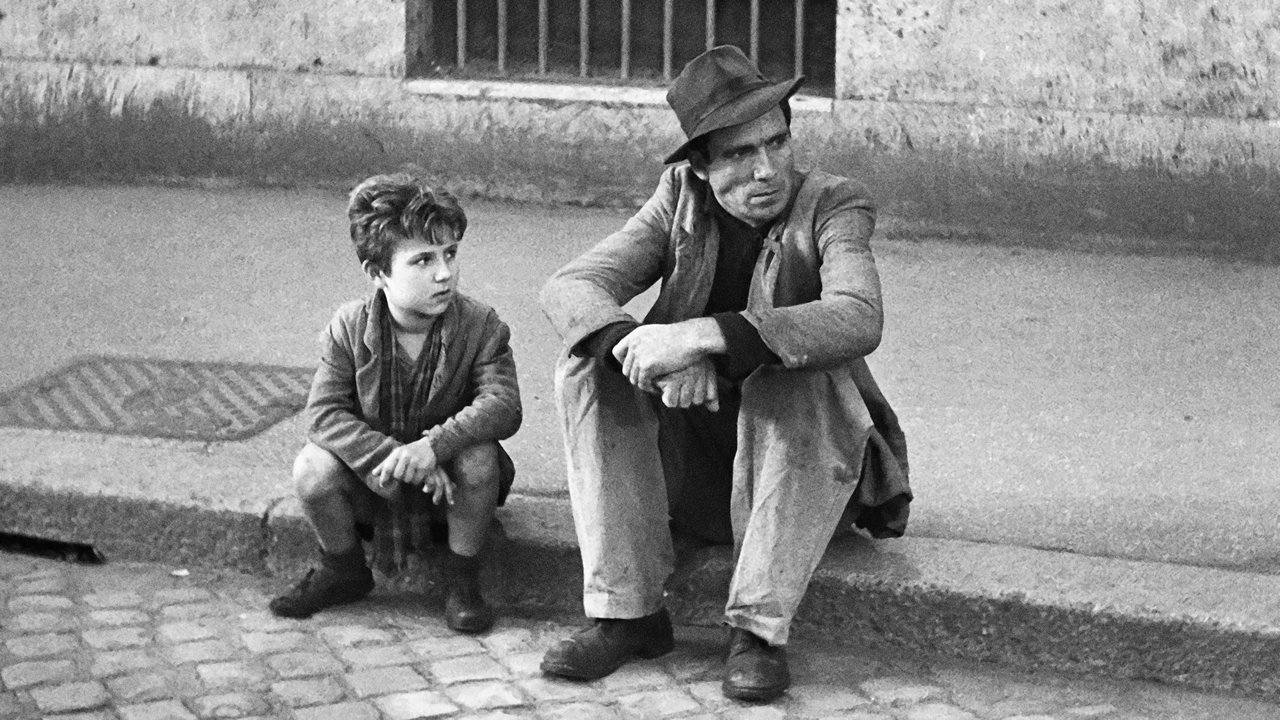
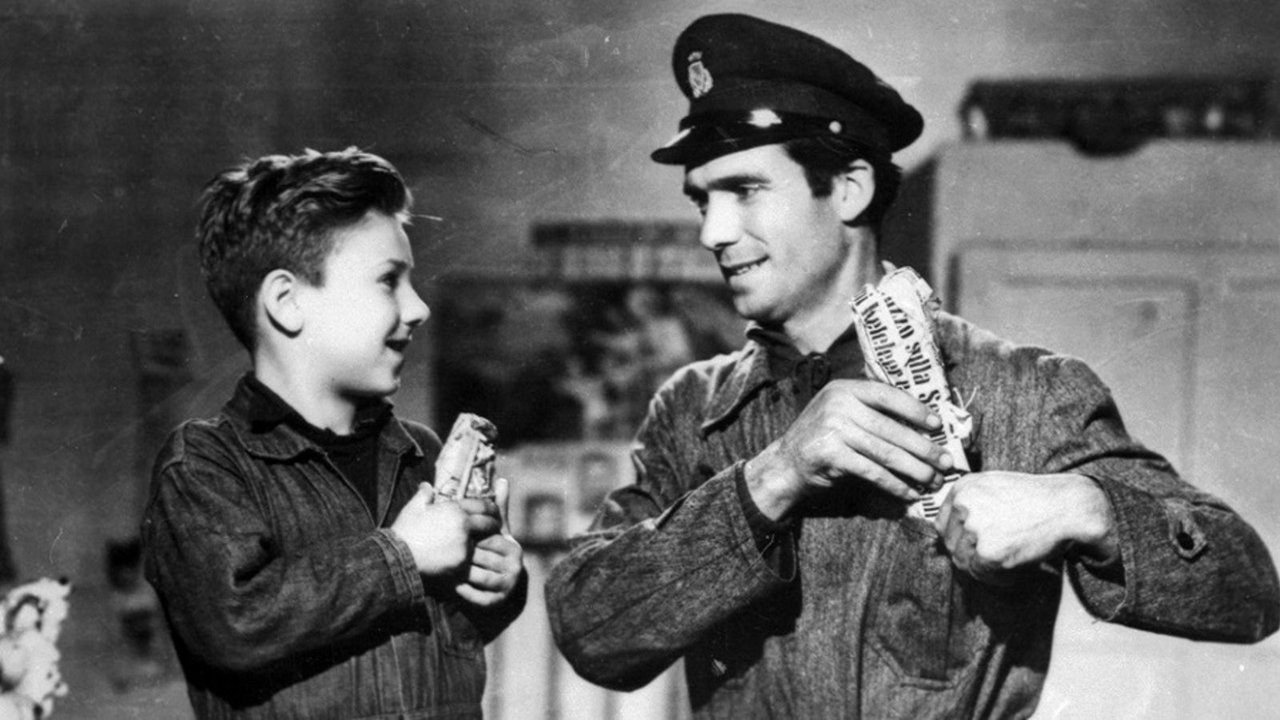
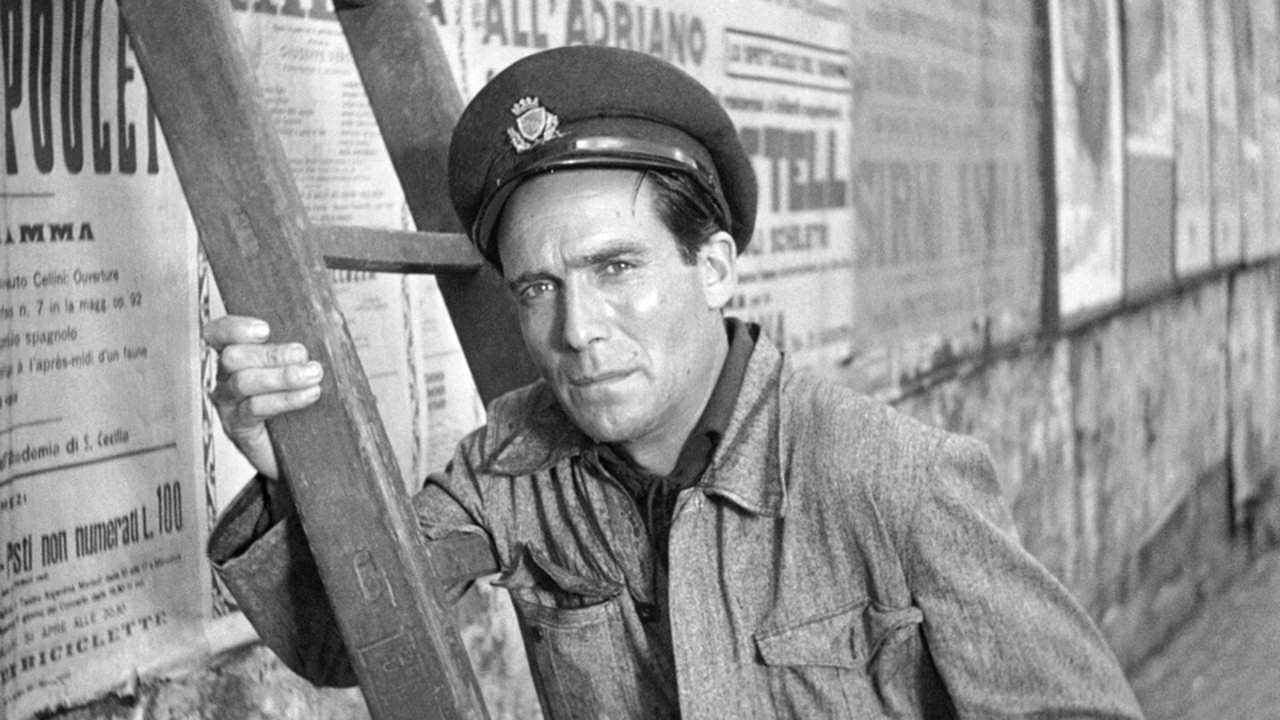
Unemployed Antonio is elated when he finally finds work hanging posters around war-torn Rome. However on his first day, his bicycle—essential to his work—gets stolen. His job is doomed unless he can find the thief. With the help of his son, Antonio combs the city, becoming desperate for justice.
What the catalogue says about this film
- Vittorio De Sica and Lamberto Maggiorani have worked together on 3 films in the catalogue
- The highest rated of Vittorio De Sica's 18 films here, at 8.2
- Film 8 of 31 by Vittorio De Sica in the catalogue
- Rated 8.2, against a Drama average of 6.6
Every comparison is within the CineQuiz catalogue, not cinema as a whole.
- Carlo MontuoriCinematography
- Vittorio De SicaDirector, Producer, Screenplay
- Eraldo Da RomaEditing
- Giuseppe AmatoProducer
About the film
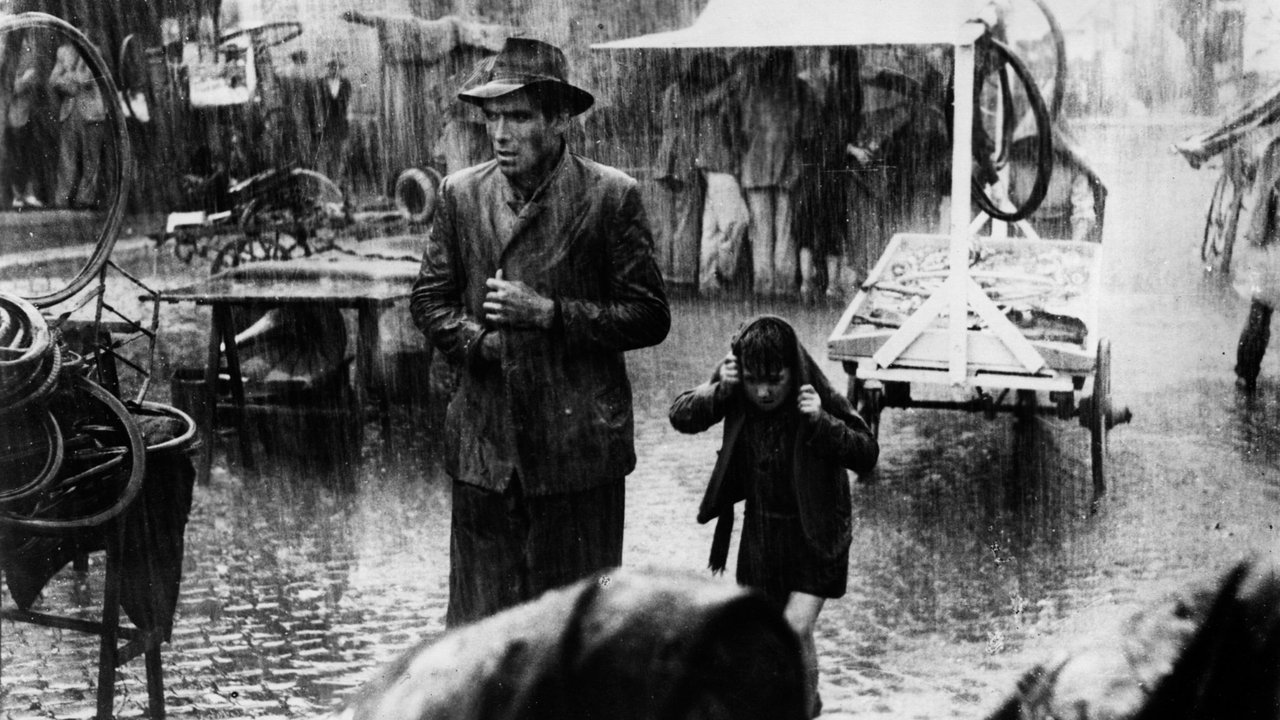
Bicycle Thieves (Italian: Ladri di biciclette), also known as The Bicycle Thief, is a 1948 Italian neorealist drama film directed by Vittorio De Sica. It follows the story of a poor father searching in post-World War II Rome for his stolen bicycle, without which he will lose the job which was to be the salvation of his young family.
Adapted for the screen by Cesare Zavattini from the 1946 novel by Luigi Bartolini, and starring Lamberto Maggiorani as the desperate father and Enzo Staiola as his plucky young son, Bicycle Thieves received an Academy Honorary Award (most outstanding foreign language film) in 1950, and in 1952 was deemed the greatest film of all time by Sight & Sound magazine's poll of filmmakers and critics; fifty years later another poll organized by the same magazine ranked it sixth among the greatest-ever films. In the 2012 version of the list the film ranked 33rd among critics and 10th among directors.
The film was also cited by Turner Classic Movies as one of the most influential films in cinema history, and it is considered part of the canon of classic cinema. Bicycle Thieves was voted number 3 on the prestigious Brussels 12 list at the 1958 World Expo, and number 4 in Empire magazine's "The 100 Best Films of World Cinema" in 2010. It was also included on the Italian Ministry of Cultural Heritage’s 100 Italian films to be saved, a list of 100 films that "have changed the collective memory of the country between 1942 and 1978."
Read the full article (16k characters)
Bicycle Thieves (Italian: Ladri di biciclette), also known as The Bicycle Thief, is a 1948 Italian neorealist drama film directed by Vittorio De Sica. It follows the story of a poor father searching in post-World War II Rome for his stolen bicycle, without which he will lose the job which was to be the salvation of his young family.
Adapted for the screen by Cesare Zavattini from the 1946 novel by Luigi Bartolini, and starring Lamberto Maggiorani as the desperate father and Enzo Staiola as his plucky young son, Bicycle Thieves received an Academy Honorary Award (most outstanding foreign language film) in 1950, and in 1952 was deemed the greatest film of all time by Sight & Sound magazine's poll of filmmakers and critics; fifty years later another poll organized by the same magazine ranked it sixth among the greatest-ever films. In the 2012 version of the list the film ranked 33rd among critics and 10th among directors.
The film was also cited by Turner Classic Movies as one of the most influential films in cinema history, and it is considered part of the canon of classic cinema. Bicycle Thieves was voted number 3 on the prestigious Brussels 12 list at the 1958 World Expo, and number 4 in Empire magazine's "The 100 Best Films of World Cinema" in 2010. It was also included on the Italian Ministry of Cultural Heritage’s 100 Italian films to be saved, a list of 100 films that "have changed the collective memory of the country between 1942 and 1978."
Plot
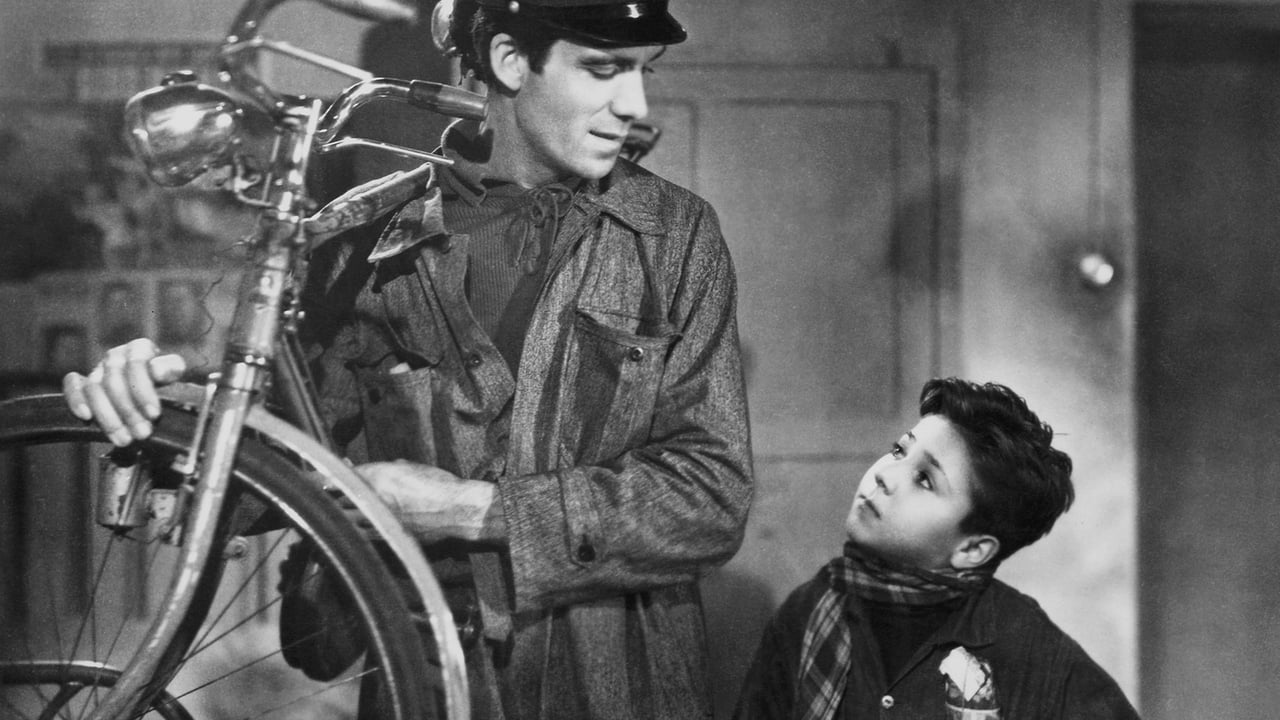
In post-World War II Rome, Antonio Ricci desperately needs work to support his wife Maria, their son Bruno, and their baby. He is offered a job posting advertising bills but tells Maria he cannot accept because the job requires a bicycle. Maria resolutely strips the bed of her dowry bedsheets—prized possessions for a poor family—and takes them to the pawn shop, where they bring enough to redeem Antonio's bicycle. On his first day of work, Antonio is at the top of a ladder when a young man steals the bicycle. Antonio runs after him but is thrown off the trail by the thief's accomplices. The police file Antonio's complaint but say that there is little they can do.
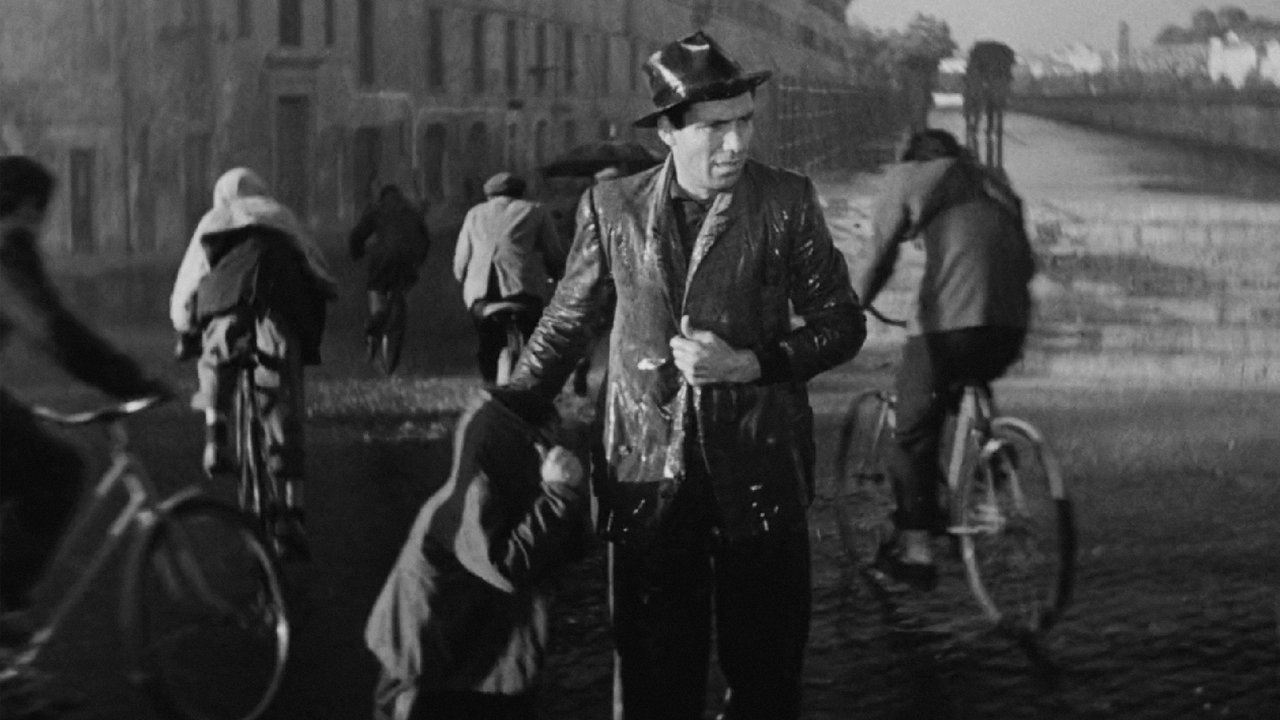
Returning home embittered, Antonio understands that his only option is to search for the bicycle himself. He asks for help from a political comrade, who in turn mobilizes his waste collector colleagues. At dawn, they and Bruno go to search for the bicycle at the Piazza Vittorio market, where stolen goods often surface. They find a bicycle frame that might be Antonio's, but the vendors refuse to allow them to examine the serial number. They call over a carabiniere, who orders the vendors to allow him to read the serial number. The officer will not allow them to examine it for themselves, but the serial number does not match that of the missing bicycle. At the Porta Portese market, Antonio and Bruno spot a man whom Antonio believes to be the thief talking with an old man. The thief eludes them and the old man feigns ignorance. They follow the old man into a church where a charitable service for the poor is underway, but he too slips away from them.
A hopeless Antonio turns to a supposed "holy woman", but her sibylline response is almost a joke. Immediately afterward, Antonio encounters the thief by chance in a disreputable district and pursues him into a brothel, whose denizens eject them. In the street, hostile neighbors gather as Antonio accuses the thief, who suddenly suffers an apparent medical emergency, for which the crowd blames Antonio. Bruno fetches a policeman, who searches the thief's apartment without success. The policeman tells Antonio the case is weak—Antonio has no witnesses and the neighbors are certain to provide the thief with an alibi. Antonio and Bruno leave in despair amid jeers and threats from the crowd.
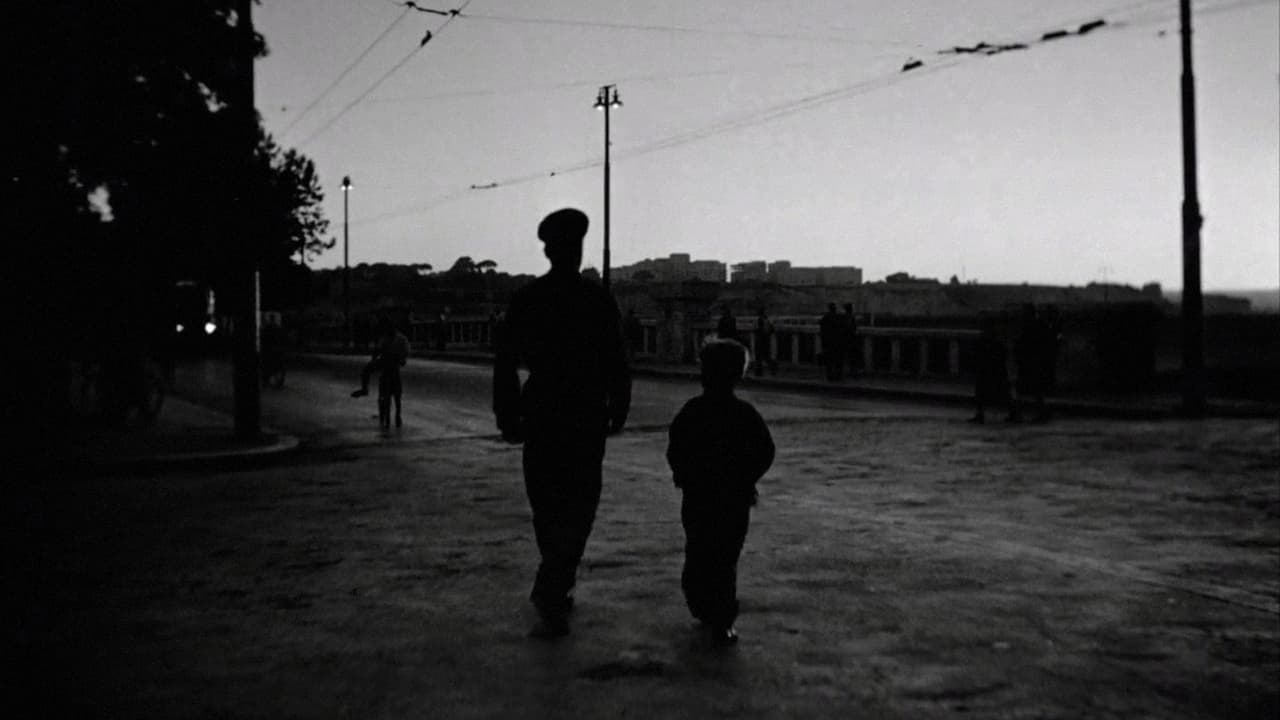
Their way home takes them to the Stadio Nazionale PNF football stadium. Antonio sees an unattended bicycle near a doorway and, after much anguished indecision, instructs Bruno to take the tram to a stop nearby and wait. Antonio circles the unattended bicycle and jumps on it. Instantly, the hue and cry is raised and Bruno—who has missed the tram—is stunned to see his father pursued, surrounded, and pulled from the bicycle. As Antonio is being muscled toward the police station, the bicycle's owner notices Bruno in tears and, in a moment of compassion, tells the others to release Antonio. Antonio and Bruno then walk off slowly through the hostile crowd. Antonio fights back tears and Bruno takes his hand.
Cast
Uncredited
Production
Bicycle Thieves is the best-known work of Italian neorealism, a movement that informally began with Roberto Rossellini's Rome, Open City (1945) and brought a new degree of realism to Italian cinema. De Sica had just made Shoeshine (1946), but was unable to get financial backing from any major studio for the film, so he raised the money himself from friends. Wanting to portray the poverty and unemployment of post-war Italy, he co-wrote a script with Cesare Zavattini and others using only the title and few plot devices of a little-known novel of the time by poet and artist Luigi Bartolini. Following the precepts of neorealism, De Sica shot only on location (that is, no studio sets) and cast only untrained actors. (Lamberto Maggiorani, for example, was a factory worker.) That some actors' roles paralleled their lives off screen added realism to the film. De Sica cast Maggiorani when he had brought his young son to an audition for the film. He later cast the 8-year-old Enzo Staiola when he noticed the young boy watching the film's production on a street while helping his father sell flowers.
The film's final shot of Antonio and Bruno walking away from the camera into the distance is an homage to many of the films of Charlie Chaplin, who was De Sica's favourite filmmaker.
Uncovering the drama in everyday life, the wonderful in the daily news.
Title
The original Italian title is Ladri di biciclette. It literally translates into English as "thieves of bicycles"; both ladri and biciclette are plural. In Bartolini's novel, the title referred to a post-war culture of rampant thievery and disrespect for civil order, countered only by an inept police force and indifferent allied occupiers.
When the film was screened in the United States in 1949, Bosley Crowther referred to it as The Bicycle Thief in his review in The New York Times, and this came to be the title by which the film was known in English. When the film was re-released in the late-1990s, San Francisco Chronicle film critic Bob Graham said that he preferred that version, stating, "Purists have criticized the English title of the film as a poor translation of the Italian ladri, which is plural. What blindness! The Bicycle Thief is one of those wonderful titles whose power does not sink in until the film is over". The 2007 Criterion Collection release in North America uses the title Bicycle Thieves.
Reception
Critical response
When Bicycle Thieves was released in Italy, it was viewed with hostility and as portraying Italians in a negative way. Italian critic Guido Aristarco praised it, but also complained that "sentimentality might at times take the place of artistic emotion." Fellow Italian neorealist film director Luchino Visconti criticized the film, saying that it was a mistake to use a professional actor to dub over Lamberto Maggiorani's dialogue. Luigi Bartolini, the author of the novel from which de Sica drew his title, was highly critical of the film, feeling that the spirit of his book had been thoroughly betrayed because his protagonist was a middle-class intellectual and his theme was the breakdown of civil order.
Contemporary reviews elsewhere were positive. Bosley Crowther, film critic for The New York Times, lauded the film and its message in his review. He wrote, "Again the Italians have sent us a brilliant and devastating film in Vittorio De Sica's rueful drama of modern city life, The Bicycle Thief. Widely and fervently heralded by those who had seen it abroad (where it already has won several prizes at various film festivals), this heart-tearing picture of frustration, which came to [the World Theater] yesterday, bids fair to fulfill all the forecasts of its absolute triumph over here. For once more the talented De Sica, who gave us the shattering Shoeshine, that desperately tragic demonstration of juvenile corruption in post-war Rome, has laid hold upon and sharply imaged in simple and realistic terms a major—indeed, a fundamental and universal—dramatic theme. It is the isolation and loneliness of the little man in this complex social world that is ironically blessed with institutions to comfort and protect mankind". Pierre Leprohon wrote in Cinéma D'Aujourd'hui that "what must not be ignored on the social level is that the character is shown not at the beginning of a crisis but at its outcome. One need only to look at his face, his uncertain gait, his hesitant or fearful attitudes to understand that Ricci is already a victim, a diminished man who has lost his confidence." Then Paris-based Lotte H. Eisner called it the best Italian film since World War II, and UK critic Robert Winnington called it "the most successful record of any foreign film in British cinema."
When the film was re-released in the late 1990s Bob Graham, staff film critic for the San Francisco Chronicle, gave the drama a positive review: "The roles are played by non-actors, Lamberto Maggiorani as the father and Enzo Staiola as the solemn boy, who sometimes appears to be a miniature man. They bring a grave dignity to De Sica's unblinking view of post-war Italy. The wheel of life turns and grinds people down; the man who was riding high in the morning is brought low by nightfall. It is impossible to imagine this story in any other form than De Sica's. The new black-and-white print has an extraordinary range of grey tones that get darker as life closes in". In 1999, Chicago Sun-Times film reviewer Roger Ebert wrote that "The Bicycle Thief is so well-entrenched as an official masterpiece that it is a little startling to visit it again after many years and realize that it is still alive and has strength and freshness. Given an honorary Oscar in 1949, routinely voted one of the greatest films of all time, revered as one of the foundation stones of Italian neorealism, it is a simple, powerful film about a man who needs a job". Ebert added the film to his "The Great Movies" list. In 2020, A. O. Scott praised the film in an essay entitled "Why You Should Still Care About 'Bicycle Thieves'."
Bicycle Thieves is a fixture on the British Film Institute's Sight & Sound critics' and directors' polls of the greatest films ever made. The film ranked 1st and 7th on critics' poll in 1952 and 1962 respectively. It ranked 11th on the magazine's 1992 Critics' poll, 45th in 2002 Critics' Poll and 6th on the 2002 Directors' Top Ten Poll. It was slightly lower in the 2012 directors' poll, 10th and 33rd on the 2012 critics' poll. The Village Voice ranked the film at number 37 in its Top 250 "Best Films of the Century" list in 1999, based on a poll of critics. The film was voted at No. 99 on the list of "100 Greatest Films" by the prominent French magazine Cahiers du cinéma in 2008.
The Japanese filmmaker Akira Kurosawa cited this movie as one of his 100 favorite films. The film was included by the Vatican in a list of important films compiled in 1995, under the category of "Values".
Bicycle Thieves has continued to gain very high praise from contemporary critics, with the review aggregator website Rotten Tomatoes reporting 99% of 70 reviews as of April 2022 as positive, with an average rating of 9.20/10. The site's critics consensus reads, "An Italian neorealism exemplar, Bicycle Thieves thrives on its non-flashy performances and searing emotion."
Awards and nominations
Locarno International Film Festival, Switzerland: Special Prize of the Jury, Vittorio De Sica; 1949.
National Board of Review: NBR Award, Best Director, Vittorio De Sica; Best Film (Any Language), Italy; 1949.
New York Film Critics Circle Awards: NYFCC Award, Best Foreign Language Film, Italy; 1949.
Academy Awards: Honorary Award, as The Bicycle Thief (Italy). Voted by the Academy Board of Governors as the most outstanding foreign language film released in the United States during 1949; 1950.
Academy Awards: Nominated, Oscar, Best Writing, Screenplay; as The Bicycle Thief, Cesare Zavattini; 1950.
British Academy of Film and Television Arts: BAFTA Film Award, Best Film from any Source; 1950.
Bodil Awards, Copenhagen, Denmark: Bodil, Best European Film (Bedste europæiske film), Vittorio De Sica; 1950.
Golden Globes: Golden Globe, Best Foreign Film, Italy; 1950.
Cinema Writers Circle Awards, Spain: CEC Award, Best Foreign Film (Mejor Película Extranjera), Italy; 1951.
Kinema Junpo Awards, Tokyo, Japan: Kinema Junpo Award, Best Foreign Language Film, Vittorio De Sica; 1951.
Best Cinematography (Migliore Fotografia), Carlo Montuori.
Best Director (Migliore Regia), Vittorio De Sica.
Best Film (Miglior Film a Soggetto).
Best Score (Miglior Commento Musicale), Alessandro Cicognini.
Best Screenplay (Migliore Sceneggiatura), Cesare Zavattini, Vittorio De Sica, Suso Cecchi d'Amico, Oreste Biancoli, Adolfo Franci, and Gerardo Guerrieri.
Best Story (Miglior Soggetto), Cesare Zavattini.
Listed as one of TCM's top 15 most influential films list, as The Bicycle Thief (1947),
Ranked #4 in Empire magazines "The 100 Best Films Of World Cinema" in 2010.
Voted #2 in BBC Culture's poll of 209 critics in 43 countries for the greatest foreign-language film of all time.
Legacy
Many directors have cited the film as a major influence including Satyajit Ray, Ken Loach, Giorgio Mangiamele, Bimal Roy, Anurag Kashyap, Balu Mahendra, Vetrimaaran and Basu Chatterjee.
The film was noteworthy for film directors of the Iranian New Wave, such as Jafar Panahi and Dariush Mehrjui.
The film was one of 39 foreign films recommended by Martin Scorsese to Colin Levy.
It was parodied in the film The Icicle Thief (1989). and in The Carol Burnett Show sketch "Salute to Foreign Films."
The film features incidentally in the 1992 Robert Altman film The Player. A Hollywood studio executive (played by Tim Robbins) tracks a screenwriter to a theater showing Bicycle Thieves and stages what he represents as a chance meeting.
Norman Loftis's film Messenger (1994) is considered to be a remake of Bicycle Thieves.
The episode "The Thief" from the American comedy-drama series Master of None is heavily influenced by Bicycle Thieves.
See also
List of films considered the best
List of films about bicycles and cycling
References
External links
Lombardi, Elena (December 2009). "Of Bikes and Men: The intersection of three narratives in Vittorio De Sica's Ladri di biciclette". Studies in European Cinema. 6 (2–3): 113–126. doi:10.1386/seci.6.2-3.113/1.
Bicycle Thieves at IMDb
Bicycle Thieves at AllMovie
Bicycle Thieves at the TCM Movie Database (archived)
Bicycle Thieves at Rotten Tomatoes
Bicycle Thieves is available for free viewing and download at the Internet Archive (German dialogue)
Bicycle Thieves: A Passionate Commitment to the Real an essay by Godfrey Cheshire at the Criterion Collection
Bicycle Thieves: Ode to the Common Man an essay by Charles Burnett at the Criterion Collection
Bicycle Thieves video film review on YouTube by A. O. Scott (The New York Times) at YouTube
Bicycle Thieves trailer on YouTube
Text from Bicycle Thieves on Wikipedia, licensed CC BY-SA 4.0. https://en.wikipedia.org/wiki/Bicycle_Thieves
Trivia
- It cost US$ 133.000 and grossed US$ 450.159 in theaters — 3.4 times its budget.
- It premiered on July 21, 1948, a Wednesday.
- It runs 1h30 — a typical feature length.
- Its original title is "Ladri di biciclette".
- It won 3 award(s) and received 3 nomination(s) on record at Wikidata — Academy Honorary Award among them.
- As of September 20, 2026, it is available in Brazil by subscription on Belas Artes à La Carte, Oldflix, Arte Amazon Channel.
- This film's quiz has 13 questions — enough to play more than once without repeats.
Production
- StudiosProduzioni De Sica
- CountriesItaly
- LanguagesItalian
- BudgetUS$ 133,000
- Box officeUS$ 450,159
- StatusReleased
More about this film
Awards
- Academy Honorary Award
- National Board of Review Award for Best Film
- National Board of Review: Top Ten Films
Nominations
- Academy Award for Best Writing, Adapted Screenplay 1950
- BAFTA Award for Best Film 1950
- Golden Globe Award for Best Non-English Language Film 1949
Set in
- Rome
Where to watch
Videos
Photos



Cast
-
 Lamberto Maggiorani
Antonio
Lamberto Maggiorani
Antonio -
 Enzo Staiola
Bruno
Enzo Staiola
Bruno -
 Lianella Carell
Maria
Lianella Carell
Maria -
 Gino Saltamerenda
Baiocco
Gino Saltamerenda
Baiocco -
 Vittorio Antonucci
Alfredo Catelli, The Thief
Vittorio Antonucci
Alfredo Catelli, The Thief -
 Giulio Chiari
The Beggar
Giulio Chiari
The Beggar -
 Elena Altieri
The Charitable Lady
Elena Altieri
The Charitable Lady - Carlo Jachino A Beggar
- Michele Sakara Secretary of the Charity Organization
- Emma Druetti
-
 Eolo Capritti
Carabiniere (uncredited)
Eolo Capritti
Carabiniere (uncredited) -
 Fausto Guerzoni
Amateur Actor (uncredited)
Fausto Guerzoni
Amateur Actor (uncredited) -
 Giulio Battiferri
Citizen Who Protects the Real Thief (uncredited)
Giulio Battiferri
Citizen Who Protects the Real Thief (uncredited) -
 Sergio Leone
A Seminary Student (uncredited)
Sergio Leone
A Seminary Student (uncredited) - Mario Meniconi Meniconi, the Street Sweeper (uncredited)
-
 Checco Rissone
Guard in Piazza Vittorio (uncredited)
Checco Rissone
Guard in Piazza Vittorio (uncredited) - Peppino Spadaro Police Officer (uncredited)
-
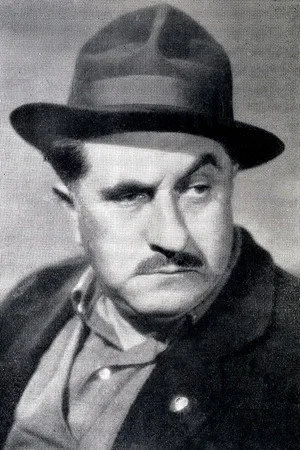 Nando Bruno
(uncredited)
Nando Bruno
(uncredited) -
 Memmo Carotenuto
(uncredited)
Memmo Carotenuto
(uncredited) -
 Umberto Spadaro
(uncredited)
Umberto Spadaro
(uncredited)
Quiz about this movie
Questions from the whole catalogue.
Play nowIf you liked this one
-
O Trem Italiano da Felicidade
 7.4
7.4
-
Roma, Cidade Aberta Drama from the 1940s
 8.0
8.0
-
Uma Estrada Para Recomeçar
 6.7
6.7
-
Europa 51
 7.3
7.3
-
Five Seconds
 6.7
6.7
-
Estamos Todos Bem
 7.3
7.3
-
Accattone - Desajuste Social
 7.7
7.7
-
Perfeitos Desconhecidos
 7.9
7.9
-
A Imensidão
 6.3
6.3
-
A Terra Treme Drama from the 1940s
 7.7
7.7
-
Trágica Obsessão
 6.7
6.7
-
Assassinato no Expresso do Oriente
 6.7
6.7
Tags
Crew
- Carlo Montuori Cinematography
- Vittorio De Sica Director
- Eraldo Da Roma Editing
- Giuseppe Amato Producer
- Vittorio De Sica Producer
- Alessandro Cicognini Original music
- Adolfo Franci Screenplay
- Cesare Zavattini Screenplay
- Cesare Zavattini Story
- Gerardo Guerrieri Screenplay
- Gherardo Gherardi Screenplay
- Oreste Biancoli Screenplay
- Suso Cecchi d'Amico Screenplay
- Vittorio De Sica Screenplay
Questions about this film
What is Bicycle Thieves about?
Bicycle Thieves: Unemployed Antonio is elated when he finally finds work hanging posters around war-torn Rome. However on his first day, his bicycle—essential to his work—gets stolen. His job is doomed unless he can find the thief. With the help of his son, Antonio combs the city, becoming desperate for justice.
Who directed Bicycle Thieves?
Bicycle Thieves was directed by Vittorio De Sica in 1948.
Who stars in Bicycle Thieves?
The cast of Bicycle Thieves includes Lamberto Maggiorani, Enzo Staiola, Lianella Carell, Gino Saltamerenda and Vittorio Antonucci.
How long is Bicycle Thieves?
Bicycle Thieves runs for 90 minutes, or 1h30.
How much did Bicycle Thieves cost and how much did it make?
Bicycle Thieves had a budget of US$ 133,000 and took US$ 450,159 at the box office — 3.4 times its cost.
Where can I watch Bicycle Thieves?
Bicycle Thieves is available on Belas Artes à La Carte, Oldflix and Arte Amazon Channel. Availability changes often: the list on this page is the most recent we received.
What awards did Bicycle Thieves win?
Bicycle Thieves has 3 recorded awards, among them Academy Honorary Award, National Board of Review Award for Best Film and National Board of Review: Top Ten Films.
Similar films
 8.7
8.7
 8.5
8.5
 8.7
8.7
 7.9
7.9
 8.4
8.4
 8.5
8.5
 8.1
8.1
 8.2
8.2
 8.0
8.0
 8.2
8.2
 8.5
8.5
 8.5
8.5
Page updated on 09/09/2026.
Back to the catalogue