Carbide and Sorrel (1963)
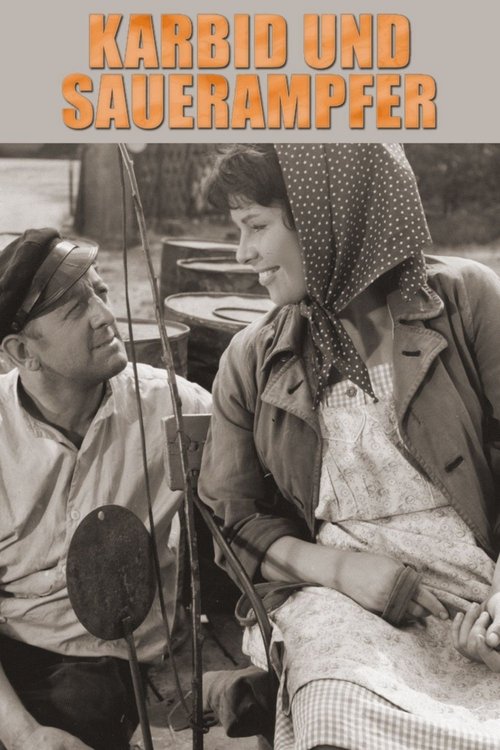
Carbide and Sorrel (1963), directed by Frank Beyer, starring Erwin Geschonneck and Marita Böhme.
score
Synopsis
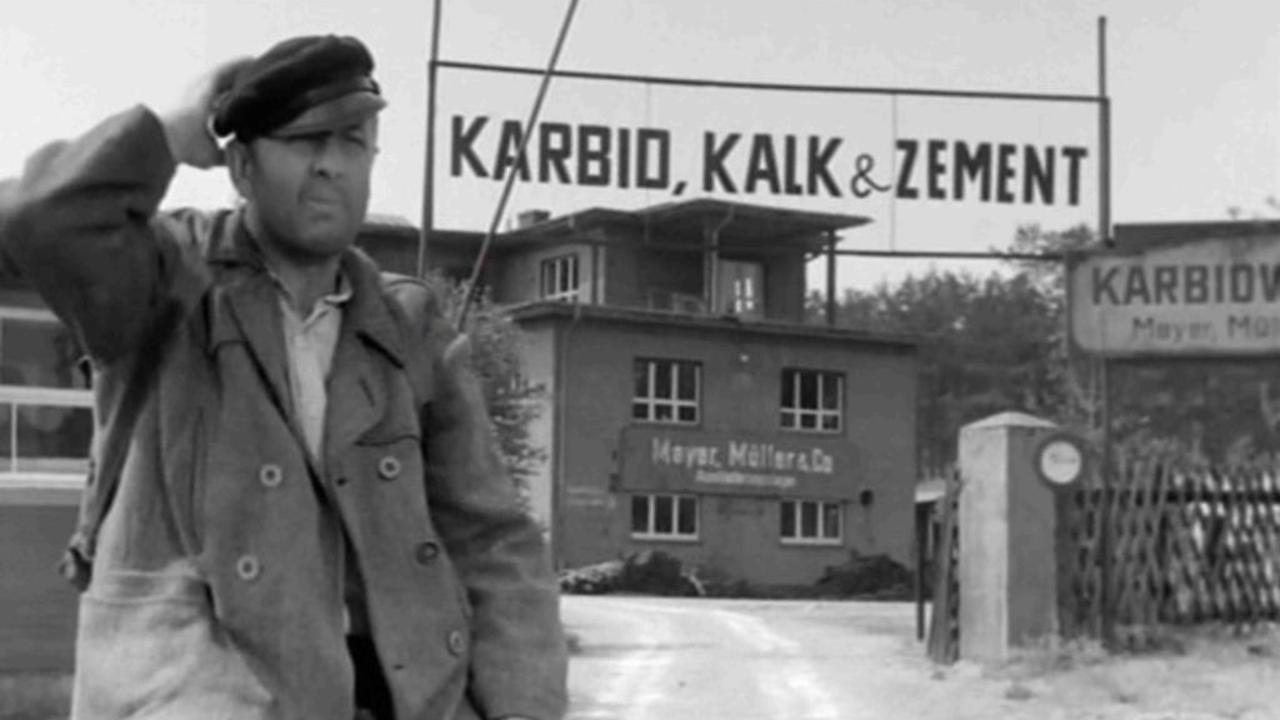
After the second World War, Dresden has a lot of reconstructing to do. To get the cigarette factory he once worked for running again, Kalle has to travel to Wittenberg - the only place where carbide can be found. Once there, Kalle find himself in the unfortunate situation of having to hitchhike his way back to Dresden, transporting seven heavy barrels of carbide. However, his inventiveness and optimistic attitude help transform the grueling task into an adventurous, entertaining, and funny journey.
- Frank BeyerDirector, Writer
- Hildegard ConradEditing
- Joachim WerzlauOriginal music
- Hans Oliva-HagenWriter
About the film
Carbide and Sorrel (German: Karbid und Sauerampfer) is a 1963 East German comedy film directed by Frank Beyer and starring Erwin Geschonneck.
Read the full article (7k characters)
Carbide and Sorrel (German: Karbid und Sauerampfer) is a 1963 East German comedy film directed by Frank Beyer and starring Erwin Geschonneck.
Plot
In 1945, after the end of World War II in Europe, Karl 'Kalle' Blücher examines the ruins of the cigarette factory where he used to work in the city of Dresden. The other workers tell him they need carbide to replace the destroyed roof. They assign him the job of getting it, as he has a brother-in-law in Wittenberge who works at a carbide company. Also, they are all married and have to look after their families, while Karl is single and a vegetarian, so he should be better able to feed himself along the way.
Karl walks to Wittenberge. His brother-in-law gives him seven 50-kilogram (110 lb) barrels, but cannot help him with their transportation. His return to Dresden turns into a long chain of comical incidents.
First, a good-looking war widow named Karla invites him to put the barrels on her wagon and takes him a short distance to her farmhouse, where he spends the night and they become romantically entwined. He promises to return to her after he makes his delivery.
Next, he hitches a ride on a truck in exchange for his cigarettes. While waiting for another ride, he hunts mushrooms in the nearby forest, unaware that the woods are still mined until an old man warns him. A second truck takes him further along in return for his cooked mushrooms.
Finding a seemingly empty barn, he takes a nap in the loft. Soviet soldiers find him (and a hidden cache of Nazi food), so they take him to their commandant. The sympathetic commandant believes his story and lets him go, but tells him he needs permits from Dresden and Potsdam to transport raw materials between regions. Karl instead talks the captain in charge of supplies into giving him stamped written authorization and a cart for two barrels of carbide. Later, hunger overcoming his beliefs, he decides to go fishing using carbide (which explodes when it is wet). The first barrel he opens contains chalk, but the second has carbide. The explosion, however, results in suspicious Soviet troops taking him into custody again. Back he goes to the same commandant. This time, he trades the captain one more barrel for a 30-kilometre truck ride (Karl gives him the one with chalk inside). Along the way, they pick up first a middle-aged singer, then Karin, a teenage orphan in pigtails determined to go to America.
The trio then find an abandoned boat. The singer, unable to steal the boat, leaves the next morning. Karl rows the barrels and the girl (who does not want to go to Dresden) down the river Elbe. When one of the oars breaks, they end up stranded on the concrete pillar of a wrecked bridge in the middle of the river with two barrels; the boat comes loose and drifts away with the other two. Karin abandons him the next morning.
Then an American soldier appears in a motorboat. He is willing to help (in exchange for a barrel), but is forbidden to go into Soviet-controlled territory, so Karl steals his boat. He later docks and encounters Clara, a middle-aged widow. She plies him with liquor, but he ends up too drunk to go to bed with her as she wants. (One of her workers tells him that he is the 13th man Clara has taken in.) Two German ex-soldiers show up and are put to work gardening. Karl fixes some machinery in a sawmill. One of the soldiers sleeps with Clara. Early the next morning, the pair steal Karl's barrels, but he wakes up in time to drive them off.
He is next given a ride by an undertaker in exchange for a eulogy. Taking a nap in the empty coffin, he terrifies a hitchhiker when he emerges from it. At the funeral, they discover that the dead man was despised when the "mourners" slip quickly away.
At a black market, he tries to exchange transportation for a barrel, but is instead arrested. He escapes and is recaptured; fortunately, the man in charge believes he is working for the Soviet occupiers and lets him go.
Finally, after six weeks, he returns to the factory with two barrels of carbide. He finds letters from Karla there. Karl borrows a bicycle and starts back to Wittenberge.
Cast
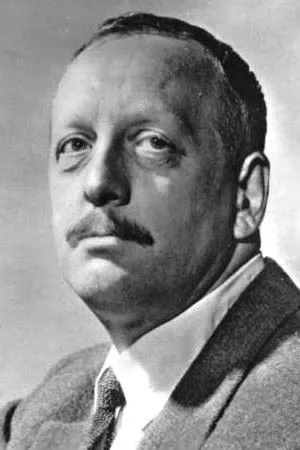
Erwin Geschonneck as Karl 'Kalle' Blücher
Marita Böhme as Karla
Manja Behrens as Clara
Margot Busse as Karin
Kurt Rackelmann as Riese
Rudolf Asmus as the singer
Hans-Dieter Schlegel as the American soldier
Fred Delmare as the coachman
Bruno Carstens as the police officer
Alexei Presnetsov as the Soviet commandant
Leonid Svetloff as the Red Army supply officer
Werner Möhring as Peter
Peter Dommisch as Paul
Fred Ludwig as Ganove
Günter Rüger as the man with the marmalade
Fritz Diez as the reconstruction chief
Jochen Thomas as a locomotive driver
Elsa Grube-Deister as a woman in the sawmill
Gina Presgott as a woman in the sawmill
Otto Saltzmann as an old man
Wolfram Handel as a traveler
Gerd Ehlers as the butcher
Albert Zahn as a locomotive driver
Hans Hardt-Hardtloff as the commissar
Agnes Kraus as a woman in the cemetery
Sabine Thalbach as a woman in the cemetery
Else Koren as a woman in the cemetery
Maria Besendahl as a woman in the cemetery
Gertrud Brendler as a woman in the cemetery
Frank Michelis as a worker
Hermann Eckhardt as a worker
Georg Helge as a worker
Peter Kalisch as the man with the hat
Horst Giese in an uncredited role
Production
Frank Beyer recounted that the script was authorized without unusual problems. But after filming ended, representatives of the East German Ministry of Culture were worried that the portrayal of Red Army soldiers as comical plunderers would offend the Soviet Union. The Deputy Minister then took a copy of the film to Moscow and arranged a screening for a local audience. The audience broke into loud laughter during the viewing, and it was approved for mass screening.
Actor Erwin Geschonneck told that "In Carbide and Sorrel we did not ignore the hardships of the time. We did not turn the people who rebuilt the country into a joke... We knew that, in spite of all the challenges back then, the people also had funny experiences and knew to laugh about them."
Reception
The film was well received. Author Joshua Feinstein noted that "the picture spared no one, including the Red Army, in its satire. The work also subtly undermined the official accounts of the GDR's history." Seán Allan and John Sandford wrote that "it took a deceptively light-hearted look at the division of Germany" and was a "milestone in DEFA's history." Catherine Fowler concluded that it was one of the "most prominent" examples of "DEFA comedies... relaxed enough to laugh at their own Germanness."
Frank Beyer's codename in Stasi files, Karbid, was inspired by the film's title.
References
External links
Carbide and Sorrel at IMDb
Carbide and Sorrel at filmportal.de/en
Text from Carbide and Sorrel on Wikipedia, licensed CC BY-SA 4.0. https://en.wikipedia.org/wiki/Carbide_and_Sorrel
Trivia
- It premiered on December 27, 1963, a Friday.
- It runs 1h25 — short for a feature film.
- Its original title is "Karbid und Sauerampfer".
- This film's quiz has 10 questions — enough to play more than once without repeats.
Production
- StudiosDEFA-Studio für Spielfilme
- CountriesEast Germany
- LanguagesGerman
- StatusReleased
Cast
-
 Erwin Geschonneck
Kalle
Erwin Geschonneck
Kalle -
 Marita Böhme
Karla
Marita Böhme
Karla -
 Manja Behrens
Clara
Manja Behrens
Clara -
 Margot Busse
Karin
Margot Busse
Karin -
 Rudolf Asmus
Sänger
Rudolf Asmus
Sänger -
 Hans-Dieter Schlegel
US-Offizier
Hans-Dieter Schlegel
US-Offizier -
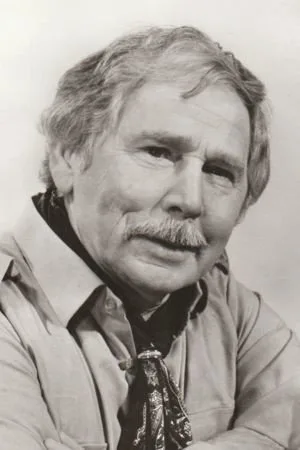 Fred Delmare
Kutscher
Fred Delmare
Kutscher -
 Bruno Carstens
Polizeikommissar
Bruno Carstens
Polizeikommissar -
 Aleksei Presnetsov
Sowjetischer Kommandant
Aleksei Presnetsov
Sowjetischer Kommandant -
 Kurt Rackelmann
Riese
Kurt Rackelmann
Riese -
 Peter Dommisch
- Fred Ludwig
-
 Hans Hardt-Hardtloff
- Werner Möhring
- Günter Rüger
-
 Fritz Diez
-
 Jochen Thomas
- Peter Kalisch
- Otto Saltzmann
- Albert Zahn
Quiz about this movie
Questions from the whole catalogue.
Play nowIf you liked this one
-
Eddie Murphy - Sem Censura
 7.3
7.3
-
Jackass Apresenta: Vovô Sem Vergonha
 6.2
6.2
-
Perfeita é a Mãe 2
 6.3
6.3
-
George Carlin: It's Bad for Ya!
 7.9
7.9
-
Seis Vezes Confusão
 6.2
6.2
-
O Natal dos Amigos Indiscretos
 6.5
6.5
-
Dois Loucos na Noite
 6.1
6.1
-
Bill Burr: Ao Vivo no Red Rocks
 7.3
7.3
-
Jim Jefferies: Intolerant
 7.1
7.1
-
Tomando Rumo
 7.0
7.0
-
Virada Para a Lua
 6.9
6.9
-
Bill Burr: Morrendo de Rir
 7.2
7.2
Tags
Crew
- Frank Beyer Director
- Hildegard Conrad Editing
- Joachim Werzlau Original music
- Frank Beyer Writer
- Hans Oliva-Hagen Writer
Questions about this film
What is Carbide and Sorrel about?
Carbide and Sorrel: After the second World War, Dresden has a lot of reconstructing to do. To get the cigarette factory he once worked for running again, Kalle has to travel to Wittenberg - the only place where carbide can be found. Once there, Kalle find himself in the unfortunate situation of having to hitchhike his way back to Dresden…
Who directed Carbide and Sorrel?
Carbide and Sorrel was directed by Frank Beyer in 1963.
Who stars in Carbide and Sorrel?
The cast of Carbide and Sorrel includes Erwin Geschonneck, Marita Böhme, Manja Behrens, Margot Busse and Rudolf Asmus.
How long is Carbide and Sorrel?
Carbide and Sorrel runs for 85 minutes, or 1h25.
Similar films
 8.3
8.3
 8.5
8.5
 8.5
8.5
 7.6
7.6
 8.0
8.0
 7.6
7.6
 8.0
8.0
 8.5
8.5
 7.9
7.9
 7.9
7.9
 8.0
8.0
 8.3
8.3
Page updated on 09/17/2026.
Back to the catalogue