Conduct Unbecoming (1975)
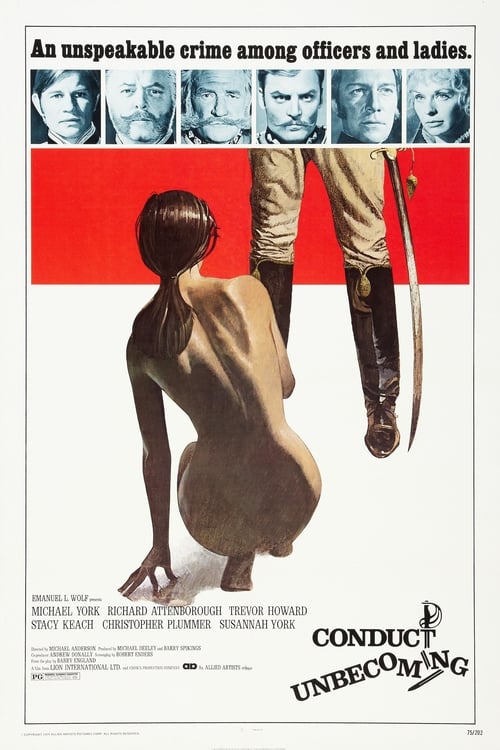
Conduct Unbecoming (1975), directed by Michael Anderson, starring Michael York and Richard Attenborough.
score
An unspeakable crime among officers and ladies.
Synopsis
A company of British soldiers in colonial India is shaken when the widow of their most honored hero is assaulted. A young officer must defend a fellow lieutenant from the charges in an unusual court-martial, while investigating the deepening mystery behind the attack.
- Michael AndersonDirector
- John GlenEditing
- Andrew DonallyProducer
- Barry SpikingsProducer
About the film
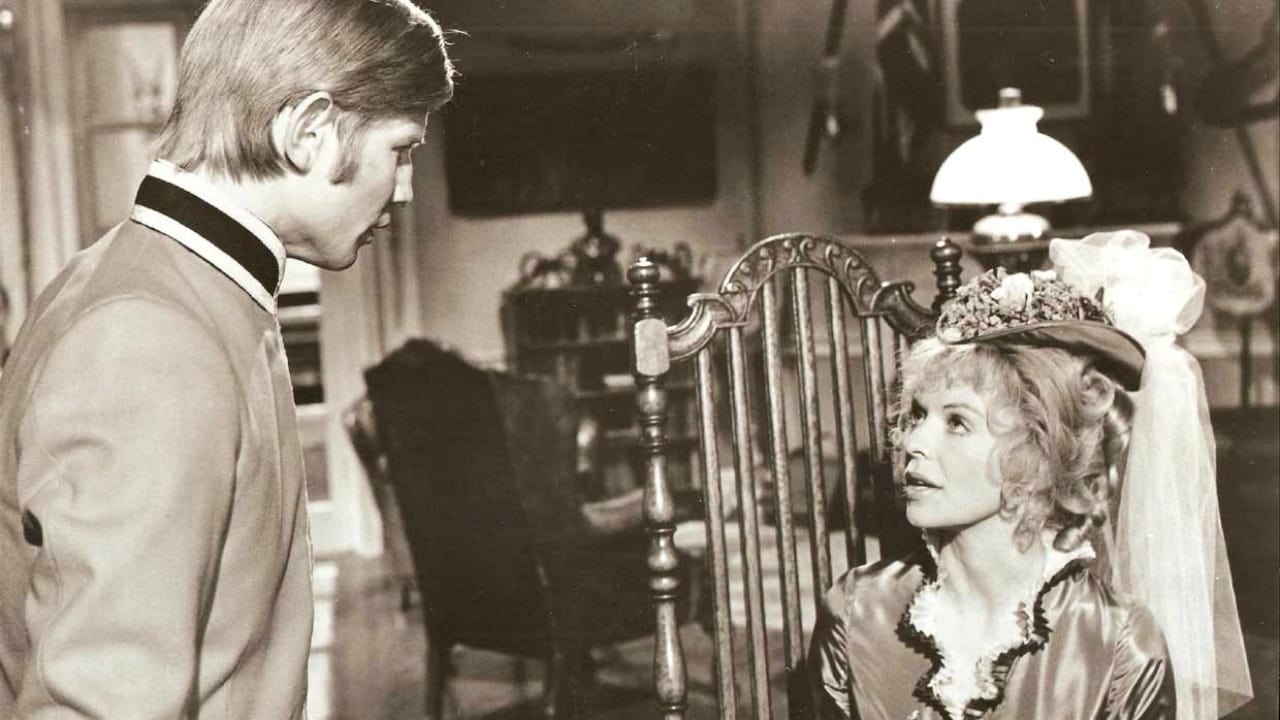
Conduct Unbecoming is a 1975 British period legal drama film directed by Michael Anderson and adapted by Robert Enders from Barry England's play of the same name. It features an ensemble cast, starring Michael York, Richard Attenborough, Trevor Howard, Stacy Keach, Christopher Plummer and Susannah York. Set in a British Indian Army barracks in the late 19th-century, the film centers on an impromptu court-martial following the assault of Captain John Scarlett's widow Marjorie.
Conduct Unbecoming was released by British Lion Films on 5 October 1975, to generally positive reviews. The American National Board of Review ranked the film in its Top Ten Films of 1975.
Read the full article (8k characters)
Conduct Unbecoming is a 1975 British period legal drama film directed by Michael Anderson and adapted by Robert Enders from Barry England's play of the same name. It features an ensemble cast, starring Michael York, Richard Attenborough, Trevor Howard, Stacy Keach, Christopher Plummer and Susannah York. Set in a British Indian Army barracks in the late 19th-century, the film centers on an impromptu court-martial following the assault of Captain John Scarlett's widow Marjorie.
Conduct Unbecoming was released by British Lion Films on 5 October 1975, to generally positive reviews. The American National Board of Review ranked the film in its Top Ten Films of 1975.
Plot
In 1878, two young British officers arrive to join a regiment in India. Middle-class Second Lieutenant Arthur Drake, whose father previously served in the regiment, is eager to fit in. Second Lieutenant Edward Millington, son of a general, confides to Drake that he intends to fail his 3-month probationary period; he deliberately antagonizes his fellow officers.
Drake and Millington arrive during the third commemoration ceremony of the Battle of Rajapur, where fallen hero Captain John Scarlett is honored annually. His widow, Marjorie Scarlett, again is presented with the Victoria Cross, awarded posthumously for his valor, that she always returns to the regiment. Captain Scarlett's medal, along with his bloody and tattered uniform, hang prominently in a glass case as a testament to his brutal death at the hands of tribesmen. Majors Alastair Wimbourne and Lionel Roach viewed Scarlett's savaged and brutally emasculated body.
Lieutenant Richard Fothergill instructs the two newcomers on the regiment's rigid rules and traditions. He warns the young officers that they should not take advantage of the favors offered by the attractive and respected widow, Mrs. Scarlett. Millington immediately breaks the rules by addressing Mrs. Scarlett and Fothergill warns him that another such infraction will get him kicked out of the regiment.
While Millington remains aloof, Drake participates in a regimental mess game where officers chase a wooden pig on wheels, pulled by Drake. Catching it, they fiercely pierce the wooden pig's anus with their swords while yelling “pig!”
At a dance, Millington gets drunk and tries to seduce Mrs. Scarlett in the garden. She repels him but moments later runs back into the mess wounded and bloodied in her hindquarters, claiming the culprit was Millington. An informal court martial—a private hearing designed to avoid public scandal for the regiment—is presided over by Captain Stuart Harper. Millington chooses Drake to be his defending advocate and Drake is obliged to undertake the role.
Though pressured by his superior officer to plead Millington guilty and close the case quickly, Drake insists on giving the defendant a fair trial. Drake learns from Mrs. Scarlett's Indian servant Pradah Singh that Mrs. Bandanai, widow of an Indian soldier who died with Scarlett, suffered a similar attack with a sword six months prior, long before Millington joined the regiment. When pressed, Mrs. Bandanai says Captain Scarlett assaulted her.
Warning Mrs. Scarlett to keep silent, Wimbourne threatens, “They’ll take India away from you.” At the hearing, when shown her dress from the night of the assault, with blood and a cut likely made with a sword point, Mrs. Scarlett acts out the attack, which mimics the regimental game of officers chasing then stabbing a wooden pig on wheels. She admits it was not Millington who attacked her but will not say who did, saying the regiment are all “cruel men who treat women and pigs alike.”
Wimbourne knows who the culprit is but refuses to identify him. Millington, now proved innocent, is embraced by his brother officers and now willingly fits in; Drake, disgusted by the truth he's uncovered, resigns. Colonel Benjamin Strang thanks Captain Harper for his conduct in administering the inconclusive proceedings. When asked whether he wishes his resignation accepted, Drake responds that he puts his personal honor above that of the regiment. Colonel Strang responds that Drake's honor and the regiment's should be one, accepting the resignation with regret.
Colonel Strang confronts Wimbourne about shielding the attacker; Wimbourne replies that identifying the culprit would oblige Colonel Strang to take official action: “The regiment would never have survived the scandal.” Wimbourne assures Colonel Strang the matter will be handled in the “traditional way, as a matter of honor.”
Wimbourne returns to the drawing-room and speaks to Drake, telling him that protecting the culprit was about “comradeship,” not “honor.” Wimbourne tells Drake that the culprit had become possessed after witnessing Captain Scarlett's mutilated and emasculated corpse and when the culprit considers the wives of dead regimental heroes to be "unfaithful", the culprit donned Captain Scarlett's bloody and torn coat and attacked those wives in his possessed persona of Captain Scarlett. Wimbourne then tells Drake to sit in the shadows and witness what happens next, then turns down the remaining light in the room to wait for the real culprit to enter.
Steps are heard and the real culprit enters the room: Major Lionel Roach. Roach and Winbourne speak occasionally to help Roach cope with what he has done and allow Winbourne to keep Roach's attacks secret, preserving the honor of the regiment and the traumatised Roach. But this time Wimbourne confronts Roach, saying he can protect him no longer and the matter must end and Roach finally comes to terms with what he has done. Wimbourne and Drake leave Roach with a loaded pistol, which Roach puts to his head and fires. Roach is “honorably” recorded in the regimental archives as “killed in action" at Rajapur.
Cast
Production
Barry England's play premiered in 1969 and had a short run on Broadway the following year. The film was greenlit by Michael Deeley and Barry Spikings who had recently become managing directors of British Lion Films and was part financed through a US tax deal. Deeley said there had been a number of screenplays written, including one by Terence Rattigan which Deeley says cost £250,000. He said all of them "failed to crack the adaptation" but there was "a very simple solution, which was to go back to the stage play and strip out as much extraneous dialogue as possible. Robert Enders delivered a perfect screenplay by these means."
Deeley hired Michael Anderson to direct, in part because he was efficient, and the film was shot at Shepperton Studios over four weeks starting mid November 1974. This meant the filmmakers had five weeks before the studio shut down over Christmas. Deeley says "the picture ran like clockwork". The veteran Elizabeth Haffenden designed the costumes in her final film production.
A novelisation of the film was produced by the writer Rupert Croft-Cooke and published by W. H. Allen.
Reception
Deeley says the film was "well made, at the right price and completely fulfilling British Lion's objective – to make money".
Film critic John Simon wrote – "Conduct Unbecoming can be viewed with modest pleasure if only for its performances and the cinematography of Bob Huke".
The American National Board of Review ranked the film in its Top Ten Films of 1975.
References
Notes
Deeley, Michael (2009). Blade runners, deer hunters and blowing the bloody doors off : my life in cult movies. Pegasus Books. ISBN 9781605980386.
External links
Conduct Unbecoming at IMDb
Text from Conduct Unbecoming (1975 film) on Wikipedia, licensed CC BY-SA 4.0. https://en.wikipedia.org/wiki/Conduct_Unbecoming_(1975_film)
Trivia
- It premiered on October 4, 1975, a Saturday.
- It runs 1h47 — a typical feature length.
- It won 1 award(s) and received 0 nomination(s) on record at Wikidata — National Board of Review: Top Ten Films among them.
- This film's quiz has 14 questions — enough to play more than once without repeats.
Production
- StudiosCrown, Lion International
- CountriesUnited Kingdom
- LanguagesEnglish
- StatusReleased
More about this film
Awards
- National Board of Review: Top Ten Films
Set in
- India
Cast
-
 Michael York
2nd Lieutenant Arthur Drake
Michael York
2nd Lieutenant Arthur Drake -
 Richard Attenborough
Major Lionel E. Roach
Richard Attenborough
Major Lionel E. Roach -
 Trevor Howard
Colonel Benjamin Strang
Trevor Howard
Colonel Benjamin Strang -
 Stacy Keach
Captain Archer
Stacy Keach
Captain Archer -
 Christopher Plummer
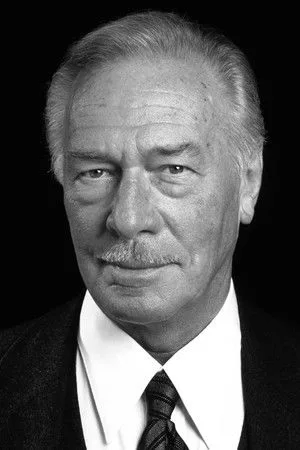
Major Alastair Wimbourne
Christopher Plummer
Major Alastair Wimbourne -
 Susannah York
Marjorie Scarlett
Susannah York
Marjorie Scarlett -
 James Faulkner
2nd Lieutenant Edward Millington
James Faulkner
2nd Lieutenant Edward Millington -
 Persis Khambatta
Mrs. Bandanai
Persis Khambatta
Mrs. Bandanai -
 Michael Culver
Lt. Richard Fothergill
Michael Culver
Lt. Richard Fothergill -
 James Donald
The Doctor
James Donald
The Doctor - Rafiq Anwar Pradah Singh
-
 Helen Cherry
Mrs. Strang
Helen Cherry
Mrs. Strang -
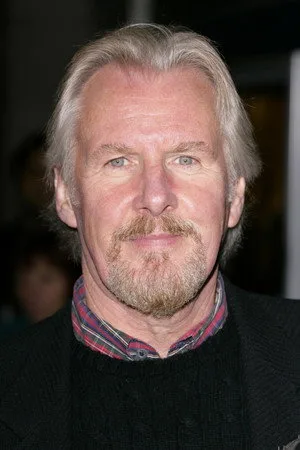 David Robb
2nd Lt. Winters
David Robb
2nd Lt. Winters -
 Michael Byrne
2nd Lt. Toby Strang
Michael Byrne
2nd Lt. Toby Strang
Quiz about this movie
Questions from the whole catalogue.
Play nowIf you liked this one
-
Visões de Um Crime
 5.9
5.9
-
Limbo
 6.1
6.1
-
Esquadrão Implacável Crime from the 1970s
 6.4
6.4
-
O Dossiê Pelicano
 6.6
6.6
-
Os Limites do Controle
 6.0
6.0
-
Treze à Mesa
 5.9
5.9
-
Morte em Três Atos
 6.0
6.0
-
Jogada de Mestre
 6.0
6.0
-
Memórias Secretas
 7.4
7.4
-
A Gardênia Azul
 6.5
6.5
-
A Máscara de Dimitrios
 7.1
7.1
-
F.I.S.T. Drama from the 1970s
 6.5
6.5
Crew
- Michael Anderson Director
- John Glen Editing
- Andrew Donally Producer
- Barry Spikings Producer
- Michael Deeley Producer
- Stanley Myers Original music
- Barry England Writer
- Robert Enders Writer
Questions about this film
What is Conduct Unbecoming about?
Conduct Unbecoming: A company of British soldiers in colonial India is shaken when the widow of their most honored hero is assaulted. A young officer must defend a fellow lieutenant from the charges in an unusual court-martial, while investigating the deepening mystery behind the attack.
Who directed Conduct Unbecoming?
Conduct Unbecoming was directed by Michael Anderson in 1975.
Who stars in Conduct Unbecoming?
The cast of Conduct Unbecoming includes Michael York, Richard Attenborough, Trevor Howard, Stacy Keach and Christopher Plummer.
How long is Conduct Unbecoming?
Conduct Unbecoming runs for 107 minutes, or 1h47.
What awards did Conduct Unbecoming win?
Conduct Unbecoming has 1 recorded awards, among them National Board of Review: Top Ten Films.
Similar films
-
 6.7
6.7
Murder on the Orient Express
2017
-
 7.7
7.7
Mystic River
2003
-
 7.3
7.3
Gone Baby Gone
2007
-
 7.5
7.5
Lucky Number Slevin
2006
-
 7.6
7.6
Changeling
2008
-
 6.8
6.8
The Bone Collector
1999
-
 6.8
6.8
Bad Times at the El Royale
2018
-
 6.4
6.4
The Number 23
2007
-
 6.3
6.3
A Walk Among the Tombstones
2014
-
 7.5
7.5
The Girl with the Dragon Tattoo
2009
-
 7.8
7.8
Infernal Affairs
2002
-
 8.0
8.0
Rashomon
1950
Page updated on 09/13/2026.
Back to the catalogue