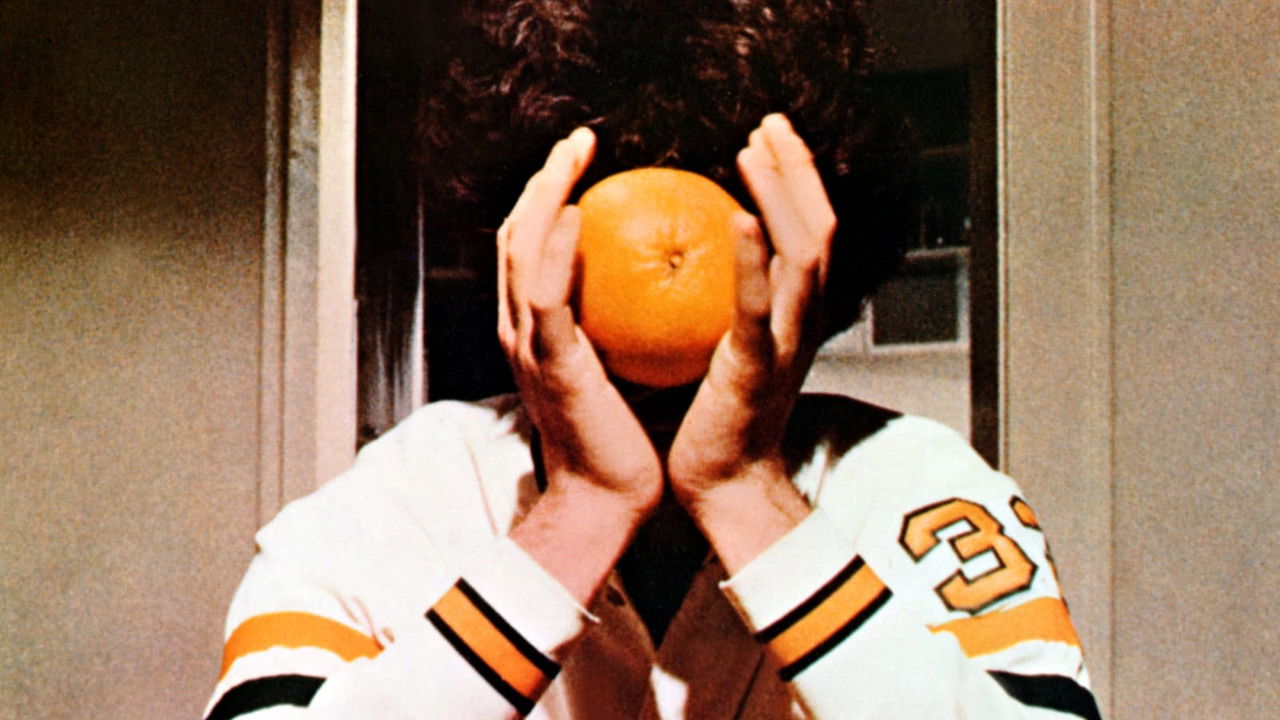
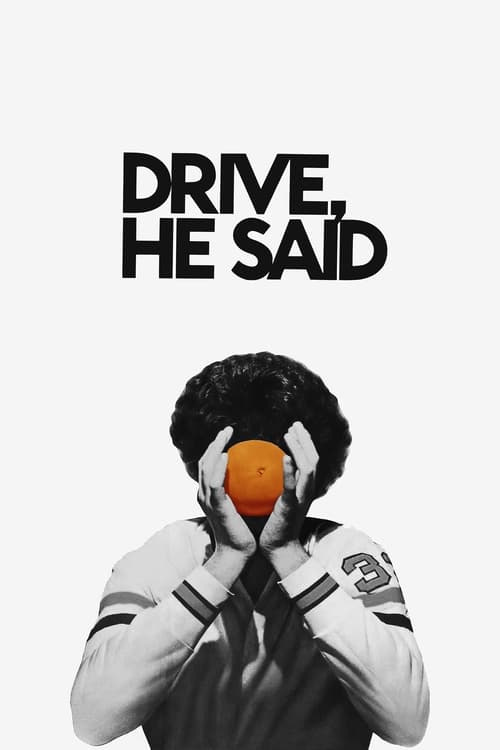
Drive, He Said (1971)
Drive, He Said (1971), directed by Jack Nicholson, starring William Tepper and Karen Black.
score
Don't Lie, Don't Cheat, And Don't Be Afraid!
Synopsis
Hector is a star basketball player for the College basketball team he plays for, the Leopards. His girlfriend, Olive, doesn't know whether to stay with him or leave him. And his friend, Gabriel, who may have dropped out from school and become a protestor, wants desperately not to get drafted for Vietnam.
- Wilmer ButlerCinematography
- Jack NicholsonDirector, Producer, Screenplay
- Christopher HolmesEditing
- Donn CambernEditing
About the film
Drive, He Said is a 1971 American sports comedy-drama film directed by Jack Nicholson, in his directorial debut, and starring William Tepper, Karen Black, Bruce Dern, Robert Towne and Henry Jaglom. Based on the 1964 novel of the same name by Jeremy Larner, the film follows a disenchanted college basketball player who is having an affair with a professor's wife, as well as dealing with his counterculture roommate's preoccupation with avoiding the draft in the Vietnam War. The film features supporting performances by David Ogden Stiers, Cindy Williams, and Michael Warren. The screenplay was adapted by Larner and Nicholson, and included uncredited contributions from Terrence Malick.
After screening at the Cannes Film Festival, where it was poorly received, the film faced more backlash from the Motion Picture Association of America for its profanity and sexual content, including numerous scenes featuring full-frontal male nudity.
The title comes from the poem "I Know a Man" by Robert Creeley, which a character recites in the opening scene. It also serves as a cryptic reference to basketball, the movie's dominant milieu.
Read the full article (9k characters)
Drive, He Said is a 1971 American sports comedy-drama film directed by Jack Nicholson, in his directorial debut, and starring William Tepper, Karen Black, Bruce Dern, Robert Towne and Henry Jaglom. Based on the 1964 novel of the same name by Jeremy Larner, the film follows a disenchanted college basketball player who is having an affair with a professor's wife, as well as dealing with his counterculture roommate's preoccupation with avoiding the draft in the Vietnam War. The film features supporting performances by David Ogden Stiers, Cindy Williams, and Michael Warren. The screenplay was adapted by Larner and Nicholson, and included uncredited contributions from Terrence Malick.
After screening at the Cannes Film Festival, where it was poorly received, the film faced more backlash from the Motion Picture Association of America for its profanity and sexual content, including numerous scenes featuring full-frontal male nudity.
The title comes from the poem "I Know a Man" by Robert Creeley, which a character recites in the opening scene. It also serves as a cryptic reference to basketball, the movie's dominant milieu.
Plot
Hector Bloom is a laconic, libidinous college basketball star distracted by obligations and current events: the misadventures of his volatile roommate Gabriel, a potential pro career, the draft, campus unrest, and a turbulent affair with Olive, the wife of Richard, a professor and friend. His coach pays special attention to him, given Hector's abilities, but is unsure how to get him to focus and fulfill his potential. Hector's attitude, and his coach's frustration, is exemplified by a meeting before an important late-season game where the coach instructs him to "play it straight out there tonight, I don't want any fooling around at all"; to his coach's exasperation, Hector replies "Why not?"
Gabriel, a vulgar borderline psychotic, is far more troubled and committed to rebellion than Hector. He abuses drugs, disrupts a basketball game with a guerrilla theatre stunt, goes crazy during an induction physical, ransacks his apartment, espouses anti-establishment views about everything, and drifts aimlessly.
During a confrontation in a grocery store, Olive informs Hector that she is pregnant, implies he is not the father, and tells him their affair is over. Hector replies that he has "the clap", which infuriates Olive; she warns him that if he follows her, she will call the police.
That night, Hector leads his team to a huge victory; the fans storm the court, and triumphantly carry Hector off. At the same time, Gabriel breaks into Olive's house while she is bathing and physically assaults her. She fends off his attack, eventually running outdoors with Gabriel in pursuit just as Hector drives up. Gabriel, aware of Hector's trysts with Olive, screams at Hector that Olive prefers him over Richard, then runs off when Richard arrives home. Hector confronts Richard, telling him Olive should be with him; a shaken Olive asserts her independence, saying "I'm not going with anybody, anywhere". Richard warns Hector "I'll kill you", then escorts Olive back into their house.
The next morning Gabriel, completely naked, runs into a biology lab and frees snakes, an iguana, mice and other vermin. Eventually campus police and white-coated attendants arrive with a straitjacket; Gabriel rebuffs them, insisting he is both "right and sane". They cloak him in a blanket and lead him into a padded van. Hector, seeing this, jumps onto the back of the van, demanding they open it. As the van pulls away, he jumps off, yelling to Gabriel that his mother called.
Cast
Production
Filming of Drive, He Said took place on the campus of the University of Oregon and other nearby locations, all in Eugene, Oregon.
During a break in the filming of this movie, which he directed and which required a brief non-sexual nude scene for an actress, Jack Nicholson decided to operate his own personal casting couch to find the perfect girl. Nicholson had the most beautiful starlets in Hollywood come to his office and made each disrobe for him. Some were more eager than others, but all disrobed and endured Jack's near-medical examination. He saw more than 100 girls before he chose June Fairchild, an actress he had worked with before, and likely someone he had in mind for the part all along.
Release
Censorship
The Motion Picture Association of America unsuccessfully attempted to grant the film an X rating due to its profanity and sexual content. Among the scenes criticized were several locker room sequences displaying full-frontal male nudity; a protracted sequence in which Margotta's character, Gabriel, goes streaking through the campus; and a sex scene in which Karen Black's character, Olive, has an orgasm.
Critical response
The film was entered into the 1971 Cannes Film Festival, where it encountered a stormy reception; The New York Times reported that the movie "set off the most violently negative reaction from an audience at the festival this year. As the lights came up, the people hooted, screamed and whistled. Some got to their feet and waved indignant fists toward where Nicholson and his two actors, William Tepper and Michael Margotta, were seated."
Roger Ebert of the Chicago Sun-Times gave the film three stars out of four and called it "a disorganized but occasionally brilliant movie," with the performances being "the best thing in the movie. Nicholson himself is a tremendously interesting screen actor, and he directs his actors to achieve a kind of intimacy and intensity that is genuinely rare. But if Nicholson is good on the nuances, he's weak on the overall direction of his film. It doesn't hang together for us as a unified piece of work." Vincent Canby of The New York Times wrote "It is not a great film, but it is an often intelligent one, and it is so much better than all of the rest of the campus junk Hollywood has manufactured that it can be indulged in its sentimental conventions." Gene Siskel of the Chicago Tribune gave the film his highest grade of four stars and wrote "The dialog and acting are of the highest calibre...The script respects each character, and the actors deliver fresh, unpredictable performances." Variety called it "an uneven film" with "a bombastic, racy, pellmell style touching on all that has gone before, but with a modern ring which may appeal to youthful audiences." Charles Champlin of the Los Angeles Times wrote of Nicholson's direction: "I think it is an unusually impressive debut. What is least surprising, I suppose, is that Nicholson works extremely well with his actors and has evoked several performances of outstanding quality." Gary Arnold of The Washington Post wrote "While it's not an untalented picture, it is an exasperating and finally insufferable one, because none of its potentially interesting themes or characters ever takes hold...For short periods of time it's possible to persuade yourself that something interesting might come of the athletic theme or the romantic theme or the political theme, but the movie never takes you up on it."
Pauline Kael, looking back on the film in 1978, called it "perhaps the most ambitious, chaotic, and daring of the counterculture films—it had a deranged, dissociated vitality. Though Nicholson couldn't pace it or bring it together, he did seem to have control of the actors, and you knew that nobody was just trying to charm you—they were all trying to get something new on the screen." A later assessment from Steven H. Scheuer found the film "utterly downbeat, and unfortunately dated". Leonard Maltin's home video guide awarded two-and-a-half stars out of four and found the film "confusing", and while he also praised the acting performances, he found that the film "loses itself in its attempt to cover all the bases".
The film holds a score of 57% on Rotten Tomatoes based on 14 reviews.
Home media
In 2010, the film was issued on DVD and Blu-ray by the Criterion Collection, as part of the "America Lost and Found" box set, which features a number of other films produced by BBS Productions, including Head (1968), Easy Rider (1969), Five Easy Pieces (1970), A Safe Place (1971), and The Last Picture Show (also 1971). Columbia TriStar Home Entertainment issued a standalone DVD as part of the Sony Pictures "Choice" Collection on June 4, 2013.
See also
List of basketball films
References
Sources
McDougal, Dennis (2008). Five Easy Decades: How Jack Nicholson Became the Biggest Movie Star in Modern Times. Hoboken, New Jersey: John Wiley & Sons. ISBN 978-0-471-72246-5.
External links
Drive, He Said at IMDb
Drive, He Said at Rotten Tomatoes
Text from Drive, He Said on Wikipedia, licensed CC BY-SA 4.0. https://en.wikipedia.org/wiki/Drive,_He_Said
Trivia
- It premiered on June 13, 1971, a Sunday.
- It runs 1h35 — a typical feature length.
- This film's quiz has 13 questions — enough to play more than once without repeats.
Production
- StudiosColumbia Pictures, BBS Productions
- CountriesUnited States
- LanguagesEnglish
- StatusReleased
Cast
- William Tepper Hector Bloom
-
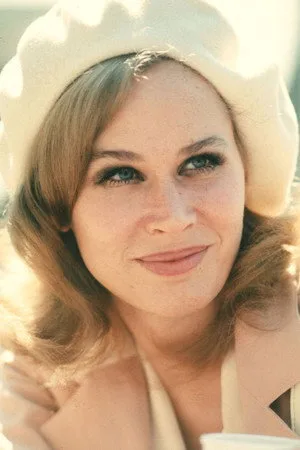 Karen Black
Olive
Karen Black
Olive -
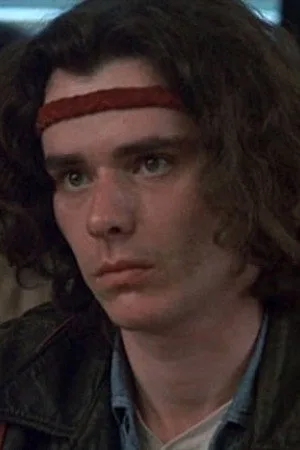 Michael Margotta
Gabriel
Michael Margotta
Gabriel -
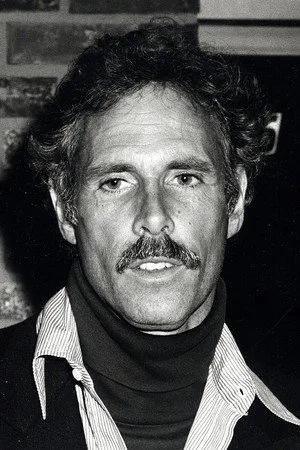 Bruce Dern
Coach Bullion
Bruce Dern
Coach Bullion -
 Robert Towne
Richard
Robert Towne
Richard -
 Henry Jaglom
Conrad
Henry Jaglom
Conrad -
 Michael Warren
Easly
Michael Warren
Easly -
 June Fairchild
Sylvie
June Fairchild
Sylvie -
 Don Hanmer
Director of Athletics
Don Hanmer
Director of Athletics -
 Lynette Bernay
Dance Instructor
Lynette Bernay
Dance Instructor -
 Joseph Walsh
Announcer #1
Joseph Walsh
Announcer #1 -
 Harry Gittes
Announcer #2
Harry Gittes
Announcer #2 -
 Charles Robinson
Jollop
Charles Robinson
Jollop - Bill Sweek Finnegan
-
 David Ogden Stiers
Pro Owner
David Ogden Stiers
Pro Owner -
 Jack Nicholson
Annoyed Bearded Guy
Jack Nicholson
Annoyed Bearded Guy -
 Lynne Marie Stewart
Cheerleader
Lynne Marie Stewart
Cheerleader - B.J. Merholz Pro Lawyer
- I.J. Jefferson Secretary
- Kenneth Payne President Wallop
Quiz about this movie
Questions from the whole catalogue.
Play nowIf you liked this one
-
Amigos Para a Vida
 6.1
6.1
-
Em Algum Lugar do Queens
 6.3
6.3
-
CQ
 5.9
5.9
-
SubUrbia
 6.2
6.2
-
Mapa do Sexo
 6.3
6.3
-
Conflitos Em Família
 6.2
6.2
-
Final de Semana em Família
 6.3
6.3
-
Quase Amigos
 6.3
6.3
-
Uma Questão de Classe
 6.0
6.0
-
In the Soup
 6.7
6.7
-
O Lance do Crime
 7.1
7.1
-
72 Horas em Miami
 6.8
6.8
Crew
- Wilmer Butler Cinematography
- Jack Nicholson Director
- Christopher Holmes Editing
- Donn Cambern Editing
- Pat Somerset Editing
- Robert L. Wolfe Editing
- Jack Nicholson Producer
- Steve Blauner Producer
- David Shire Original music
- Jack Nicholson Screenplay
- Jeremy Larner Screenplay
Questions about this film
What is Drive, He Said about?
Drive, He Said: Hector is a star basketball player for the College basketball team he plays for, the Leopards. His girlfriend, Olive, doesn't know whether to stay with him or leave him. And his friend, Gabriel, who may have dropped out from school and become a protestor, wants desperately not to get drafted for Vietnam.
Who directed Drive, He Said?
Drive, He Said was directed by Jack Nicholson in 1971.
Who stars in Drive, He Said?
The cast of Drive, He Said includes William Tepper, Karen Black, Michael Margotta, Bruce Dern and Robert Towne.
How long is Drive, He Said?
Drive, He Said runs for 95 minutes, or 1h35.
Similar films
-
 8.5
8.5
Forrest Gump
1994
-
 8.0
8.0
The Wolf of Wall Street
2013
-
 8.5
8.5
Parasite
2019
-
 7.9
7.9
Inside Out
2015
-
 8.2
8.2
The Truman Show
1998
-
 8.3
8.3
The Intouchables
2011
-
 7.9
7.9
La La Land
2016
-
 7.4
7.4
The Devil Wears Prada
2006
-
 7.4
7.4
Once Upon a Time... in Hollywood
2019
-
 8.0
8.0
The Grand Budapest Hotel
2014
-
 8.2
8.2
Green Book
2018
-
 8.4
8.4
Life Is Beautiful
1997
Page updated on 09/11/2026.
Back to the catalogue