Fiesta (1947)
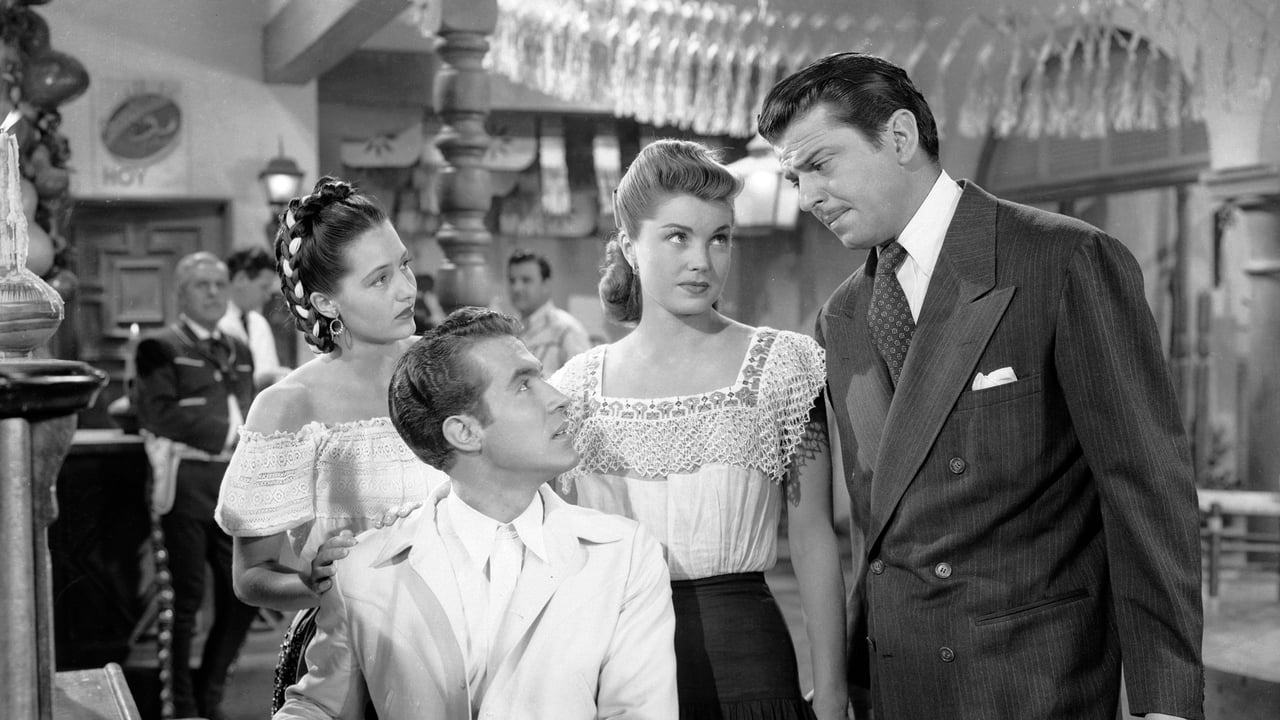
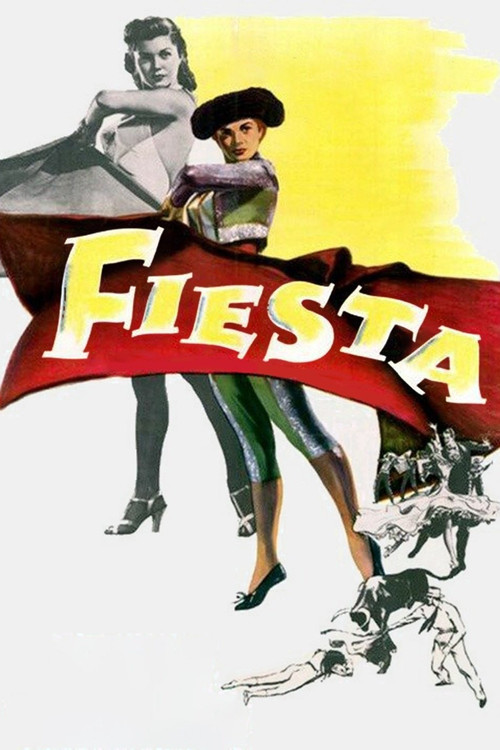
Fiesta (1947), directed by Richard Thorpe, starring Esther Williams and Akim Tamiroff.
score
Where they live and love dangerously!
Synopsis
When a matador leaves town to focus on his music, his twin sister takes on his identity in the bullfighting ring.
- Charles RosherCinematography
- Richard ThorpeDirector
- George BruceScreenplay
- Lester ColeScreenplay
About the film
Fiesta is a 1947 American Technicolor musical drama film directed by Richard Thorpe and starring Esther Williams, Ricardo Montalbán, Mary Astor and Cyd Charisse. It was released by Metro-Goldwyn-Mayer. The screenplay was written by George Bruce and Lester Cole.
The story focuses on Mario Morales (Montalbán), a bullfighter who wants to be a composer, and his twin sister, Maria Morales (Williams), who wants to be a bullfighter even though she is a woman.
The film was shot on location in Puebla, Mexico. This was Montalbán's first credited role in a Hollywood film, and resulted in him being offered a contract by the studio. It was also the first of three films pairing Williams and Montalbán, the other two being On an Island with You (1948) and Neptune's Daughter (1949).
Fiesta was the first time Williams's name was billed above the title in the marketing, though in the onscreen credits, all the actors are below the title.
Read the full article (8k characters)
Fiesta is a 1947 American Technicolor musical drama film directed by Richard Thorpe and starring Esther Williams, Ricardo Montalbán, Mary Astor and Cyd Charisse. It was released by Metro-Goldwyn-Mayer. The screenplay was written by George Bruce and Lester Cole.
The story focuses on Mario Morales (Montalbán), a bullfighter who wants to be a composer, and his twin sister, Maria Morales (Williams), who wants to be a bullfighter even though she is a woman.
The film was shot on location in Puebla, Mexico. This was Montalbán's first credited role in a Hollywood film, and resulted in him being offered a contract by the studio. It was also the first of three films pairing Williams and Montalbán, the other two being On an Island with You (1948) and Neptune's Daughter (1949).
Fiesta was the first time Williams's name was billed above the title in the marketing, though in the onscreen credits, all the actors are below the title.
Plot summary
Retired matador Antonio Morales is anxious when his wife gives birth, disappointed when the baby turns out to be a girl, then thrilled when a twin brother is born. He names them Mario and Maria.
As the children grow up, Antonio's wife dreads the idea of her son facing the danger of becoming a bullfighter, particularly inasmuch as Mario has an artistic side to his nature, an affinity for music. Maria, meanwhile, becomes quite expert in the ring, taught by her father's right-hand man, Chato Vasquez.
As a gift on their 21st birthday, Maria honors her brother by getting a copy of Mario's new music composition to Maximino Contreras, a famed orchestra conductor. Maximino, thoroughly impressed, pays a call on the Morales family just before Mario's first bullfight. Antonio prefers not to distract his son prior to entering the ring, so he promises to pass along Maximino's personal regards later. But he does not.
Before a second bullfight, Mario is approached by Maximino, who wonders why he never responded to his previous invitation to meet. Realizing that his father ignored it, Mario angrily walks out of the ring, disappointing spectators and infuriating his father, who feels the family's honor has been disgraced.
Mario subsequently disappears. Maximino has his composition played on the radio in hopes it will draw him out of hiding, while Maria, with the same goal and to save his reputation, disguises herself as Mario and continues on the bullfighting circuit in his place. He eventually returns, but when Maria sees him in the audience she is distracted and almost killed; Mario intervenes to save her life. The incident leads their father to support Mario's pursuit of a life in music instead of bullfighting.
Cast
Esther Williams as Maria Morales
Ricardo Montalbán as Mario Morales
Fortunio Bonanova as Antonio Morales
Mary Astor as Señora Morales
Akim Tamiroff as Chato Vasquez
John Carroll as Jose 'Pepe' Ortega
Cyd Charisse as Conchita
Hugo Haas as Maximino Contreras
Jean Van as Maria Morales, as a child
Joey Preston as Mario Morales, as a child
Frank Puglia as Doctor
Los Bocheros as The Basque Singers
Alan Napier as The Tourist
Soundtrack
Fantasia Mexicana
based on El Salon Mexico
Music by Aaron Copland
Music Adapted and Orchestrated by Johnny Green
Piano soloist André Previn
La Bamba
Written by Luis Martínez Serrano
Jarabe Tapatío (The Mexican Hat Dance)
Traditional
La luna enamorada
Written by Angel Ortiz De Villajos, Miriano Bolanos, Recio Leocadio and Martinez Durango
Romeria Vasca
Written and Performed by Los Bocheros
La barca de oro
Traditional
Production
In March 1945, producer Jack Cummings announced his next film would be Fiesta Brava ("Wonderful Holiday") with Esther Williams. It was based on a story that George Bruce had come up with after a two-month holiday in Mexico.
In September 1945, MGM announced Richard Thorpe would direct with filming to start in October. The same month Ricardo Montalban, married to Loretta Young's sister, was announced as Williams' co star.
The film took longer than expected because Thorpe decided that he did not want the bulls killed. However, this led to the bulls attacking the stuntmen, four of them ending up in the hospital, and two of them barely surviving after being gored in the groin due to infections caused by the dirt on the bulls' horns. (Williams was doubled by men. After years swimming, she had broad shoulders, a flat backside, and a different body build from that of a bullfighter and a visible difference on film.) Not killing the bulls made the Mexican people angry, which didn't help, since they were already angry that their own toreadors could not star in the film. At the end of filming, the unit manager, Walter Strohm convinced Thorpe to kill the bulls, even though they cost $1000 each.
Director of photography Sidney Wagner and one other crew member died of cholera after eating contaminated street food they had bought in town. Williams' husband, Ben Gage, was arrested after getting into a fight with an employee of the hotel at which the cast was staying, the same man who had recently shot the crew's doctor, who had yelled at him. Gage's arrest was covered by gossip columnist Hedda Hopper. Gage and the film's makeup artist George Lane were then declared persona non grata and wanted expelled from Mexico, but the company would be allowed to finish shooting the film. However, Williams knew that Lane would be fired when he returned to California, so she stalled shooting until he came back. Instead, the studio sent another makeup artist, Bill Tuttle to Mexico, and he promised Williams he would help Lane get another job. In the film's bullring sequence, the capework concludes with the archaic and very rare "quite de la mariposa," or "butterfly takeaway." Hemingway described this maneuver as he saw it performed in the 1920s and '30s by matador Marcial Lananda. In 1983 Lalanda, now an octogenarian, described it in an interview on Television Española, as performed by matador Luis Francisco Espla.
The studio insisted that Williams wear a traje de luces matador outfit for the film. Traditionally, the suit is made to lie very flat on the toreador's chest, and this proved to be difficult. The tailor in Mexico refused to work on the suit unless Williams "agreed to have her bosom surgically removed." Strohm had the suit sent back to Irene, MGM's costume designer in Hollywood, to be fitted to her body, which included closing the fly with hooks. On the trage de luces, when worn by men, the fly is left slightly open, so the "world can appreciate what's in there."
The film features Williams in the water for one short sequence. This was a stark contrast with many of her box office hits, which all featured elaborate water sequences. Publicity photos for the film featuring Williams in a bathing suit were utilized much more than those of her in the traje de luces suit.
Reception
Box Office
The film earned $2,546,000 in the US and $3,089,000 elsewhere, resulting in a profit of $1,170,000.
Awards
Fiesta was nominated for Best Music, Scoring of a Musical Picture at the 1948 Academy Awards, but lost to Mother Wore Tights.
Home media
On October 6, 2009, Turner Entertainment released Fiesta on DVD as part of the Esther Williams Spotlight Collection, Volume 2. The 6 disc set was a follow-up to the company's Esther Williams Spotlight Collection, Volume 1, and contains digitally remastered versions of several of Williams's films including Thrill of a Romance (1945), This Time for Keeps (1947), Pagan Love Song (1950), Million Dollar Mermaid (1952) and Easy to Love (1953).
See also
1947 in film
References
External links
Fiesta at IMDb
Fiesta at the TCM Movie Database (archived)
Fiesta at the AFI Catalog of Feature Films
Text from Fiesta (1947 film) on Wikipedia, licensed CC BY-SA 4.0. https://en.wikipedia.org/wiki/Fiesta_(1947_film)
Trivia
- It premiered on June 12, 1947, a Thursday.
- It runs 1h44 — a typical feature length.
- It won 0 award(s) and received 1 nomination(s) on record at Wikidata — Academy Award for Best Original Musical Score among them.
- This film's quiz has 11 questions — enough to play more than once without repeats.
Production
- StudiosMetro-Goldwyn-Mayer
- CountriesUnited States
- LanguagesEnglish
- StatusReleased
More about this film
Nominations
- Academy Award for Best Original Musical Score 1948
Filming locations
- Mexico
Set in
- Mexico
Cast
-
 Esther Williams
Maria Morales
Esther Williams
Maria Morales -
 Akim Tamiroff
Chato Vasquez
Akim Tamiroff
Chato Vasquez -
 Ricardo Montalban
Mario Morales
Ricardo Montalban
Mario Morales -
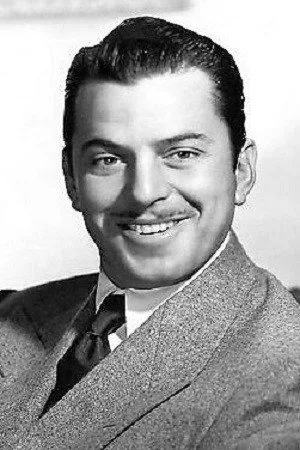 John Carroll
Jose 'Pepe' Ortega
John Carroll
Jose 'Pepe' Ortega -
 Mary Astor
Señora Morales
Mary Astor
Señora Morales -
 Cyd Charisse
Conchita
Cyd Charisse
Conchita -
 Fortunio Bonanova
Antonio Morales
Fortunio Bonanova
Antonio Morales -
 Hugo Haas
Maximino Contreras
Hugo Haas
Maximino Contreras - Jean Van Maria Morales, as a child
- Joey Preston Mario Morales, as a child
-
 Frank Puglia
Doctor
Frank Puglia
Doctor - Los Bocheros The Basque Singers
-
 Alan Napier
The Tourist
Alan Napier
The Tourist
Quiz about this movie
Questions from the whole catalogue.
Play nowIf you liked this one
-
Sangue e Areia Drama from the 1940s
 6.5
6.5
-
Sob a Luz da Fama: O Poder da Paixão
 6.9
6.9
-
A Estrela
 6.9
6.9
-
O Sonho Eterno
 7.0
7.0
-
Amor, Sublime Amor
 7.2
7.2
-
Enquanto Estivermos Juntos
 7.6
7.6
-
O Segredo: Ouse Sonhar
 7.3
7.3
-
High Strung: Ao Ritmo do Sonho
 7.0
7.0
-
Uma Longa Jornada
 7.6
7.6
-
A Partida
 6.3
6.3
-
Kitty Foyle Drama from the 1940s
 6.6
6.6
-
Os Embalos de Sábado Continuam
 5.8
5.8
Tags
Crew
- Charles Rosher Cinematography
- Richard Thorpe Director
- George Bruce Screenplay
- Lester Cole Screenplay
Questions about this film
What is Fiesta about?
Fiesta: When a matador leaves town to focus on his music, his twin sister takes on his identity in the bullfighting ring.
Who directed Fiesta?
Fiesta was directed by Richard Thorpe in 1947.
Who stars in Fiesta?
The cast of Fiesta includes Esther Williams, Akim Tamiroff, Ricardo Montalban, John Carroll and Mary Astor.
How long is Fiesta?
Fiesta runs for 104 minutes, or 1h44.
Similar films
 7.5
7.5
 7.3
7.3
 7.5
7.5
 7.7
7.7
 7.2
7.2
 6.9
6.9
 7.5
7.5
 7.9
7.9
 6.3
6.3
 6.7
6.7
 7.2
7.2
 7.9
7.9
Page updated on 09/13/2026.
Back to the catalogue