Floating Clouds (1955)
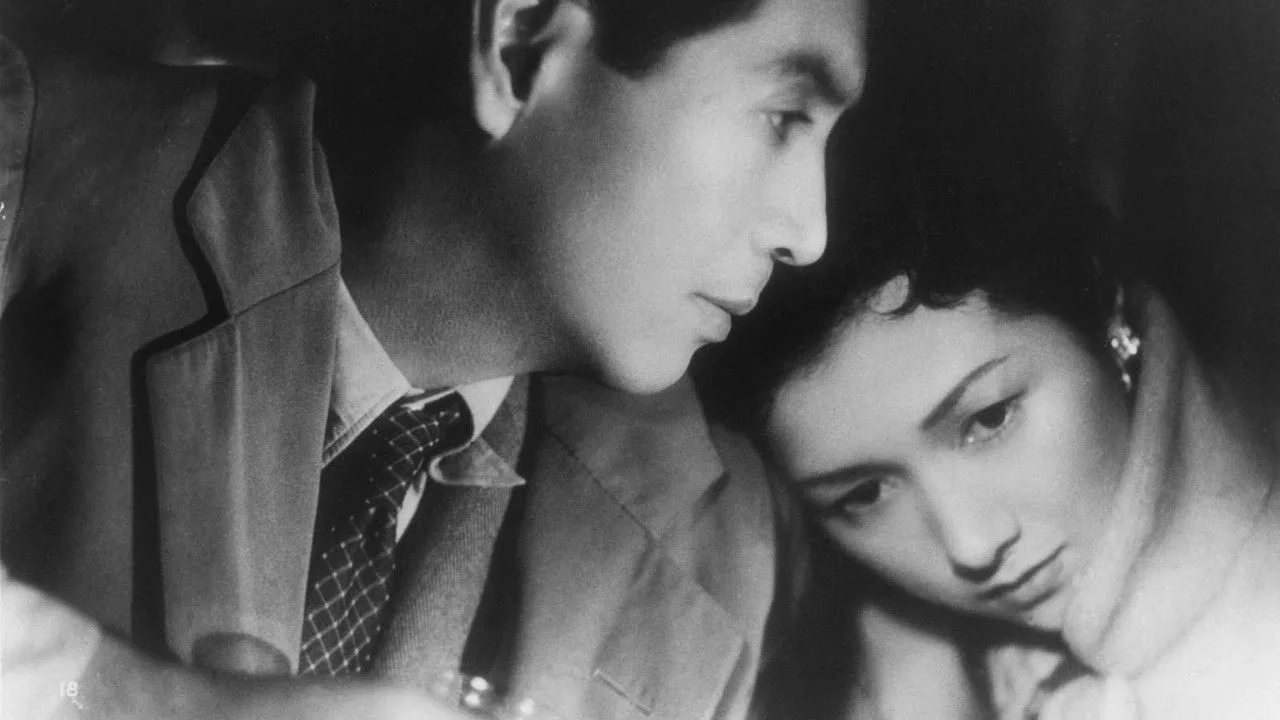
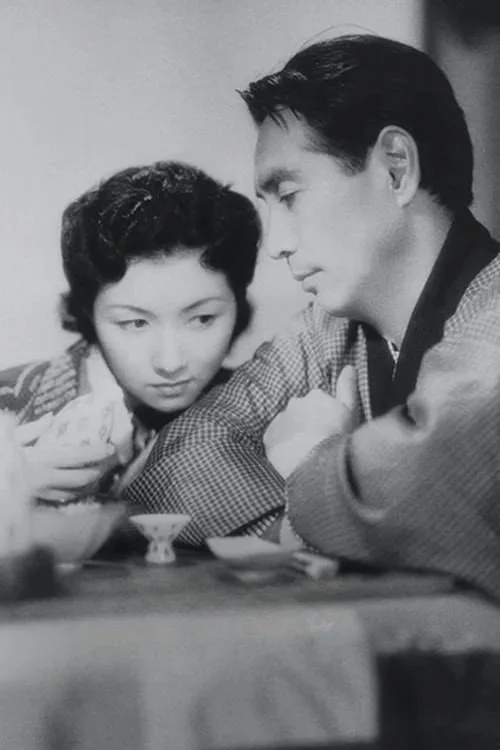
Floating Clouds (1955), directed by Mikio Naruse, starring Hideko Takamine and Masayuki Mori.
score
So short is the life of a flower, yet so much hardships it suffered.
Synopsis
A married Japanese forester during WWII is sent to Indochina to manage forests. He meets a young Japanese typist and promises to leave his wife. He doesn't and after the war, she turns up and the affair resumes.
- 玉井正夫Cinematography
- Mikio NaruseDirector
- 大井英史Editing
- 藤本真澄Producer
About the film
Floating Clouds (Japanese: 浮雲, Hepburn: Ukigumo) is a 1955 Japanese drama film directed by Mikio Naruse and based on the novel Ukigumo by Fumiko Hayashi, published just before her death in 1951. The film received numerous national awards upon its release and remains one of Naruse's most acclaimed works.
Read the full article (3k characters)
Floating Clouds (Japanese: 浮雲, Hepburn: Ukigumo) is a 1955 Japanese drama film directed by Mikio Naruse and based on the novel Ukigumo by Fumiko Hayashi, published just before her death in 1951. The film received numerous national awards upon its release and remains one of Naruse's most acclaimed works.
Plot
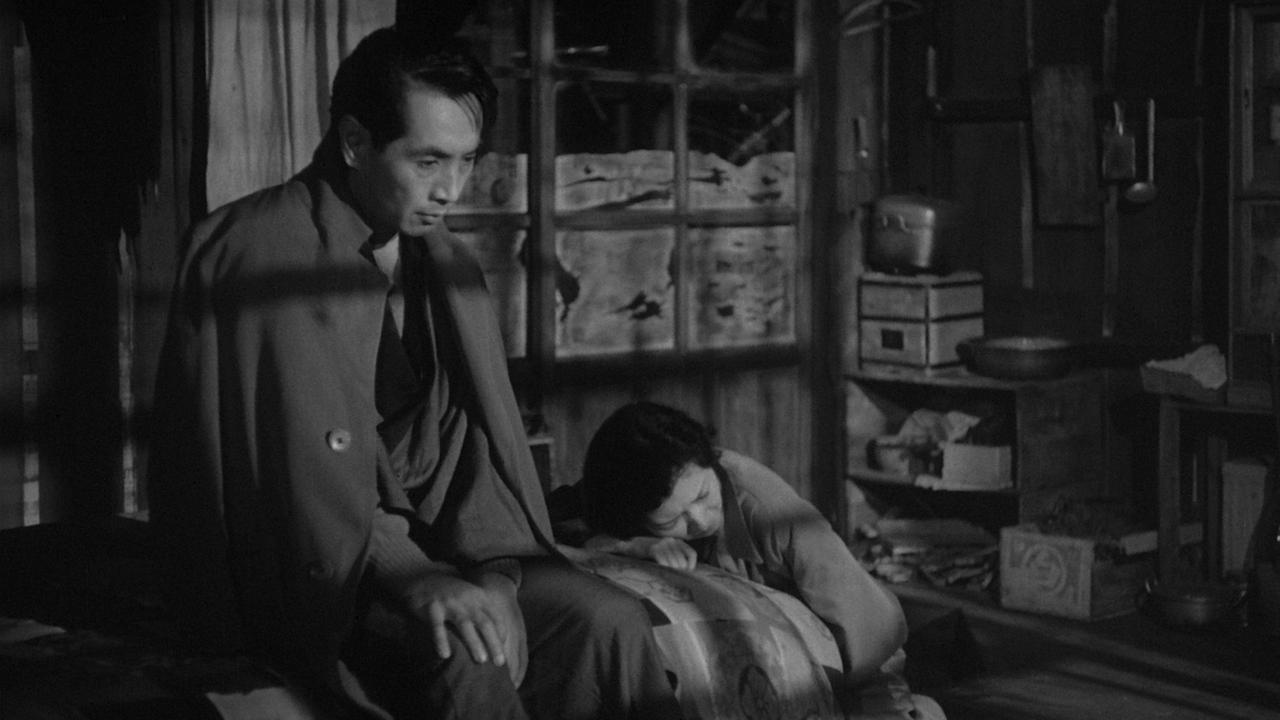
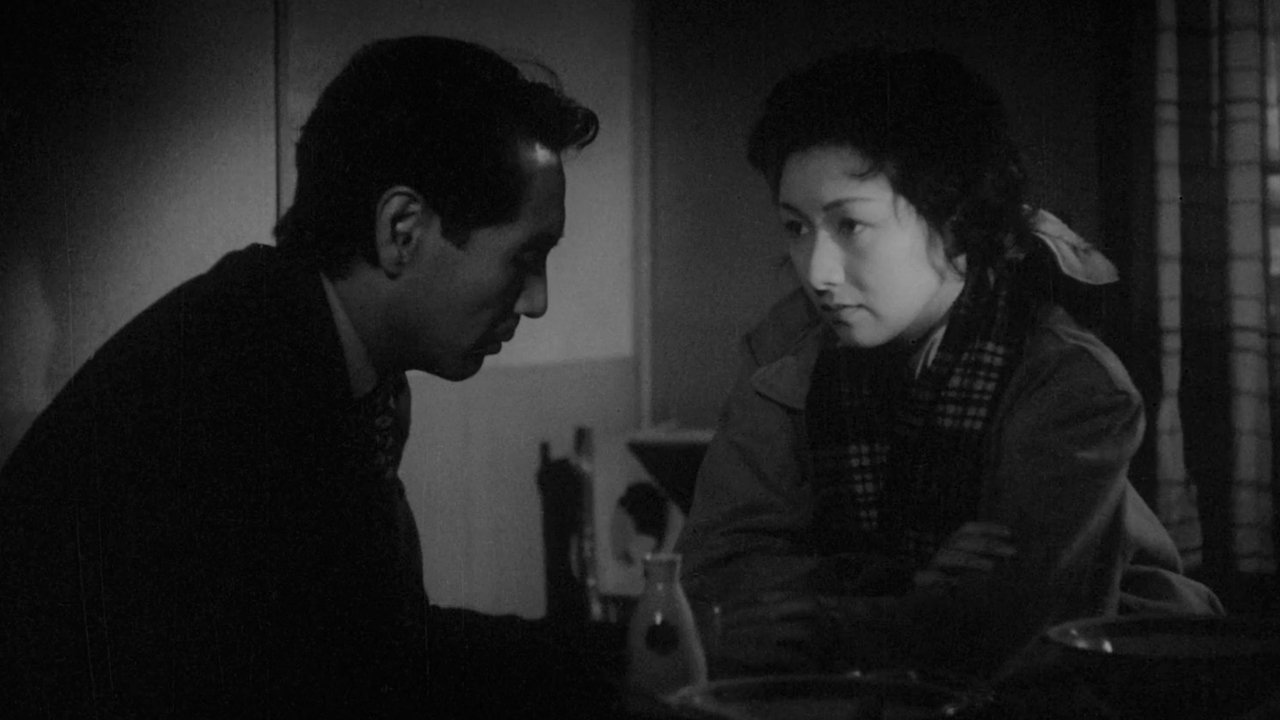
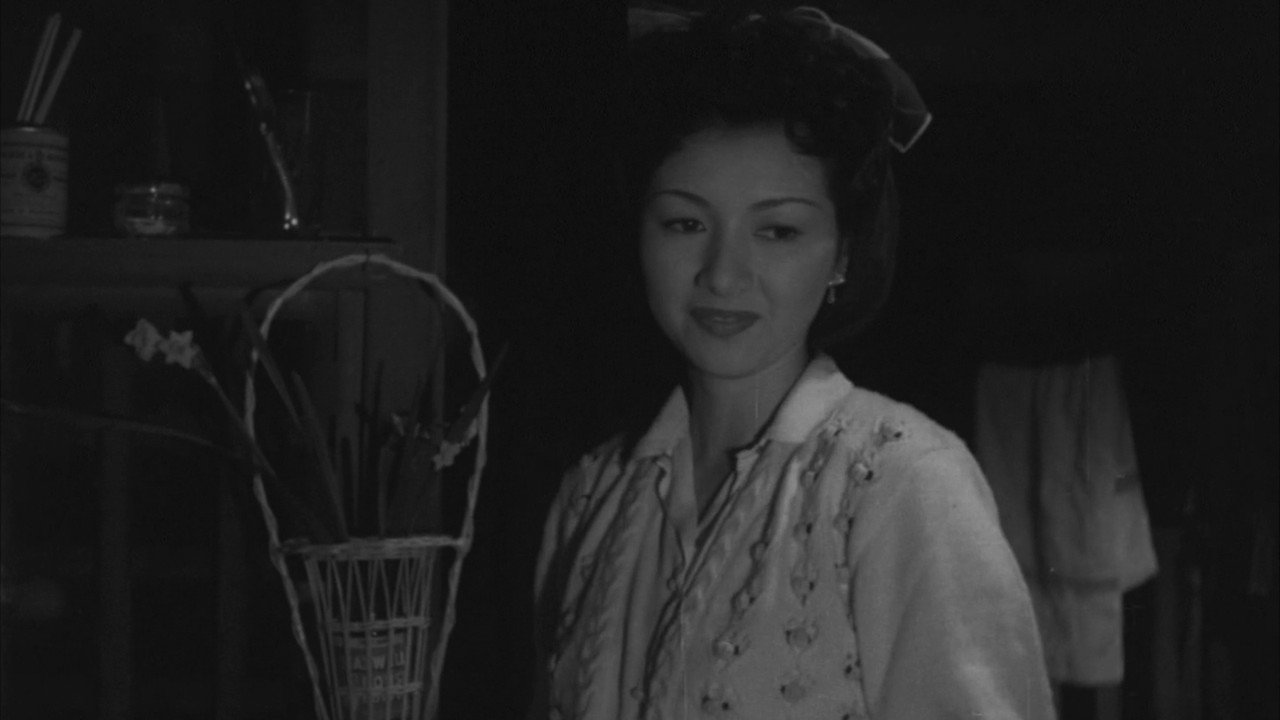
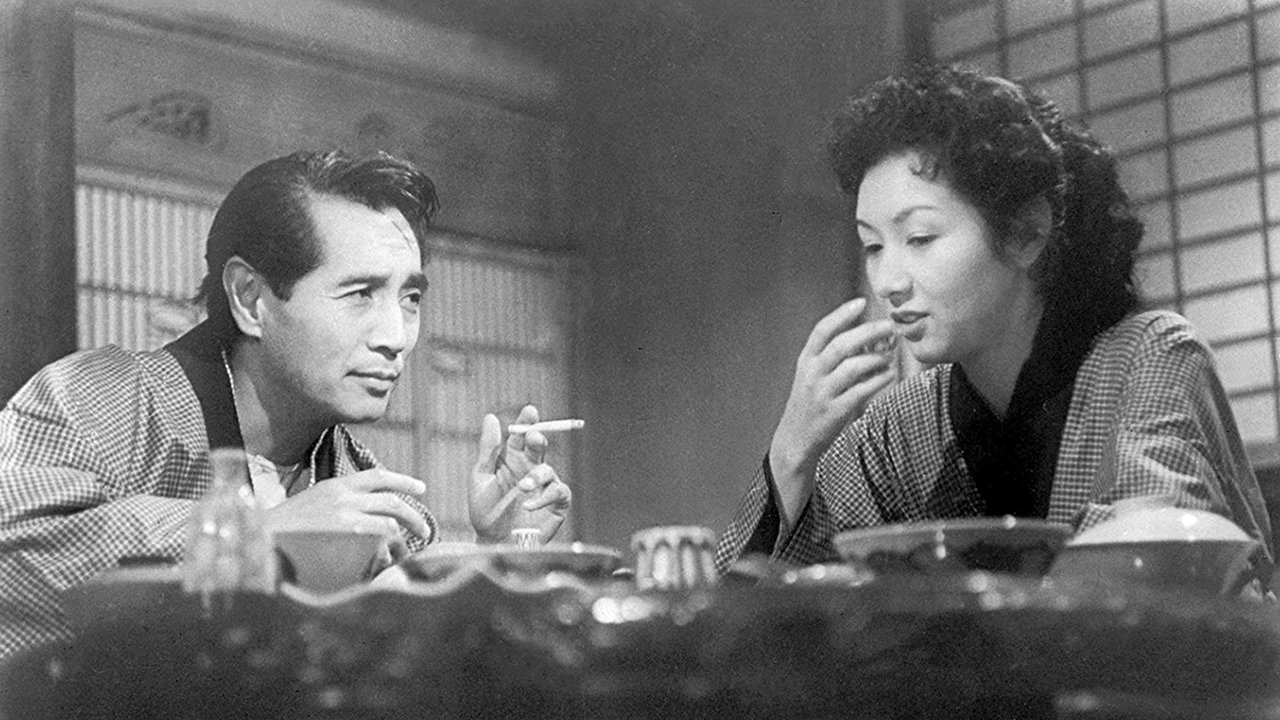
The film follows Yukiko, a woman who has just been expatriated from French Indochina, where she has been working as a secretary for a forestry project of the Japanese wartime government. In Tokyo, Yukiko seeks out Kengo, one of the engineers of the project, with whom she had an affair and who had promised to divorce his wife Kuniko for her. They renew their affair, but Kengo tells Yukiko he is unable to leave his sickly wife. She becomes the mistress of an American soldier as a means to survive in times of economic restraint. Still, Yukiko can't cut ties with Kengo, although he even starts an affair with a married younger woman, Osei. Pregnant from Kengo, Yukiko has an abortion. She later hears from Kengo that Kuniko has died from illness. Eventually, Yukiko follows Kengo to his new job on Yakushima island, where she dies of her bad health and the humid climate.
Cast
Reception
Film director Yasujirō Ozu saw Floating Clouds upon its release and called it "a real masterpiece" in his journals.
Awards
1956: Blue Ribbon Awards for Best Film
1956: Kinema Junpo Award for Best Film, Best Actor (Masayuki Mori), for Best Actress (Hideko Takamine), and for Best Director (Mikio Naruse)
1956: Mainichi Film Concours for Best Film, for Best Actress (Hideko Takamine), for Best Director (Mikio Naruse), and for Best Sound Recording (Hisashi Shimonaga)
Legacy
Floating Clouds is Naruse's most popular film in Japan. It ranked number three of the best Japanese films of all time in a poll of 140 Japanese critics and filmmakers conducted by the magazine Kinema Junpo in 1999.
It was screened at the Berkeley Art Museum and Pacific Film Archive in 1981, at the Museum of Modern Art in 1985, and at the Harvard Film Archive in 2005 as part of their retrospectives on Mikio Naruse, and at the Cinémathèque Française in 2012 and 2018.
Analysis
Adrian Martin, editor of on-line film journal Rouge, has remarked upon Naruse's cinema of walking. Bertrand Tavernier, speaking of Naruse's Sound of the Mountain, described how the director minutely describes each journey and that "such comings and goings represent uncertain yet reassuring transitions: they are a way of taking stock, of defining a feeling". So in Floating Clouds, the walks down streets "are journeys of the everyday, where time is measured out of footfalls, – and where even the most melodramatic blow or the most ecstatic moment of pleasure cannot truly take the characters out of the unromantic, unsentimental forward progression of their existences."
Film scholar Freda Freiberg has remarked on the terrain of the film: "The frustrations and moroseness of the lovers in Floating Clouds are directly linked to and embedded in the depressed and demoralised social and economic conditions of early post-war Japan; the bombed-out cities, the shortage of food and housing, the ignominy of national defeat and foreign occupation, the economic temptation of prostitution with American military personnel."
Notes
References
External links
Floating Clouds at IMDb
Floating Clouds at Rotten Tomatoes
Text from Floating Clouds on Wikipedia, licensed CC BY-SA 4.0. https://en.wikipedia.org/wiki/Floating_Clouds
Trivia
- It premiered on January 15, 1955, a Saturday.
- It runs 2h03 — a typical feature length.
- Its original title is "浮雲".
- This film's quiz has 12 questions — enough to play more than once without repeats.
Production
- StudiosTOHO
- CountriesJapan
- LanguagesJapanese
- StatusReleased
More about this film
Set in
- Vietnam
Photos



Cast
-
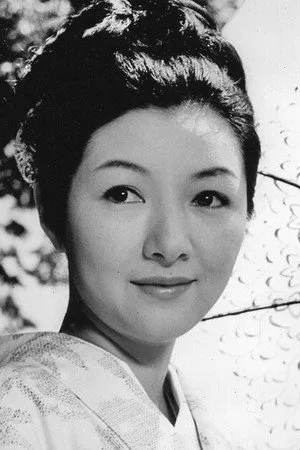 Hideko Takamine
Yukiko Koda
Hideko Takamine
Yukiko Koda -
 Masayuki Mori
Kengo Tomioka
Masayuki Mori
Kengo Tomioka -
 Mariko Okada
Sei Mukai
Mariko Okada
Sei Mukai -
 Isao Yamagata
Sugio Iba
Isao Yamagata
Sugio Iba -
 Chieko Nakakita
Kuniko Tomioka
Chieko Nakakita
Kuniko Tomioka -
 Daisuke Katō
Seikichi Mukai
Daisuke Katō
Seikichi Mukai -
 Noriko Sengoku
-
 Mayuri Mokushô
-
 Fuyuki Murakami
-
 Heihachirō Ōkawa
-
 Nobuo Kaneko
- Roy James
- Kan Hayashi
- Akira Tani
-
 Seijirô Onda
- Keiko Môri
-
 Tsuruko Mano
-
 Kumeko Otowa
-
 Teruko Mita
- Toshiko Nakano
Quiz about this movie
Questions from the whole catalogue.
Play nowIf you liked this one
-
Dicionário de Cama
 6.6
6.6
-
Amor Sem Fim
 6.9
6.9
-
Os Amantes de Maria
 6.0
6.0
-
O Império dos Sentidos
 6.6
6.6
-
It Feels So Good
 6.6
6.6
-
Ponto de Decisão
 6.3
6.3
-
O Amante de Lady Chatterley
 6.7
6.7
-
Um Novo Olhar
 6.1
6.1
-
O Segredo: Ouse Sonhar
 7.3
7.3
-
Meu Casamento Feliz
 7.3
7.3
-
Uma Nova Paixão
 6.3
6.3
-
O Inferno de Gabriel - Parte 3
 8.3
8.3
Tags
Crew
- 玉井正夫 Cinematography
- Mikio Naruse Director
- 大井英史 Editing
- 藤本真澄 Producer
- 斎藤一郎 Original music
- 水木洋子 Screenplay
Questions about this film
What is Floating Clouds about?
Floating Clouds: A married Japanese forester during WWII is sent to Indochina to manage forests. He meets a young Japanese typist and promises to leave his wife. He doesn't and after the war, she turns up and the affair resumes.
Who directed Floating Clouds?
Floating Clouds was directed by Mikio Naruse in 1955.
Who stars in Floating Clouds?
The cast of Floating Clouds includes Hideko Takamine, Masayuki Mori, Mariko Okada, Isao Yamagata and Chieko Nakakita.
How long is Floating Clouds?
Floating Clouds runs for 123 minutes, or 2h03.
Similar films
 7.9
7.9
 8.5
8.5
 7.9
7.9
 8.1
8.1
 6.3
6.3
 8.5
8.5
 7.9
7.9
 7.8
7.8
 7.9
7.9
 5.9
5.9
 7.2
7.2
 7.0
7.0
Page updated on 09/12/2026.
Back to the catalogue