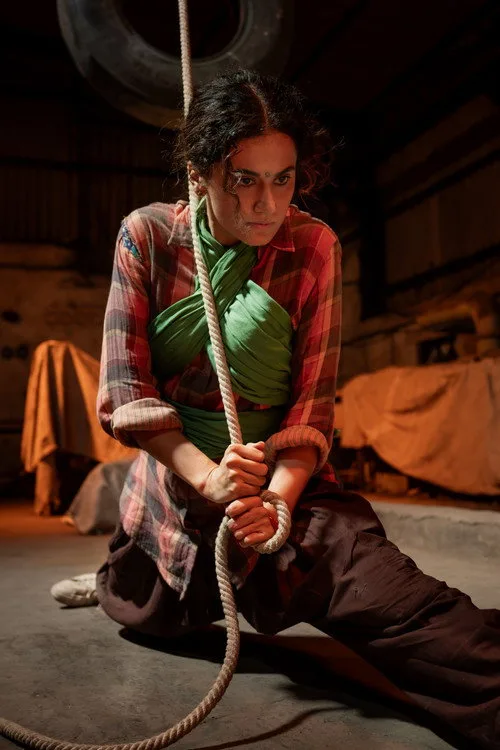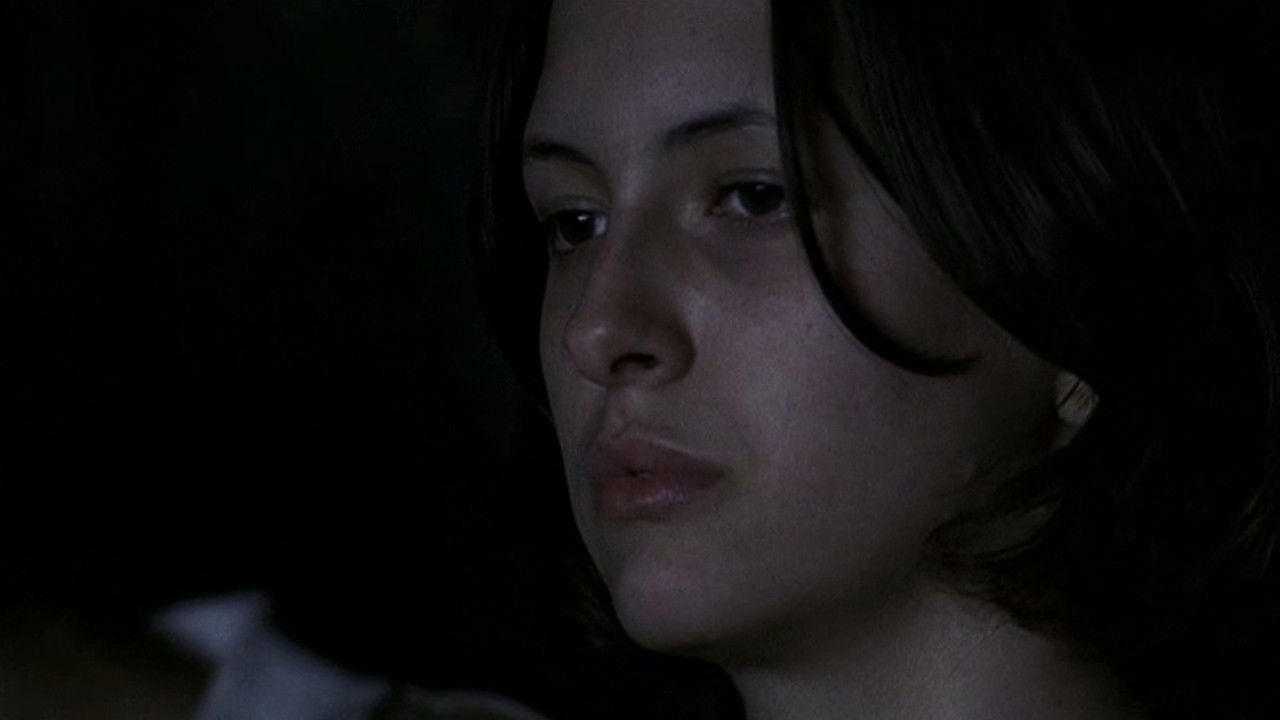

Garage Olimpo (1999)
Garage Olimpo (1999), directed by Marco Bechis, starring Antonella Costa and Carlos Echevarría.
score
Synopsis
María is eighteen years old, she lives with her mother in an old house in Buenos Aires in 1978, subletting rooms and giving classes to poor illiterate adults. Suddenly she is abducted by a military squad and finds herself accused of subversion and submitted to torture in the hideous underground of the Garage Olimpo, while her mother desperately tries to find her.
- Ramiro CivitaCinematography
- Marco BechisDirector, Producer, Writer
- Jacopo QuadriEditing
- Amedeo PaganiProducer
About the film
Olympic Garage (Spanish: Garage Olimpo) is a 1999 Argentine-French-Italian historical-political thriller film cowritten and directed by Marco Bechis and starring Antonella Costa, Carlos Echevarría, Enrique Piñeyro, Chiara Caselli and Dominique Sanda. It was produced by Bechis and Piñeyro (from Argentina) with Amedeo Pagani (from Italy) and Eric Heumann (from France). Executive producers were Daniel Burman and Diego Dubcovsky.
The story centers on a young and politically active Argentine woman who is kidnapped Argentina's last civil-military dictatorship (1976-1983) during the late 1970s. "Garage Olimpo" is the name of the illegal detention-and-torture center where she is taken, in the middle of Buenos Aires.
Read the full article (7k characters)
Olympic Garage (Spanish: Garage Olimpo) is a 1999 Argentine-French-Italian historical-political thriller film cowritten and directed by Marco Bechis and starring Antonella Costa, Carlos Echevarría, Enrique Piñeyro, Chiara Caselli and Dominique Sanda. It was produced by Bechis and Piñeyro (from Argentina) with Amedeo Pagani (from Italy) and Eric Heumann (from France). Executive producers were Daniel Burman and Diego Dubcovsky.
The story centers on a young and politically active Argentine woman who is kidnapped Argentina's last civil-military dictatorship (1976-1983) during the late 1970s. "Garage Olimpo" is the name of the illegal detention-and-torture center where she is taken, in the middle of Buenos Aires.
Plot
Maria (Antonella Costa) is a young activist fighting the Argentinian military dictatorship during Argentina's last civil-military dictatorship (1976-1983). She teaches reading and writing in a poor suburb of Buenos Aires and lives with her mother Diane (Dominique Sanda), who rents out rooms. One of the lodgers is a young man named Felix (Carlos Echevarría), who is in love with Maria, and is rather shy. Felix seems to have come from nowhere, with no background or past, and is supposed to work as a watchman in a garage.
One morning, Maria is kidnapped by a military squad in civilian clothes in front of her mother and is taken to the garage Olimpo, one of the many well-known torture places of the military dictatorship right in the middle of Buenos Aires, which operates with the general indifference of the locals. As soon as Maria is captured the film's mood becomes uncomfortable and the atmosphere is minimalist. The head of the center, known as "Tigre" (Enrique Piñeyro; "tigre" means "Tiger" in the Spanish language), asks Felix, who happens to be their "best torturer", to make Maria talk. Yet, Felix is overcome by his feelings for Maria, and Maria is determined to exploit this for her survival.
Cast
Antonella Costa as Maria
Carlos Echevarría as Felix
Enrique Piñeyro as Tigre
Pablo Razuk as Tex
Chiara Caselli as Ana
Dominique Sanda as Diane
Paola Bechis as Gloria
Adrián Fondari as Rubio
Marcelo Chaparro as Turco
Miguel Oliveira as Nene
Ruy Krieger as Francisco
Marcos Montes as Víbora
Erica Rivas as Hija de Tigre
Historical context
The film is based on the real political events that took place in Argentina after Jorge Rafael Videla's reactionary military junta assumed power on March 24, 1976. During the junta's rule: the parliament was suspended, unions, political parties and provincial governments were banned, and in what became known as the Dirty War between 9,000 and 30,000 people deemed left-wing "subversives" disappeared from society.
As the country celebrated its win of the World Cup, many political activists were tortured in Buenos Aires and then later taken on "death flights", where victims were drugged and then dropped alive into the Atlantic Ocean from military aircraft.
Chilean born director Marco Bechis was a victim of the country's military regime and was forced to leave Argentina in 1977, at the age of 20, for political reasons.
Release
The film was first presented at the 1999 Cannes Film Festival on May 16 in the Un Certain Regard section. It opened wide in Argentina on September 2, 1999.
The film was screened at various film festivals, including: the Toronto International Film Festival, Canada; the Huelva Latin American Film Festival, Spain; the Norwegian International Film Festival, Norway; the Human Rights Watch Film Festival, New York City; the Amnesty International Film Festival, Netherlands; and others.
Reception
Critical response
Stephen Holden, film critic for The New York Times, wrote the film is "notable on the international front...a not-for-the-squeamish film from Argentina about an opponent of the military dictatorship who is tortured in a garage in the heart of Buenos Aires."
Critic Jonathan Hollander liked the directorial lead of Marco Bechis, and wrote, "Garage Olimpo is the kind of valuable cultural product that symbolises political regeneration...himself a victim of the country's regime – he was forced to leave Argentina in 1977, at the age of 20, for political reasons – director Marco Bechis has the necessary moral authority to make this film."
Michael Thomson, writing for the BBC, lauded the film and the passion of director Marco Bechis, and wrote, "It is director Marco Bechis' softly-softly approach which fills each frame with real power and leaves you in no doubt as to his commitment and passion. It is indeed no surprise to learn that this Italian-Chilean was himself snatched by the military in Buenos Aires and tortured. Yet, despite his admirable insistence on moving us with the truth (helped by his grainy camera work), Bechis can also tell a tale and he gradually incorporates a race-against-time element. Will Maria escape, especially when she is taken out on the town by her captor? Let's just say that the answer would be alien to Hollywood."
Awards
Wins
Havana Film Festival: Cuban Critics Award; Glauber Rocha Award; Grand Coral – First Prize; Martin Luther King Memorial Center Award; OCIC Award; all for Marco Bechis; Memoria Documentary Award, David Blaustein 1999.
Thessaloniki Film Festival: FIPRESCI Prize International Competition – For the conviction and subtlety with which it conveys the mechanisms of terror both political and psychological; Silver Alexander; both for Marco Bechis; 1999.
Huelva Latin American Film Festival: Golden Colon, Marco Bechis; 1999.
Lleida Latin-American Film Festival: ICCI Screenplay Award, Marco Bechis and Lara Fremder; 2000.
Lucas – International Festival of Films for Children and Young People: C.I.F.E.J. Award – Special Mention; Lucas Youth Section; Marco Bechis; 2000.
Argentine Film Critics Association Awards: Best Director, Marco Bechis; Best Editing, Jacopo Quadri; 2000.
Cartagena Film Festival: Golden India Catalina, Best Film, Marco Bechis; 2000.
David di Donatello Awards, Italy: David, Best Producer, Amedeo Pagani; 2000.
Santa Barbara International Film Festival: Phoenix Prize, Marco Bechis; 2000.
Nominations
Thessaloniki Film Festival: Golden Alexander, Marco Bechis; 1999.
Argentine Film Critics Association Awards: Silver Condor, Best Actress, Antonella Costa; Best Art Direction/Production Design, Rómulo Abad; Best Cinematography, Ramiro Civita; Best Film; Best New Actress, Antonella Costa; Best Original Screenplay, Marco Bechis and Lara Fremder; 2000.
Ariel Awards, Mexico: Silver Ariel, Best Latin-American Film, Marco Bechis, Argentina; 2001.
David di Donatello Awards: David, Best Director, Marco Bechis; Best Editing, Jacopo Quadri; Best Film; Best Screenplay, Marco Bechis and Lara Fremder; 2000.
Italian National Syndicate of Film Journalists: Silver Ribbon, Best Director, Marco Bechis; Best Editing, Jacopo Quadri; Best Original Story, Marco Bechis and Lara Fremder; Best Producer, Amedeo Pagani; 2000.
References
External links
Garage Olimpo at IMDb
Garage Olimpo at Cinenacional.com (in Spanish)
Garage Olimpo film review at Cineismo by Guillermo Ravaschino (in Spanish)
Text from Olympic Garage on Wikipedia, licensed CC BY-SA 4.0. https://en.wikipedia.org/wiki/Olympic_Garage
Trivia
- It premiered on September 2, 1999, a Thursday.
- It runs 1h38 — a typical feature length.
- It won 0 award(s) and received 1 nomination(s) on record at Wikidata — David di Donatello for Best Director among them.
- This film's quiz has 8 questions — enough to play more than once without repeats.
Production
- StudiosClassic Productions, Paradis Films, Nisarga
- CountriesArgentina, France, Italy
- LanguagesItalian, Spanish, French
- StatusReleased
More about this film
Nominations
- David di Donatello for Best Director
Filming locations
- Buenos Aires
Set in
- Argentina
Cast
-
 Antonella Costa
Maria
Antonella Costa
Maria -
 Carlos Echevarría
Felix
Carlos Echevarría
Felix -
 Enrique Piñeyro
Tigre
Enrique Piñeyro
Tigre -
 Pablo Razuk
Tex
Pablo Razuk
Tex -
 Dominique Sanda
Diane
Dominique Sanda
Diane -
 Chiara Caselli
Ana
Chiara Caselli
Ana -
 Paola Bechis
Gloria
Paola Bechis
Gloria -
 Adrián Fondari
Rubio
Adrián Fondari
Rubio - Marcelo Chaparro Turco
- Miguel Oliveira Nene
- Ruy Krieger Francisco
-
 Marcos Montes
Vibora
Marcos Montes
Vibora -
 Érica Rivas
Hija de Tigre
Érica Rivas
Hija de Tigre -
 Gonzalo Urtizberea
Cura
Gonzalo Urtizberea
Cura -
 Roly Serrano
Escribano
Roly Serrano
Escribano -
 Jean Pierre Reguerraz
Juan Carlos
Jean Pierre Reguerraz
Juan Carlos
Quiz about this movie
Questions from the whole catalogue.
Play nowIf you liked this one
-
Night of the Pencils
 7.0
7.0
-
O Clã
 6.8
6.8
-
Kamchatka
 6.7
6.7
-
Argentina 1985
 7.8
7.8
-
Kóblic
 6.0
6.0
-
A História Oficial
 7.5
7.5
-
A Garota do Abrigo
 7.1
7.1
-
A Morte e a Donzela Drama from the 1990s
 7.1
7.1
-
El Polaquito
 6.8
6.8
-
Paulina
 6.4
6.4
-
Xiu Xiu: The Sent-Down Girl Drama from the 1990s
 7.2
7.2
-
Sequestros em Cleveland
 7.2
7.2
Tags
Crew
- Ramiro Civita Cinematography
- Marco Bechis Director
- Jacopo Quadri Editing
- Amedeo Pagani Producer
- Enrique Piñeyro Producer
- Marco Bechis Producer
- Lara Fremder Writer
- Marco Bechis Writer
Questions about this film
What is Garage Olimpo about?
Garage Olimpo: María is eighteen years old, she lives with her mother in an old house in Buenos Aires in 1978, subletting rooms and giving classes to poor illiterate adults. Suddenly she is abducted by a military squad and finds herself accused of subversion and submitted to torture in the hideous underground of the Garage Olimpo, w…
Who directed Garage Olimpo?
Garage Olimpo was directed by Marco Bechis in 1999.
Who stars in Garage Olimpo?
The cast of Garage Olimpo includes Antonella Costa, Carlos Echevarría, Enrique Piñeyro, Pablo Razuk and Dominique Sanda.
How long is Garage Olimpo?
Garage Olimpo runs for 98 minutes, or 1h38.
Similar films
 8.7
8.7
 8.5
8.5
 8.7
8.7
 7.9
7.9
 8.4
8.4
 8.5
8.5
 8.1
8.1
 8.2
8.2
 8.0
8.0
 8.2
8.2
 8.5
8.5
 8.5
8.5
Page updated on 09/16/2026.
Back to the catalogue