
His Majesty O'Keefe (1954)
His Majesty O'Keefe (1954), directed by Byron Haskin, starring Burt Lancaster and Joan Rice.
score
Adventure Beyond The Fabulous! Two Years In The Making! All Of It Actually Filmed In The Fiji Islands!
Synopsis
Men steal for it. Nations go to war for it. The it is oil - and it grows on trees. Coconut oil is the precious lifeblood of 1870s South Seas traders. And lots of real blood will be spilled to get it! Screen royalty Burt Lancaster is His Majesty O'Keefe in this last of three adventures that (along with The Flame and the Arrow and The Crimson Pirate) blew a revitalizing wind into the sails of the swashbuckler genre. Action, cunning and derring-do are watchwords of the title seafarer as he befriends, defends and ultimately rules the islanders of exotic Yap. Lensed on gorgeus Fiji locations, grandly scored by Robert Farnon and rousingly directed by Byron Haskin, His Majesty O'Keefe delivers heroics of regal proportions.
- Otto HellerCinematography
- Byron HaskinDirector
- Manuel del CampoEditing
- Harold HechtProducer
About the film
His Majesty O'Keefe is a 1954 American adventure film directed by Byron Haskin and starring Burt Lancaster. The cast also included Joan Rice, André Morell, Abraham Sofaer, Archie Savage, and Benson Fong. The screenplay by Borden Chase and James Hill was based on the novel of the same name by Laurence Klingman and Gerald Green (1952).
Read the full article (5k characters)
His Majesty O'Keefe is a 1954 American adventure film directed by Byron Haskin and starring Burt Lancaster. The cast also included Joan Rice, André Morell, Abraham Sofaer, Archie Savage, and Benson Fong. The screenplay by Borden Chase and James Hill was based on the novel of the same name by Laurence Klingman and Gerald Green (1952).
Plot
Captain David O'Keefe, seeking his fortune in the 19th century South Pacific, decides to enlist island natives to harvest copra, but runs into a wall of cultural problems. Backed by a Chinese dentist, he obtains a ship and sets about harvesting copra while fending off cantankerous native chieftains and ambitious German empire-builders. The natives, happy with their existence, see no reason to work hard to obtain copra, either for a German trading company or for O'Keefe. He finally motivates them by showing them how to produce large quantities of Rai stones, the stone money of Yap, and their valued coinage.
Cast
Historical basis
The story is based on the life of a sailor named David O'Keefe who in 1871 was shipwrecked on Yap in the Caroline Islands, where he found the natives highly prized Rai stones quarried at great effort and danger on the island of Palau. He organized the natives to produce the large stone disks by employing modern methods and then used them to buy copra for coconut oil. The stones he produced were not valued as highly as those obtained by traditional methods due to the lack of personal sacrifice in their production, and the effect of an inflationary over-production.
Production
Original book
O'Keefe's life was turned into a 1950 book by Lawrence Klingman and Gerard Green. The Los Angeles Times said the writers did "a magnificent job". The Chicago Tribune called it a "well told story". The New York Times called it "interesting" and "curious".
Development
Film rights were optioned in December 1950 by Norma Productions, the company of Harold Hecht and Burt Lancaster.
In April 1951 Lancaster announced Fred Zinnemann would direct. Lancaster was very busy at this time in his career and the film was not made immediately. In January 1952 Frank Nugent was reported as working on the script. In May 1952 Byron Haskin signed to direct.
The film would be the last in a three-picture deal between Norma Productions and Warner Bros. The others had been The Flame and the Arrow and The Crimson Pirate.
Pre-production
Haskin arrived in Sydney, Australia in June 1952 and five Australian actors had roles in the supporting cast, including Lloyd Berrell, Guy Doleman, Muriel Steinbeck, Grant Taylor and Harvey Adams.
Max Osbiston was offered a role but turned it down due to his film commitments.
Later in June Haskin moved to Fiji where the bulk of the movie was shot.
The film was made with "frozen" English funds, so many English technicians and cast were used and it was decided to shoot on location in Fiji, a British colony at the time.
Joan Rice was cast in July 1952.
Shooting
Filming took four months, mostly on location in the South Pacific in Fiji – not Yap. Also, indigenous people and customs/dances portrayed in the movie were Fijian.
The choreographer was Daniel Nagrin.
The unit was based at the Beachcomber Hotel at Deuba Beach in Viti Levu. The entire village of Goloa five miles west of the hotel was rented. Two miles east of Deuba the unit built a temporary sound stage as well as a darkroom and lab. The village was handed over to the locals after the unit left
"I can't say that we'd ever want to remake O'Keefe," said Lancaster later. "It was so tough working in the humidity that one day I actually watched fungus grow on my clothes. Every day blazing sun or tropical rain beat down upon us and at night there were always mosquitos."
Haskin spoke highly of Australian actors saying:
American actors are hothouse plants by comparison because they don't have such an exacting apprenticeship as Australian radio and repertory give. Few of the unknowns we try out can pick up any script and do any kind of part with out rehearsal. But your boys can. And they don't mess about. Put them up in front of a camera and they get on with what's required of them.
Filming finished in November 1952.
Reception
The film was popular. According to Kinematograph Weekly the film was a "money maker" at the British box office in 1954.
However Warner Bros were unhappy by the fact it went over budget. Hecht and Lancaster later welcomed His Majesty O'Keefe's screenwriter, James Hill, as an equal partner and renamed their company Hecht-Hill-Lancaster Productions in 1956.
Legacy
The film prompted Guy Doleman to go to Hollywood.
Director Byron Haskin later returned to Australia to make Long John Silver (1954).
References
Chujoy, Anatole. The Dance Encyclopedia. (Simon and Schuster, 1967)
External links
His Majesty O'Keefe at IMDb
His Majesty O'Keefe at the TCM Movie Database (archived)
His Majesty O'Keefe at the AFI Catalog of Feature Films
Review of film at New York Times
Review of film at Variety
Text from His Majesty O'Keefe on Wikipedia, licensed CC BY-SA 4.0. https://en.wikipedia.org/wiki/His_Majesty_O'Keefe
Trivia
- It premiered on January 16, 1954, a Saturday.
- It runs 1h30 — a typical feature length.
- As of September 20, 2026, it is available in Brazil by subscription on Looke.
- This film's quiz has 11 questions — enough to play more than once without repeats.
Production
- StudiosWarner Bros. Pictures, Norma Productions
- CountriesUnited States
- LanguagesEnglish
- StatusReleased
More about this film
Set in
- Insular Oceania
Where to watch
Photos

Cast
-
 Burt Lancaster
Capt. David Dion O'Keefe
Burt Lancaster
Capt. David Dion O'Keefe -
 Joan Rice
Dalabo aki Dali
Joan Rice
Dalabo aki Dali -
 André Morell
Alfred Tetins
André Morell
Alfred Tetins -
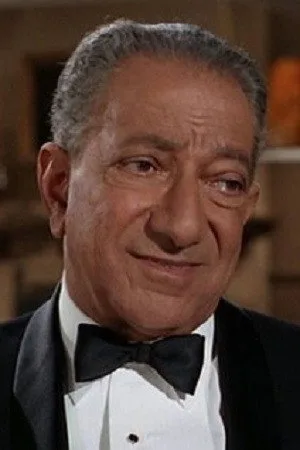 Abraham Sofaer
Fatumak, Medicine Man
Abraham Sofaer
Fatumak, Medicine Man -
 Archie Savage
Boogulroo
Archie Savage
Boogulroo -
 Benson Fong
Mr. Chou
Benson Fong
Mr. Chou -
 Tessa Prendergast
Kakofel
Tessa Prendergast
Kakofel - Lloyd Berrell Inifel
-
 Charles Horvath
Capt. Bully Hayes
Charles Horvath
Capt. Bully Hayes -
 Philip Ahn
Sien Tang, Dentist
Philip Ahn
Sien Tang, Dentist -
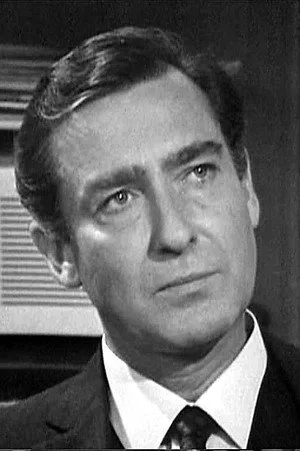 Guy Doleman
Herb Weber
Guy Doleman
Herb Weber -
 Grant Taylor
Lt. Brenner
Grant Taylor
Lt. Brenner - Alexander Archdale Bob Harris
- Harvey Adams Herr Friedlander
-
 Jimmy Dime
Sailor at Table in Saloon (uncredited)
Jimmy Dime
Sailor at Table in Saloon (uncredited) -
 Sol Gorss
Tough Sailor in Fight (uncredited)
Sol Gorss
Tough Sailor in Fight (uncredited) -
 Paul Picerni
Spanish Ship Owner (uncredited)
Paul Picerni
Spanish Ship Owner (uncredited) - Jack Stoney Tough Sailor in Fight (uncredited)
Quiz about this movie
Questions from the whole catalogue.
Play nowIf you liked this one
-
Sahara
 5.9
5.9
-
S.O.S. Malibu: Casamento Havaiano
 6.0
6.0
-
O Pirata Negro
 6.7
6.7
-
Pinóquio
 6.1
6.1
-
Um Conto do Destino
 6.3
6.3
-
Raízes no Surf
 6.3
6.3
-
Lancelot: O Primeiro Cavaleiro
 6.1
6.1
-
Em Chamas
 6.3
6.3
-
O Pastor
 6.9
6.9
-
Ponto de Decisão
 6.3
6.3
-
Hilda e o Rei da Montanha
 7.6
7.6
-
Levantando Poeira
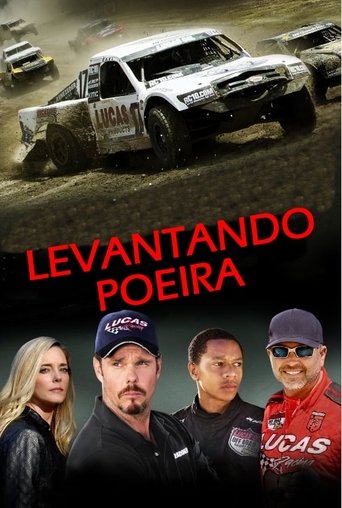 6.1
6.1
Tags
Crew
- Otto Heller Cinematography
- Byron Haskin Director
- Manuel del Campo Editing
- Harold Hecht Producer
- Dimitri Tiomkin Original music
- Robert Farnon Original music
- Borden Chase Screenplay
- James Hill Screenplay
Questions about this film
What is His Majesty O'Keefe about?
His Majesty O'Keefe: Men steal for it. Nations go to war for it. The it is oil - and it grows on trees. Coconut oil is the precious lifeblood of 1870s South Seas traders. And lots of real blood will be spilled to get it! Screen royalty Burt Lancaster is His Majesty O'Keefe in this last of three adventures that (along with The Flame and t…
Who directed His Majesty O'Keefe?
His Majesty O'Keefe was directed by Byron Haskin in 1954.
Who stars in His Majesty O'Keefe?
The cast of His Majesty O'Keefe includes Burt Lancaster, Joan Rice, André Morell, Abraham Sofaer and Archie Savage.
How long is His Majesty O'Keefe?
His Majesty O'Keefe runs for 90 minutes, or 1h30.
Where can I watch His Majesty O'Keefe?
His Majesty O'Keefe is available on Looke and Looke Amazon Channel. Availability changes often: the list on this page is the most recent we received.
Similar films
-
 7.4
7.4
Crouching Tiger, Hidden Dragon
2000
-
 6.0
6.0
Alexander
2004
-
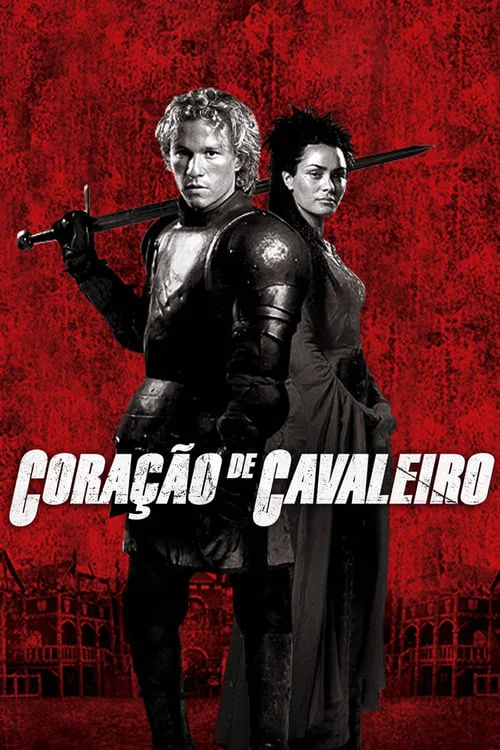 6.9
6.9
A Knight's Tale
2001
-
 5.5
5.5
Pompeii
2014
-
 6.4
6.4
The Karate Kid Part II
1986
-
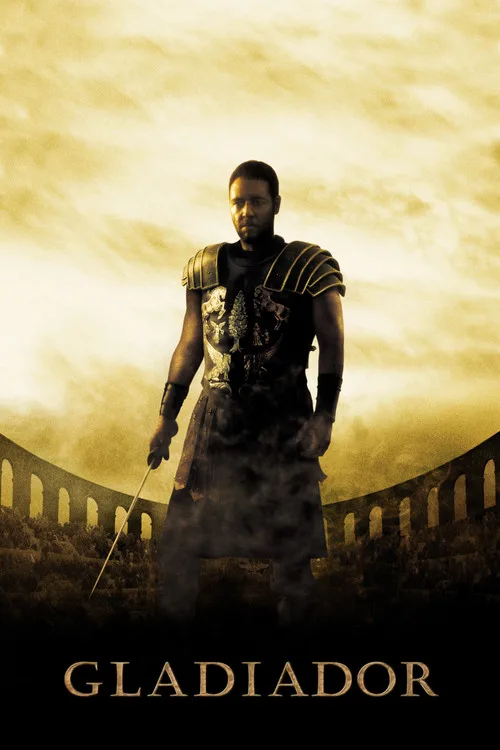 8.2
8.2
Gladiator
2000
-
 7.1
7.1
Maleficent
2014
-
 7.1
7.1
Top Gun
1986
-
 6.0
6.0
The Twilight Saga: New Moon
2009
-
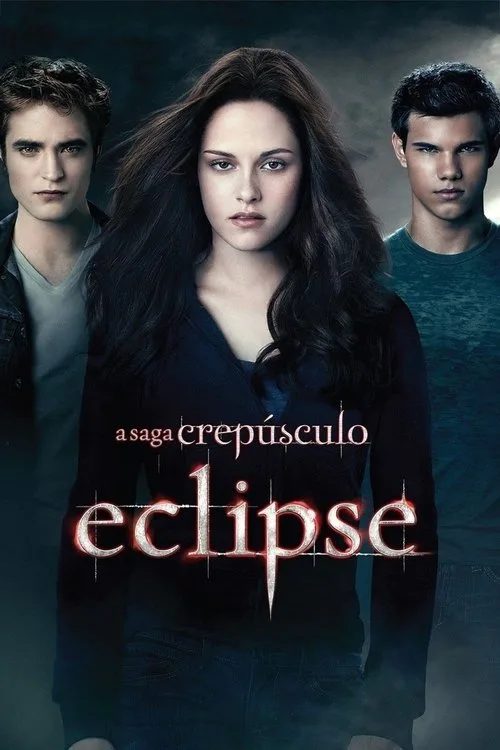 6.2
6.2
The Twilight Saga: Eclipse
2010
-
 6.9
6.9
King Kong
2005
-
 9.1
9.1
Batman: Knightfall Part 1: Knightfall
2026
Page updated on 09/11/2026.
Back to the catalogue