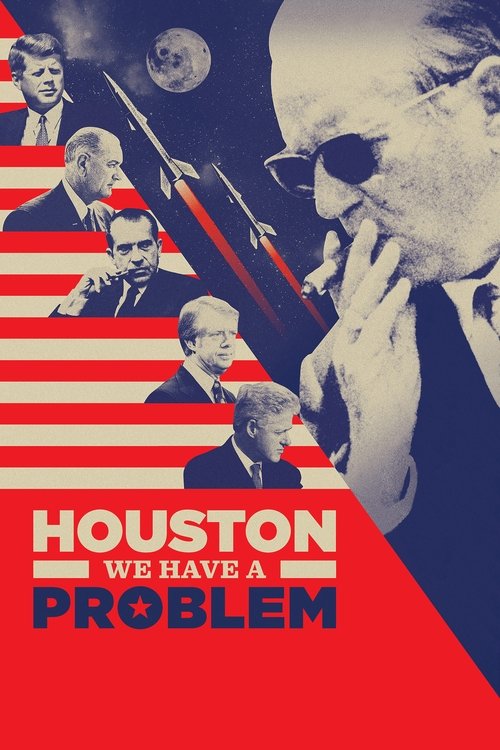
Houston, We Have a Problem! (2016)
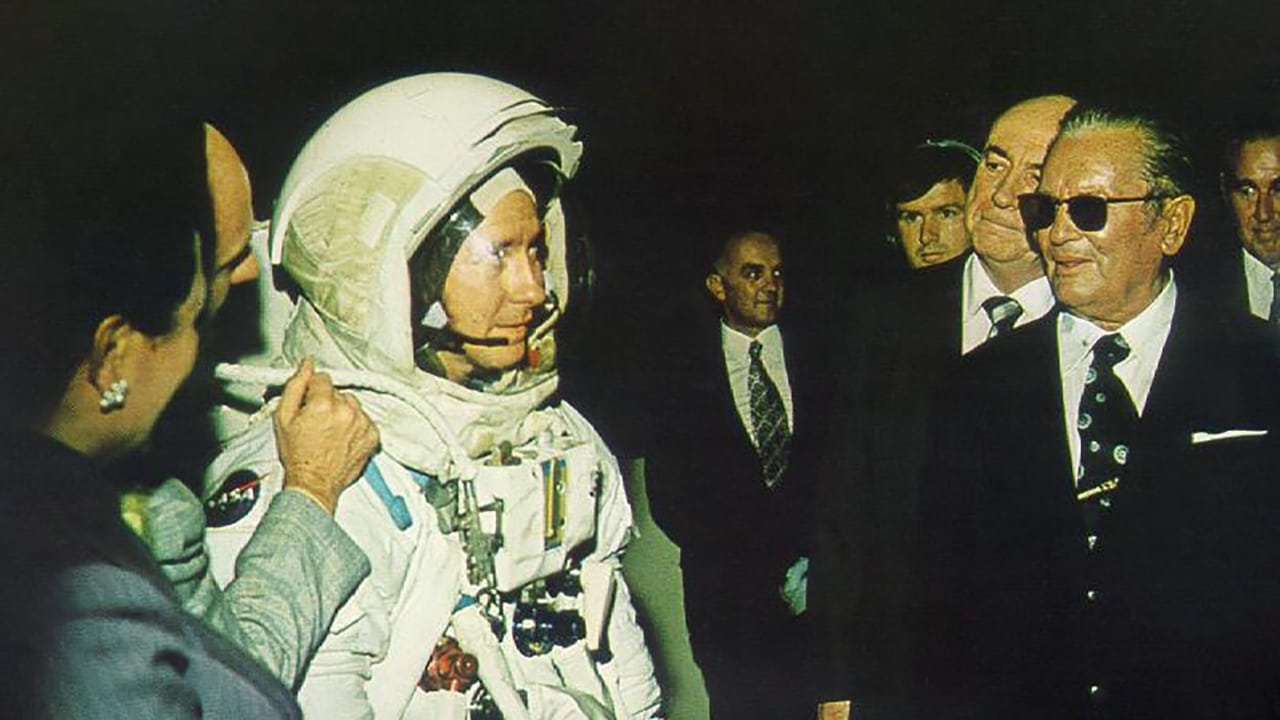
Houston, We Have a Problem! (2016), directed by Žiga Virc, starring Slavoj Žižek and Josip Broz Tito.
score
Yugoslav Space Program: Myth Or Reality?
Synopsis
The cold war, the space race, and NASA’s moon landing are landmark events that defined an era. But they are also fodder for conspiracy theories. In Houston, We Have a Problem! filmmaker Žiga Virc adds new material to the discussion on both fronts. This intriguing docu-fiction explores the myth of the secret multi-billion-dollar deal behind America’s purchase of Yugoslavia’s clandestine space program in the early 1960s.
- Andrej VircCinematography
- Žiga VircDirector, Writer
- Vladimir GojunEditing
- Boštjan VircProducer, Writer
About the film
Houston, We Have a Problem! (Slovene: Houston, imamo problem!) is a 2016 internationally co-produced docufiction-mockumentary film by Slovenian director Žiga Virc. The film explores the myth of the secret multibillion-dollar deal behind the United States' purchase of Yugoslavia's clandestine space program in the early 1960s. It is based and inspired by numerous real events and facts, in the sense that it is intended as an allegory to the Cold War.
The film premiered on 16 April 2016 at Tribeca Film Festival. It was selected as the Slovenian entry for the Best Foreign Language Film at the 89th Academy Awards but it was not nominated.
Read the full article (8k characters)
Houston, We Have a Problem! (Slovene: Houston, imamo problem!) is a 2016 internationally co-produced docufiction-mockumentary film by Slovenian director Žiga Virc. The film explores the myth of the secret multibillion-dollar deal behind the United States' purchase of Yugoslavia's clandestine space program in the early 1960s. It is based and inspired by numerous real events and facts, in the sense that it is intended as an allegory to the Cold War.
The film premiered on 16 April 2016 at Tribeca Film Festival. It was selected as the Slovenian entry for the Best Foreign Language Film at the 89th Academy Awards but it was not nominated.
Plot
Yugoslavia develops a space program, as a forgotten third player in the Space Race beside the United States and the Soviet Union, which Josip Broz Tito then sells to the John F. Kennedy administration in the U.S. in return for $2.5 billion (a value of about $50 billion in 2016, the year the film was released) in "overseas aid" which boosts Yugoslavia's economy. When the imported technology fails to deliver its promised results for NASA's planned Moon landing, an angry U.S. applies pressure to Tito, including financial blackmail and threats of military action, culminating in a secret CIA plot that triggers the bloody breakup of Yugoslavia.
Production
It is international co-production by Studio Virc (Slovenia), Nukleus Film (Croatia) and Sutor Kolonko (Germany), backed by HBO Europe, Westdeutscher Rundfunk, Radiotelevizija Slovenija and the Doha Film Institute. It is subsidized by Slovenian Film Centre, the Croatian Audiovisual Centre, Viba Film Studio, MEDIA Creative Europe, Eurimages and the Doha Film Institute. It's HBOs first co-production in the Adriatic region.
According to the director Žiga Virc, the intention of the film was to "tell the symbolic story of the rise and fall of Yugoslavia", as well inviting the viewer to decide what is real and what fiction. In the film are mixed real archive footage with artful fabrication, and conspiracy theory about the Yugoslav space program. Although the film has many comic and emotional subplots, like the pig that served as the first test pilot, or the elderly engineer Ivan Pavić, one of twenty six Yugoslav engineers, who was forced to leave his young family, fake his death and funeral, for the undercovered move and work for NASA, and his later return to Croatia, confession and meeting with grown up daughter, they are all fictional. However, many details are real, like the underground military air base Objekat 505, Tito's visit to New York in 1963, during which he survived a failed assassination attempt, the scratchy recording of phone call between Tito and Kennedy, the recording by Richard Nixon (in a quote about Vietnam, "We'll bomb those Yugoslav bastards right out of the—off the earth. I really mean it.", Yugoslavia is carefully added) and many others.
The film producer and co-writer Boštjan Virc noted that they are aware "not everyone will understand the nature of the film". The point is the power of deception - the people believed a small production film with a hint, while on the other hand big news productions, companies, governments have no hints that something is wrong in the picture, and people take it for granted. He worriedly concluded that "seeing is believing" even if it is a complete fake.
The myth became popular in January 2012 when the filmmakers Žiga and Boštjan uploaded a short video clip on YouTube, which received in excess of one million views, as well as extensive media attention including by Smithsonian Institution. Most of the viewers believed in what they saw in the video, and in the same year internet survey by Radio Free Europe/Radio Liberty, 41.8% of the respondents of the online poll voted that they believe that Yugoslavia sold the program to US.
Yugoslav space program
The myth is based on several facts: the work The Problem of Space Travel by Herman Potočnik (1892–1929) influenced German, American and Soviet scientists, but it is speculated that U.S. agents confiscated his surviving unpublished notes. In the early 1960s the financial support from the U.S. was larger than NASA's annual budgets, and after Dwight D. Eisenhower the policy was continued by Kennedy. Tito was the last foreign statesman to visit Kennedy before his death, and reasons for the U.S. financial support are not understood to this day.
There existed scientific cooperation between the United States and Yugoslavia, including the Yugoslav visits by the crews of Apollo 8, 9 and 11. On 26 September 1967, in Belgrade was held the first-ever international symposium on space exploration "First Steps Toward Space", while the second in New York. On 27 June 1971, in Belgrade was held an exhibition on space technologies, which brought together American and Soviet specialists, and fostered future cooperation.
Many Yugoslav engineers were employed by NASA, including Mike (Milojko) Vucelić who worked on Apollo 11 and 13 and Anton Mavretič. The crew of Apollo 11 carried with it the flags of 135 countries including Yugoslavia during the Moon landing on 20 July 1969. The Yugoslavian lunar sample display is now held at the Museum of Yugoslav History in Belgrade.
Reception
Critical response
Stephen Dalton from The Hollywood Reporter described the film as "consistently witty and entertaining, even when testing the limits of audience gullibility... ultimately less a film about Cold War politics than a sly commentary on our current climate of internet myth-making and 'post-truth' public figures", and that philosopher Slavoj Žižek has a chorus role which warns that comforting fiction is often more appealing than complex fact, "even if it didn’t happen, it’s true. That’s the crucial message".
Steve Pond from TheWrap described it as "very entertaining, even if it’s about as factual as This Is Spinal Tap". He noted that the film "acts like a doc but works as myth, not fact; director Ziga Virc doesn’t want audiences to believe what he’s telling them so much as he wants them to think about why they’re so ready to accept any kind of tomfoolery and conspiracy the media puts in front of them".
P. Stuart Robinson from Montages Magazine saw in the film structure parallels with Searching for Sugar Man, and described it as "a minor masterpiece of plausible fabrication, tracking real events with an unwavering satirical eye, and placing them in a kind of perspective that is at once ridiculous and yet surprisingly illuminating. Above all, it’s a good story in its own terms, a real cinematic page-turner".
Noah Charney from the New York Observer paralleled it with "Dr. Strangelove, part F for Fake, part real and part Spinal Tap", and praised it as a clever film. He quotes Slovenian film critic Marcel Stefancic Jr.'s interpretation that the film mocks both Yugo-nostalgia and the idea that socialism cannot work unless it is secretly funded by capitalism. However, in Charney's opinion, even
intelligent viewers from former Yugoslavia, let alone from the U.S., may have a problem understanding it.
Jessica Kiang and Nick Schager from Variety and The Village Voice criticized that the "little fun ... depends on falling for its far-fetched premise", and "there are surely more compelling ways to offer it than via a one-note, 88-minute-long joke".
Awards
Slovenian Film Festival - best feature film; best editing (Vladimir Gojun); best actor (Božidar Smiljanić as Ivan Pavić)
Mediteran Film Festival - audience award
Karlovy Vary International Film Festival - East of West Award nomination for Žiga Virc
See also
List of Slovenian submissions for the Academy Award for Best Foreign Language Film
List of submissions to the 89th Academy Awards for Best Foreign Language Film
References
External links
Houston, We Have a Problem! at IMDb
Text from Houston, We Have a Problem! (film) on Wikipedia, licensed CC BY-SA 4.0. https://en.wikipedia.org/wiki/Houston,_We_Have_a_Problem!_(film)
Trivia
- It premiered on May 5, 2016, a Thursday.
- It runs 1h28 — a typical feature length.
- It won 0 award(s) and received 1 nomination(s) on record at Wikidata — International Submission to the Academy Awards among them.
- This film's quiz has 10 questions — enough to play more than once without repeats.
Production
- StudiosSutor Kolonko, Nukleus film, Studio Virc
- CountriesQatar, Slovenia, Croatia, Germany, Czech Republic
- LanguagesCroatian, English, Serbian, Slovenian
- StatusReleased
More about this film
Nominations
- International Submission to the Academy Awards 2017
Cast
-
 Slavoj Žižek
Self
Slavoj Žižek
Self -
 Josip Broz Tito
Self (archive footage)
Josip Broz Tito
Self (archive footage) -
 John F. Kennedy
Self (archive footage)
John F. Kennedy
Self (archive footage) -
 Richard Nixon
Self (archive footage)
Richard Nixon
Self (archive footage) -
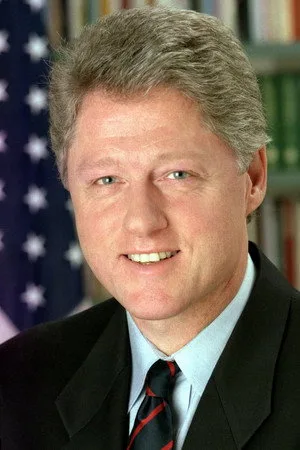 Bill Clinton
Self (archive footage)
Bill Clinton
Self (archive footage) -
 Lyndon B. Johnson
Self (archive footage) (as Lyndon Johnson)
Lyndon B. Johnson
Self (archive footage) (as Lyndon Johnson) - Dean Rusk Self (archive footage)
-
 Jimmy Carter
Self (archive footage)
Jimmy Carter
Self (archive footage)
Quiz about this movie
Questions from the whole catalogue.
Play nowIf you liked this one
-
Embaixo da Luz de Neon
 7.2
7.2
-
Jayne Mansfield, Minha Mãe
 8.0
8.0
-
Boys State
 7.1
7.1
-
Alexandre McQueen Documentary from the 2010s
 7.4
7.4
-
O Labirinto de Kubrick Documentary from the 2010s
 6.1
6.1
-
Amor Tóxico
 6.4
6.4
-
Influencer do Mal: A História de Jodi Hildebrandt
 6.2
6.2
-
Fuck
 6.4
6.4
-
Voyeur Documentary from the 2010s
 5.9
5.9
-
Selena Gomez: Minha Mente e Eu
 8.5
8.5
-
Desastre Total: O Verdadeiro Projeto X
 5.9
5.9
-
Instinto Materno
 7.1
7.1
Crew
- Andrej Virc Cinematography
- Žiga Virc Director
- Vladimir Gojun Editing
- Boštjan Virc Producer
- Ingmar Trost Producer
- Siniša Juričić Producer
- Boštjan Virc Writer
- Žiga Virc Writer
Questions about this film
What is Houston, We Have a Problem! about?
Houston, We Have a Problem!: The cold war, the space race, and NASA’s moon landing are landmark events that defined an era. But they are also fodder for conspiracy theories. In Houston, We Have a Problem! filmmaker Žiga Virc adds new material to the discussion on both fronts. This intriguing docu-fiction explores the myth of the secret multi-bill…
Who directed Houston, We Have a Problem!?
Houston, We Have a Problem! was directed by Žiga Virc in 2016.
Who stars in Houston, We Have a Problem!?
The cast of Houston, We Have a Problem! includes Slavoj Žižek, Josip Broz Tito, John F. Kennedy, Richard Nixon and Bill Clinton.
How long is Houston, We Have a Problem!?
Houston, We Have a Problem! runs for 88 minutes, or 1h28.
Similar films
-
 7.3
7.3
Harry Potter 20th Anniversary: Return to Hogwarts
2022
-
 6.3
6.3
Jackass: The Movie
2002
-
 7.5
7.5
The Social Dilemma
2020
-
 6.7
6.7
Super Size Me
2004
-
 7.5
7.5
Bowling for Columbine
2002
-
 7.9
7.9
Free Solo
2018
-
 6.6
6.6
Jackass 3D
2010
-
 7.1
7.1
Fahrenheit 9/11
2004
-
 7.8
7.8
Friends: The Reunion
2021
-
 7.7
7.7
Citizenfour
2014
-
 6.6
6.6
Jackass Number Two
2006
-
 7.6
7.6
Amy
2015
Page updated on 09/14/2026.
Back to the catalogue