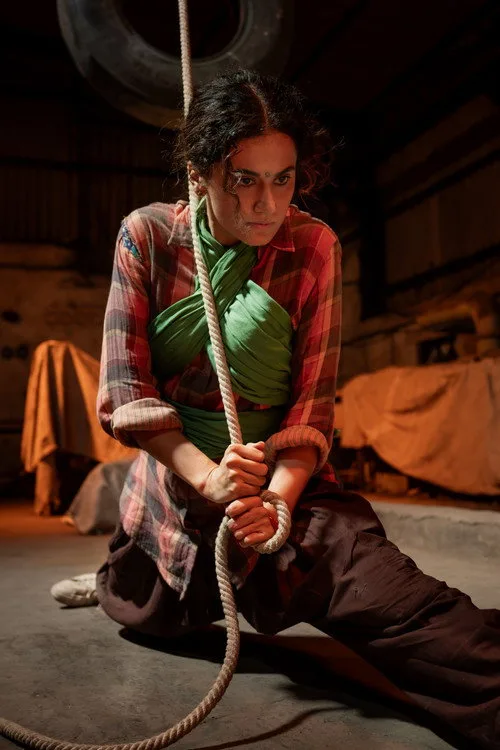
Like Water for Chocolate (1992)
Like Water for Chocolate (1992), directed by Alfonso Arau, starring Lumi Cavazos and Marco Leonardi.
score
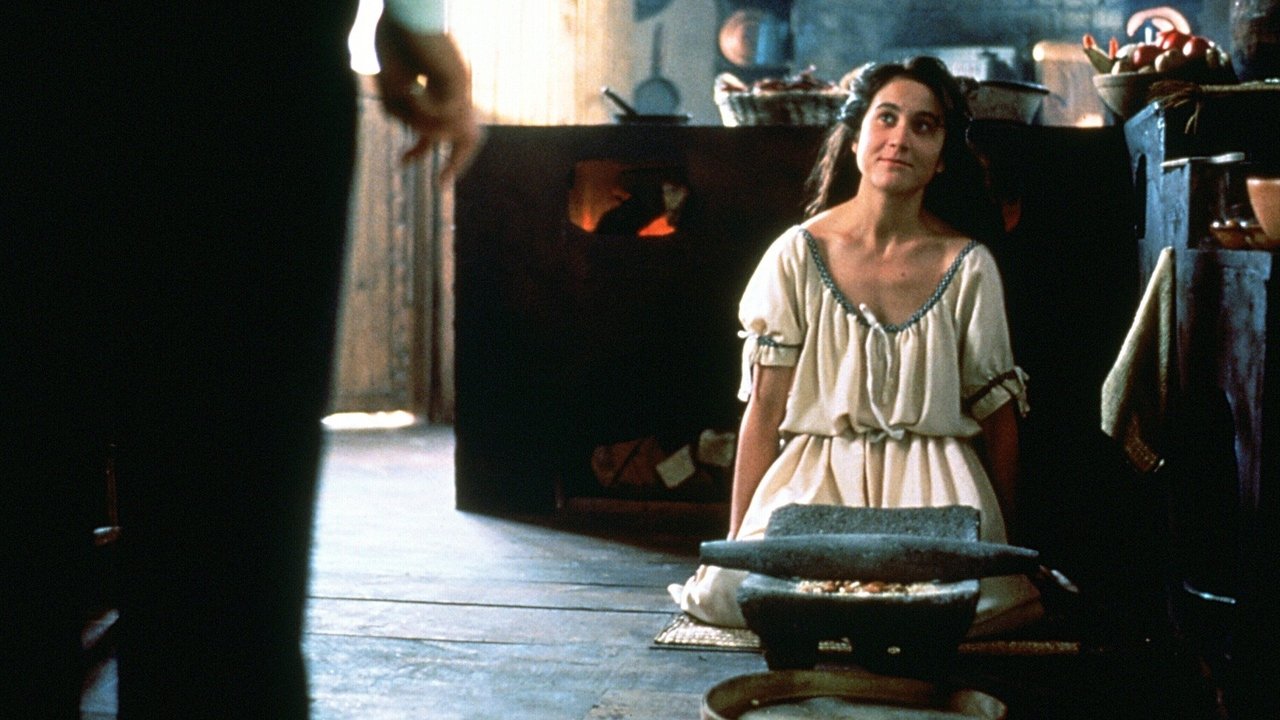
In Tita's kitchen, ordinary spices become a recipe for passion.
Synopsis
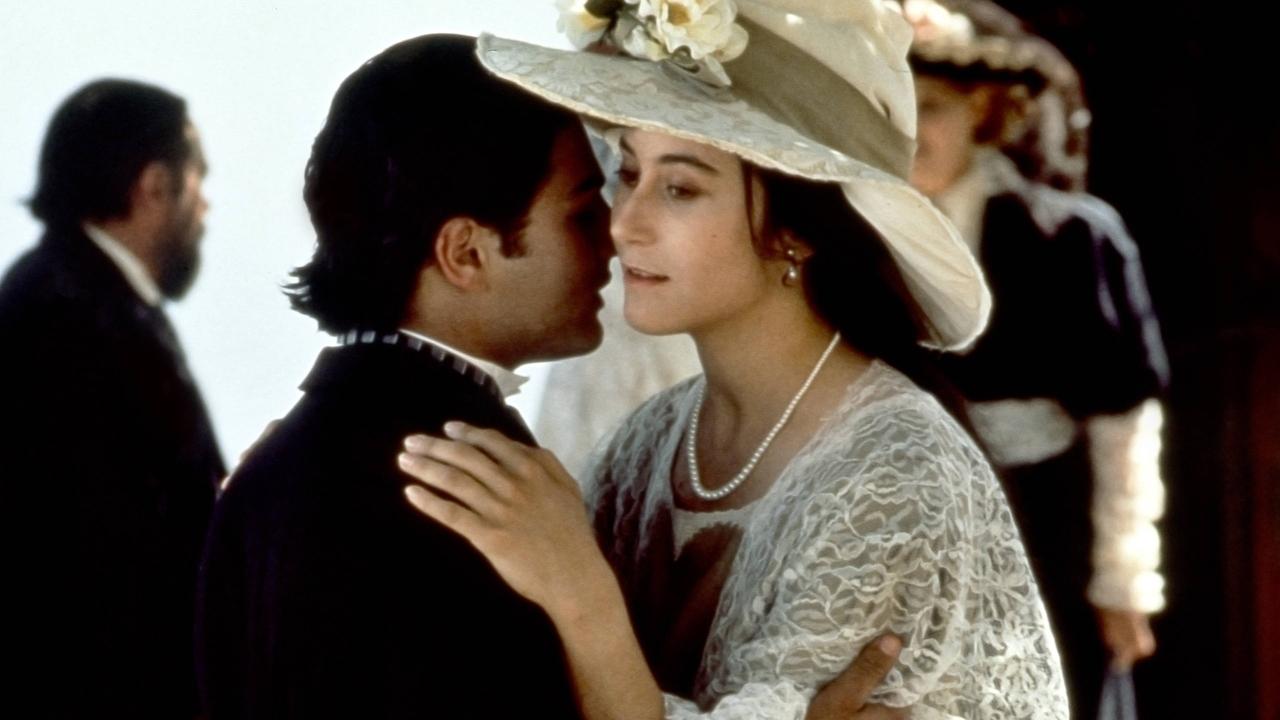
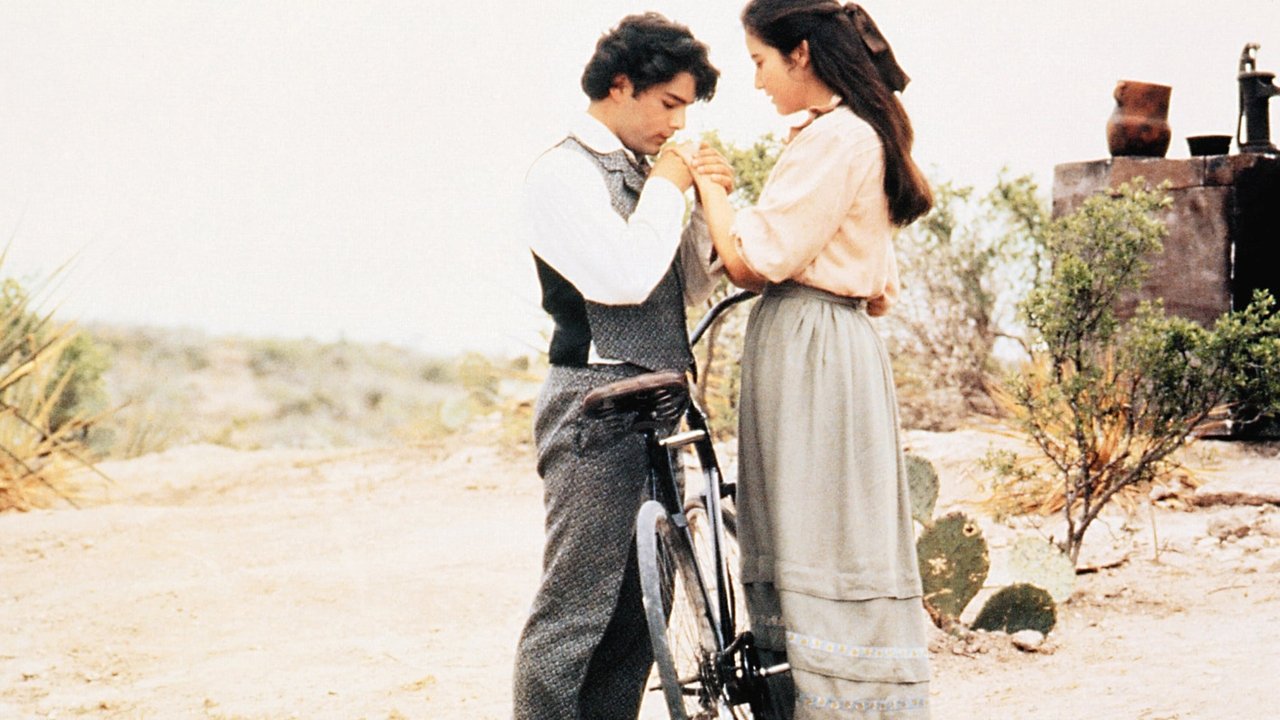
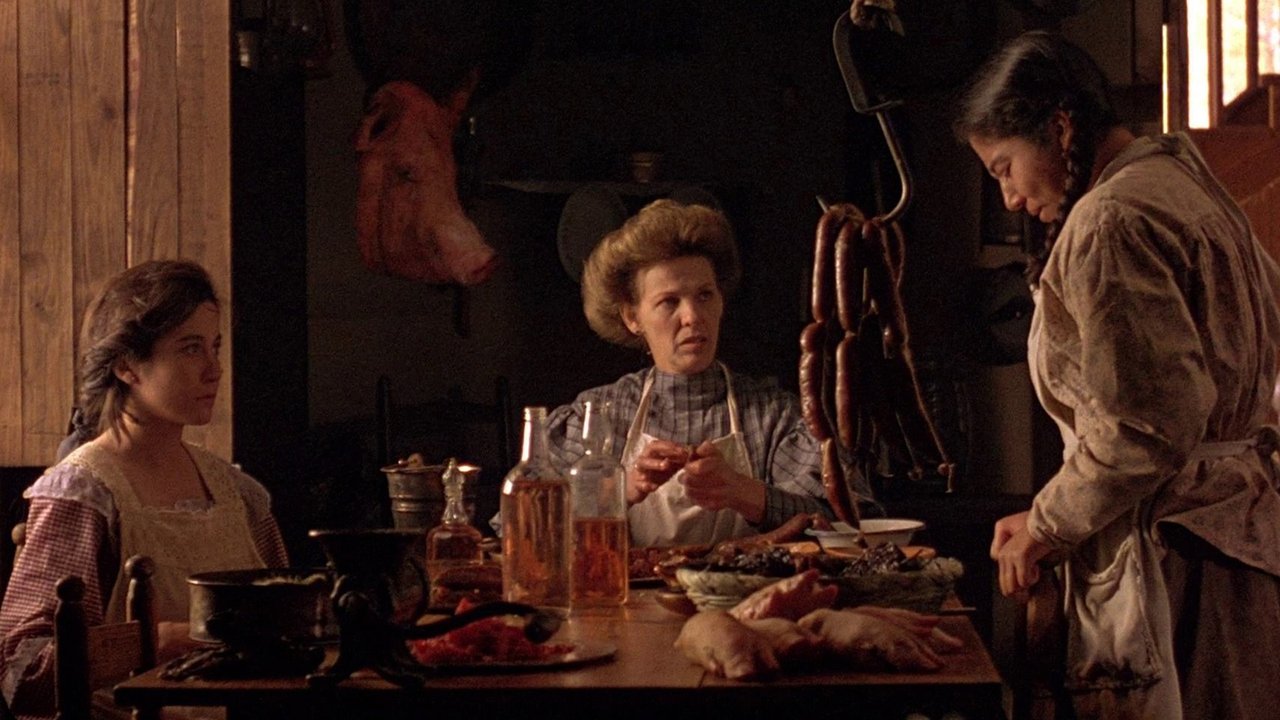
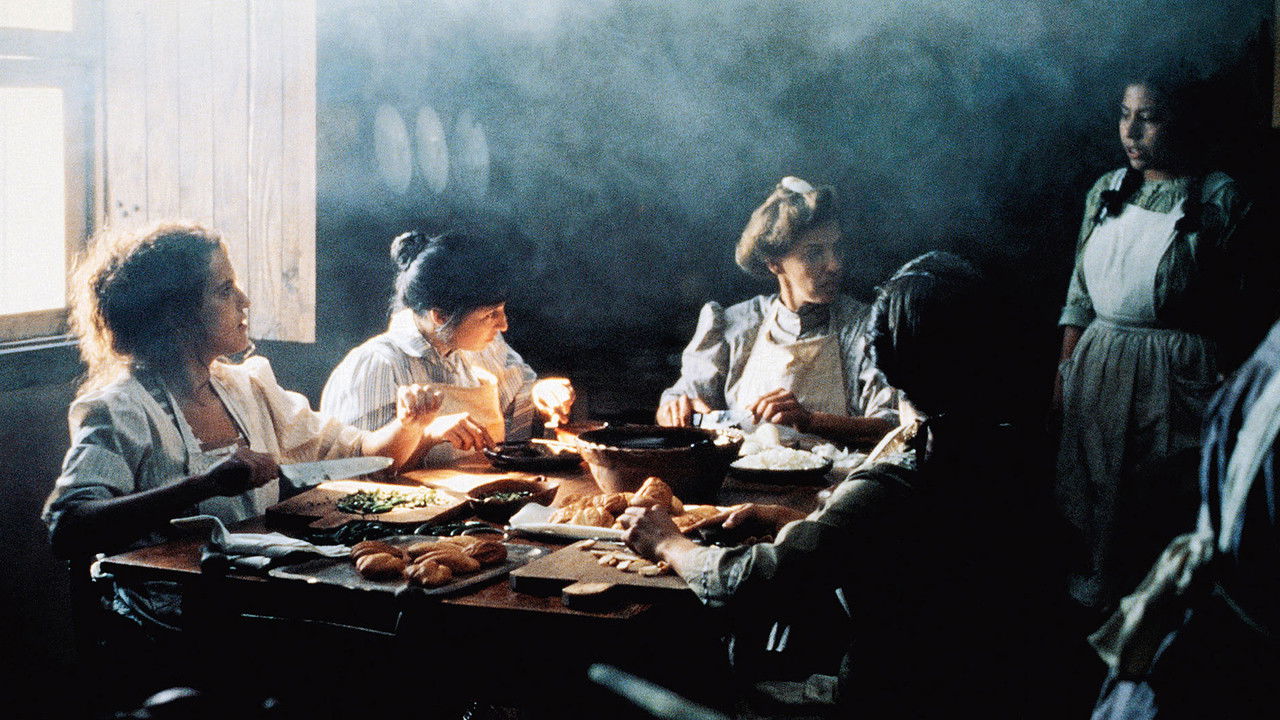
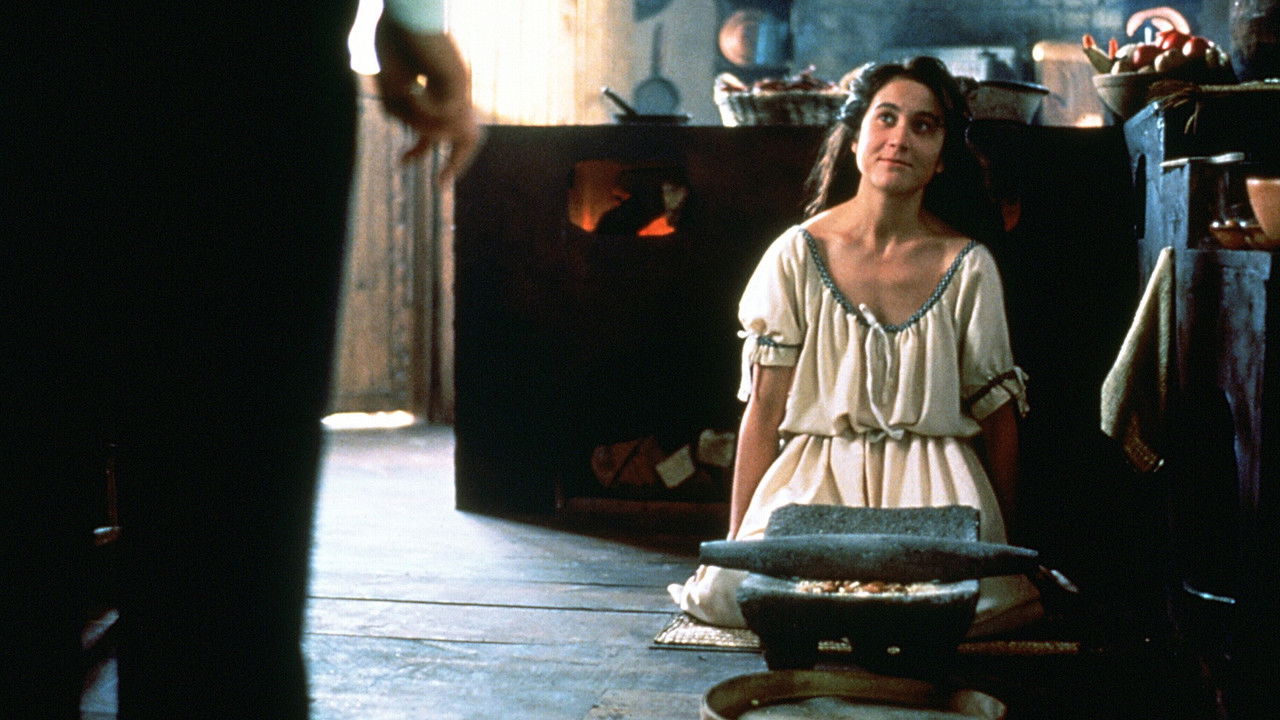
Tita is passionately in love with Pedro, but her controlling mother forbids her from marrying him. When Pedro marries her sister, Tita throws herself into her cooking and discovers she can transfer her emotions through the food she prepares, infecting all who eat it with her intense heartbreak.
- Emmanuel LubezkiCinematography
- Steven BernsteinCinematography
- Alfonso ArauDirector, Producer
- Carlos BoladoEditing
About the film
Like Water for Chocolate (Spanish: Como agua para chocolate) is a 1992 Mexican romantic drama film produced and directed by Alfonso Arau, and written by Laura Esquivel, who adapted her 1989 debut novel. It earned 10 Ariel Awards including the Best Picture, and was nominated for a Golden Globe Award for Best Foreign Language Film. The film became the highest-grossing foreign-language film ever released in the United States at the time. The film was selected as the Mexican entry for the Best Foreign Language Film at the 65th Academy Awards, but was not accepted as a nominee.
Read the full article (8k characters)
Like Water for Chocolate (Spanish: Como agua para chocolate) is a 1992 Mexican romantic drama film produced and directed by Alfonso Arau, and written by Laura Esquivel, who adapted her 1989 debut novel. It earned 10 Ariel Awards including the Best Picture, and was nominated for a Golden Globe Award for Best Foreign Language Film. The film became the highest-grossing foreign-language film ever released in the United States at the time. The film was selected as the Mexican entry for the Best Foreign Language Film at the 65th Academy Awards, but was not accepted as a nominee.
Plot
Narrated through a cookbook, the story follows Tita, a young Mexican woman forbidden from marrying due to a cruel family tradition enforced by her tyrannical mother, Elena. Tita must remain single to care for Elena until her death, forcing her true love, Pedro, to marry her sister Rosaura just to stay near her. Raised by the cook Nacha, Tita suppresses her intense grief and passion, which structurally manifests as magical effects inside the food she prepares for the family. After Elena's violent death, Tita actively fights to break the generational curse to save her niece, Esperanza. Once Rosaura dies, Tita and Pedro finally consummate their love, causing a fatal fire that consumes the entire ranch.
Cast
Themes
Gender
Differing gender roles and values are central to the de la Garza family. The film complicates the roles that tradition expects Tita, Getrudis, and Rosaura to play. Tita, a maternal caretaker, breaks tradition; Gertrudis embodies the duality of the male and the female; and Rosaura, an upholder of the traditional female role, fails to fulfill it. Rosaura strives to be a traditional female matron. She marries her sister Tita's one true love Pedro and adopts the role of wife. Her primary duties are to cook, to clean, and to take care of her children. The problem is that she cannot cook, cannot clean, and cannot nurse her own baby. Next to bend her gender is Gertrudis, offspring of an illicit affair between Mama Elena and her paramour. We know from early on that Gertrudis does not fit the ladylike mold. She is a tomboy, openly disagreeing with her mother and her traditional values. She encourages Tita to court Pedro even though he is married to their sister. When Tita's emotions enter into the rose petal dish she serves the family for dinner, Gertrudis eats and becomes so aroused that her body begins to steam. She runs to the outhouse, her heat setting it on fire, and departs home on the back of a horse ridden by a soldier of the Mexican Revolution. When Gertrudis mysteriously returns one night, we learn that she is a soldier fighting in the Revolution. Married to the man on the horse, she now commands her husband's troops. Tita is her sisters' opposite. She is a caretaker and family cook. Everyone loves her cooking and Tita miraculously serves as nursemaid to Rosaura's baby, since Rosaura is unable to produce milk. (When Pedro and Rosaura move away, the baby dies because Rosaura could not nurse it.) The differing gender roles give each character depth and significance, highlighting the opposites at work in each sister. In doing so the film displays strong women breaking barriers and redefining what it means to be a female.
Tradition
Tradition is central to this movie. Tita, Gertrudis and the Mexican Revolution itself all fight against it. The movie's main conflict is a family tradition which forbids the youngest daughter from marrying so that she will be free to take care of her mother. This requirement sets up a battle between Tita and her mother, Mama Elena. Tita struggles to live her own life; Mama Elena fights to keep Tita at home. So fierce is Mama Elena's desire to uphold tradition that she orders her oldest daughter, Rosaura, to marry Pedro, Tita's one true love. Gertrudis, the middle child and offspring of an illicit affair between Mama Elena and her lover, runs away from home and joins the people fighting to end the dictatorship and corruption afflicting the common folk of Mexico. Tired of the tradition that only the wealthy landowners had wealth and power, the people revolted, fighting for the workers of the land. Gertrudis' battle against the government parallels the battle between Tita and Elena. Both fight for change. In the war Gertrudis becomes a leader of an all-male rebel group. The men both listen and respect her. Gertrudis challenges tradition and becomes a successful leader. Tita's challenge to tradition will also be successful and portends successful change for Mexico.
On the other hand, while tradition serves well to help pass down a family's customs or even cultural customs, often tradition can be viewed negatively and tear families and society apart because of how it can mistreat those in society who deviate from tradition. Mexican culture has in fact long expressed this coerced marriage rule in which women's opinions are left unconsidered, and as a result these traditions lead to the mistreatment of women. This mistreatment also happens in the de la Garza family where the family tradition prevents the main character, Tita, from marrying Pedro due to the rule that the youngest daughter must not marry. Thus, breaking this specific tradition is a main theme within the film. One way this is represented in the film is through the character of Mama Elena as her oppressive and tyrannical force to Tita. Her character displays how corruptive traditions such as forced marriage hinder others and tear groups apart, as Mama Elena does to Tita to prevent her from marrying Pedro. However, with the help of Tita's magical cooking that eventually breaks the family free from tradition, Tita and her sister, Gertrudis, not only break barriers and the gender roles in their society, but also help establish a tradition to start treating each other equally.
Filming locations
Ciudad Acuña, Mexico
Eagle Pass, Texas
Piedras Negras, Coahuila, Mexico
Del Rio, Texas
Reception
Critical response
Like Water for Chocolate received critical acclaim from critics. On review aggregator website Rotten Tomatoes, the film holds an approval rating of 88%, based on 48 reviews, and an average rating of 7.6/10. The website's critics consensus reads, "Like Water for Chocolate plays to the senses with a richly rewarding romance that indulges in magical realism to intoxicating effect." On Metacritic, it has a weighted average score of 86 out of 100 based on 18 critics, indicating "universal acclaim".
The American release of this film is shorter than the original Mexican version. In the original release, you see Tita returns home to take care of her dying mother; in the American release, this complete sequence is removed and instead Tita only returns home for her mother's funeral.
Box office
The film became the highest-grossing foreign-language film ever released in the United States and Canada at the time with a gross of $21.6 million, surpassing the previous record of $20.2 million set by I Am Curious (Yellow) released in 1969.
Year-end lists
6th – Dan Craft, The Pantagraph
Awards and nominations
Ariel Awards
The Ariel Awards are awarded annually by the Mexican Academy of Film Arts and Sciences in Mexico. Como agua para chocolate received ten awards out of 14 nominations.
Golden Globe Awards
See also
List of submissions to the 65th Academy Awards for Best Foreign Language Film
List of Mexican submissions for the Academy Award for Best Foreign Language Film
References
External links
Like Water for Chocolate at IMDb
Like Water for Chocolate at Box Office Mojo
Like Water for Chocolate at Rotten Tomatoes
Text from Like Water for Chocolate (film) on Wikipedia, licensed CC BY-SA 4.0. https://en.wikipedia.org/wiki/Like_Water_for_Chocolate_(film)
Trivia
- It cost US$ 2.0 million and grossed US$ 22 million in theaters — 10.9 times its budget.
- It premiered on April 16, 1992, a Thursday.
- It runs 1h44 — a typical feature length.
- Its original title is "Como agua para chocolate".
- It won 0 award(s) and received 1 nomination(s) on record at Wikidata — International Submission to the Academy Awards among them.
- As of September 20, 2026, it is available in Brazil by subscription on HBO Max.
- This film's quiz has 15 questions — enough to play more than once without repeats.
Production
- StudiosAviacsa, Cinevista
- CountriesMexico
- LanguagesEnglish, Spanish
- BudgetUS$ 2,000,000
- Box officeUS$ 21,744,201
- StatusReleased
More about this film
Nominations
- International Submission to the Academy Awards 1993
Based on
- Like Water for Chocolate
Set in
- Mexico
Where to watch
Photos




Cast
-
 Lumi Cavazos
Tita
Lumi Cavazos
Tita -
 Marco Leonardi
Pedro Muzquiz
Marco Leonardi
Pedro Muzquiz -
 Regina Torné
Mamá Elena
Regina Torné
Mamá Elena -
 Mario Iván Martínez
John Brown
Mario Iván Martínez
John Brown -
 Ada Carrasco
Nacha
Ada Carrasco
Nacha -
 Yareli Arizmendi
Rosaura
Yareli Arizmendi
Rosaura -
 Claudette Maillé
Gertrudis
Claudette Maillé
Gertrudis - Pilar Aranda Chencha
-
 Farnesio de Bernal
Cura
Farnesio de Bernal
Cura -
 Joaquín Garrido
Sergeant Treviño
Joaquín Garrido
Sergeant Treviño -
 Margarita Isabel
Paquita Lobo
Margarita Isabel
Paquita Lobo - Sandra Arau Esperanza
-
 Rodolfo Arias
Juan Alejándrez
Rodolfo Arias
Juan Alejándrez - Andrés García Jr. Alex Brown
-
 Arcelia Ramírez
Bisnieta
Arcelia Ramírez
Bisnieta - Regino Herrera Nicolás
- Genaro Aguirre Rosalio
-
 David Ostrosky
Juan de la Garza
David Ostrosky
Juan de la Garza - Brígida Alexander Tía Mary
- Amado Ramírez Padre de Pedro
Quiz about this movie
Questions from the whole catalogue.
Play nowIf you liked this one
-
Desejo e Reparação
 7.6
7.6
-
Segundas Intenções Drama from the 1990s
 6.8
6.8
-
Minha Culpa
 7.7
7.7
-
Arranca-me a Vida
 7.9
7.9
-
Círculo de Paixões Drama from the 1990s
 6.3
6.3
-
Desire
 6.0
6.0
-
The Cement Garden Drama from the 1990s
 6.7
6.7
-
Diga-me Baixinho
 6.3
6.3
-
Os Fugitivos
 6.1
6.1
-
Palmeiras na Neve
 7.4
7.4
-
Era Uma Vez em Nova York
 6.3
6.3
-
Ano Bissexto
 6.4
6.4
Tags
Crew
- Emmanuel Lubezki Cinematography
- Steven Bernstein Cinematography
- Alfonso Arau Director
- Carlos Bolado Editing
- Francisco Chili Editing
- Alfonso Arau Producer
- Leo Brouwer Original music
- Laura Esquivel Screenplay
Questions about this film
What is Like Water for Chocolate about?
Like Water for Chocolate: Tita is passionately in love with Pedro, but her controlling mother forbids her from marrying him. When Pedro marries her sister, Tita throws herself into her cooking and discovers she can transfer her emotions through the food she prepares, infecting all who eat it with her intense heartbreak.
Who directed Like Water for Chocolate?
Like Water for Chocolate was directed by Alfonso Arau in 1992.
Who stars in Like Water for Chocolate?
The cast of Like Water for Chocolate includes Lumi Cavazos, Marco Leonardi, Regina Torné, Mario Iván Martínez and Ada Carrasco.
How long is Like Water for Chocolate?
Like Water for Chocolate runs for 104 minutes, or 1h44.
How much did Like Water for Chocolate cost and how much did it make?
Like Water for Chocolate had a budget of US$ 2,000,000 and took US$ 21,744,201 at the box office — 10.9 times its cost.
Where can I watch Like Water for Chocolate?
Like Water for Chocolate is available on HBO Max and HBO Max Amazon Channel. Availability changes often: the list on this page is the most recent we received.
What is Like Water for Chocolate based on?
Like Water for Chocolate is based on Like Water for Chocolate.
Similar films
 7.9
7.9
 8.5
8.5
 7.9
7.9
 8.1
8.1
 6.3
6.3
 8.5
8.5
 7.9
7.9
 7.8
7.8
 7.9
7.9
 5.9
5.9
 7.2
7.2
 7.0
7.0
Page updated on 09/13/2026.
Back to the catalogue