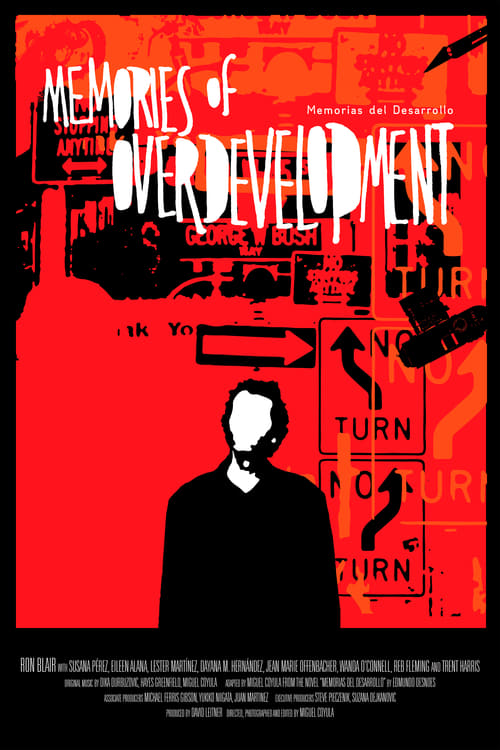
Memories of Overdevelopment (2011)
Memories of Overdevelopment (2011), directed by Miguel Coyula, starring Bill Clinton and Fidel Castro.
score
Exiled from the world
Synopsis
An intellectual leaves the Cuban revolution and 'underdevelopment' behind only to find himself at odds with the ambiguities of his new life in the 'developed' world. A portrait of alienation, of an outsider with no clear-cut politics or ideology. A stranger in a strange land struggling with old age, sexual desire and ultimately the impossibility for the individual to belong in any society. The film's narrative is a collage of flashbacks, daydreams, and hallucinations comprising live-action, animation, and newsreel footage assembled to suggest the way personal memory works, subjectively and emotionally.
- Miguel CoyulaDirector
- David LeitnerProducer
- Dika DurbuzovicOriginal music
- Hayes GreenfieldOriginal music
About the film
Memories of Overdevelopment (Spanish: Memorias del Desarrollo) is a 2010 Cuban-American film. Written and directed by Miguel Coyula, the story is based on a novel by Edmundo Desnoes, also the author of the 1968 classic Memories of Underdevelopment. This independent film was produced by David Leitner and features Cuban actor Ron Blair as the lead character. It is the first post-1959 Cuban-American co-production, with narrative scenes filmed both in Cuba and the United States. After its world premiere at the 2010 Sundance Film Festival, it garnered several awards and honors. The International Film Guide omitted the United States' involvement in the production, and described it as one of the best films Cuba has produced.
Read the full article (9k characters)
Memories of Overdevelopment (Spanish: Memorias del Desarrollo) is a 2010 Cuban-American film. Written and directed by Miguel Coyula, the story is based on a novel by Edmundo Desnoes, also the author of the 1968 classic Memories of Underdevelopment. This independent film was produced by David Leitner and features Cuban actor Ron Blair as the lead character. It is the first post-1959 Cuban-American co-production, with narrative scenes filmed both in Cuba and the United States. After its world premiere at the 2010 Sundance Film Festival, it garnered several awards and honors. The International Film Guide omitted the United States' involvement in the production, and described it as one of the best films Cuba has produced.
Plot
Sergio Garcet is an intellectual who abandons the Cuban Revolution and 'underdevelopment' behind only to find himself at odds with the ambiguities of his new life in the 'developed' world.
Highly episodical, the film consists of flashbacks, daydreams, and hallucinations comprising live-action, animation, and newsreel footage assembled to suggest the way personal memory works, subjectively and emotionally.
Production
Production of “Memorias del Desarrollo” took five years, starting in 2005 and completed in 2010, with locations in five countries. According to director Miguel Coyula, his first draft of the screenplay was a faithful adaptation of Edmundo Desnoes' novel. But as he began filming and editing simultaneously, he became aware of new possibilities, which would radically alter the narrative structure of the original novel as well as its characters. The film did not follow the traditional chronology of writing, shooting and editing. This required a new approach where pre-production, production, and postproduction, no longer needed to exist as distinct elements but rather as an integral interactive seamless process. This new way of working was not meant as a shortcut, but rather as a way of revealing new narrative layers of the work as it evolved to create the director’s vision.
Coyula would take advantage of everything around him that he thought would add to the film, heavily manipulating images digitally, into the film’s final highly fragmented narrative. For example, the scenes with the 9/11 footage, which the director had recorded years before; the Paris, London and Tokyo scenes, which were shot while Coyula was travelling invited to film festivals presenting his film Red Cockroaches. Most of the various location shoots were done without permits, through favors from friends, and with a minimal crew consisting mostly of director Miguel Coyula, producer David W. Leitner and lead actor Ron Blair, easily adapting at a moment’s notice and without the constraints of a rigid schedule. The film's most decisive work however took place in the editing room. In several visual presentations Coyula stated that no shot in the film escaped digital manipulation of some kind, which included, green screen, compositing in recreating sets, double exposures, replacing backgrounds, changing lighting, weather conditions, performing digital art direction, and actors shot in different countries performing together on screen.
Producer David Leitner initially hoped to raise 2 million dollars for the project. But after realizing there was no interest from film production companies neither in North or South America, they reverted to a strategy closer to Coyula's first feature, Red Cockroaches. The film was funded by executive producers Steve Pieczenik, and Suzana Dejkanovic, associate producers Juan Martinez, and Michael Ferris Gibson as well as the Guggenheim Fellowship Coyula was awarded in 2009 for this project. While working on a low budget delayed completion by five years, it also allowed Coyula to have total creative control of the film.
Reception
Memories of Overdevelopment was the subject of considerable critical discussion, with critics highlighting its formal experimentation, narrative ambition, and exploration of exile, memory, and identity in the context of contemporary Cuba. At the film's premiere at the Sundance Film Festival, programmer Shari Frilot described it in Filmmaker Magazine as “one of those films that was simply born from the head of Zeus, like fully formed.”
An initial negative review by Variety’s Robert Koehler called it “an unfortunate follow up to Tomas Gutierrez Alea’s masterpiece.” Subsequently James Greenberg from Hollywood Reporter considered it “Thoughtful and cinematically bold... an affecting portrait of modern man becoming more and more isolated from a world he helped to create.” Bérénice Reynaud, writing for ''Senses of Cinema'', compared the film with ''Memories of Underdevelopment'' and wrote that “Coyula raises the stakes through an over-composition of the image and a saturation of colors, creating a complex kaleidoscope that, in turn, determines the editing of the sequences in a kinetic and non-linear manner.” She also observed that “the structure blurs the boundaries between real events, false memories, projections, irritation with American popular culture, political anger, digressions and resentments.” According to Reynaud, these visual strategies further “destabilize” the protagonist, creating “a palpable tension between the film and Desnoes's text.” Film historial Michael Chanan described the film as “a dazzling and disconcerting work of great bravado.” He also noted that, although at times the film appeared “overwhelmed by its own excess,” it represented “a paradigm for a new digital cinema that owes nothing to any orthodoxy.” Robin Menken, writing for ''Cinema Without Borders'', described the film as one that "weaves past and present, personal and historic events in a cascade of images that cut to the heart of modern alienation.
Orlando Luis Pardo Lazo's review at Diario de Cuba summarized the film as “A memorable moment in the Cuban Arts”. In contrast, Cuban critic Rolando Pérez Betancourt, writing in Granma, acknowledged the film's formal ambition but expressed reservations about the protagonist's perspective on the Cuban Revolution, writing “when analyzing Che he also does so from the simplification disseminated by a certain kind of propaganda: the guerrilla struggle was a failure and the hero ended up becoming a commodity on T-shirts. But that is the new Sergio, and that is this film, well conceived in its formal presentation, which I by no means see as having a propagandistic intention, but rather as an attempt to problematize ideas and conflicts through art, and not only those concerning Cuba.” Writing in the journal Surco Sur, critic Dean Luis Reyes argued that the film’s protagonist “assumes his definitive schizoid position, his dissociation from reality.” Reyes argued that Sergio “wants something authentic, something that will last, that is not marked by a contextual call. His anguish is that of the individual who seeks to be more than a person or a subject.”
In a retrospective assessment published in 2024, Cuban essayist Luis Álvarez Álvarez wrote that the film “dares to embrace the most personal, frank, and direct language in the entire history of Cuban cinema.
Honors
Best Cuban Film of 2010 by the International Film Guide.
Best Film of 2010 by Cinema Without Borders
In 2016 La Habana.com chose it among the “Must see Cuban films"
Awards
Audience Award for Best Foreign Feature Film, Arraial CineFest, Brazil, 2012
Best Narrative Feature, Extreme World Cinema Festival San Sebastián de Veracruz, Mexico, 2012
Best Director, Latin American Territory, Málaga Film Festival, Spain, 2011
Cine Latino Award, Washington DC Independent Film Festival, USA, 2011
Special Jury Award, Encuentro Nacional de Video, Cuba, 2011
Special Jury Award, El Almacén de la Imagen, Cuba, 2011
FIPRESCI Award, Caracol Awards, Cuba, 2011
Mention, Caracol Awards, Cuba, 2011
UNEAC Award, Encuentro Nacional de Video, Cuba, 2011
Best Film, Muestra Joven ICAIC, Cuba, 2011
Best Original Music, Muestra Joven ICAIC, Cuba, 2011
FIPRESCI Award, Muestra Joven ICAIC, Cuba, 2011
SIGNIS Award, Muestra Joven ICAIC, Cuba, 2011
Editora Musical Award, Muestra Joven ICAIC, Cuba, 2011
Special Distinction, Latin ACE Awards, USA, 2011
Most Innovative, Cero Latitud Film Festival, Ecuador, 2010
Best Narrative Feature, Dallas Video Fest, USA, 2010
Best Feature, New Media Film Festival, USA, 2010
Special Mention, Cine Las Americas International Film Festival, USA, 2010
Best Film, Havana Film Festival New York, USA, 2010
See also
Cinema of Cuba
List of films shot over three or more years
References
External links
Memories of Overdevelopment at IMDb
"Best Cuban Films of 2010" "IFG - Cuba International Film Guide 2010 | PDF | Cuba | Unrest" (PDF). Archived from the original (PDF) on 2011-10-06. Retrieved 2018-01-25.[1]" (201 KB). International Film Guide. Abu Dhabi Film Commission.
Greenberg, James (14 October 2010) "Memories of Overdevelopmen—Film Review", The Hollywood Reporter - review
Menken, Robin (23 January 2011) "Best Film of 2010, according to CWB's critic, Robin Menken" Cinema Without Borders - review
Reynaud, Bérénice (11 July 2010) "The Image and its Discontent". Senses of Cinema, Issue 55. - review
Text from Memories of Overdevelopment on Wikipedia, licensed CC BY-SA 4.0. https://en.wikipedia.org/wiki/Memories_of_Overdevelopment
Trivia
- The production budget was US$ 30.000.
- It premiered on November 26, 2011, a Saturday.
- It runs 1h53 — a typical feature length.
- Its original title is "Memorias del Desarrollo".
- This film's quiz has 10 questions — enough to play more than once without repeats.
Production
- CountriesCuba, United States
- LanguagesEnglish, French, Japanese, Spanish
- BudgetUS$ 30,000
- StatusReleased
Cast
-
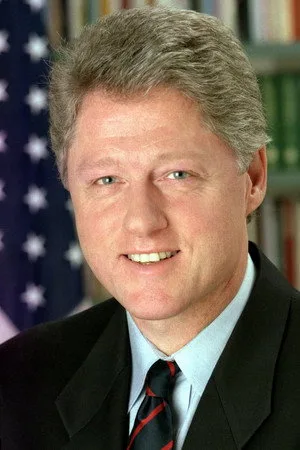 Bill Clinton
Self
Bill Clinton
Self -
 Fidel Castro
Self (archive footage)
Fidel Castro
Self (archive footage) -
 Anna Luca Biani
Model on Website
Anna Luca Biani
Model on Website -
 Jorge Molina
Mob leader
Jorge Molina
Mob leader -
 Trent Harris
Astronaut
Trent Harris
Astronaut -
 Abraham Amkpa
Alex
Abraham Amkpa
Alex - Jean Marie Offenbacher Carol Ratner
Quiz about this movie
Questions from the whole catalogue.
Play nowIf you liked this one
-
O Tradutor Drama from the 2010s
 6.8
6.8
-
Post Tenebras Lux Drama from the 2010s
 6.1
6.1
-
A Adolescente
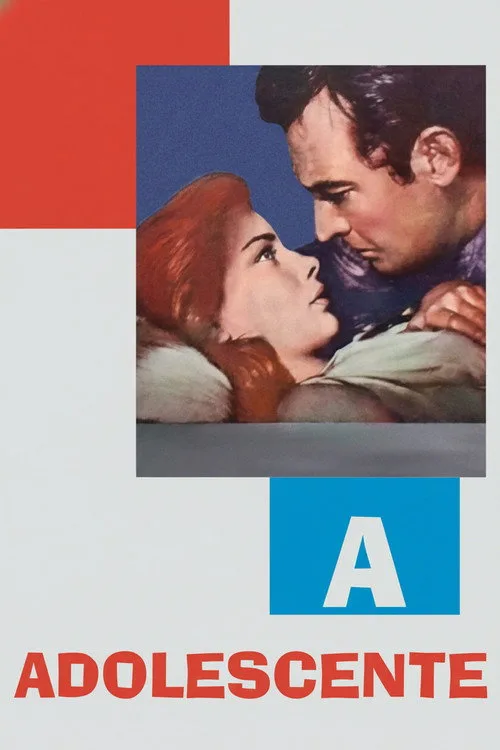 7.0
7.0
-
El encanto
 6.2
6.2
-
O Refúgio
 6.1
6.1
-
Tótem
 6.8
6.8
-
Aqui
 6.5
6.5
-
CATO
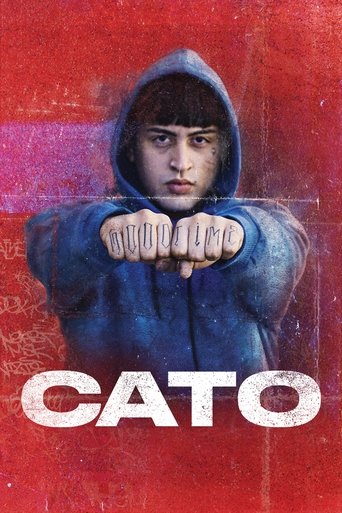 8.5
8.5
-
Tio Vanya em Nova York
 6.7
6.7
-
A Noite do Fogo
 7.6
7.6
-
Infância Clandestina Drama from the 2010s
 6.8
6.8
-
O Rei de Havana Drama from the 2010s
 6.9
6.9
Crew
- Miguel Coyula Director
- David Leitner Producer
- Dika Durbuzovic Original music
- Hayes Greenfield Original music
Questions about this film
What is Memories of Overdevelopment about?
Memories of Overdevelopment: An intellectual leaves the Cuban revolution and 'underdevelopment' behind only to find himself at odds with the ambiguities of his new life in the 'developed' world. A portrait of alienation, of an outsider with no clear-cut politics or ideology. A stranger in a strange land struggling with old age, sexual desire and …
Who directed Memories of Overdevelopment?
Memories of Overdevelopment was directed by Miguel Coyula in 2011.
Who stars in Memories of Overdevelopment?
The cast of Memories of Overdevelopment includes Bill Clinton, Fidel Castro, Anna Luca Biani, Jorge Molina and Trent Harris.
How long is Memories of Overdevelopment?
Memories of Overdevelopment runs for 113 minutes, or 1h53.
Similar films
 8.7
8.7
 8.5
8.5
 8.7
8.7
 7.9
7.9
 8.4
8.4
 8.5
8.5
 8.1
8.1
 8.2
8.2
 8.0
8.0
 8.2
8.2
 8.5
8.5
 8.5
8.5
Page updated on 09/15/2026.
Back to the catalogue