Missing (1982)
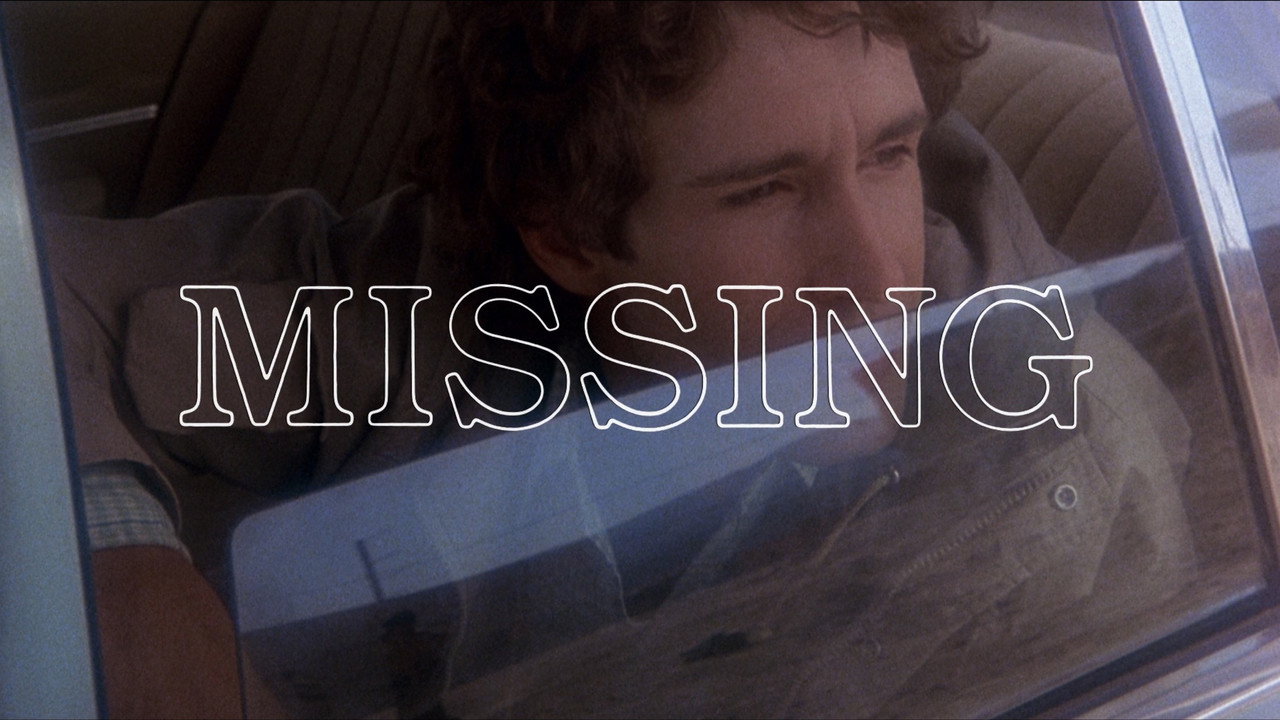
Missing (1982), directed by Costa-Gavras, starring Jack Lemmon and Sissy Spacek.
score
Ed Horman thought that being an American would guarantee his safety. His family believed that being Americans would guarantee them the truth. They were all wrong.
Synopsis
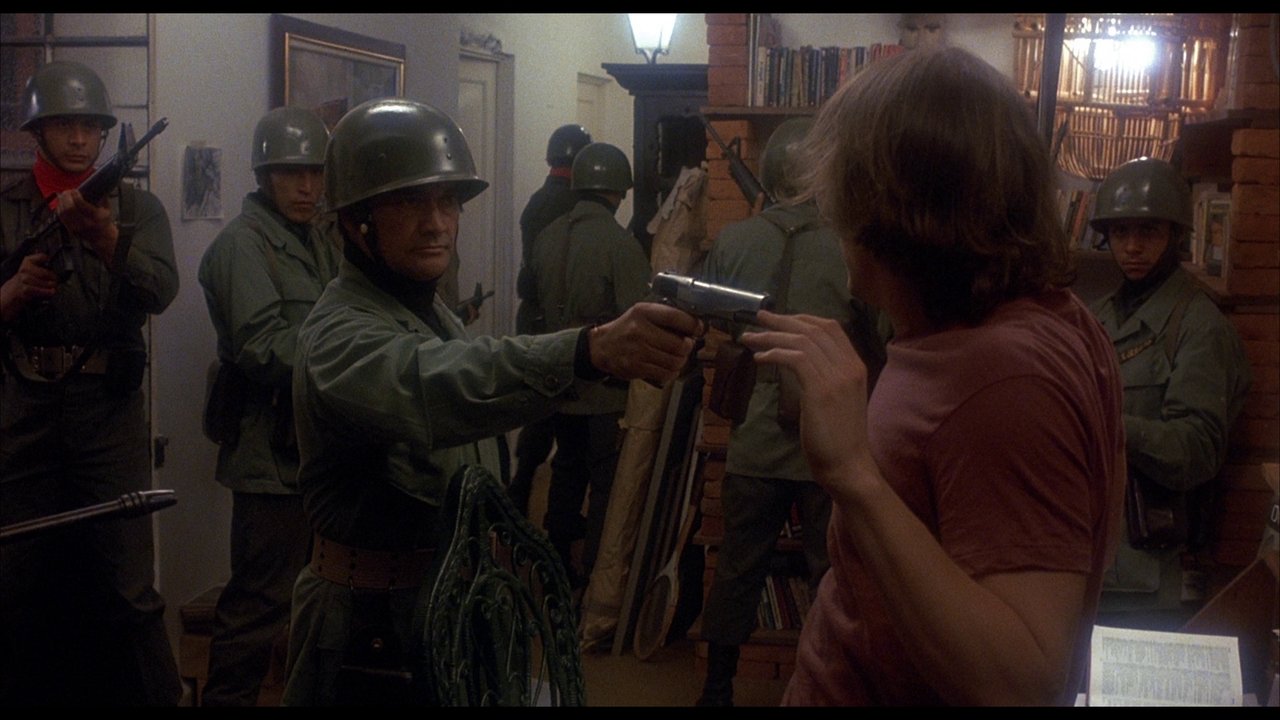
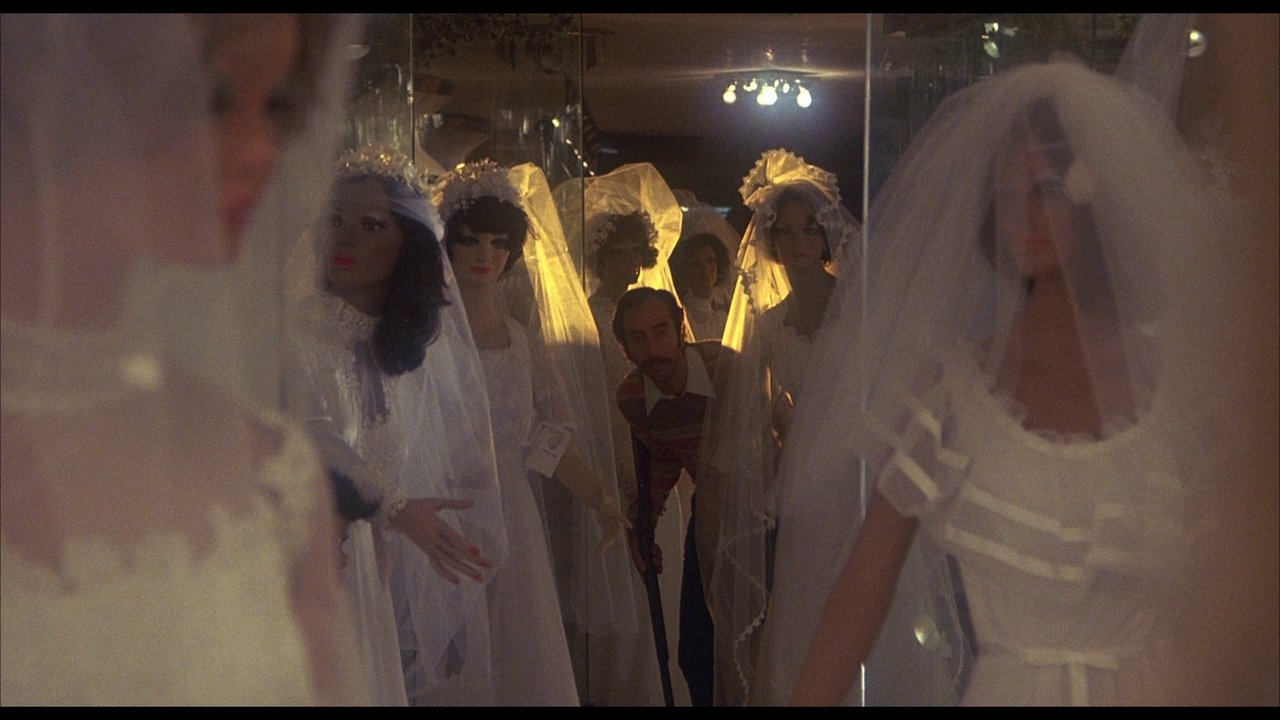
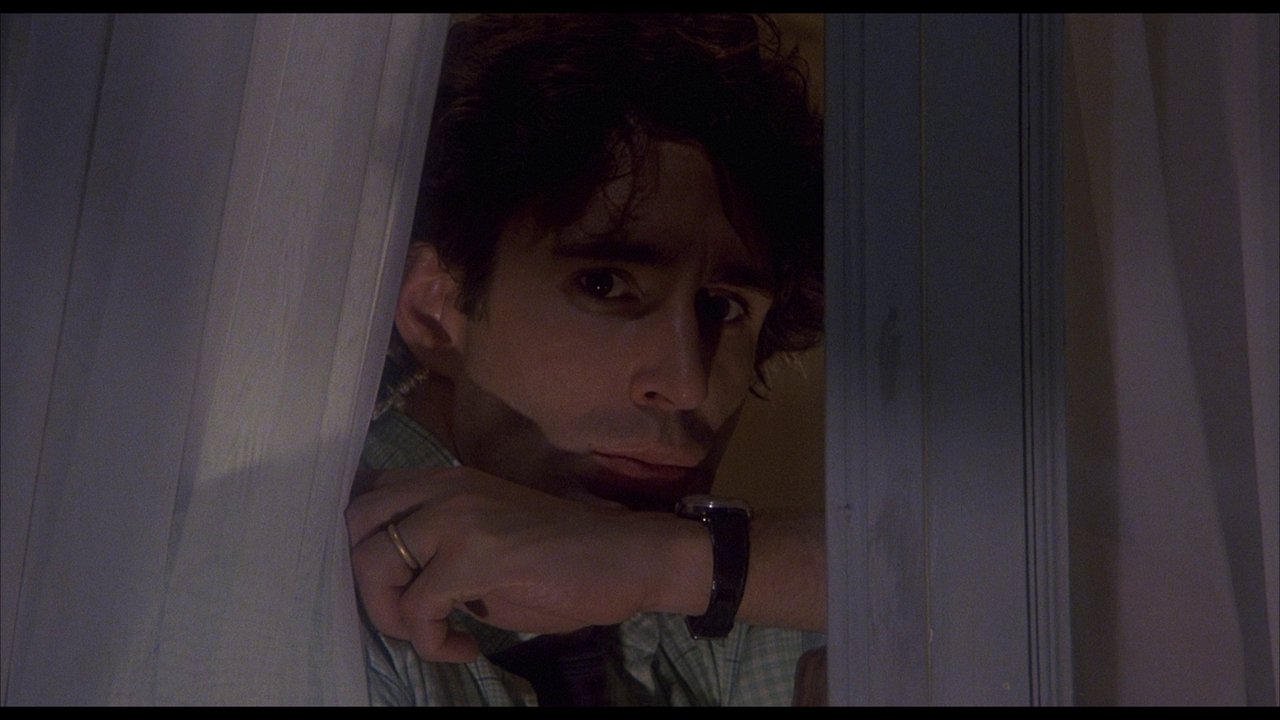
Based on the real-life experiences of Ed Horman. A conservative American businessman travels to Chile to investigate the sudden disappearance of his son after a military takeover. Accompanied by his son's wife he uncovers a trail of cover-ups that implicate the US State department which supports the dictatorship.
- Ricardo AronovichCinematography
- Costa-GavrasDirector, Screenplay
- Françoise BonnotEditing
- Edward LewisProducer
About the film
Missing (stylized as missing.) is a 1982 American biographical thriller drama film directed by Costa-Gavras from a screenplay written by Gavras and Donald E. Stewart, adapted from the book The Execution of Charles Horman: An American Sacrifice (1978) by Thomas Hauser (later republished under the title Missing in 1982), based on the disappearance of American journalist Charles Horman, in the aftermath of the Chilean coup of 1973, which deposed the democratically elected socialist President Salvador Allende.
The film stars Jack Lemmon, Sissy Spacek, Melanie Mayron, John Shea, Janice Rule and Charles Cioffi. Set largely during the days and weeks following Horman's disappearance, it examines the relationship between Horman's wife Beth and his father Edmund and their subsequent quest to find Horman.
Missing was theatrically released on February 12, 1982, to critical acclaim. The film premiered at the 1982 Cannes Film Festival where it was jointly awarded the Palme d'Or (along with the Turkish film Yol), while Lemmon won the Best Actor prize. It received four nominations at the 55th Academy Awards; Best Picture, Best Actor (for Lemmon), Best Actress (for Spacek) and won Best Adapted Screenplay. The film created significant controversy in Chile and was banned during Augusto Pinochet's dictatorship; neither Chile nor Pinochet is mentioned by name, although the Chilean cities of Viña del Mar and Santiago are, as is the airline LAN Chile.
Read the full article (8k characters)
Missing (stylized as missing.) is a 1982 American biographical thriller drama film directed by Costa-Gavras from a screenplay written by Gavras and Donald E. Stewart, adapted from the book The Execution of Charles Horman: An American Sacrifice (1978) by Thomas Hauser (later republished under the title Missing in 1982), based on the disappearance of American journalist Charles Horman, in the aftermath of the Chilean coup of 1973, which deposed the democratically elected socialist President Salvador Allende.
The film stars Jack Lemmon, Sissy Spacek, Melanie Mayron, John Shea, Janice Rule and Charles Cioffi. Set largely during the days and weeks following Horman's disappearance, it examines the relationship between Horman's wife Beth and his father Edmund and their subsequent quest to find Horman.
Missing was theatrically released on February 12, 1982, to critical acclaim. The film premiered at the 1982 Cannes Film Festival where it was jointly awarded the Palme d'Or (along with the Turkish film Yol), while Lemmon won the Best Actor prize. It received four nominations at the 55th Academy Awards; Best Picture, Best Actor (for Lemmon), Best Actress (for Spacek) and won Best Adapted Screenplay. The film created significant controversy in Chile and was banned during Augusto Pinochet's dictatorship; neither Chile nor Pinochet is mentioned by name, although the Chilean cities of Viña del Mar and Santiago are, as is the airline LAN Chile.
Plot
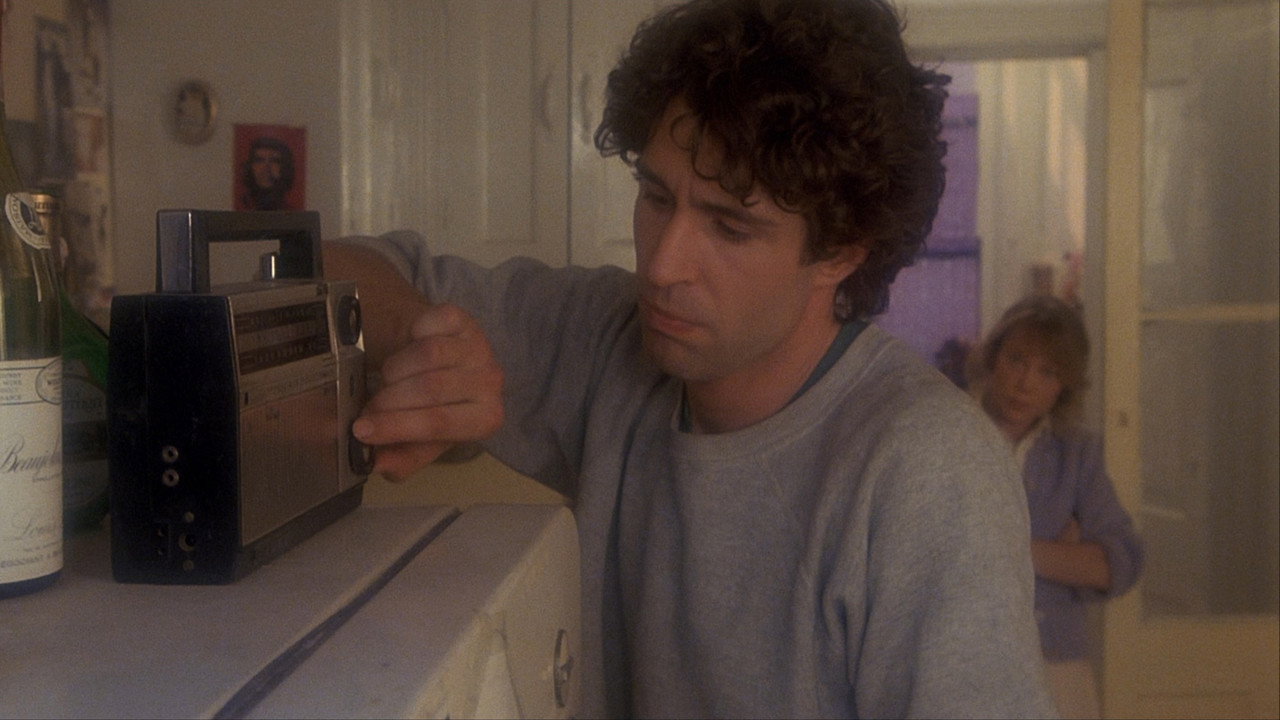
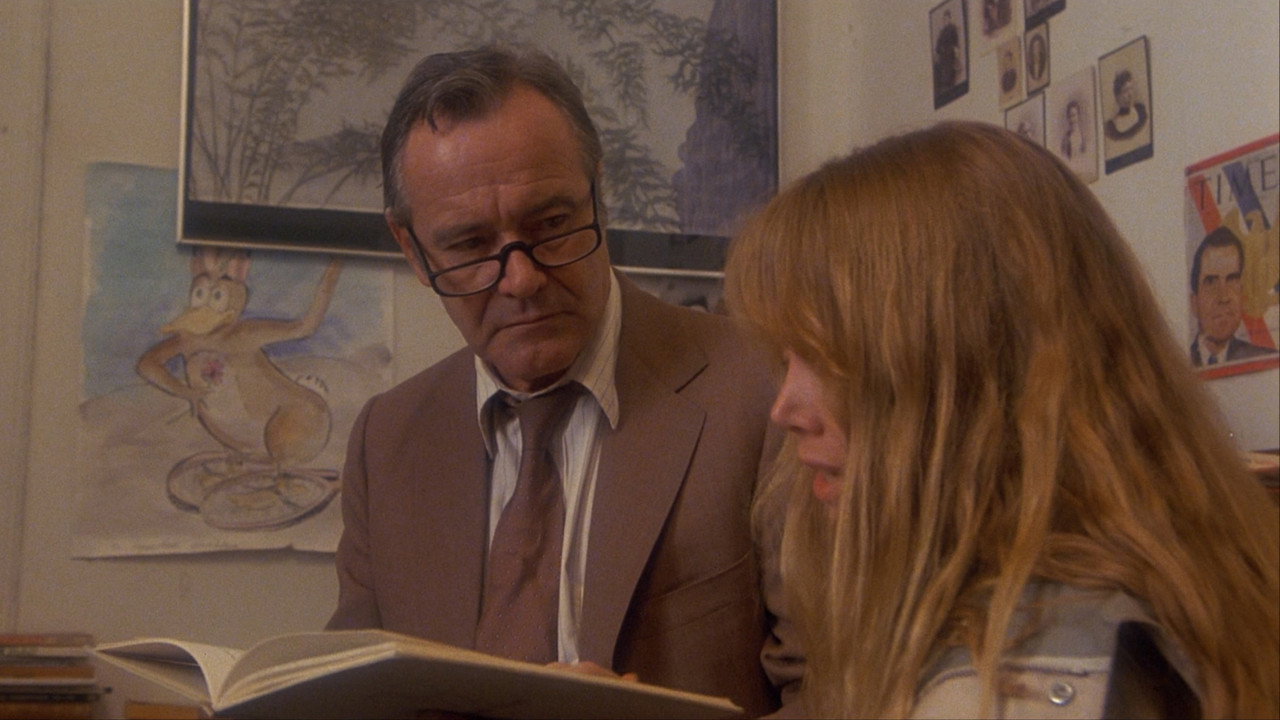
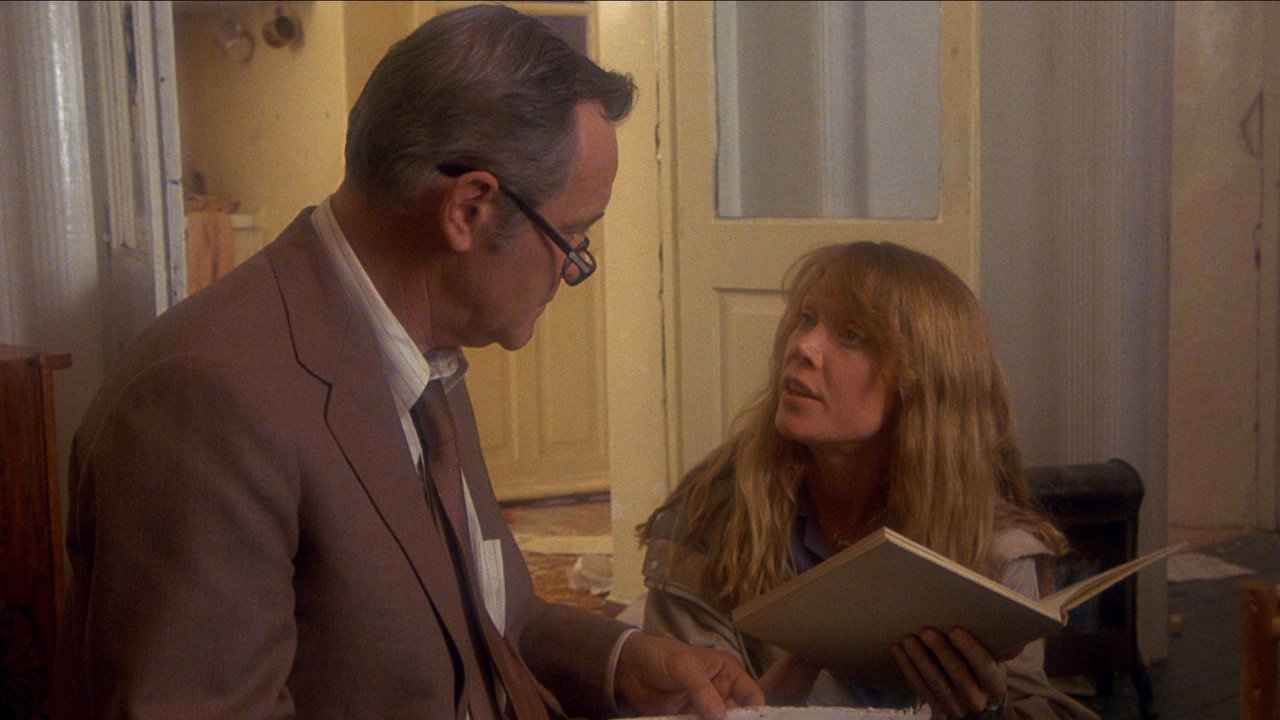
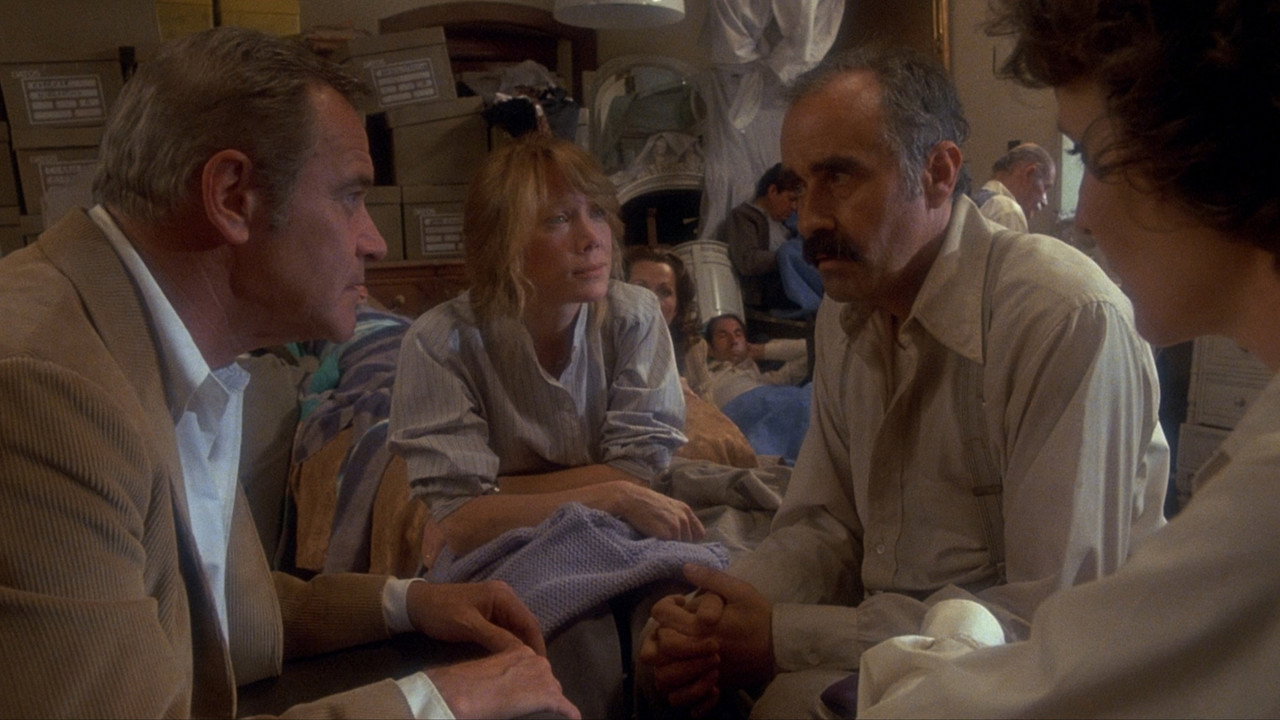
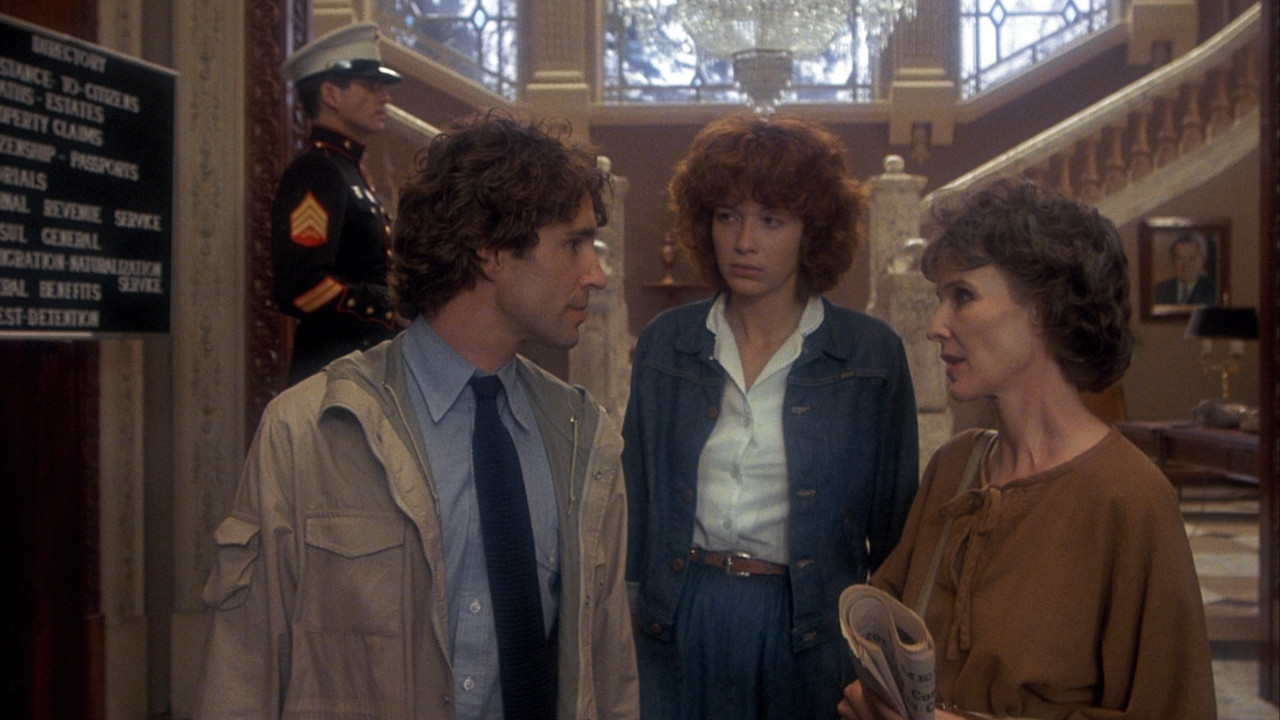
Ed Horman, a conservative businessman from New York, arrives in Chile to search for his son Charlie, a journalist who disappeared during the recent military coup. Ed meets his daughter-in-law, Beth, with whom he has a strained relationship, and they argue over politics. Ed blames his son and daughter-in-law's radical political views for Charlie's disappearance, while Beth blames the American government. Ed leverages his connections to meet with various government officials to uncover the truth about his son's vanishing.
As he investigates, Ed discovers that the American embassy is not as helpful as he expected and suspects them of concealing information about Charlie. One U.S. diplomat is polite and friendly but consistently lies to him; a high-ranking American military attaché is blunt and tells Ed that whatever happened to Charlie was his own fault, stating, "You play with fire, you get burned." Together, Ed and Beth learn that the U.S. had many interests in the country that were enhanced by the coup and its aftermath, and that many military officials aided Pinochet in the coup. As Ed becomes disillusioned with the American government, he comes to respect the work Beth and Charlie were doing, and he and Beth reconcile. When they receive proof that Charlie was murdered by the junta and that the U.S. allowed it to happen, he tells the embassy officials, "I just thank God we live in a country where we can still put people like you in jail!"
The film concludes with a postscript stating that, after Ed's return to the United States, he received Charlie's body seven months later, making an autopsy impossible, and that a subsequent lawsuit against the U.S. government was dismissed. It also adds that the State Department denies its involvement in the Pinochet coup, a position maintained to the present day.
Cast
Production
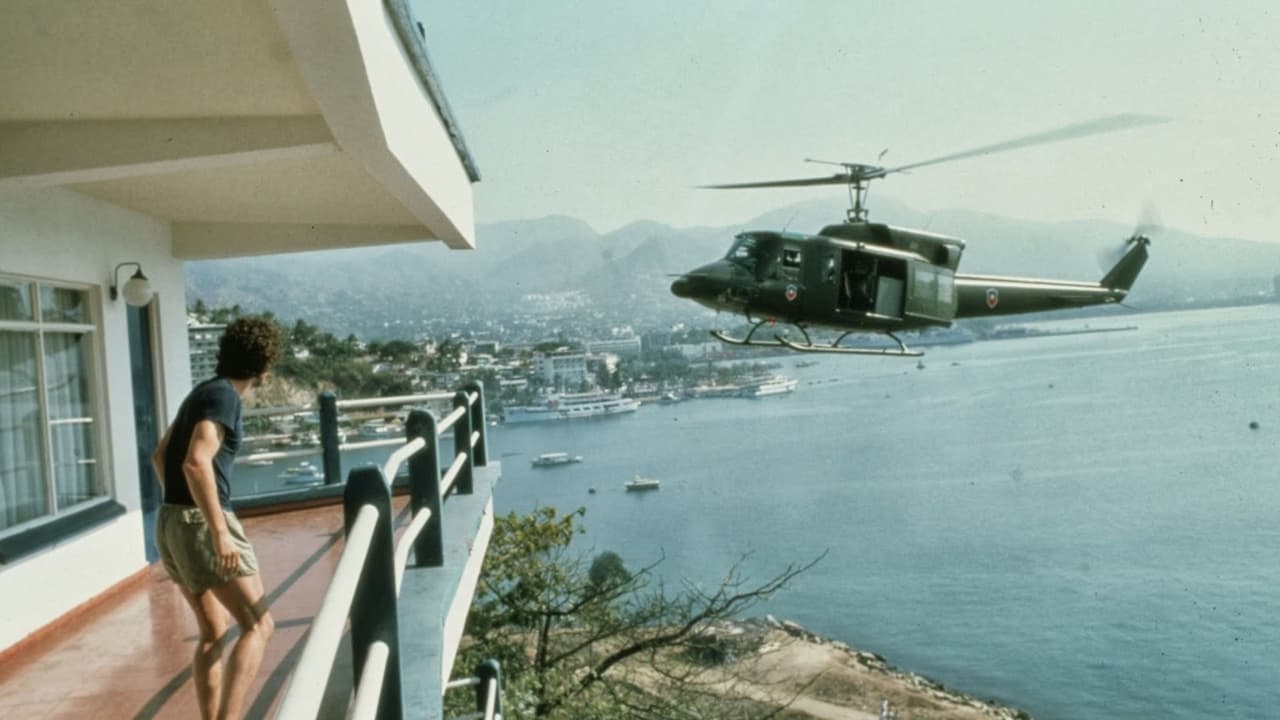
The film was shot in Mexico with a budget of $9.5 million from Universal Studios, marking Costa-Gavras' most expensive production. The city of Acapulco served as a stand-in for Viña del Mar, while interiors were shot at Estudios Churubusco.
Soundtrack
The score is by the Greek electronic composer Vangelis. The movie's piano theme has been used extensively in commercials, but an official release of the film's soundtrack has not yet occurred. The main theme appeared first on Vangelis' 1989 album Themes. A 45 rpm single of the title track backed with "Eric's Theme" from Chariots of Fire was released by Polydor in 1989. The main theme is also available on the Festival de Cannes (60th Anniversary) compilation of famous soundtracks. A bootleg release of the soundtrack exists. A sung version with lyrics by Tim Rice has been recorded by Elaine Paige and Nana Mouskouri.
Release
Missing was released in theaters on February 12, 1982, in limited theaters and was released widely on March 12, 1982, in 733 theaters. It ranked at #3 at the box office, grossing $2.3 million. In its first week, it grossed $5.5 million. In its second weekend, it landed at #5, making $1.8 million. For its second week, it made $2.3 million. After 49 days and 7 weeks in theaters, the film made between $14 million and $16 million in the US.
The film was released on both VHS and Laserdisc, in 1982 and 1987, by MCA Videocassette, MCA Videodisc, and MCA Home Video respectively. The VHS version was pulled from the market due to the lawsuit filed against director Costa-Gavras. Universal Home Video re-released Missing on DVD in 2004, following the dismissal of the lawsuit. A special edition DVD was released by The Criterion Collection in October 2008.
Lawsuit
In 1983, a year after the film's theatrical release, both the film (then in the home video market) and Thomas Hauser's book The Execution of Charles Horman were removed from the United States market following a lawsuit filed against Costa-Gavras and Universal Pictures's (then) parent company MCA by former ambassador Nathaniel Davis and two others for libel. A lawsuit against Hauser himself was dismissed because the statute of limitations had expired. Davis and his associates lost their lawsuit, after which the film was re-released by Universal in 2006.
Reception
Reviews
Roger Ebert gave the film three stars, writing that while the film was being cited for courage in criticism of the U.S. government, the criticism was clouded by its direction, but the best scenes were where Lemmon and Spacek's character were bogged down by the embassy's "niceties" in their search:By the time Missing begins its crucial last half-hour, a strange thing has happened. We care about this dead American, and his wife and father, almost despite the movie. The performances of Spacek and Lemmon carry us along through the movie's undisciplined stylistic displays.
Vincent Canby, writing for The New York Times, positively reviewed the film's message and Ricardo Aronovich's cinematography.
The American filmmaker Wes Anderson listed Missing as one of his favorite films.
In his 2015 Movie Guide, Leonard Maltin awarded Missing three and a half stars, highlighting Lemmon's acting and crediting Costa-Gavras as a skilled director. The film has a 94% approval rating on Rotten Tomatoes, based on 35 reviews with the consensus: "Thanks in large part to strong performances from Sissy Spacek and Jack Lemmon, Missing is both a gripping character exploration and an effective political thriller." Metacritic, which uses a weighted average, assigned the film a score of 78 out of 100, based on 10 critics, indicating "generally favorable" reviews.
Accolades
Missing won the Palme d'Or (Golden Palm) at the 1982 Cannes Film Festival, while Lemmon was awarded Best Actor for his performance.
See also
Forced disappearance
1973 Chilean coup d'état
Operation Condor (also known as Plan Condor)
References
Further reading
Hauser, Thomas (1978). The Execution of Charles Horman: An American Sacrifice. New York: Harcourt Brace Jovanovich. ISBN 0-151-29456-9.
Hauser, Thomas (1982). Missing: A New Film by Costa-Gavras. New York: AVON. ISBN 0-380-49098-6.
External links
Missing at IMDb
Missing at AllMovie
Missing at the TCM Movie Database (archived)
Missing at the AFI Catalog of Feature Films
Missing at Letterboxd
Missing at Rotten Tomatoes
Missing: “Who Would Care About Us If We Disappeared?” An essay by Michael Wood at the Criterion Collection.
Text from Missing (1982 film) on Wikipedia, licensed CC BY-SA 4.0. https://en.wikipedia.org/wiki/Missing_(1982_film)
Trivia
- It cost US$ 9.6 million and grossed US$ 14 million in theaters — 1.5 times its budget.
- It premiered on February 12, 1982, a Friday.
- It runs 2h02 — a typical feature length.
- It won 4 award(s) and received 4 nomination(s) on record at Wikidata — Academy Award for Best Writing, Adapted Screenplay among them.
- This film's quiz has 16 questions — enough to play more than once without repeats.
Production
- StudiosUniversal Pictures, Polygram Pictures, Edward Lewis Productions
- CountriesUnited States
- LanguagesSpanish, English
- BudgetUS$ 9,600,000
- Box officeUS$ 14,000,000
- StatusReleased
More about this film
Awards
- Academy Award for Best Writing, Adapted Screenplay 1983
- Writers Guild of America Award 1983
- Palme d'Or 1982
- National Board of Review: Top Ten Films
Nominations
- Academy Award for Best Picture 1983
- Academy Award for Best Actress 1983
- Academy Award for Best Actor 1983
- Academy Award for Best Writing, Adapted Screenplay 1983
Based on
- The Execution of Charles Horman: An American Sacrifice
Filming locations
- Mexico
Set in
- Chile
- Santiago
Videos
Photos
Cast
-
 Jack Lemmon
Ed Horman
Jack Lemmon
Ed Horman -
 Sissy Spacek
Beth Horman
Sissy Spacek
Beth Horman -
 Melanie Mayron
Terry Simon
Melanie Mayron
Terry Simon -
 John Shea
Charles Horman
John Shea
Charles Horman -
 Charles Cioffi
Captain Ray Tower
Charles Cioffi
Captain Ray Tower -
 David Clennon
Consul Phil Putnam
David Clennon
Consul Phil Putnam -
 Richard Venture
U.S. Ambassador
Richard Venture
U.S. Ambassador -
 Jerry Hardin
Colonel Sean Patrick
Jerry Hardin
Colonel Sean Patrick -
 Richard Bradford
Andrew Babcock
Richard Bradford
Andrew Babcock -
 Joe Regalbuto
Frank Teruggi
Joe Regalbuto
Frank Teruggi -
 Keith Szarabajka
David Holloway
Keith Szarabajka
David Holloway -
 John Doolittle
David McGeary
John Doolittle
David McGeary -
 Janice Rule
Kate Newman
Janice Rule
Kate Newman -
 Ward Costello
Congressman
Ward Costello
Congressman - Hansford Rowe Senator
-
 Tina Romero
Maria
Tina Romero
Maria - Richard Whiting Statesman
-
 Martin LaSalle
Paris
Martin LaSalle
Paris - Terence Nelson Colonel Clay
- Robert Hitt Peter Chernin
Quiz about this movie
Questions from the whole catalogue.
Play nowIf you liked this one
-
Todos os Homens do Presidente
 7.7
7.7
-
Perigo Real e Imediato
 6.6
6.6
-
Murder at the Embassy
 6.0
6.0
-
O Ultimato Bourne
 7.4
7.4
-
A Traição do Falcão Drama from the 1980s
 6.4
6.4
-
A Soma de Todos os Medos
 6.4
6.4
-
Sete Dias de Maio
 7.4
7.4
-
No Limite
 6.1
6.1
-
Relay: Contrato Perigoso
 7.0
7.0
-
Crimes em Primeiro Grau
 6.3
6.3
-
A Caçada
 6.5
6.5
-
Assassinato Num Dia de Sol Drama from the 1980s
 6.9
6.9
Tags
Crew
- Ricardo Aronovich Cinematography
- Costa-Gavras Director
- Françoise Bonnot Editing
- Edward Lewis Producer
- Mildred Lewis Producer
- Vangelis Original music
- Donald E. Stewart Screenplay
- Costa-Gavras Screenplay
Questions about this film
What is Missing about?
Missing: Based on the real-life experiences of Ed Horman. A conservative American businessman travels to Chile to investigate the sudden disappearance of his son after a military takeover. Accompanied by his son's wife he uncovers a trail of cover-ups that implicate the US State department which supports the dictatorship.
Who directed Missing?
Missing was directed by Costa-Gavras in 1982.
Who stars in Missing?
The cast of Missing includes Jack Lemmon, Sissy Spacek, Melanie Mayron, John Shea and Charles Cioffi.
How long is Missing?
Missing runs for 122 minutes, or 2h02.
How much did Missing cost and how much did it make?
Missing had a budget of US$ 9,600,000 and took US$ 14,000,000 at the box office — 1.5 times its cost.
What is Missing based on?
Missing is based on The Execution of Charles Horman: An American Sacrifice.
What awards did Missing win?
Missing has 4 recorded awards, among them Academy Award for Best Writing, Adapted Screenplay, Writers Guild of America Award, Palme d'Or and National Board of Review: Top Ten Films.
Similar films
 8.2
8.2
 7.9
7.9
 8.0
8.0
 7.1
7.1
 7.5
7.5
 7.0
7.0
 8.3
8.3
 7.8
7.8
 7.7
7.7
 7.6
7.6
 8.1
8.1
Page updated on 09/10/2026.
Back to the catalogue