My House in Umbria (2003)
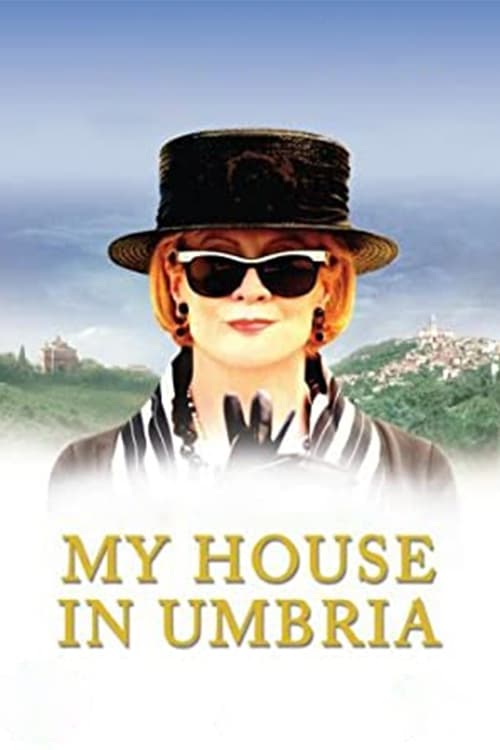
My House in Umbria (2003), directed by Richard Loncraine, starring Maggie Smith and Ronnie Barker.
score
Synopsis
Emily Delahunty is an eccentric British romance novelist who lives in Umbria in central Italy. One day while travelling, the train she is on is bombed by terrorists. After she wakes up in a hospital, she invites three of the other survivors of the disaster to stay at her Italian villa for recuperation. Of these are The General, a retired British Army veteran, Werner, a young German man, and Aimee, a young American girl who has now become mute after her parents were both killed in the explosion.
- Richard LoncraineDirector
- Humphrey DixonEditing
- Ann WingateProducer
- Marco Valerio PuginiProducer
About the film
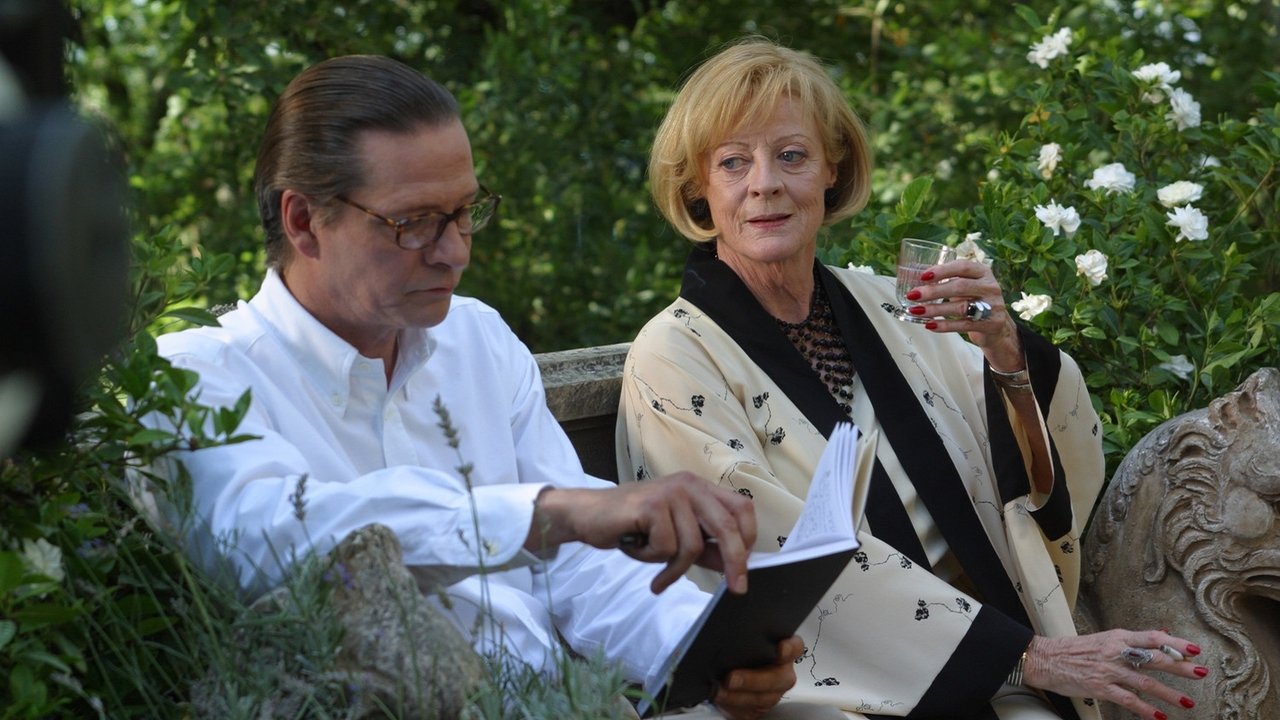
My House in Umbria is a 2003 British-Italian made-for-television drama mystery film directed by Richard Loncraine. Loosely based on William Trevor's 1991 novella of the same name, published alongside another novella in the collection Two Lives, the film stars Maggie Smith as Emily Delahunty, a flamboyant English romance novelist living in Umbria. After surviving a terrorist bombing aboard a train, Emily invites several fellow survivors to recuperate at her home, including Aimee, a young American girl orphaned in the attack, to whom she becomes particularly attached.
The film received mixed reviews from critics, with Smith's performance consistently praised for its restrained and sympathetic portrayal, while critics also highlighted its visual style and themes of recovery and emotional healing but criticized its slow pace and conventional storytelling. My House in Umbria received numerous award nominations, including at the Golden Globe Awards, Directors Guild of America, and Satellite Awards. Smith won the Primetime Emmy Award for Outstanding Lead Actress in a Miniseries or a Movie, while the film also won the Producers Guild of America Award for Best Long-Form Television.
Read the full article (11k characters)
My House in Umbria is a 2003 British-Italian made-for-television drama mystery film directed by Richard Loncraine. Loosely based on William Trevor's 1991 novella of the same name, published alongside another novella in the collection Two Lives, the film stars Maggie Smith as Emily Delahunty, a flamboyant English romance novelist living in Umbria. After surviving a terrorist bombing aboard a train, Emily invites several fellow survivors to recuperate at her home, including Aimee, a young American girl orphaned in the attack, to whom she becomes particularly attached.
The film received mixed reviews from critics, with Smith's performance consistently praised for its restrained and sympathetic portrayal, while critics also highlighted its visual style and themes of recovery and emotional healing but criticized its slow pace and conventional storytelling. My House in Umbria received numerous award nominations, including at the Golden Globe Awards, Directors Guild of America, and Satellite Awards. Smith won the Primetime Emmy Award for Outstanding Lead Actress in a Miniseries or a Movie, while the film also won the Producers Guild of America Award for Best Long-Form Television.
Plot
Emily Delahunty is an eccentric British romance novelist who lives in Umbria, Italy, where she runs a small pensione with the help of her manager, Quinty. Having fled a traumatic past, she has constructed an idealized life for herself through her novels and her secluded home.
While traveling to Milan on a shopping trip, Emily survives a terrorist bombing aboard her train. After recovering in hospital, she invites three fellow survivors to recuperate at her villa: a retired British Army officer known as the General, a young German photographer named Werner, and Aimee, an American girl whose parents were killed in the attack. Aimee has been rendered mute by the trauma, while the General has lost his daughter and Werner has suffered severe injuries and lost his girlfriend.
As the survivors recover, Inspector Girotti investigates the bombing. Under Emily's care, Aimee gradually begins to speak again, and the group forms an unlikely family. Their fragile peace is threatened when Aimee's uncle, Thomas Riversmith, a university professor from the United States, arrives to take her home. Although Thomas and his wife have little experience raising children, they intend to care for Aimee themselves. Emily, who has grown deeply attached to the girl, tries to persuade Thomas to leave her in Italy.
Flashbacks reveal the traumatic experiences that shaped Emily's life. Orphaned as a child, she was abused by her adoptive father and later left England with a traveling salesman, eventually living as a prostitute before Quinty helped her establish a new life in Italy. Her relationship with Aimee allows Emily to confront aspects of her past that she has long avoided.
Meanwhile, Inspector Girotti discovers evidence linking Werner to the terrorist attack. Emily reluctantly reaches the same conclusion, but Werner secretly leaves the villa before he can be confronted. Despite the revelation, Emily's life takes a hopeful turn. The General decides to remain in Umbria, while Thomas ultimately agrees to let Aimee stay with Emily. Having formed a new family among the survivors, Emily embraces her changed circumstances and finds a measure of peace with her past.
Cast
Production
Pre-production and development
The film was developed for American cable television network HBO and produced as a British-Italian co-production by Canine Films and Panorama Films in association with HBO Films. Anne Wingate served as producer, with Frank Doelger and Robert Allan Ackerman as executive producers and Marco Valerio Pugini as co-producer. Richard Loncraine was attached to direct, while Hugh Whitemore wrote the screenplay, adapting William Trevor's 1991 novella of the same name. Loncraine and Whitemore had previously collaborated on the 2002 BBC/HBO television film The Gathering Storm (2002), for which Whitemore received the Emmy Award for Outstanding Writing for a Movie. While retaining the novella’s central premise, Loncraine and Whitemore’s adaptation took greater liberties with the source material, introducing a number of changes and departures from the original.
As with Whitemore, My House in Umbria reunited Loncraine with several members of The Gathering Storm's production team, including production designer Luciana Arrighi and casting director Irene Lamb. The film also assembled an experienced international crew, with Christina Onori serving as art director and Alessandra Querzola as set decorator, while several members of the team would go on to collaborate with Loncraine on later projects. Nicoletta Ercole designed the costumes, Marco Pontecorvo served as director of photography, Humphrey Dixon edited the film, and Claudio Capponi composed the score. Sergio Ercolessi served as first assistant director, with David Stephenson overseeing sound and Daniel Acon and Angus Bickerton supervising special and visual effects, respectively.
Filming and locations
My House in Umbria was filmed in 2002, primarily on location in Italy, with additional studio filming in Italy and the United Kingdom. The film's visual design presented several logistical challenges for Loncraine and his team, particularly because the Italian landscape had changed considerably in the years since the period in which Trevor's novella is set. Although the novella does not specify a precise year, its events take place in an earlier, unspecified period, preceding the film's production by more than a decade. The production therefore sought locations that retained the architectural, agricultural, and natural features associated with the Italy depicted in the novella, while also incorporating elements of visual reconstruction where existing locations no longer corresponded to its appearance. Loncraine described this process as an effort to recreate "an Italy that is perhaps no longer there."
Although the film is set in Umbria, a region of central Italy, much of it was shot elsewhere in the country. Many scenes depicting Delahunty's villa, the film's principal setting, were filmed at Villa Arceno, a historic estate situated south of San Gusmè, a hamlet of Castelnuovo Berardenga in the Province of Siena, Tuscany. The former private estate dates back to the 17th century and was owned by a consortium at the time of filming. Other Italian locations included the old town of Siena; San Casciano in Val di Pesa, in the Metropolitan City of Florence; the now-defunct Stazione di Allumiere in the province of Rome, Lazio; the medieval village of Calcata in the province of Viterbo; and the forecourt of the basilica of Santi Pietro e Paolo a Via Ostiense in Rome. Studio filming took place at Cinecittà studios in Rome, as well as Shepperton Studios and Twickenham Film Studios in London, where reshoots and sequences depicting the dream scenes, which take place outside Italy, were primarily filmed.
Reception
Commerical performance
My House in Umbria premiered at the Santa Barbara International Film Festival on March 12, 2003, where it was screened as part of the festival's Journey to Italy program. In North America, the film bypassed a traditional theatrical release and instead premiered on HBO on May 25, 2003. Its initial HBO broadcast attracted approximately 3 million viewers, according to The New York Times. Although a strong audience for a television film, the figure was lower than the ratings achieved by several other recent HBO original productions, including And Starring Pancho Villa as Himself (3.4 million), Normal (3.1 million), and Hysterical Blindness (5.5 million), as well as Mike Nichols' miniseries Angels in America ( 4.2 million).
Following its television success, My House in Umbria received limited theatrical distribution in several international markets, primarily through independent and specialized art-house cinemas. In Australia and New Zealand, the film was distributed by Hopscotch Films; in the United Kingdom, by Universal Pictures UK; in Germany, by Concorde Filmverleih; and in Italy, by Mikado Film. These international theatrical releases were secondary to the film’s original television distribution through HBO and were generally handled as limited, specialized engagements rather than wide commercial releases. Despite its limited theatrical exposure, the film grossed approximately $1.32 million worldwide. In New Zealand, My House in Umbria earned $609,510 during its theatrical run, reaching a peak of fifth place on the weekly box-office chart.
Critical response
Critics gave My House in Umbria a generally favorable reception, with Maggie Smith's performance as Emily Delahunty being the most consistently praised aspect. On the review aggregator website Rotten Tomatoes, the film holds an approval rating of 50% based on six reviews. Apart from Smith's performance, several crtitics also praised the film's visual and emotional qualities. Lael Loewenstein of Variety called it a "superb adaptation" that was "visually lush and dramatically poignant," while David Wiegand from The San Francisco Chronicle described it as a "lovely adaptation" and praised Smith's "magnificent and uncharacteristically restrained performance." Writing for New York magazine, John Leonard similarly praised Smith's ability to make Emily's idealized worldview sympathetic, while highlighting the film's emphasis on character and emotional recovery. Josh Friedman of The Los Angeles Times described Smith's performance as "touching" and praised the film's portrayal of the survivors finding "solace and friendship." The Independent's Anthony Quinn praised the film as "tastefully made."
Other critics found the film's leisurely pace and lack of narrative momentum less successful. Time Out called it a "pretty moderate cable movie" that "trundles along pleasantly enough," while Alessandra Stanley of The New York Times described it as a "leisurely paced psychological thriller" whose "appeal [...] is elusive". Philip French of The Observer praised Smith but said the film began "with a bang" before continuing "with an extended whimper." Anna Smith of Empire similarly praised the Italian setting and Smith's performance but criticized the film as "rather sluggishly told." The most negative responses focused on the film's restrained style and conventional storytelling, with Neil Smith of the BBC describing it as "another tediously tasteful vehicle" for Smith. He found it "so airless and mannered that the end result is stultifying." Peter Bradshaw from The Guardian called it "another genteel diversion," criticizing it as "a bit soppy, a bit soggy" and concluding that "nothing really clicks and the ending is very feeble." Evening Standard's Derek Malcolm argued that Smith was "the only reason to see it," criticizing Loncraine's direction and the screenplay as "blandly gooey."
Accolades
See also
Two Lives, the volume on which the film is based
References
External links
My House in Umbria at IMDb
Text from My House in Umbria on Wikipedia, licensed CC BY-SA 4.0. https://en.wikipedia.org/wiki/My_House_in_Umbria
Trivia
- It premiered on May 25, 2003, a Sunday.
- It runs 1h43 — a typical feature length.
- This film's quiz has 10 questions — enough to play more than once without repeats.
Production
- StudiosHBO Films, Panorama Films
- CountriesUnited Kingdom, United States, Italy
- LanguagesGerman, Italian, Latin, English
- StatusReleased
More about this film
Set in
- Italy
Cast
-
 Maggie Smith
Mrs. Emily Delahunty
Maggie Smith
Mrs. Emily Delahunty -
 Ronnie Barker
The General
Ronnie Barker
The General -
 Chris Cooper
Thomas 'Tom' Riversmith
Chris Cooper
Thomas 'Tom' Riversmith -
 Benno Fürmann
Werner
Benno Fürmann
Werner -
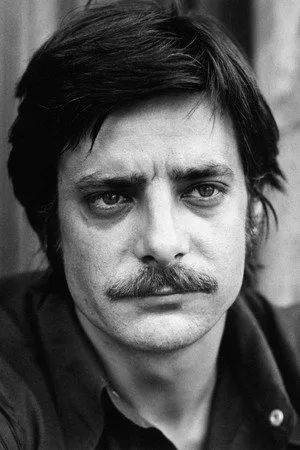 Giancarlo Giannini
Inspector Girotti
Giancarlo Giannini
Inspector Girotti -
 Timothy Spall
Quinty
Timothy Spall
Quinty -
 Libero De Rienzo
Dr. Innocenti
Libero De Rienzo
Dr. Innocenti -
 Emmy Clarke
Aimee
Emmy Clarke
Aimee -
 Cecilia Dazzi
Rosa Crevelli
Cecilia Dazzi
Rosa Crevelli -
 Anna Longhi
Signora Barcini
Anna Longhi
Signora Barcini - Deirdre Harrison Phyllis, Aimee's Mother
-
 Silvia De Santis
Madeleine
Silvia De Santis
Madeleine - Alison Cameron Adam General's Daughter
-
 Lynn Swanson
Francine Riversmith
Lynn Swanson
Francine Riversmith - Taddeo Harbutt Young General
- Vittoria Colonna Di Stigliano Young Woman
-
 Yari Gugliucci
Terrorist
Yari Gugliucci
Terrorist -
 Pietro Ragusa
Terrorist
Pietro Ragusa
Terrorist -
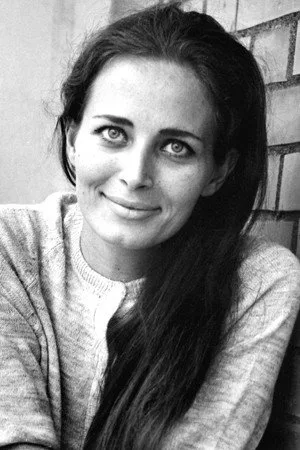 Anna Orso
Woman in Siena
Anna Orso
Woman in Siena -
 Ana Mulvoy-Ten
Girl (uncredited)
Ana Mulvoy-Ten
Girl (uncredited)
Quiz about this movie
Questions from the whole catalogue.
Play nowIf you liked this one
-
Garagem de Mistérios: Culpado ou Inocente
 6.4
6.4
-
Past Malice: An Emma Fielding Mystery
 6.5
6.5
-
Um Mistério de Aurora Teagarden: O Segredo da Caveira
 6.9
6.9
-
Perigos da Rede
 6.3
6.3
-
Jesse Stone: Perdido no Paraíso
 6.6
6.6
-
Visões de Um Crime Drama from the 2000s
 5.9
5.9
-
Um Mistério de Aurora Teagarden: Colhendo o que Plantou
 6.9
6.9
-
Miss Marple: The Murder at the Vicarage
 6.7
6.7
-
Memórias Secretas
 7.4
7.4
-
Miss Marple: A Caribbean Mystery
 6.7
6.7
-
Noite Interminável
 6.1
6.1
-
Ilha do Mistério
 5.9
5.9
Crew
- Richard Loncraine Director
- Humphrey Dixon Editing
- Ann Wingate Producer
- Marco Valerio Pugini Producer
- Claudio Capponi Original music
Questions about this film
What is My House in Umbria about?
My House in Umbria: Emily Delahunty is an eccentric British romance novelist who lives in Umbria in central Italy. One day while travelling, the train she is on is bombed by terrorists. After she wakes up in a hospital, she invites three of the other survivors of the disaster to stay at her Italian villa for recuperation. Of these are Th…
Who directed My House in Umbria?
My House in Umbria was directed by Richard Loncraine in 2003.
Who stars in My House in Umbria?
The cast of My House in Umbria includes Maggie Smith, Ronnie Barker, Chris Cooper, Benno Fürmann and Giancarlo Giannini.
How long is My House in Umbria?
My House in Umbria runs for 103 minutes, or 1h43.
Similar films
-
 7.8
7.8
Sherlock: The Abominable Bride
2016
-
 6.7
6.7
Flowers in the Attic
2014
-
 6.6
6.6
Red Riding: The Year of Our Lord 1974
2009
-
 7.4
7.4
An Inspector Calls
2015
-
 7.9
7.9
Doctor Who: The Waters of Mars
2009
-
 7.6
7.6
Doctor Who: Voyage of the Damned
2007
-
 6.9
6.9
Red Riding: The Year of Our Lord 1980
2009
-
 6.9
6.9
Red Riding: The Year of Our Lord 1983
2009
-
 7.5
7.5
Ed, Edd n Eddy's Big Picture Show
2009
-
 8.2
8.2
Shutter Island
2010
-
 7.9
7.9
Gone Girl
2014
-
 7.6
7.6
Arrival
2016
Page updated on 09/10/2026.
Back to the catalogue