Nancy Goes to Rio (1950)
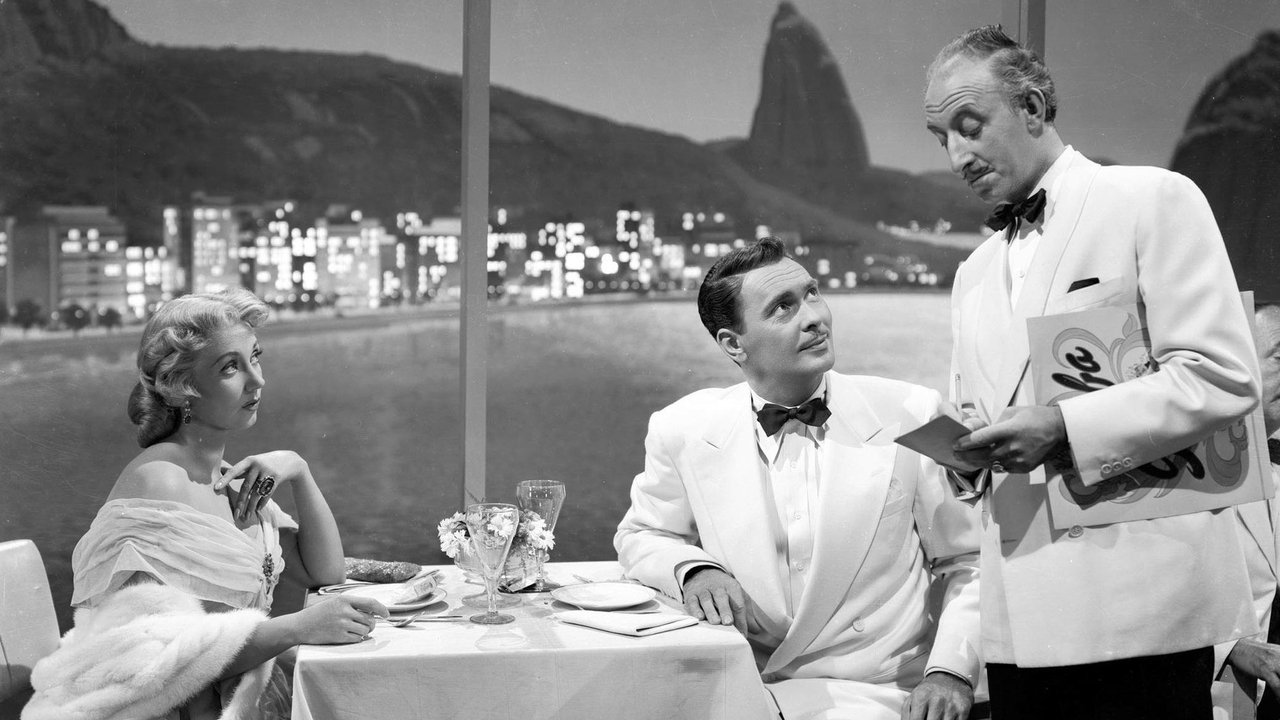
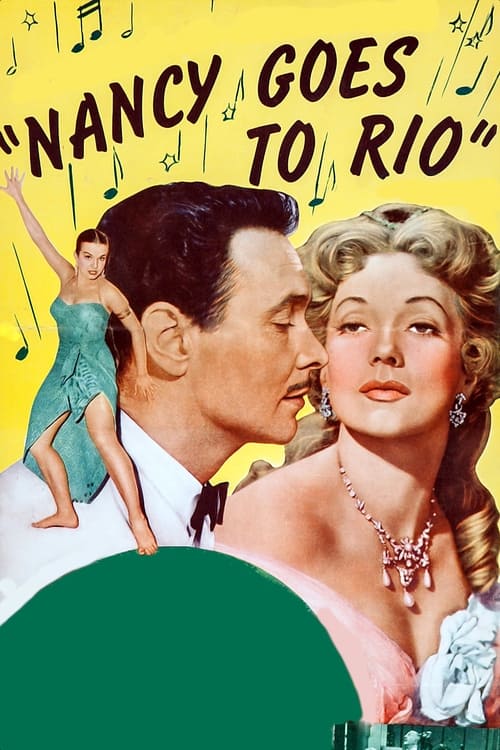
Nancy Goes to Rio (1950), directed by Robert Z. Leonard, starring Ann Sothern and Jane Powell.
score
It's Eastertime...time for M-G-M's TECHNICOLOR treat with a musical beat!!!
Synopsis
Mother and daughter compete over same singing role and, unbeknownst to each other, the same man.
- Ray JuneCinematography
- Robert Z. LeonardDirector
- Adrienne FazanEditing
- Joe PasternakProducer
About the film
Nancy Goes to Rio is a 1950 American Technicolor musical-comedy film directed by Robert Z. Leonard and produced by Joe Pasternak from a screenplay by Sidney Sheldon, based on a story by Jane Hall, Frederick Kohner, and Ralph Block. The music was directed and supervised by George Stoll and includes compositions by George and Ira Gershwin, Giacomo Puccini, Jack Norworth, and Stoll.
The film stars Jane Powell, Ann Sothern, Barry Sullivan, Carmen Miranda, Louis Calhern, and Scotty Beckett.
Read the full article (9k characters)
Nancy Goes to Rio is a 1950 American Technicolor musical-comedy film directed by Robert Z. Leonard and produced by Joe Pasternak from a screenplay by Sidney Sheldon, based on a story by Jane Hall, Frederick Kohner, and Ralph Block. The music was directed and supervised by George Stoll and includes compositions by George and Ira Gershwin, Giacomo Puccini, Jack Norworth, and Stoll.
The film stars Jane Powell, Ann Sothern, Barry Sullivan, Carmen Miranda, Louis Calhern, and Scotty Beckett.
Plot
On the closing night of a Broadway play, leading actress Frances Elliott hosts a party attended by many guests, including her eccentric father Gregory, who is also an actor; her seventeen-year-old daughter, Nancy Barklay, an aspiring actress; and Brazilian playwright Ricardo Domingos, who is considering starring Frances in his next play.
Frances eagerly pursues the part in Ricardo's play, and though she is virtually assured of the role, Ricardo asks her not publicize the news until a final decision is made. Later, Ricardo privately tells Frances' producer that Frances may not be right for the part and that he had a younger actress in mind. Then, when Ricardo meets Nancy, he instantly knows that he has found the perfect young woman for the role.
The next day, Frances sets sail for Rio de Janeiro, where she intends to vacation and devote herself to studying her lines. Gregory accompanies Frances to Rio, while Nancy, who is about to star in a small stock company play, goes to Connecticut. After observing Nancy's acting abilities, Ricardo offers her the part that he promised Frances. Nancy accepts the role, though she is unaware that Ricardo has already promised it to her mother.
Seeking the quiet she needs to study for the part, Nancy follows her mother and grandfather to Rio. On board the ship, businessman Paul Berten overhears Nancy rehearsing her lines and mistakenly concludes that she is a deserted wife and an expectant mother. Paul takes pity on Nancy and enlists the help of his business partner, Marina Rodrigues, to counsel the young girl.
Nancy does not know that Paul is trying to help her and mistakes his paternal concern for a marriage proposal. She rejects Paul's apparent proposal, and bids him farewell when the ship reaches Rio.
Soon after she is reunited with her mother, Nancy overhears her rehearsing her lines and immediately realizes that they are studying for the same part. The revelation devastates Nancy and prompts her to bow out of the play. She does not tell her mother that she was set to star in Ricardo's play, and instead informs her that she is in an entirely different play.
Confusion abounds when Nancy later visits Paul at his office and tries to accept the marriage proposal she thought he had made. Paul is perplexed by her behavior, and still thinks that Nancy is pregnant and troubled. He sends her home to talk to her mother about her situation, but Nancy misunderstands him and thinks that he meant for her to discuss their impending marriage with her mother.
Marina follows Nancy to her mother's house, and privately tells Frances about Nancy's supposed pregnancy. The confusion is heightened when Frances misunderstands her daughter's anguish and concludes that she must be pregnant by Paul.
Frances demands a private meeting with Paul, during which he reveals his romantic attraction to Frances. Frances leaves Paul in disgust, but the situation is soon clarified when Paul tells Gregory that he had only just met Nancy on the boat. Gregory immediately recognizes Nancy's supposed predicament from the story of the play that Frances was reading, and explains the situation to Frances.
When Frances learns the truth about Paul, she changes her impression of him and they embark on a romance. After announcing her engagement to Paul, Frances withdraws from Ricardo's play and suggests Nancy as her replacement. All ends happily when the show opens in New York with Nancy in the starring role.
Cast
Ann Sothern as Frances Elliott
Jane Powell as Nancy Barklay
Barry Sullivan as Paul Berten
Carmen Miranda as Marina Lopes Souza Rodrigues
Louis Calhern as Gregory Elliott
Scotty Beckett as Scotty Sheridan
Fortunio Bonanova as Ricardo Domingos
Glenn Anders as Arthur Barrett
Nella Walker as Mrs. Harrison
Hans Conried as Alfredo
Frank Fontaine as The Mashe
John Goldsworthy as Butler
Michael Raffetto as Purser (uncredited)
Production
The working titles of this film were Ambassador to Brazil and His Excellency from Brazil.
The 1940 Universal film It's a Date, produced by Joe Pasternak, directed by William A. Seiter and starring Deanna Durbin and Kay Francis, was also based on Jane Hall, Frederick Kohner and Ralph Block's screen story.
Despite the title and some colorful second-unit footage, the film was mostly filmed on MGM's soundstages. The production makes use of lavish, elegant "New Look" gowns and colorful sets, typical of the top-notch MGM standards.
This was the final film of Ann Sothern's MGM contract; she soon appeared in a series of television sitcoms.
Musical numbers
"Time and Time Again", music by Fred Spielman, lyrics by Earl Brent
"Shine On, Harvest Moon", music by Nora Bayes, lyrics by Jack Norworth
"Magic Is the Moonlight", music and lyrics by María Grever (song "Te quiero dijiste"), English lyrics by Charles Pasquale
"Nancy's Goin' to Rio", music by Georgie Stoll, lyrics by Earl Brent
"Cae Cae", music by Roberto Martins, lyrics by Pedro Barrios, English lyrics by John Latouche
"Yipsee-I-O", music and lyrics by Ray Gilbert
"Embraceable You", music by George Gershwin, lyrics by Ira Gershwin
"Baião (Ca-Room' Pa Pa)", written by Humberto Teixeira and Luiz Gonzaga, English lyrics by Ray Gilbert
"Musetta's Waltz", from the opera La Bohème, music by Giacomo Puccini, libretto by Giuseppe Giacosa and Luigi Illica
"Love Is Like This", music by Pixinguinha, lyrics by João de Barro (song "Carinhoso"), English lyrics by Ray Gilbert
Box office
According to MGM records the film earned $1,839,000 in the US and Canada and $1,027,000 elsewhere, resulting in a loss of $52,000.
Critical reception
Bosley Crowther’s review of Nancy Goes to Rio critiques MGM’s attempt to mold Jane Powell into a young star similar to Deanna Durbin, placing her under the production of Joe Pasternak and giving her a script reminiscent of Durbin’s films. Crowther describes the movie as a weak remake of It's a Date (1940). He criticizes the plot as trivial and lacking strength, though he acknowledges a few pleasant songs and charismatic performances, particularly from Powell, Ann Sothern, and Louis Calhern. The film is praised for musical numbers like "Shine On, Harvest Moon", but is seen as dated and lacking substantial depth. Crowther also points out a misunderstanding in the plot that adds forced humor and notes that, while Powell is talented, she falls short of her potential in this type of film.
Variety describes the movie as a light, sparkling musical with all the typical qualities of the genre, creating a vibrant spectacle. Director Robert Z. Leonard is praised for keeping the film's pace dynamic and avoiding heavy moments, ensuring the story remains escapist. The choreography by Nick Castle is also highlighted for adding visual value to the production.
The St. Petersburg Times lauds Nancy Goes to Rio, noting its "cheerful songs, harmonious costumes, abundant laughter, and beautiful landscapes," making it a "thoroughly enjoyable" movie. However, the review mentions that the use of Technicolor did not flatter Ann Sothern, making her appear older, nor did it suit Carmen Miranda, who lost some of her charm. On the other hand, Technicolor was beneficial for Louis Calhern, who was older, and Jane Powell, who looked great on screen.
Dave Kehr of the Chicago Reader considers Nancy Goes to Rio an interesting idea for an MGM musical, with the dynamic of a mother and daughter team of prospectors, but he points out that Robert Z. Leonard’s direction leaves the film lacking in charm. He mentions the cast, which includes Ann Sothern, Jane Powell, Barry Sullivan, Carmen Miranda (whose career was winding down), and Louis Calhern. Kehr also notes that the screenplay by Sidney Sheldon is responsible for the film, which he compares to The Other Side of Midnight (1950), suggesting that it lacks impact.
Home media
The film was released on DVD along with Two Weeks with Love as part of the Classic Musicals from the Dream Factory, Vol. 3. The set also included several other Powell films, such as Hit the Deck and Deep in My Heart. This DVD was re-released on November 28, 2017 under the Warner Archive Collection on DVD.
References
External links
Nancy Goes to Rio at IMDb
Nancy Goes to Rio at AllMovie
Nancy Goes to Rio at the AFI Catalog of Feature Films
Nancy Goes to Rio at the TCM Movie Database (archived)
Nancy Goes to Rio at NNDB
Text from Nancy Goes to Rio on Wikipedia, licensed CC BY-SA 4.0. https://en.wikipedia.org/wiki/Nancy_Goes_to_Rio
Trivia
- It premiered on March 10, 1950, a Friday.
- It runs 1h40 — a typical feature length.
- This film's quiz has 13 questions — enough to play more than once without repeats.
Production
- StudiosMetro-Goldwyn-Mayer
- CountriesUnited States
- LanguagesEnglish
- StatusReleased
More about this film
Set in
- Rio de Janeiro
Cast
-
 Ann Sothern
Frances Elliott
Ann Sothern
Frances Elliott -
 Jane Powell
Nancy Barklay
Jane Powell
Nancy Barklay -
 Barry Sullivan
Paul Berten
Barry Sullivan
Paul Berten -
 Carmen Miranda
Marina Rodrigues
Carmen Miranda
Marina Rodrigues -
 Louis Calhern
Gregory Elliott
Louis Calhern
Gregory Elliott -
 Scotty Beckett
Scotty Sheldan
Scotty Beckett
Scotty Sheldan -
 Fortunio Bonanova
Ricardo Domingos
Fortunio Bonanova
Ricardo Domingos -
 Glenn Anders
Arthur Barrett
Glenn Anders
Arthur Barrett -
 Nella Walker
Mrs. Harrison
Nella Walker
Mrs. Harrison -
 Hans Conried
Alfredo
Hans Conried
Alfredo -
 Frank Fontaine
Masher
Frank Fontaine
Masher -
 Bess Flowers
Party Guest (uncredited)
Bess Flowers
Party Guest (uncredited) -
 Sig Arno
Georges (uncredited)
Sig Arno
Georges (uncredited) -
 Bill Shirley
Tenor in Operetta (uncredited)
Bill Shirley
Tenor in Operetta (uncredited) - Dickie Humphreys Drama Student (uncredited)
Quiz about this movie
Questions from the whole catalogue.
Play nowIf you liked this one
-
Os Tênis Encantados
 5.9
5.9
-
Loucos de Amor
 5.8
5.8
-
Música, Maestro!
 5.9
5.9
-
John Mulaney & The Sack Lunch Bunch
 7.0
7.0
-
Sing - Quem Canta Seus Males Espanta
 7.1
7.1
-
Godspell - A Esperança
 6.6
6.6
-
Belezas em Revista
 6.8
6.8
-
Arlo, o Menino Jacaré
 6.8
6.8
-
Sing 2
 7.8
7.8
-
Casa Maluca
 6.3
6.3
-
Let It Shine
 7.0
7.0
-
Os Galhofeiros
 6.9
6.9
Tags
Crew
- Ray June Cinematography
- Robert Z. Leonard Director
- Adrienne Fazan Editing
- Joe Pasternak Producer
- Frederick Kohner Story
- Jane Hall Story
- Ralph Block Story
- Sidney Sheldon Screenplay
Questions about this film
What is Nancy Goes to Rio about?
Nancy Goes to Rio: Mother and daughter compete over same singing role and, unbeknownst to each other, the same man.
Who directed Nancy Goes to Rio?
Nancy Goes to Rio was directed by Robert Z. Leonard in 1950.
Who stars in Nancy Goes to Rio?
The cast of Nancy Goes to Rio includes Ann Sothern, Jane Powell, Barry Sullivan, Carmen Miranda and Louis Calhern.
How long is Nancy Goes to Rio?
Nancy Goes to Rio runs for 100 minutes, or 1h40.
Similar films
 7.3
7.3
 7.1
7.1
 6.8
6.8
 8.0
8.0
 7.7
7.7
 6.5
6.5
 6.7
6.7
 7.6
7.6
 7.2
7.2
 6.8
6.8
Page updated on 09/13/2026.
Back to the catalogue