
No Love for Johnnie (1961)
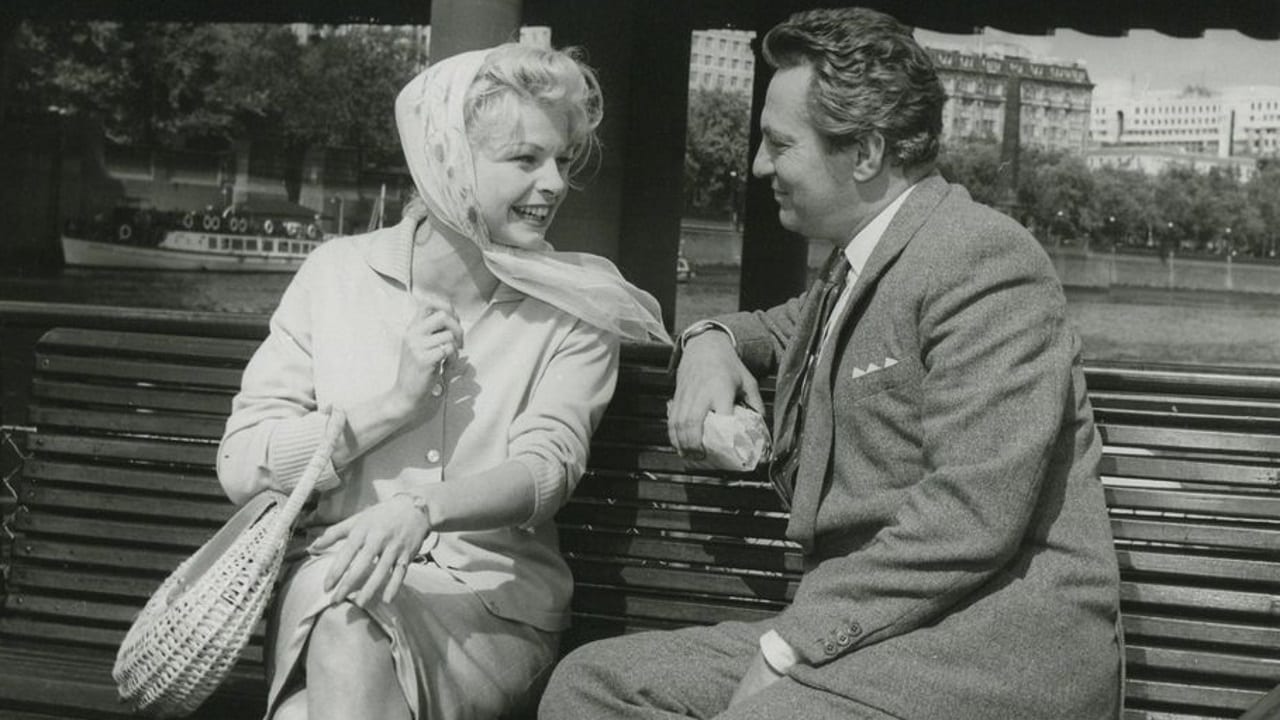
No Love for Johnnie (1961), directed by Ralph Thomas, starring Peter Finch and Stanley Holloway.
score
It Scorches With All the Intensity of Truth
Synopsis
Johnnie Byrne is a member of the British Parliament. In his 40s, he's feeling frustrated with his life and his personal as well as professional problems tower up over him. His desires to win the next election are endangered by his constant looking for love and he is faced with the choice of giving up a career in politics or giving up the woman he loves.
- Ralph ThomasDirector
- Alfred RoomeEditing
- Betty E. BoxProducer
- Mordecai RichlerScreenplay
About the film
No Love for Johnnie is a 1961 British drama film in CinemaScope directed by Ralph Thomas and starring Peter Finch. It was written by Mordecai Richler and Nicholas Phipps based on the 1959 novel No Love for Johnnie by the Labour Member of Parliament Wilfred Fienburgh.
It depicts the disillusionment and cynicism of a rebellious leftist Labour MP, who seeks escape in a relationship with a younger woman.
The film had its world premiere on 9 February 1961 at the Leicester Square Theatre in London's West End. It has been called Thomas' best film.
Read the full article (9k characters)
No Love for Johnnie is a 1961 British drama film in CinemaScope directed by Ralph Thomas and starring Peter Finch. It was written by Mordecai Richler and Nicholas Phipps based on the 1959 novel No Love for Johnnie by the Labour Member of Parliament Wilfred Fienburgh.
It depicts the disillusionment and cynicism of a rebellious leftist Labour MP, who seeks escape in a relationship with a younger woman.
The film had its world premiere on 9 February 1961 at the Leicester Square Theatre in London's West End. It has been called Thomas' best film.
Plot
Johnnie Byrne, a cynical and burnt-out Yorkshire Labour MP, whose career has seemingly stalled due to his ostensibly leftist leanings, is re-elected with the victorious Labour Party after a general election. Bitter not to receive an invitation to join the Government, his left-wing wife leaves him, and he accepts an invitation to lead a conspiratorial group of MPs working against the centrist government. Mary, the single woman upstairs, adores him, but they never quite become a couple.
Johnnie falls in love with a 20-year-old student/model Pauline, and misses making an important speech against the Government's militaristic plans because he is in bed with her. His conspirators turn against him and cause his local party to attempt to deselect him. He suffers a humiliating vote of no-confidence at a meeting of his Constituency Labour Party, but is put on probation. He then goes in search of Pauline, who has ended their relationship, still in love, but knowing it is not the right relationship for her.
He goes back home, where he finds his wife, who wants to give their marriage another chance; she gives Johnnie her phone number to call if he decides he wants her back. Meanwhile, the Prime Minister offers him a junior post, and reveals that the reason Johnnie was not offered one earlier was due to his wife's communist connections. Johnnie tears up the paper with his wife's phone number and embraces his role in government.
Cast
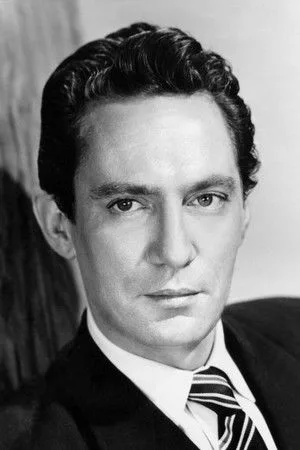
Peter Finch as Johnnie Byrne
Stanley Holloway as Fred Andrews
Mary Peach as Pauline
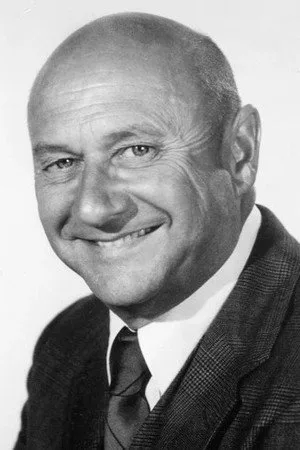
Donald Pleasence as Roger Renfrew
Billie Whitelaw as Mary
Hugh Burden as Tim Maxwell
Rosalie Crutchley as Alice
Michael Goodliffe as Dr. West
Mervyn Johns as Charlie Young
Geoffrey Keen as the Prime Minister
Paul Rogers as Sydney Johnson
Dennis Price as Flagg
Peter Barkworth as Henderson
Fenella Fielding as Sheila
Derek Francis as Frank
Conrad Phillips as Drake
Gladys Henson as constituent
Peter Sallis as M.P.
Novel
The film was based on a novel by Labour politician Wilfred Fienburgh whose wife later said he wrote it over three months to "make some money". Fienburgh died in a car crash in February 1958 and the novel was published in early 1959. In February 1959 the BBC bought the rights to adapt the book for television. The book was serialised in a newspaper and became a best seller in England for several months. It was picked up for publication in the US.
Development
Film rights were bought by Sydney Box who hired Mordecai Richler to do the script and David Deutsch to produce. Richler said the original hope was for Jack Clayton to direct. However two weeks into Richler working on a script, Box had a heart attack and retired, and Deutsch moved on to another project. No Love for Johnnie transferred to Betty Box and Ralph Thomas. They were dissastifed with Richler's script and had Nicholas Phiipps work on it.
Box and Thomas had made the Doctor comedies for the Rank Organisation, and used this as leverage to get the studio to finance other projects, such as No Love for Johnnie. Ralph Thomas later said "we made that because we wanted to make it very much. We all loved it – Betty, myself, Peter Finch."
Betty Box said she was "very surprised Rank let me do it... because they were very politically conservative as an organisation. Perhaps they liked the Peter Finch character being so corrupt because, after all, he was left-wing. I must say I liked it very much... I enjoyed making it very much. I loved working with Peter Finch. He was drunk some of the time, and not always very easy, but I was just very fond of him. Ralph and I both knew how to work with him."
In August 1960 St John announced Rank would make fifteen films that year, down from his peak of 55 a year. "About a third will be comedies," he said. "The remainder will be dramas - some of them more frankly adult than we have ever attempted before. We must move with the times." No Love for Johnnie was expected to be Rank's first X rated movie.
Shooting
Filming started in August 1960. Ralph Thomas said "Peter managed to get everything that existed in that man [Fienburgh] on to the screen without ever having known him. People who knew Fienburgh really well identified Peter absolutely with the character."
Music was by Malcolm Arnold, the score containing themes similar to those from Whistle Down the Wind (1961), which he also scored the same year. Arnold produced music scores for more than a hundred films, among these The Bridge on the River Kwai (1957), for which he won an Oscar.
There is a brief appearance of a young Oliver Reed as a bohemian party-goer.
Filmink said "Rank’s films under St John were famously timid in their story angles, especially compared to rivals such as Woodfall, Bryanston, Hammer and Romulus" but argued "the odd gutsy movie did sneak through", giving No Love for Johnnie as an example.
Reception
Thomas says the Labour Party were "enormously supportive" of the film even though it "knocked the Labour Party terribly" and "half the cabinet came to premiere."
Box Office
In March 1961 Kinematograph Weekly wrote the film "had a first-class opening week. The melodrama... is an amalgam of sex and politics, but, although politics are usually anathema to the ladies, the film's appealing equally to men and women. The picture bears an X certificate, but the X, far from being a handicap, is almost an infallible sign of success." However it was not a commercial success. Thomas says the film "got great notices although it was never a commercial success, didn't even pay for itself... it very much reflected the politics of the day. The plain fact is that people were not very interested in the politics of the day."
Critical
Reviews were very strong, particularly for Finch.
The Monthly Film Bulletin wrote: "The story splits awkwardly in two. Its emphasis, and most of the feeling, are on the side of Johnnie's affair with Pauline, a middle-aged man's efforts to rediscover himself through his love for a twenty-year-old girl. ... Stanley Holloway's fatherly M.P., with his talk of "the people in the streets", and Donald Pleasence's thin lipped intriguer are undeveloped and consequently improbable characters, though hardly more so than Dennis Price's chic photographer or Fenella Fielding's wild party-giver. With its range of contemporary allusions, No Love for Johnnie no doubt considers that it is making a move towards realism; but the lack of real conviction or spirit behind its "frank" love scenes, its strip-tease club visit and the rest of it, produce an effect which at first looks self-conscious and ends up looking vulgar."
Variety said the film "though not sensational in treatment, it has some earthy sex angles and is a strong, adult film which should hold intelligent audiences. Though it has no obvious stellar value for the U.S., No Love For Johnnie is a film worth the attention of any out-of-the-rut booker."
Filmink argued "it's extremely well made with superb work from Peter Finch but is also (surprisingly) dramatically underwhelming. The movie didn’t recover its cost at the box office; Ralph Thomas blamed politics, but we think the main reason is the lead has no drive, no passion – he’s bad at his job, slacks off, doesn't care about anything, just sort of flounders around. If Finch’s character had ambition and drive like the leads of Room at the Top and Saturday Night and Sunday Morning, this film would’ve had more kick. Nonetheless, No Love for Johnnie remains a high point in the career of Finch, Box and Thomas."
Bosley Crowther of The New York Times praised the films authentic depiction of British political life, highlighting Ralph Thomas' direction and the films vivid sense of place, from constituency backrooms to the House of Commons. He also praised it for Peter Finch's performance calling it "sharp and compelling" and called the supporting cast strong. Crowther also criticised the film for its structural inconsistency, saying that the shift from political drama to romantic melodrama weakened the narrative, the romance subplot being implausible and overly dominant, causing the film to lose focus and he also felt that the final act of the film felt contrived.
Accolades
Finch won two film awards for this performance – one a BAFTA (his third), and the other the Silver Bear for Best Actor at the 11th Berlin International Film Festival. The film won Best Film from the British Film Academy.
References
External links
No Love for Johnnie at IMDb
No Love for Johnnie at Rotten Tomatoes
No Love for Johnnie at Letterbox DVD
No Love for Johnnie at BFI
No Love for Johnnie at the TCM Movie Database (archived)
Original novel review at Kirkus
Text from No Love for Johnnie on Wikipedia, licensed CC BY-SA 4.0. https://en.wikipedia.org/wiki/No_Love_for_Johnnie
Trivia
- It premiered on February 14, 1961, a Tuesday.
- It runs 1h50 — a typical feature length.
- This film's quiz has 10 questions — enough to play more than once without repeats.
Production
- StudiosFive Star Films Ltd.
- CountriesUnited Kingdom
- LanguagesEnglish
- StatusReleased
More about this film
Filming locations
- Pinewood Studios
Set in
- Yorkshire
Cast
-
 Peter Finch
Johnnie Byrne
Peter Finch
Johnnie Byrne -
 Stanley Holloway
Fred Andrews
Stanley Holloway
Fred Andrews -
 Mary Peach
Pauline West
Mary Peach
Pauline West -
 Donald Pleasence
Renfrew
Donald Pleasence
Renfrew -
 Billie Whitelaw
Mary
Billie Whitelaw
Mary -
 Hugh Burden
Tim Maxwell
Hugh Burden
Tim Maxwell -
 Rosalie Crutchley
Alice Byrne
Rosalie Crutchley
Alice Byrne -
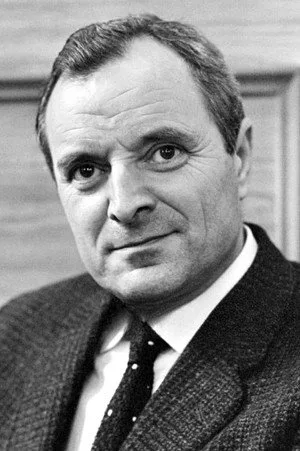 Michael Goodliffe
Dr. West
Michael Goodliffe
Dr. West -
 Mervyn Johns
Charlie Young
Mervyn Johns
Charlie Young -
 Geoffrey Keen
The Prime Minister - Reginald Stevens
Geoffrey Keen
The Prime Minister - Reginald Stevens -
 Paul Rogers
Sydney Johnson
Paul Rogers
Sydney Johnson -
 Dennis Price
Flagg
Dennis Price
Flagg -
 Peter Barkworth
Henderson
Peter Barkworth
Henderson - Fenella Fielding Sheilah
-
 Derek Francis
Frank
Derek Francis
Frank -
 Gladys Henson
Mrs. Sarah Arscott - Constituent at Party Meeting
Gladys Henson
Mrs. Sarah Arscott - Constituent at Party Meeting -
 Conrad Phillips
Drake
Conrad Phillips
Drake - Maureen Pryor Labour Party Member
-
 George Rose
Edward Collins
George Rose
Edward Collins -
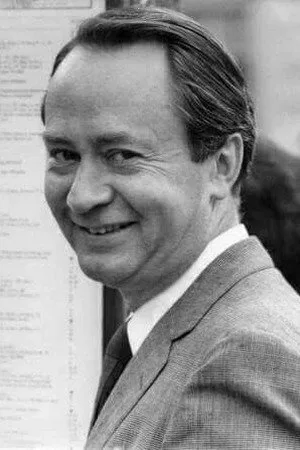 Peter Sallis
M.P.
Peter Sallis
M.P.
Quiz about this movie
Questions from the whole catalogue.
Play nowIf you liked this one
-
Bobby Jones: A Lenda do Golfe
 5.9
5.9
-
Hardball - O Jogo da Vida
 6.5
6.5
-
O.G.
 5.9
5.9
-
Gol! II: Vivendo o Sonho
 6.0
6.0
-
A Incrível Eleanor
 6.9
6.9
-
Recuperando a Esperança
 6.2
6.2
-
Jogando as Fichas Fora
 6.1
6.1
-
Sonhos Imperiais
 6.5
6.5
-
Garotas Velozes
 6.0
6.0
-
Perigos da Rede
 6.3
6.3
-
Beast
 7.5
7.5
-
O Refúgio
 6.1
6.1
Tags
Crew
- Ralph Thomas Director
- Alfred Roome Editing
- Betty E. Box Producer
- Mordecai Richler Screenplay
- Nicholas Phipps Screenplay
Questions about this film
What is No Love for Johnnie about?
No Love for Johnnie: Johnnie Byrne is a member of the British Parliament. In his 40s, he's feeling frustrated with his life and his personal as well as professional problems tower up over him. His desires to win the next election are endangered by his constant looking for love and he is faced with the choice of giving up a career in polit…
Who directed No Love for Johnnie?
No Love for Johnnie was directed by Ralph Thomas in 1961.
Who stars in No Love for Johnnie?
The cast of No Love for Johnnie includes Peter Finch, Stanley Holloway, Mary Peach, Donald Pleasence and Billie Whitelaw.
How long is No Love for Johnnie?
No Love for Johnnie runs for 110 minutes, or 1h50.
Similar films
 8.7
8.7
 8.5
8.5
 8.7
8.7
 7.9
7.9
 8.4
8.4
 8.5
8.5
 8.1
8.1
 8.2
8.2
 8.0
8.0
 8.2
8.2
 8.5
8.5
 8.5
8.5
Page updated on 09/11/2026.
Back to the catalogue