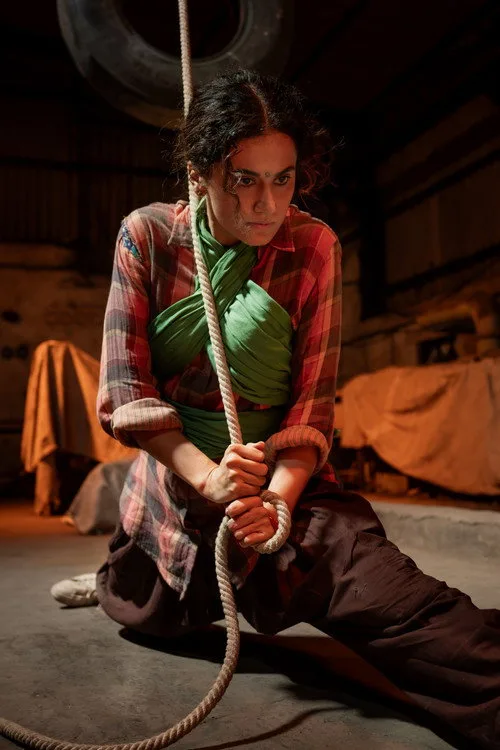
![Scene from [REC]](/fotos/8329/rec-horror-2007-backdrop.webp)
![Poster for [REC]](/fotos/8329/rec-horror-2007.webp)


[REC] (2007)
[REC] (2007), directed by Jaume Balagueró, starring Manuela Velasco and Pablo Rosso.
score
Experience fear.
Synopsis
A television reporter and cameraman follow emergency workers into a dark apartment building and are quickly locked inside with something terrifying.
What the catalogue says about this film
- Paco Plaza and Manuela Velasco have worked together on 2 films in the catalogue
- The highest rated of Paco Plaza's 10 films here, at 7.2
- Film 1 of 4 in [REC]: Coleção, by release order
- Made back 21.7 times its budget
Every comparison is within the CineQuiz catalogue, not cinema as a whole.
- Pablo RossoCinematography
- Jaume BalagueróDirector, Screenplay
- Paco PlazaDirector, Screenplay
- David GallartEditing
[REC]: Coleção
The franchise in release order. 4 films.
-
[REC] 2007 · you are here
-
[REC] 2: Possuídos 2009
![Poster for [REC] 2: Possuídos](/fotos/10664/rec-thriller-2009.webp)
-
[REC] 3: Gênesis 2012
![Poster for [REC] 3: Gênesis](/fotos/80280/rec-genesis-horror-2012.webp)
-
[REC] 4: Apocalipse 2014
![Poster for [REC] 4: Apocalipse](/fotos/185341/rec-apocalypse-thriller-2014.webp)
About the film
Rec (stylized as [•REC]; short for "record") is a 2007 Spanish found footage zombie horror film co-written and directed by Jaume Balagueró and Paco Plaza. The film stars Manuela Velasco as television reporter Ángela Vidal, who, along with her cameraman, accompany firefighters on a late-night call to an apartment building in Barcelona, where an outbreak prompts authorities to seal the building and place its occupants under quarantine.
Rec was released on 23 November 2007 to critical and commercial success. It has appeared on lists and retrospectives covering found-footage and horror cinema.
The film spawned the Rec film series, which includes three sequels: Rec 2 (2009), Rec 3: Genesis (2012), and Rec 4: Apocalypse (2014). An American remake, Quarantine, was released in 2008, followed by Quarantine 2: Terminal (2011).
Read the full article (12k characters)
Rec (stylized as [•REC]; short for "record") is a 2007 Spanish found footage zombie horror film co-written and directed by Jaume Balagueró and Paco Plaza. The film stars Manuela Velasco as television reporter Ángela Vidal, who, along with her cameraman, accompany firefighters on a late-night call to an apartment building in Barcelona, where an outbreak prompts authorities to seal the building and place its occupants under quarantine.
Rec was released on 23 November 2007 to critical and commercial success. It has appeared on lists and retrospectives covering found-footage and horror cinema.
The film spawned the Rec film series, which includes three sequels: Rec 2 (2009), Rec 3: Genesis (2012), and Rec 4: Apocalypse (2014). An American remake, Quarantine, was released in 2008, followed by Quarantine 2: Terminal (2011).
Plot
Television reporter Ángela Vidal and her cameraman, Pablo, film a night shift at a Barcelona fire station for the programme While You're Sleeping. They accompany firefighters Álex and Manu to an apartment building after reports that an elderly resident is behaving erratically. Inside the apartment, the woman attacks and bites a police officer. As panic spreads, authorities seal the building, trapping residents and emergency personnel inside under quarantine.
Attempts to control the situation fail as more people display violent symptoms and begin attacking others. A health official in protective gear arrives and explains that the infection resembles rabies and may have originated with a dog from the building. The group searches for a way out, only to find stairwells and exits blocked. Several survivors take temporary refuge in a resident's flat while they plan an escape route through the basement.
As the outbreak escalates, Ángela and Pablo fight their way upstairs, pursued by the infected. They reach the penthouse, where they discover religious material and evidence of a prior investigation. A tape recording indicates that the penthouse occupant, acting on behalf of the Vatican, had been studying a sick Portuguese girl, Tristana Medeiros, whose condition was believed to be linked to demonic possession; the illness mutated into a contagious infection, and she was sealed inside.
In the darkened attic, Pablo switches the camera to night vision. An emaciated Tristana attacks, killing Pablo. Ángela flees but drops the camera; she is dragged into the darkness, screaming, as the footage ends.
Cast
Production
In October 2006, it was announced Jaume Balagueró and Paco Plaza would direct the film for Filmax. Balagueró and Plaza had previously directed the 2002 documentary OT: la película.
Development and approach
Balagueró and Plaza said they set out to tell a classic horror scenario using what they called "the language of television", staged as if a report were unfolding live with a single camera at the centre of events. They cited an epidemic scenario and their affection for zombie cinema as guiding reference points.
Velasco recalled that auditions leaned heavily on improvisation, including being asked to "report" surreal, chaotic situations as if live television, and to play small off-camera presenter beats with the cameraman.
The directors said the apartment building became a major creative constraint: the script was finalised in the building and reshaped around what was physically available due to budget limits, including changing a scripted "driving school" meeting point to a textile warehouse found on site.
Filming
Principal photography took place in late 2006 in Barcelona, Spain.
On the audio commentary, Balagueró and Plaza said the opening material at the fire station was filmed like a genuine TV segment at an active Barcelona fire station, using real firefighters, uniforms and equipment; they recalled having no script for the interviews and being interrupted by real emergency call-outs during shooting.
The directors highlighted the film's reliance on extended takes, including a continuous sequence they described as lasting "10 minutes or so" with "no cuts" as the camera moves from the fire engine into the building and up through the action. They also described staging select beats without warning some performers in order to capture spontaneous reactions, including a stairwell moment in which "none of the actors knew" a falling body would appear.
Balagueró and Plaza said the film was shot in chronological order, which allowed them to review assembled scenes during production and adjust staging and dialogue to avoid repetition as events escalated. They also said the cast were not given the full script and were given a "false ending" during production to keep performances reactive to unfolding events. Plaza added that one on-set rule was to keep rolling—"we would never stop filming, whatever happened"—including through accidental falls and collisions. Velasco likewise said she was not told how the film ended and that some beats were staged without her foreknowledge; for one night-vision sequence, she recalled being told to "react to whatever happens".
Velasco said shooting chronologically also extended to costume continuity, with her white top kept throughout so it could become progressively dirtier and bloodied over the course of the story. She described the long takes and repeated stair runs as physically demanding, and noted that the production often filmed at night.
Cinematography
Cinematographer Pablo Rosso said the camera was required to remain strictly reactive—"at no stage could the camera be one second ahead of events"—to preserve the feeling of live coverage; he cited television as a primary visual influence and described treating the camera as a character within the action. He said the building was lit largely from outside the set, including "through a skylight above the staircase", supplemented by practical wall lamps installed by the art department.
Balagueró and Plaza said they treated the camera as vulnerable within the story, raising the idea "What if the camera was also infected?" after a blood strike on the lens, and altering exposure and image behaviour accordingly. For the night-vision finale, they said they used an amateur MiniDV camera because professional cameras lacked night-vision capability, transferring the resulting footage to 35mm. Rosso said the set had to be in complete darkness, leaving the actors effectively unable to see while he monitored the action through the viewfinder.
Sound
Sound designer Oriol Tarragó said the film was conceived without a musical score and balanced special effects with what he called a "documentary feel", keeping the soundtrack aligned to the camera's perspective. Tarragó said infected vocalisations were created by blending performer recordings with animal sounds and other sources to give different infected distinct character while maintaining overall consistency.
Both Tarragó and the directors described pushing the corridor gunshot to an intentionally harsh, distorted impact to evoke the deafening effect of an indoor gunshot. Tarragó said the night-vision sequence strips the mix back so that "the only thing you can hear is them breathing", and he highlighted the use of off-camera noises to suggest a threatening presence before it is seen.
Sound recordist Xavi Mas described the production's long moving takes as "a bit like a dance" between cast and crew, and said the team briefly considered recording sound directly on the camera but rejected it to avoid losing dialogue and subtle details. Mas said the production began with "ten live tracks" and used ten microphones for most of the shoot, which increased the complexity of dialogue editing in post-production.
Make-up and effects
On the audio commentary, Balagueró and Plaza said they aimed for the infected to appear sweat-soaked and feverish, using heavy glycerin to give performers a glossy "wet" sheen. They also said the Medeiros make-up was prepared separately so the leads would not see the design before the reveal, and that the night-vision shoot heightened the cast's reactions because they could not see in the dark.
Release
The film premiered in August 2007 at the 64th Venice International Film Festival, out of competition, in the opening and closing films sessions. It was also shown in October 2007 at the Sitges Film Festival and the Málaga International Week of Fantastic Cinema in November 2007, before going on general release in Spain later that month.
The film was also shown in February 2008 at the Glasgow Film Festival and the co-directors participated in a corresponding interview in which they revealed their influences during the creation of the cinema work: "Our main reference was TV; was not other films, or a tradition of previous features. I think the main influence for us was TV. What we wanted was to build a classic horror story, but, ahh, telling it in the way of a TV show." REC was then released in the United Kingdom in April 2008 and a North American DVD release occurred in 2009.
Reception
Critical response
On review aggregation website Rotten Tomatoes it has an approval rating of 90% based on 42 reviews. The site's consensus reads: "Plunging viewers into the nightmarish hellscape of an apartment complex under siege, [Rec] proves that found footage can still be used as an effective delivery mechanism for sparse, economic horror." Metacritic, which uses a weighted average, assigned the film a score of 71 out of 100, based on 10 critics, indicating "generally favorable" reviews.
Reviewing the film for the BBC, Jamie Russell called it "A runaway rollercoaster of a fright flick", praising the "faux-docu handheld style" and the sense of claustrophobia and confusion, though he criticised the lack of substance and a "one-dimensional" supporting cast. Bloody Disgusting awarded the film four-and-a-half stars out of five, writing that "[REC] has it all and is probably one of the best Spanish horror films in recent memory."
Accolades
The film has appeared on retrospective lists of 2000s horror, including Time Out's list of the 100 best horror films and Entertainment Weekly's list of the 25 best horror movies that defined the 2000s.
Franchise
Sequels
The Spanish Rec series continued with Rec 2 (2009), which begins immediately after the ending of the first film and again credits Jaume Balagueró and Paco Plaza as directors. Manuela Velasco reprises her role as Ángela Vidal in Rec 2 and Rec 4: Apocalypse. The third entry, Rec 3: Genesis (2012), was directed by Plaza, while the fourth film, Rec 4: Apocalypse (2014), was directed by Balagueró.
Remake series
An American remake, Quarantine (2008), was also released, followed by Quarantine 2: Terminal (2011).
References
Works cited
Balagueró, Jaume; Plaza, Paco (2021). [•REC] (archive audio commentary) (Blu-ray bonus feature (audio commentary)). Arrow Video.
Balagueró, Jaume; Plaza, Paco (2021). Interview with Jaume Balagueró and Paco Plaza (archive) (Blu-ray bonus feature (interview)). Arrow Video.
Rosso, Pablo (2021). Interview with Pablo Rosso (archive) (Blu-ray bonus feature (interview)). Arrow Video.{{cite AV media}}: CS1 maint: ref duplicates default (link)
Mas, Xavi (2021). Interview with Xavi Mas (archive) (Blu-ray bonus feature (interview)). Arrow Video.{{cite AV media}}: CS1 maint: ref duplicates default (link)
Tarragó, Oriol (2021). Interview with Oriol Tarragó (archive) (Blu-ray bonus feature (interview)). Arrow Video.{{cite AV media}}: CS1 maint: ref duplicates default (link)
Velasco, Manuela (2021). Confidences, a video diary by star Manuela Velasco (archive) (Blu-ray bonus feature (video diary)). Arrow Video.{{cite AV media}}: CS1 maint: ref duplicates default (link)
External links
Rec at IMDb
Text from Rec (film) on Wikipedia, licensed CC BY-SA 4.0. https://en.wikipedia.org/wiki/Rec_(film)
Trivia
- It cost US$ 1.5 million and grossed US$ 33 million in theaters — 21.7 times its budget.
- It premiered on November 23, 2007, a Friday.
- It runs 1h18 — short for a feature film.
- It won 1 award(s) and received 1 nomination(s) on record at Wikidata — Ignotus Award for Best Audiovisual Production among them.
- It is film 1 of 4 in the [REC] franchise.
- As of September 20, 2026, it is available in Brazil by subscription on Amazon Prime Video.
- This film's quiz has 15 questions — enough to play more than once without repeats.
Production
- StudiosCastelao Productions
- CountriesSpain
- LanguagesJapanese, Spanish
- BudgetUS$ 1,500,000
- Box officeUS$ 32,511,655
- StatusReleased
More about this film
Awards
- Ignotus Award for Best Audiovisual Production 2008
Nominations
- European Film Award – People's Choice Award for Best European Film 2008
Filming locations
- Barcelona
- Terrassa
Set in
- Barcelona
Where to watch
Videos
Photos
![Still 1 from [REC]](https://image.tmdb.org/t/p/w1280/xfrguTH6maYiGsC8FXiQ9N3lZXw.jpg)
![Still 2 from [REC]](https://image.tmdb.org/t/p/w1280/zhuK3nbMRyIOplANBuOWxPzlpXj.jpg)
![Still 3 from [REC]](https://image.tmdb.org/t/p/w1280/dzK8jdteX0mbN0kPnQdRPGBBeKo.jpg)
![Still 4 from [REC]](https://image.tmdb.org/t/p/w1280/dD3YfXh2BbAhi7LJaMETy2xajrE.jpg)
![Still 5 from [REC]](https://image.tmdb.org/t/p/w1280/sYZPRfv7OvtS8KOvZ5OojOaiI7F.jpg)
![Still 6 from [REC]](https://image.tmdb.org/t/p/w1280/haJIKsWFhOHACq6meNFIxUEouTV.jpg)
![Still 7 from [REC]](https://image.tmdb.org/t/p/w1280/d26tMXelLBtUqbcqvN1NimGPgTi.jpg)
![Still 8 from [REC]](https://image.tmdb.org/t/p/w1280/z6sTB8wFw1TWBZrf1MA3ZMVDaNG.jpg)
![Still 9 from [REC]](https://image.tmdb.org/t/p/w1280/5ZIGzevTGrw1AkcSHd5Bd9nMiUY.jpg)
![Still 10 from [REC]](https://image.tmdb.org/t/p/w1280/jjkxE61xTYyj04W6R5SPcEIncjy.jpg)
![Still 11 from [REC]](https://image.tmdb.org/t/p/w1280/bDrPMEGSlhiBNkRGkzclSWWskWg.jpg)
![Still 12 from [REC]](https://image.tmdb.org/t/p/w1280/82f34txHACGIwJB6RTHqq0ZmuXe.jpg)
Cast
-
 Manuela Velasco
Ángela Vidal
Manuela Velasco
Ángela Vidal - Pablo Rosso Pablo
-
 Javier Coromina
Pablo (voice)
Javier Coromina
Pablo (voice) -
 Ferrán Terraza
Manu
Ferrán Terraza
Manu - Martha Carbonell Mrs. Izquierdo
-
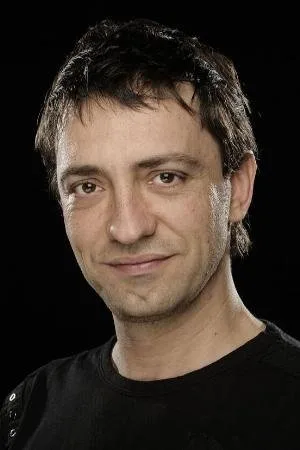 David Vert
Álex
David Vert
Álex -
 Carlos Lasarte
César
Carlos Lasarte
César -
 Vicente Gil
Old Police Officer
Vicente Gil
Old Police Officer -
 Carlos Vicente
Guillem
Carlos Vicente
Guillem -
 María Lanau
Hysterical Mother
María Lanau
Hysterical Mother - Jorge-Yamam Serrano Young Police Officer
- María Teresa Ortega Grandmother
- Manuel Bronchud Grandfather
- Claudia Silva Jennifer
-
 Javier Botet
Medeiros Girl
Javier Botet
Medeiros Girl -
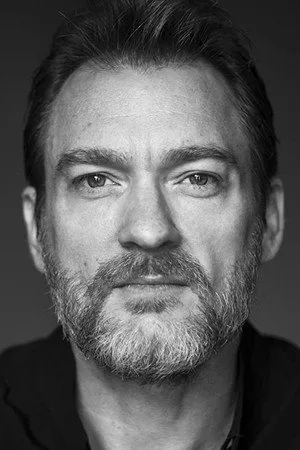 Ben Temple
Doctor
Ben Temple
Doctor - Akemi Goto Japanese Woman
-
 Kao Chen-Min
Japanese Man
Kao Chen-Min
Japanese Man -
 Ana Isabel Velásquez
Colombian Girl
Ana Isabel Velásquez
Colombian Girl - Daniel Trinh Japanese Boy
Quiz about this movie
Questions from the whole catalogue.
Play nowIf you liked this one
-
[REC] 2: Possuídos Same franchise
6.6
-
Atividade Paranormal Horror from the 2000s
 6.1
6.1
-
The Bay
 5.8
5.8
-
A Possessão de Deborah Logan
 6.6
6.6
-
O Chamado Horror from the 2000s
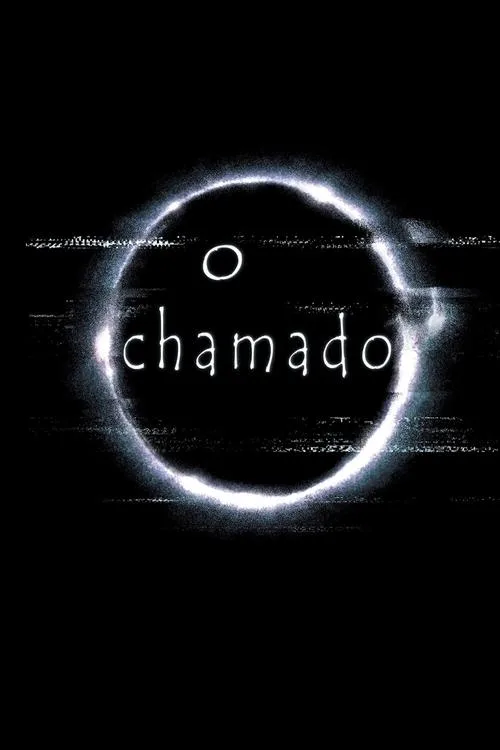 6.7
6.7
-
A Bruxa de Blair
 6.4
6.4
-
Hell House LLC
 6.5
6.5
-
Tumba Aberta
 6.0
6.0
-
Madrugada dos Mortos Horror from the 2000s
 7.1
7.1
-
O Segredo do Lago Mungo Horror from the 2000s
 6.1
6.1
-
Maldição da Múmia
 7.9
7.9
-
A Casa da Noite Eterna
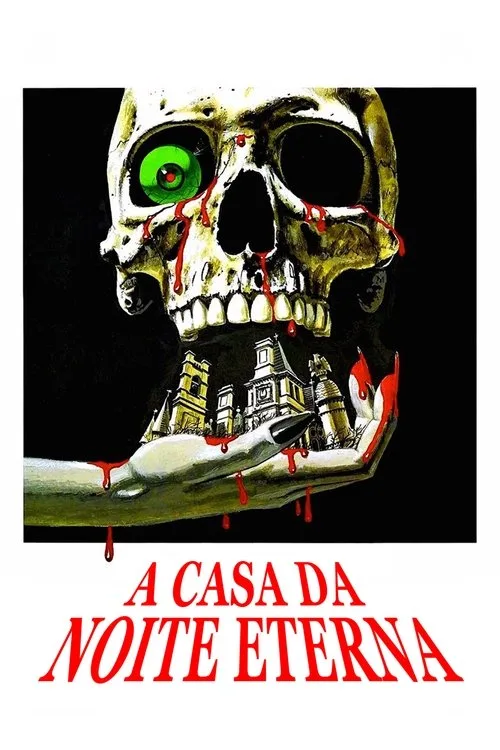 6.7
6.7
Tags
Crew
- Pablo Rosso Cinematography
- Jaume Balagueró Director
- Paco Plaza Director
- David Gallart Editing
- Julio Fernández Producer
- Jaume Balagueró Screenplay
- Luiso Berdejo Screenplay
- Paco Plaza Screenplay
Questions about this film
What is [REC] about?
[REC]: A television reporter and cameraman follow emergency workers into a dark apartment building and are quickly locked inside with something terrifying.
Who directed [REC]?
[REC] was directed by Jaume Balagueró and Paco Plaza in 2007.
Who stars in [REC]?
The cast of [REC] includes Manuela Velasco, Pablo Rosso, Javier Coromina, Ferrán Terraza and Martha Carbonell.
How long is [REC]?
[REC] runs for 78 minutes, or 1h18.
How much did [REC] cost and how much did it make?
[REC] had a budget of US$ 1,500,000 and took US$ 32,511,655 at the box office — 21.7 times its cost.
Where can I watch [REC]?
[REC] is available on Amazon Prime Video and Amazon Prime Video with Ads. Availability changes often: the list on this page is the most recent we received.
What awards did [REC] win?
[REC] has 1 recorded awards, among them Ignotus Award for Best Audiovisual Production.
What is the correct order of the [REC]: Coleção films?
The [REC]: Coleção franchise has 4 films in the catalogue. In release order: [REC]; [REC] 2: Possuídos; [REC] 3: Gênesis; [REC] 4: Apocalipse.
Similar films
 7.1
7.1
 7.6
7.6
 6.6
6.6
 8.4
8.4
 7.3
7.3
 7.4
7.4
 7.1
7.1
 6.6
6.6
 8.1
8.1
 7.0
7.0
 7.4
7.4
 6.7
6.7
Page updated on 09/08/2026.
Back to the catalogue