Samurai I: Musashi Miyamoto (1954)
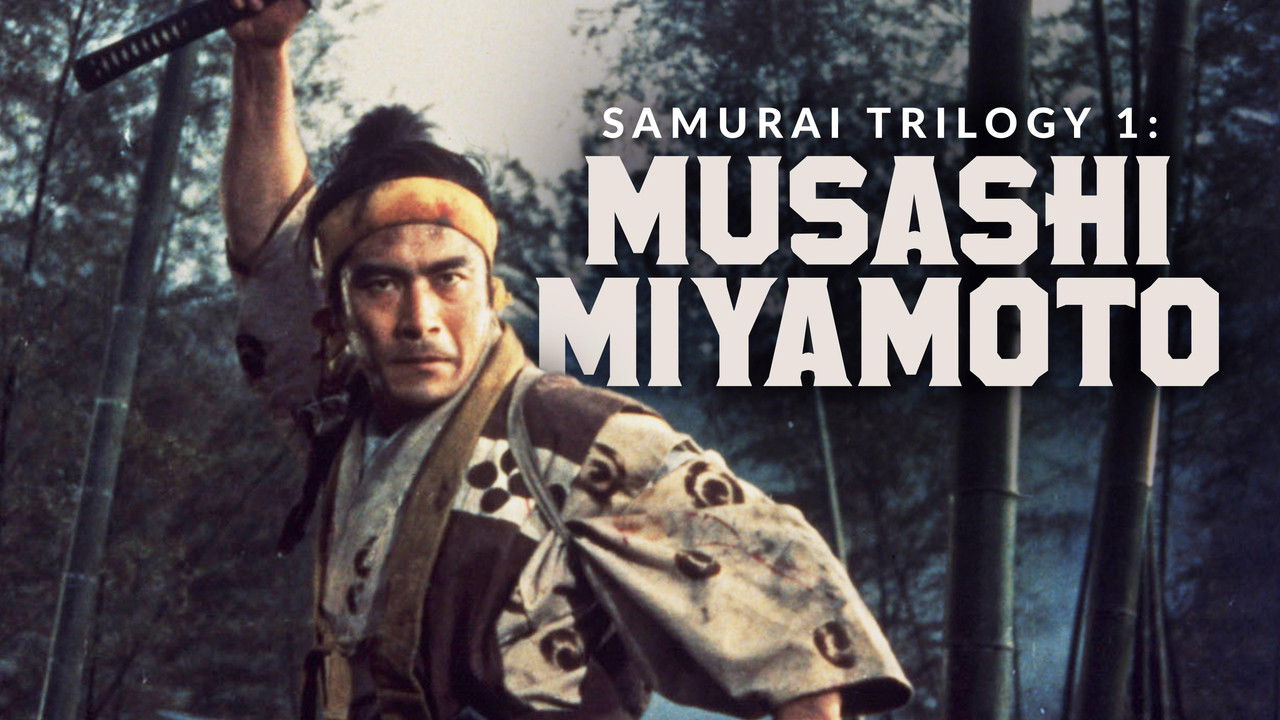
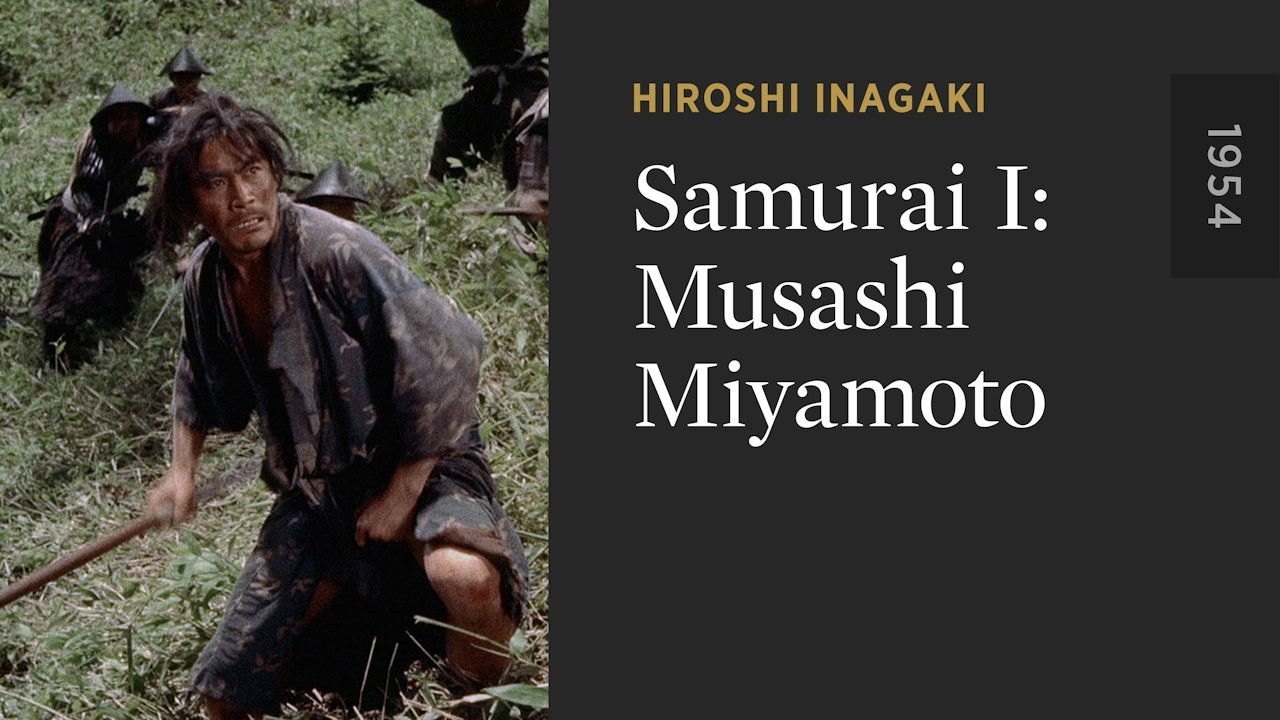
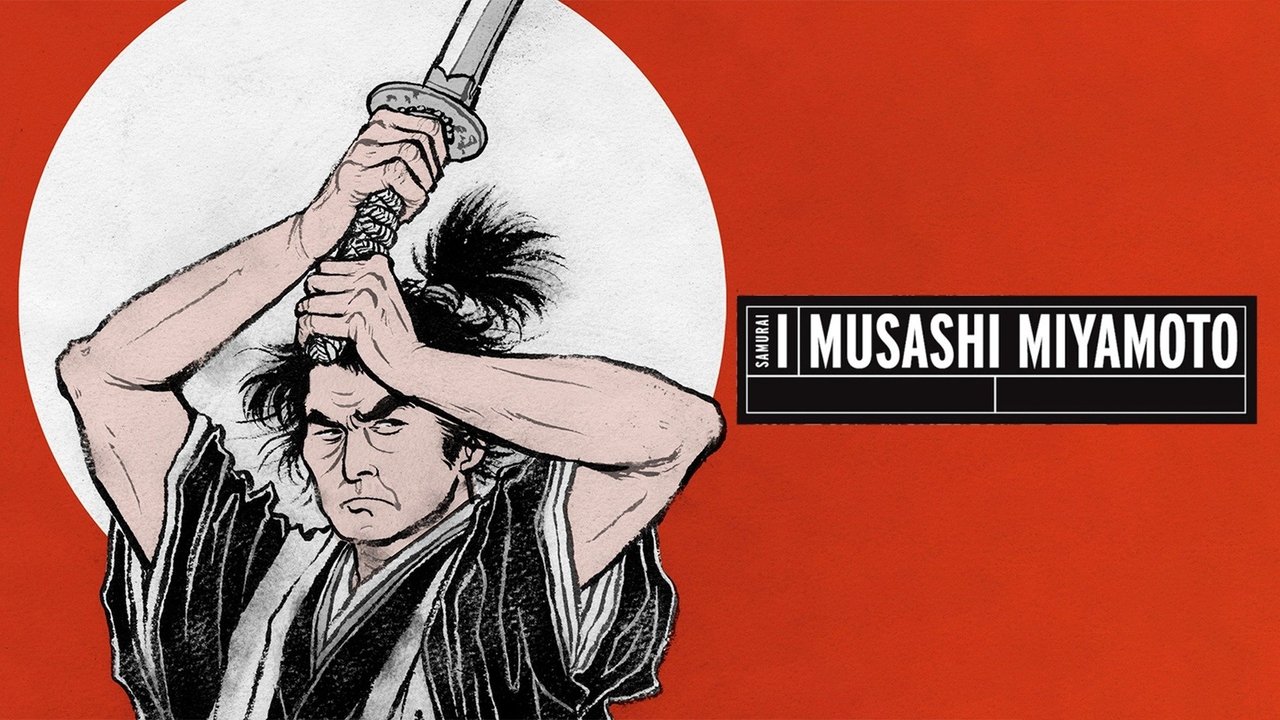
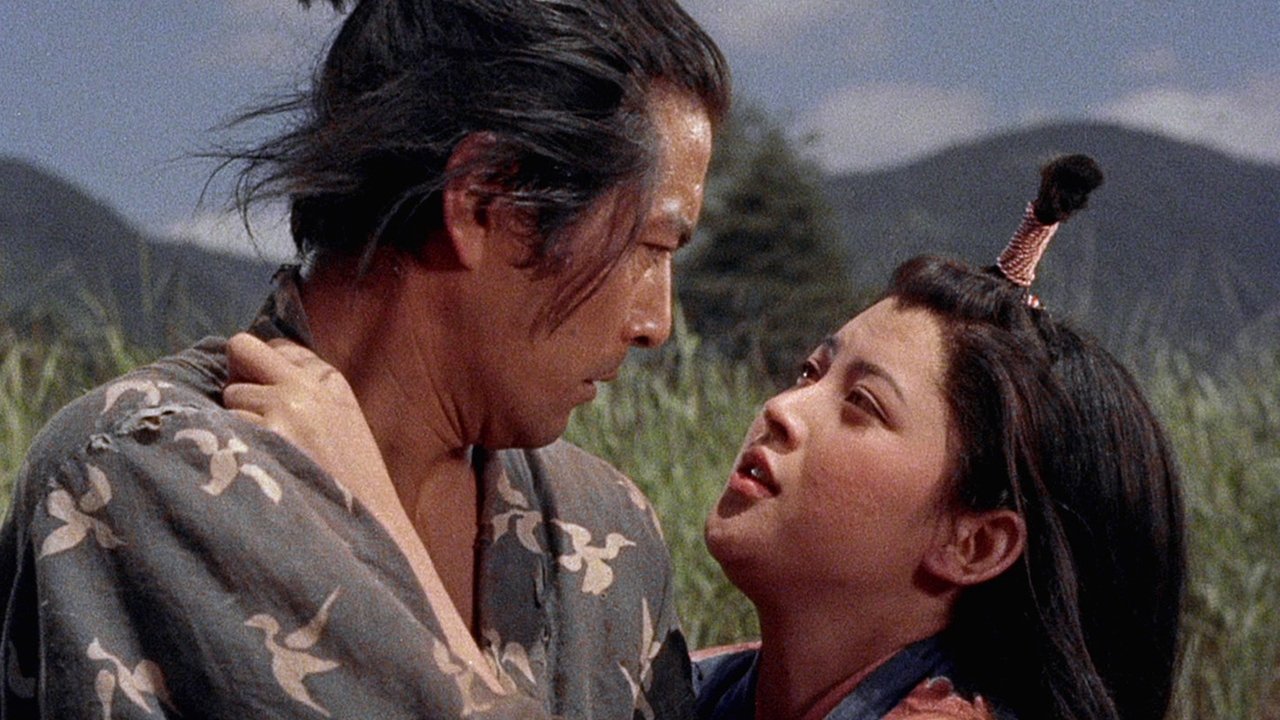
Samurai I: Musashi Miyamoto (1954), directed by Hiroshi Inagaki, starring Toshirô Mifune and Rentaro Mikuni.
score
Synopsis
Struggling to elevate himself from his low caste in 17th century Japan, Miyamoto trains to become a mighty samurai warrior.
- 安本淳Cinematography
- Hiroshi InagakiDirector, Writer
- 大井英史Editing
- 滝村和男Producer
Samurai Collection
The franchise in release order. 3 films.
-
O Samurai Dominante 1: Miyamoto Musashi 1954 · you are here
-
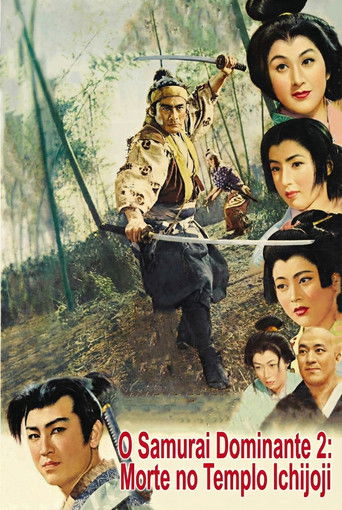
O Samurai Dominante 2: Morte no Templo Ichijoji 1955
-
O Samurai Dominante 3: Duelo na Ilha Ganryu 1956

About the film
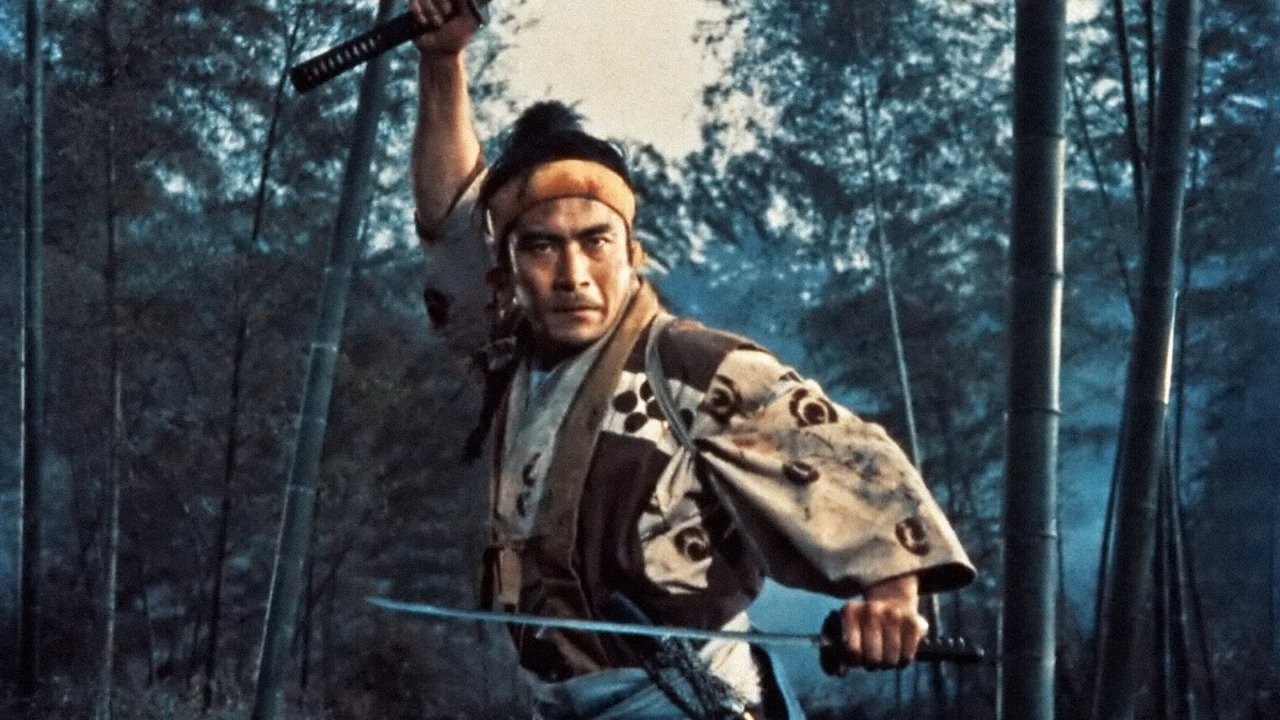
Musashi Miyamoto (Japanese: 宮本武蔵, Hepburn: Miyamoto Musashi) is a 1954 Japanese film directed and co-written by Hiroshi Inagaki and starring Toshiro Mifune. The film is the first film of Inagaki's Samurai Trilogy of historical adventures.
The film is adapted from Eiji Yoshikawa's novel Musashi, originally released as a serial in the Japanese newspaper Asahi Shimbun, between 1935 and 1939. The novel is loosely based on the life of the famous Japanese swordsman Miyamoto Musashi.
The film was followed by Samurai II: Duel at Ichijoji Temple (1955) and Samurai III: Duel at Ganryu Island (1956).
The film won a Special/Honorary Award at the 1955 Academy Awards for outstanding foreign language film.
Read the full article (5k characters)
Musashi Miyamoto (Japanese: 宮本武蔵, Hepburn: Miyamoto Musashi) is a 1954 Japanese film directed and co-written by Hiroshi Inagaki and starring Toshiro Mifune. The film is the first film of Inagaki's Samurai Trilogy of historical adventures.
The film is adapted from Eiji Yoshikawa's novel Musashi, originally released as a serial in the Japanese newspaper Asahi Shimbun, between 1935 and 1939. The novel is loosely based on the life of the famous Japanese swordsman Miyamoto Musashi.
The film was followed by Samurai II: Duel at Ichijoji Temple (1955) and Samurai III: Duel at Ganryu Island (1956).
The film won a Special/Honorary Award at the 1955 Academy Awards for outstanding foreign language film.
Plot
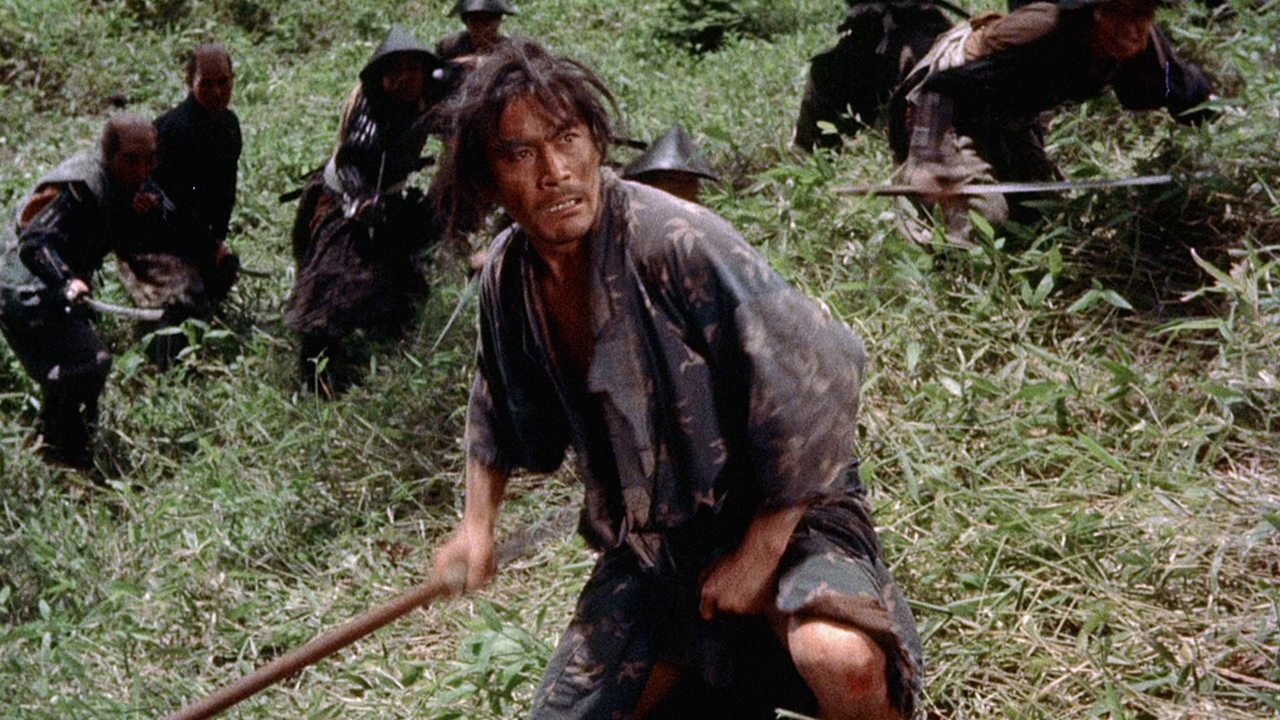
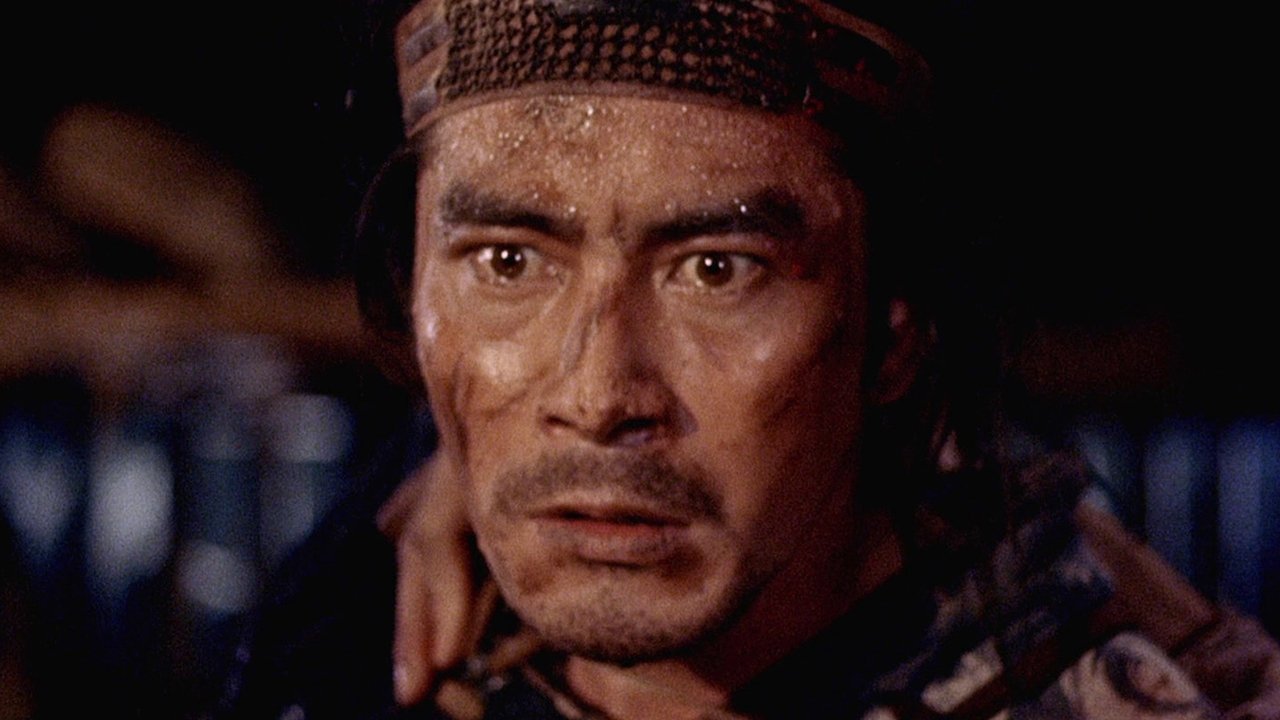
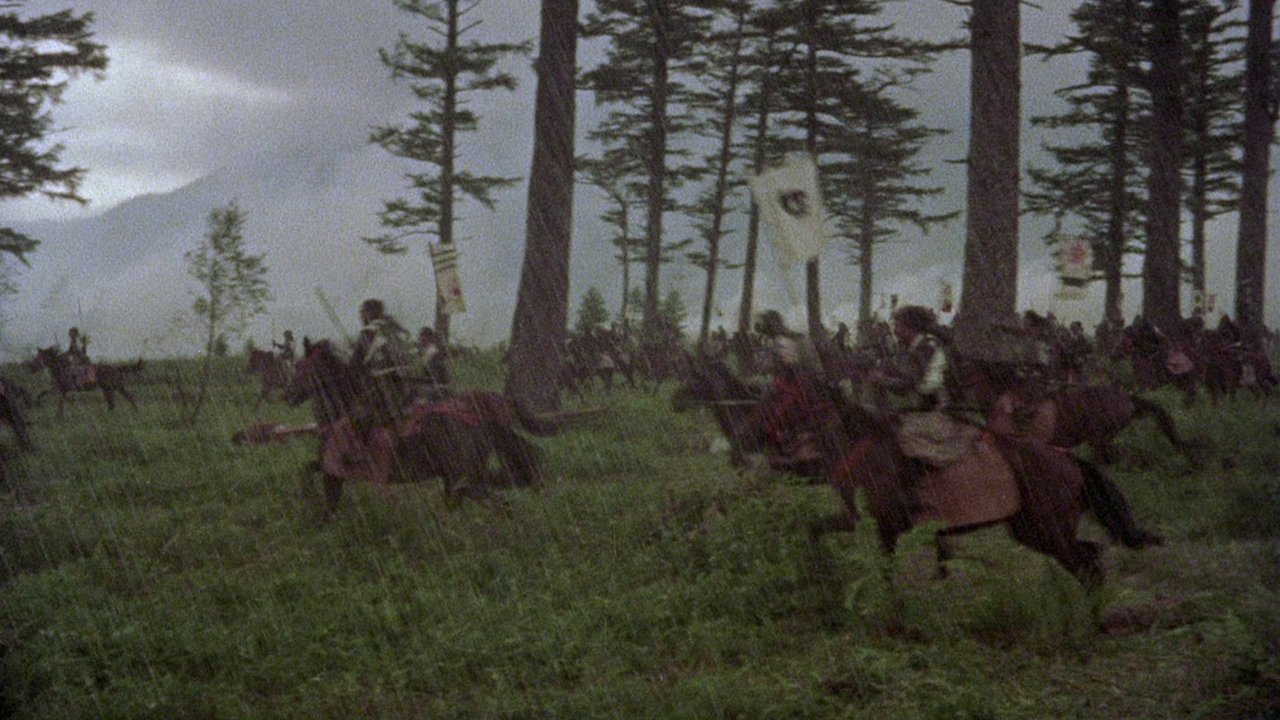
Following the battle of Sekigahara, Takezo (Toshiro Mifune) and his friend Matahachi (Rentarō Mikuni) find themselves on the losing side. Instead of the grand victory and glory Takezo had anticipated, he finds himself a hunted fugitive, having to assist a severely injured Matahachi. The pair seek shelter with a widow and her daughter who unknown to them are connected to local brigands. The brigands soon show up and ask for tribute from what the women have stripped off dead samurai, and Takezo has to fight them off. Both women attempt to seduce Takezo but are rejected. The widow then tells Matahachi that Takezo tried to assault her and convinces him to escort her and her daughter to Kyoto. Matahachi agrees even though he loves (and is betrothed to) Otsu (Kaoru Yachigusa), a woman from his village.
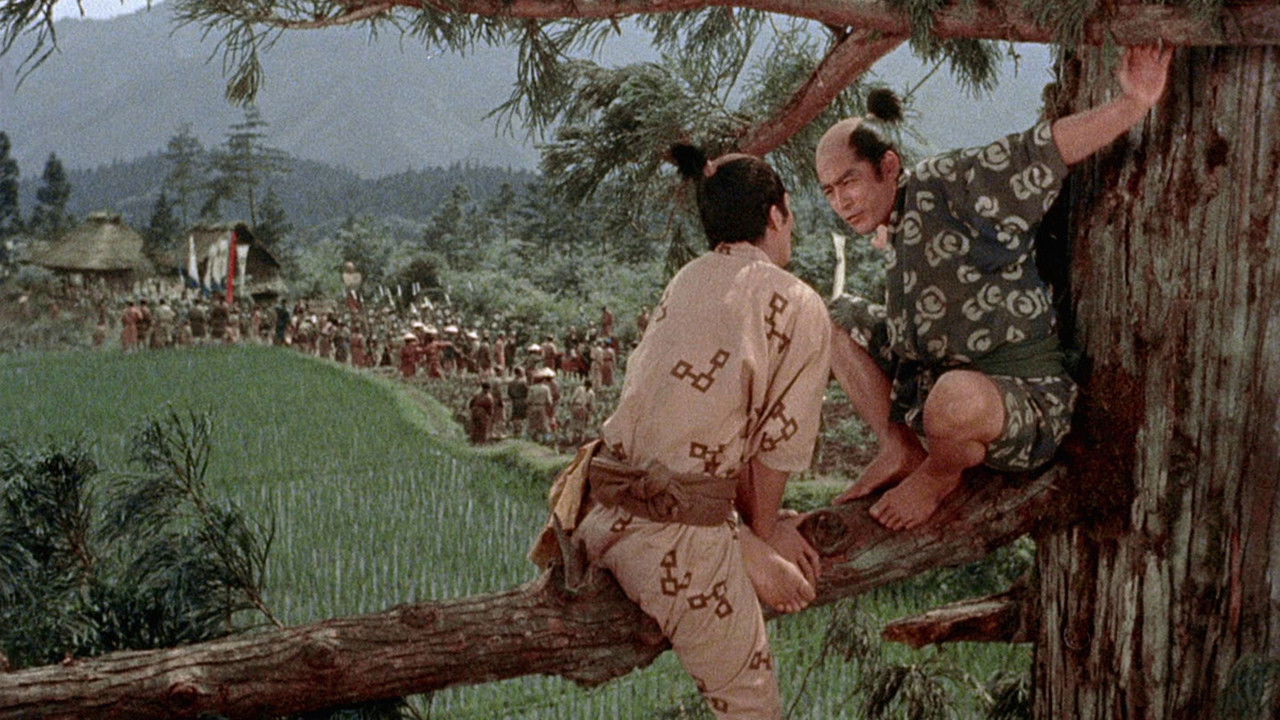
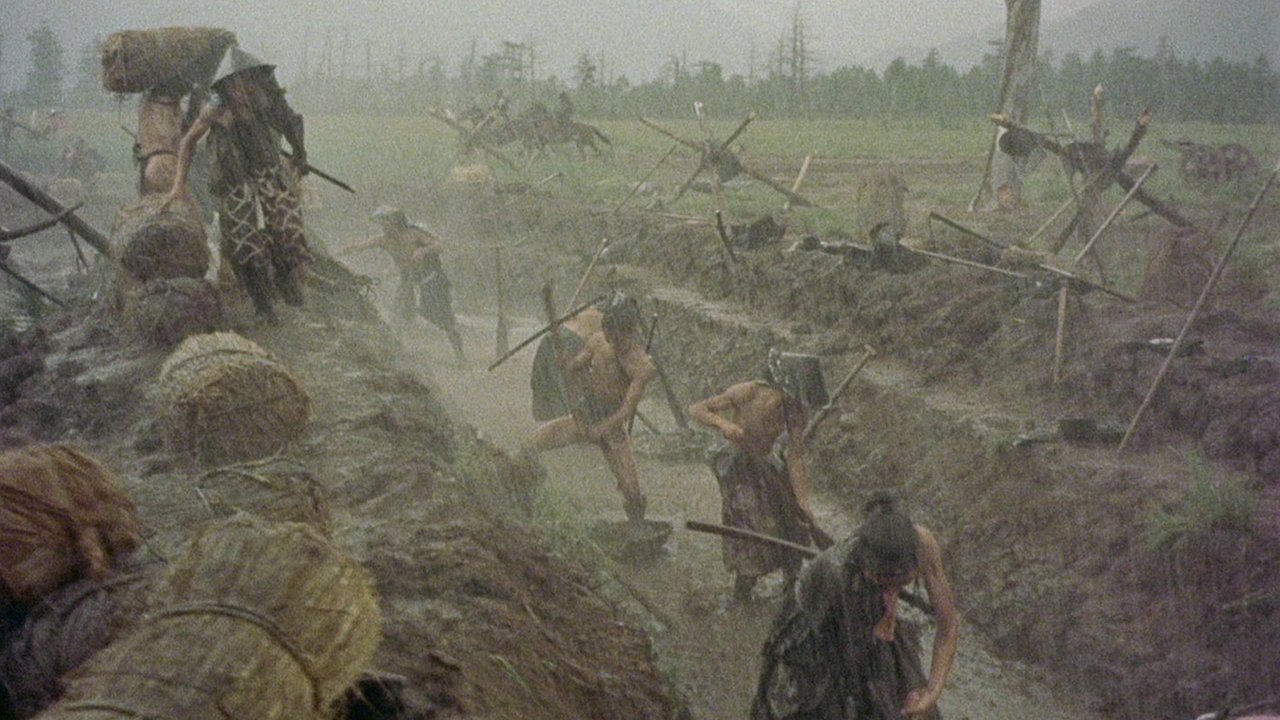
Takezo thinks his friend Matahachi has deserted him, and he makes his way home - on the way breaking through a roadblock, injuring several of the local lord's men manning it - and returns to his village. He tells Matahachi's family that he is still alive but will not reveal why Matahachi has not returned. Matahachi's mother does not believe him, and sets a trap for his capture, but he escapes. There is a village-wide search for Takezo, organized by the lord. Even after arresting his relatives to use them as bait, the villagers cannot catch Takezo.
Otsu, meanwhile, gets a letter signed by the widow Oko saying that Matahachi has gone off with her and to forget him, which leaves her devastated. Matahachi's mother, however, continues to insist that Otsu is her daughter-in-law and must live with her.
Takezo is finally captured by the Buddhist priest Takuan Sōhō, who tells the lord that he must be allowed to use his own methods to control him. The priest believes that he can straighten Takezo out, but Takezo again escapes with Otsu's help. Otsu now understands that Takezo was trying to shield her from the knowledge that Matahachi had abandoned her, and begs him to let her travel with him. They flee together but are soon tracked down. Otsu is captured, but Takezo fights his way out. Takezo learns that Otsu has been taken to Himeji Castle and breaks in to rescue her, but is once more tracked down by the priest Takuan. He is tricked and locked in a room in the castle for three years, told to study the ways of the samurai to earn his release while Otsu safely waits for him in a hiding place chosen by Takuan.
The end of the film shows Takezo being released and granted his samurai name 'Musashi Miyamoto'. He then leaves to search for enlightenment, leaving two messages for Otsu: "Soon I will be back" and "Forgive me".
Historical background
The film begins in the year 1600 with Tokugawa Ieyasu's victory in the battle of Sekigahara, which cleared the path to the Shōgunate for Tokugawa Ieyasu; however, it took three more years to consolidate the position of power over the other clans. The historical Miyamoto Musashi is believed to have fought in this battle.
Cast
Production
Director Hiroshi Inagaki had done a serial on Musashi Miyamoto in 1941 but prints of it were apparently destroyed due to its feudalistic theme. He also directed Kanketsu Sasaki Kojirô: Ganryû-jima ketto (1951), which had Mifune as Miyamoto. Samurai I: Musashi Miyamoto was the second Toho film production in color and the first in the Eastman Color process.
Release
Samurai I: Musashi Miyamoto was released in Japan on 26 September 1954 where it was distributed by Toho. Championed by William Holden, it was edited and distributed theatrically in the United States as Samurai (The Legend of Musashi) by Fine Art Films with English-subtitles and English narration by Holden on 19 November 1955.
The film was released to home video in Australia and New Zealand by Madman Entertainment as Samurai Musashi Miyamoto.
All three instalments of Samurai Trilogy have been released in a single set by The Criterion Collection.
Reception
Samurai I: Musashi Miyamoto received widespread critical acclaim upon its release in 1954 and has continued to be highly regarded in the decades since. The film was a commercial success in Japan and gained recognition internationally, solidifying its status as a classic of Japanese cinema. It won several awards, including the Academy Award for Best Foreign Language Film in 1955, further cementing its critical and commercial acclaim. On review aggregator Rotten Tomatoes, the film holds an approval rating of 100% based on 5 reviews, with an average score of 8.7/10.
References
Sources
External links
Musashi Miyamoto at IMDb
Samurai I an essay by Bruce Eder at the Criterion Collection
(in Japanese) http://www.jmdb.ne.jp/1954/cd002800.htm
Text from Samurai I: Musashi Miyamoto on Wikipedia, licensed CC BY-SA 4.0. https://en.wikipedia.org/wiki/Samurai_I:_Musashi_Miyamoto
Trivia
- It premiered on September 25, 1954, a Saturday.
- It runs 1h33 — a typical feature length.
- Its original title is "宮本武蔵".
- It won 1 award(s) and received 0 nomination(s) on record at Wikidata — Academy Honorary Award among them.
- It is film 1 of 3 in the Samurai franchise.
- As of September 20, 2026, it is available in Brazil by subscription on Belas Artes à La Carte.
- This film's quiz has 11 questions — enough to play more than once without repeats.
Production
- StudiosTOHO
- CountriesJapan
- LanguagesJapanese
- StatusReleased
More about this film
Awards
- Academy Honorary Award
Set in
- Kyoto
Where to watch
Photos
Cast
-
 Toshirô Mifune
Musashi Miyamoto a.k.a. Takezo
Toshirô Mifune
Musashi Miyamoto a.k.a. Takezo -
 Rentaro Mikuni
Matahachi
Rentaro Mikuni
Matahachi -
 Mariko Okada
Akemi
Mariko Okada
Akemi - Kurôemon Onoe Takuan
-
 Kaoru Yachigusa
Otsu
Kaoru Yachigusa
Otsu -
 Mitsuko Mito
Oko
Mitsuko Mito
Oko -
 Eiko Miyoshi
Osugi
Eiko Miyoshi
Osugi -
 Akihiko Hirata
Seijuro Yoshioka
Akihiko Hirata
Seijuro Yoshioka -
 Kusuo Abe
Temma Tsujikaze
Kusuo Abe
Temma Tsujikaze -
 Eitarō Ozawa
Terumasa Ikeda
Eitarō Ozawa
Terumasa Ikeda -
 Masanobu Ōkubo
Petty Official
Masanobu Ōkubo
Petty Official -
 Seijirô Onda
Chief Official (uncredited)
Seijirô Onda
Chief Official (uncredited) - Fumindo Matsuo Petty Official (uncredited)
-
 Takuzō Kumagai
Villager (uncredited)
Takuzō Kumagai
Villager (uncredited) - Akira Sera Villager (uncredited)
-
 Yasuhisa Tsutsumi
Villager (uncredited)
Yasuhisa Tsutsumi
Villager (uncredited) -
 Yutaka Sada
Soldier (uncredited)
Yutaka Sada
Soldier (uncredited) -
 Shigeo Katō
Soldier (uncredited)
Shigeo Katō
Soldier (uncredited) - Jun'ichirō Mukai Soldier (uncredited)
- Kiyoshi Kamoda Roving Warrior (uncredited)
Quiz about this movie
Questions from the whole catalogue.
Play nowIf you liked this one
-
O Samurai Dominante 2: Morte no Templo Ichijoji Same franchise
7.2
-
13 Assassinos
 7.3
7.3
-
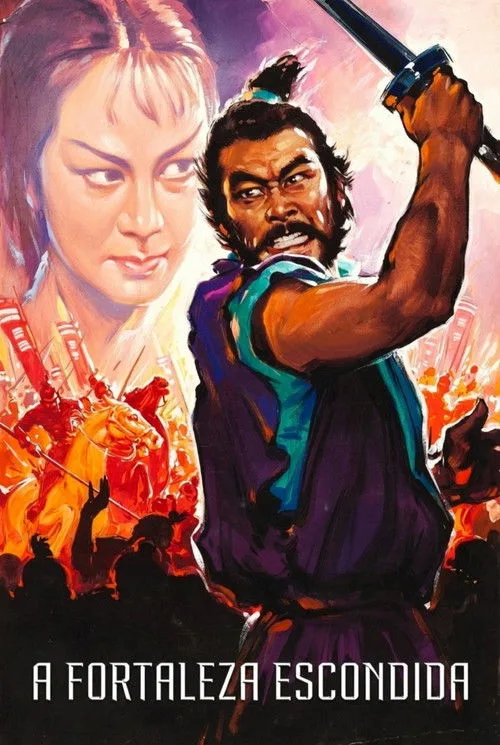
A Fortaleza Escondida 3 actors in common
 8.0
8.0
-
Samurai X: O Fim de Uma Lenda
 7.7
7.7
-
Lobo Solitário: Coração de Pai, Coração de Filho
 7.3
7.3
-
Lobo Solitário: Paraíso Branco no Inferno
 7.1
7.1
-
Samurai Marathon
 6.0
6.0
-
47 Ronins
 6.2
6.2
-
A Espada da Maldição
 7.7
7.7
-
Zatoichi
 7.2
7.2
-
13 Assassinos
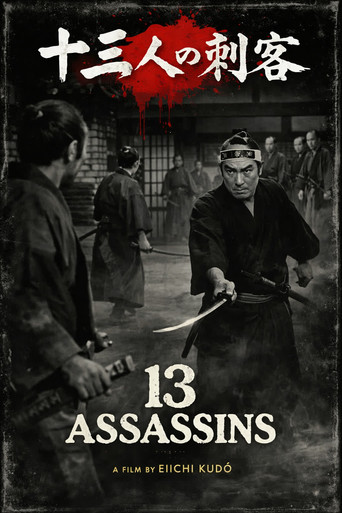 7.5
7.5
-
Samurai X: O Inferno de Kyoto
 7.6
7.6
Tags
Crew
- 安本淳 Cinematography
- Hiroshi Inagaki Director
- 大井英史 Editing
- 滝村和男 Producer
- 團伊玖磨 Original music
- Hiroshi Inagaki Writer
- 若尾徳平 Writer
Questions about this film
What is Samurai I: Musashi Miyamoto about?
Samurai I: Musashi Miyamoto: Struggling to elevate himself from his low caste in 17th century Japan, Miyamoto trains to become a mighty samurai warrior.
Who directed Samurai I: Musashi Miyamoto?
Samurai I: Musashi Miyamoto was directed by Hiroshi Inagaki in 1954.
Who stars in Samurai I: Musashi Miyamoto?
The cast of Samurai I: Musashi Miyamoto includes Toshirô Mifune, Rentaro Mikuni, Mariko Okada, Kurôemon Onoe and Kaoru Yachigusa.
How long is Samurai I: Musashi Miyamoto?
Samurai I: Musashi Miyamoto runs for 93 minutes, or 1h33.
Where can I watch Samurai I: Musashi Miyamoto?
Samurai I: Musashi Miyamoto is available on Belas Artes à La Carte. Availability changes often: the list on this page is the most recent we received.
What awards did Samurai I: Musashi Miyamoto win?
Samurai I: Musashi Miyamoto has 1 recorded awards, among them Academy Honorary Award.
What is the correct order of the Samurai Collection films?
The Samurai Collection franchise has 3 films in the catalogue. In release order: O Samurai Dominante 1: Miyamoto Musashi; O Samurai Dominante 2: Morte no Templo Ichijoji; O Samurai Dominante 3: Duelo na Ilha Ganryu.
Similar films
 8.2
8.2
 6.9
6.9
 9.1
9.1
 5.6
5.6
 6.6
6.6
 7.1
7.1
 6.6
6.6
 6.0
6.0
 6.3
6.3
 6.4
6.4
 6.3
6.3
 5.9
5.9
Page updated on 09/12/2026.
Back to the catalogue