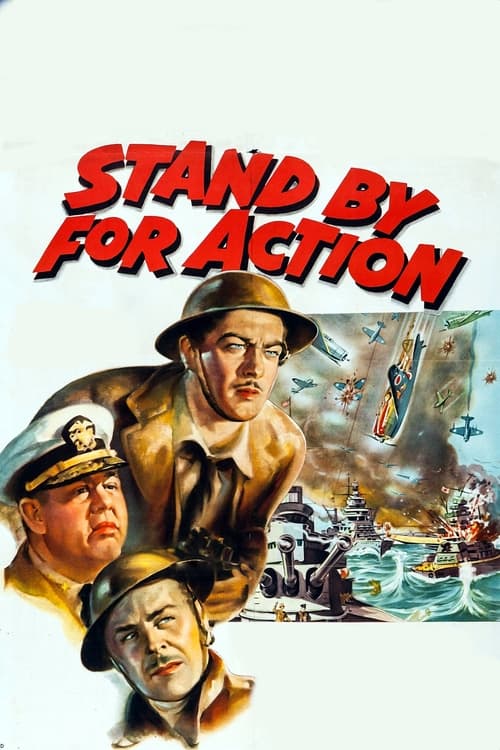
Stand by for Action (1942)
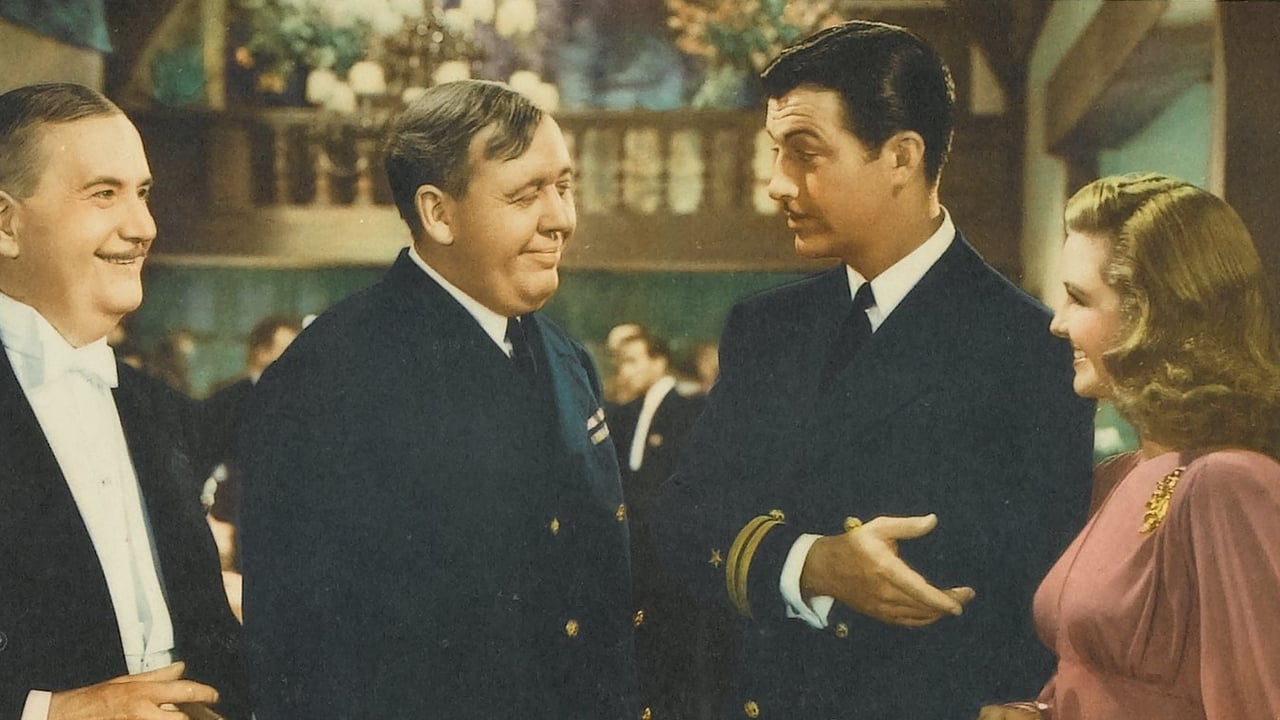
Stand by for Action (1942), directed by Robert Z. Leonard, starring Robert Taylor and Charles Laughton.
score
The mightiest naval drama of all time!
Synopsis
U. S. Navy Lieutenant Gregg Masterman, of The Harvard and Boston Back Bay Mastermans, learned about the sea while winning silver cups sailing his yacht. He climbs swiftly in rank, and is now Junior Aide to Rear Admiral Stephen Thomas.
- Charles RosherCinematography
- Robert Z. LeonardDirector
- George BoemlerEditing
- George BruceScreenplay
About the film
Stand By for Action (British title: Cargo of Innocents) is a 1942 American black-and-white U.S. Navy war film from MGM, directed by Robert Z. Leonard, and starring Robert Taylor, Brian Donlevy, Charles Laughton, Walter Brennan. Marilyn Maxwell made her film debut in this feature. Suggested by a story by Laurence Kirk, and with an original story by Captain Harvey Haislip and R. C. Sherriff, the film's screenplay was written by George Bruce, John L. Balderston, and Herman J. Mankiewicz.
Read the full article (6k characters)
Stand By for Action (British title: Cargo of Innocents) is a 1942 American black-and-white U.S. Navy war film from MGM, directed by Robert Z. Leonard, and starring Robert Taylor, Brian Donlevy, Charles Laughton, Walter Brennan. Marilyn Maxwell made her film debut in this feature. Suggested by a story by Laurence Kirk, and with an original story by Captain Harvey Haislip and R. C. Sherriff, the film's screenplay was written by George Bruce, John L. Balderston, and Herman J. Mankiewicz.
Plot
During the early months of U.S. involvement in World War II, well-connected, Harvard-educated Lieutenant Gregg Masterman enjoys his cushy posting as the junior aide to Rear Admiral Stephen "Old Ironpants" Thomas, playing tennis and arranging various Navy social functions. During a chance encounter, he gives bad advice to up-from-the-ranks Lieutenant Commander Martin J. Roberts. As a result, Thomas gives Roberts command of a once obsolete but now reconditioned World War I-era destroyer, the USS Warren. To his dismay, however, Masterman finds himself reassigned by Admiral Thomas as Roberts' new executive officer. When Masterman learns that Henry Johnson, the ship's civilian caretaker, was a member of the Warren's original crew during the war and is familiar with the ship's quirks, he helps him to reenlist in the Navy with his old rating and once again serve aboard his beloved ship. Despite his awkward beginning, Masterman begins to turn into an effective sea officer under Roberts' tutelage, though Roberts has to constantly remind him that he cannot put the welfare of any person over that of their mission. The first time a Japanese plane attacks the Warren, though, it is Masterman's error that keeps them from shooting it down.
Admiral Thomas is put in charge of a convoy of ships from Honolulu to San Francisco, but one of the escort destroyers breaks down and USS Warren is assigned to replace it. While traveling at flank speed through a heavy Pacific squall to join the convoy, Johnson falls and suffers a concussion. Masterman violates orders and reduces speed to give Johnson a smoother ride for a while. Johnson improves but remains delirious, believing he is back aboard the destroyer during World War I. Before reaching the convoy, the Warren comes across a lifeboat from a ship that had to separate from it and was torpedoed. On it are two crewmen and a party being evacuated from a maternity hospital: two pregnant women and 20 babies. Masterman and the crew must deal with them, as well as two births.
Another Japanese plane attacks and cripples Admiral Thomas's flagship, damaging its steering mechanism. The Warren shoots the plane down, but its battleship emerges from a thick fog bank and opens fire on the flagship. It is up to the Warren's crew to take immediate battle action. Roberts informs Masterman of his attack plan: to set up a heavy smoke screen, double-back behind it, then charge through the smoke and launch a spread of torpedoes into the battleship at close range. When the captain is injured, Masterman must assume command. The injured Johnson is able to escape from sickbay and appears at the destroyer's helm shortly after the bridge crew are injured. He immediately takes charge under Masterman during the battle. The Warren successfully fires six torpedoes into the Japanese battleship, detonating its ammunition magazines and completely destroying the capital ship.
After their return to San Francisco, a formal ceremony is held aboard the now repaired USS Warren: a proud Admiral Thomas presents Roberts, Masterman, and a recovered Johnson with the Navy's highest honor, the Navy Cross, awarded by the president.
Cast
Robert Taylor as Lieutenant Gregg Masterman
Charles Laughton as Rear Admiral Stephen Thomas
Brian Donlevy as Lieutenant Commander Martin J. Roberts
Walter Brennan as Chief Yeoman Henry Johnson
Marilyn Maxwell as Audrey Carr (her screen debut)
Henry O'Neill as Commander Stone M.C.
Marta Linden as Mary Collins
Chill Wills as Chief Boatswain's Mate Jenks
Douglass Dumbrille as Captain Ludlow
Production
A number of titles were considered, but ultimately the film became Stand By for Action. The other titles were: Cargo of Innocence (the title under which the film was released in Great Britain), A Cargo of Innocents, Men O'War, Clear for Action, Navy Convoy, This Man's Navy, and Pacific Task Force. Although the film was shot in Hollywood, it was originally scheduled to be filmed in late 1941 at MGM's studio in England, with Clarence Brown directing Robert Donat and Edmund Gwenn. Film production was shifted to California, however, because of the U.S. war situation following Pearl Harbor. The original intention was that the film would be set in the Atlantic Ocean and be about the Royal Navy. After the U.S. entered World War II, the story was shifted to focus on the U.S. Navy in the Pacific. This was the first naval war film made by MGM.
Release
The film premiered on New Year's Eve, 1942, in a number of cities, including Boston, Providence, Rhode Island, Washington, D.C., Chicago, Norfolk, Virginia, San Diego, California, and San Francisco. MGM had previously screened the film for naval officers on bases in California.
Response
Critical response
The critical response was not good, with the reviewer for Yank magazine saying that the film was "not about The War, but about Hollywood's War", and other reviewers comparing it to In Which We Serve, the 1942 British naval film written by and starring Noël Coward and directed by Coward and David Lean, with the earlier film being deemed superior. Bosley Crowther, the film critic for The New York Times, thought that Charles Laughton's performance was not his best, an opinion that Laughton himself agreed with, saying that it was like something out of H.M.S. Pinafore.
Box office
Despite the poor reviews, Stand By for Action was successful at the box office. It earned $2,013,000 in the US and Canada and $1,185,000 elsewhere making MGM a profit of $786,000.
Awards and honors
The film was nominated for the Oscar for Best Special Effects (A. Arnold Gillespie, Donald Jahraus, Michael Steinore).
References
External links
Stand By for Action at the TCM Movie Database (archived)
Stand By for Action at IMDb
Stand By for Action at the AFI Catalog of Feature Films
Text from Stand By for Action on Wikipedia, licensed CC BY-SA 4.0. https://en.wikipedia.org/wiki/Stand_By_for_Action
Trivia
- It premiered on December 31, 1942, a Thursday.
- It runs 1h49 — a typical feature length.
- It won 0 award(s) and received 1 nomination(s) on record at Wikidata — Academy Award for Best Special Effects among them.
- This film's quiz has 12 questions — enough to play more than once without repeats.
Production
- StudiosMetro-Goldwyn-Mayer
- CountriesUnited States
- LanguagesEnglish
- StatusReleased
More about this film
Nominations
- Academy Award for Best Special Effects 1944
Cast
-
 Robert Taylor
Lieut. Gregg Masterman
Robert Taylor
Lieut. Gregg Masterman -
 Charles Laughton
Rear Admiral Stephen Thomas
Charles Laughton
Rear Admiral Stephen Thomas -
 Brian Donlevy
Lieut. Cmdr. Martin Roberts
Brian Donlevy
Lieut. Cmdr. Martin Roberts -
 Walter Brennan
Chief Yeoman Henry Johnson
Walter Brennan
Chief Yeoman Henry Johnson -
 Chill Wills
Mate Jenks, Chef-Bootsmann
Chill Wills
Mate Jenks, Chef-Bootsmann -
 Marilyn Maxwell
Audrey Carr
Marilyn Maxwell
Audrey Carr -
 Henry O'Neill
Cmdr. Stone M.C
Henry O'Neill
Cmdr. Stone M.C -
 Marta Linden
Mary Collins
Marta Linden
Mary Collins -
 Douglass Dumbrille
Capt. Ludlow
Douglass Dumbrille
Capt. Ludlow -
 Richard Quine
Ensign Lindsay
Richard Quine
Ensign Lindsay -
 William Tannen
Flag Lt. Dudley
William Tannen
Flag Lt. Dudley -
 Douglas Fowley
Ensign Martin
Douglas Fowley
Ensign Martin -
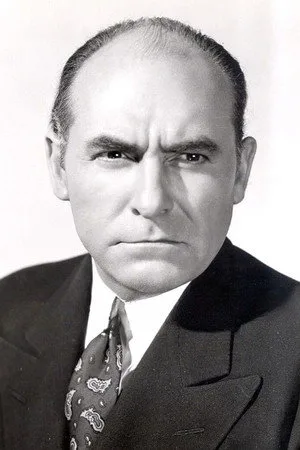 Tim Ryan
Lt. Tim Ryan
Tim Ryan
Lt. Tim Ryan -
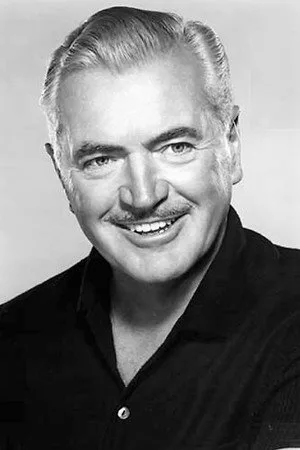 Dick Simmons
Lt. (jg) Royce
Dick Simmons
Lt. (jg) Royce -
 Byron Foulger
Pharmacist's Mate 'Doc' Miller
Byron Foulger
Pharmacist's Mate 'Doc' Miller -
 Hobart Cavanaugh
Carpenter's Mate 'Chips'
Hobart Cavanaugh
Carpenter's Mate 'Chips' -
 Inez Cooper
Susan Garrison
Inez Cooper
Susan Garrison -
 Ben Welden
Chief Quartermaster Rankin
Ben Welden
Chief Quartermaster Rankin - Harry Fleischmann Chief Signalman
-
 Douglas Wood
Sen. Masterman (uncredited)
Douglas Wood
Sen. Masterman (uncredited)
Quiz about this movie
Questions from the whole catalogue.
Play nowIf you liked this one
-
Mister Roberts
 7.0
7.0
-
Sociedade Secreta dos Segundos Filhos Reais
 6.6
6.6
-
O Preço da Glória Drama from the 1940s
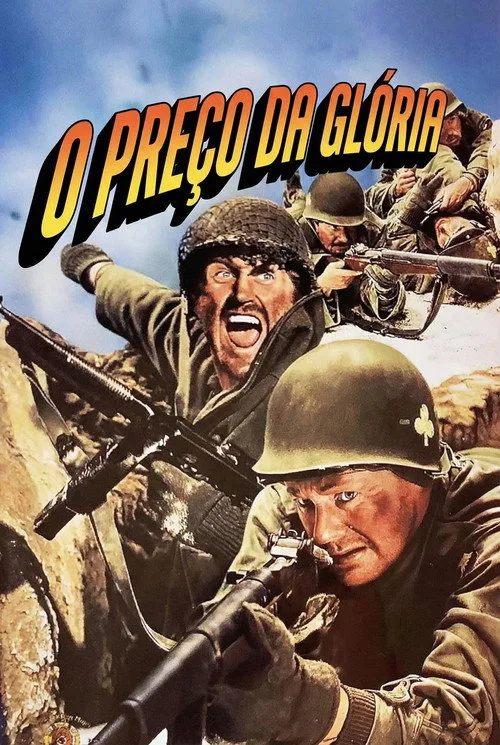 6.7
6.7
-
Spot - Um Cão da Pesada
 6.1
6.1
-
Águas Traiçoeiras
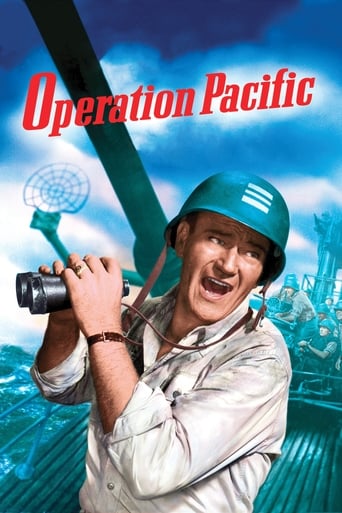 6.1
6.1
-
Ameaça Dupla
 6.5
6.5
-
Primal: Tales of Savagery
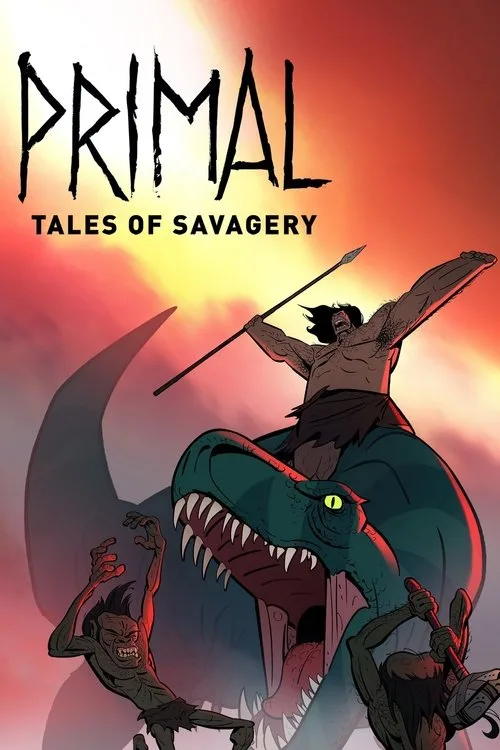 8.4
8.4
-
Manobra Super Radical
 6.1
6.1
-
O Pirata Negro
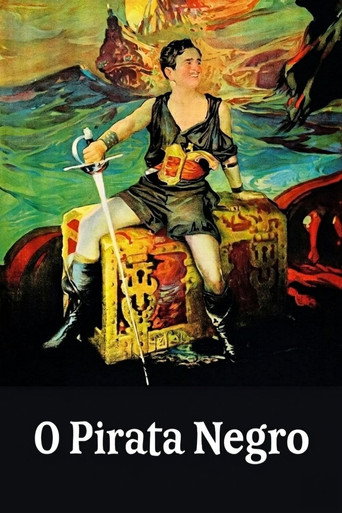 6.7
6.7
-
O Menino e a Guerra
 6.3
6.3
-
O Último Soldado
 6.7
6.7
-
Lego Liga da Justiça: Ataque da Legião do Mal
 6.6
6.6
Tags
Crew
- Charles Rosher Cinematography
- Robert Z. Leonard Director
- George Boemler Editing
- George Bruce Screenplay
- Herman J. Mankiewicz Screenplay
- John L. Balderston Screenplay
- Laurence Kirk Story
Questions about this film
What is Stand by for Action about?
Stand by for Action: U. S. Navy Lieutenant Gregg Masterman, of The Harvard and Boston Back Bay Mastermans, learned about the sea while winning silver cups sailing his yacht. He climbs swiftly in rank, and is now Junior Aide to Rear Admiral Stephen Thomas.
Who directed Stand by for Action?
Stand by for Action was directed by Robert Z. Leonard in 1942.
Who stars in Stand by for Action?
The cast of Stand by for Action includes Robert Taylor, Charles Laughton, Brian Donlevy, Walter Brennan and Chill Wills.
How long is Stand by for Action?
Stand by for Action runs for 109 minutes, or 1h49.
Similar films
 7.5
7.5
 7.5
7.5
 7.9
7.9
 6.7
6.7
 8.0
8.0
 7.6
7.6
 6.9
6.9
 6.7
6.7
 6.1
6.1
 7.1
7.1
 6.8
6.8
 7.7
7.7
Page updated on 09/11/2026.
Back to the catalogue