Sugar Cane Alley (1983)
Sugar Cane Alley (1983), directed by Euzhan Palcy, starring Garry Cadenat and Darling Légitimus.
score
Synopsis
Martinique, in the early 1930s. Young José and his grandmother live in a small village. Nearly everyone works cutting cane and barely earning a living. The overseer can fine a worker for the smallest infraction. The way to advance is to do well in school. José studies hard and succeeds in an exam allowing him to attend school in the capital. With only a partial scholarship, the tuition is very costly. José and his grandmother move to Fort-de-France to make José's studies easier...
- Dominique ChapuisCinematography
- Euzhan PalcyDirector, Writer
- Marie-Josèphe YoyotteEditing
- Groupe MalavoiOriginal music
About the film
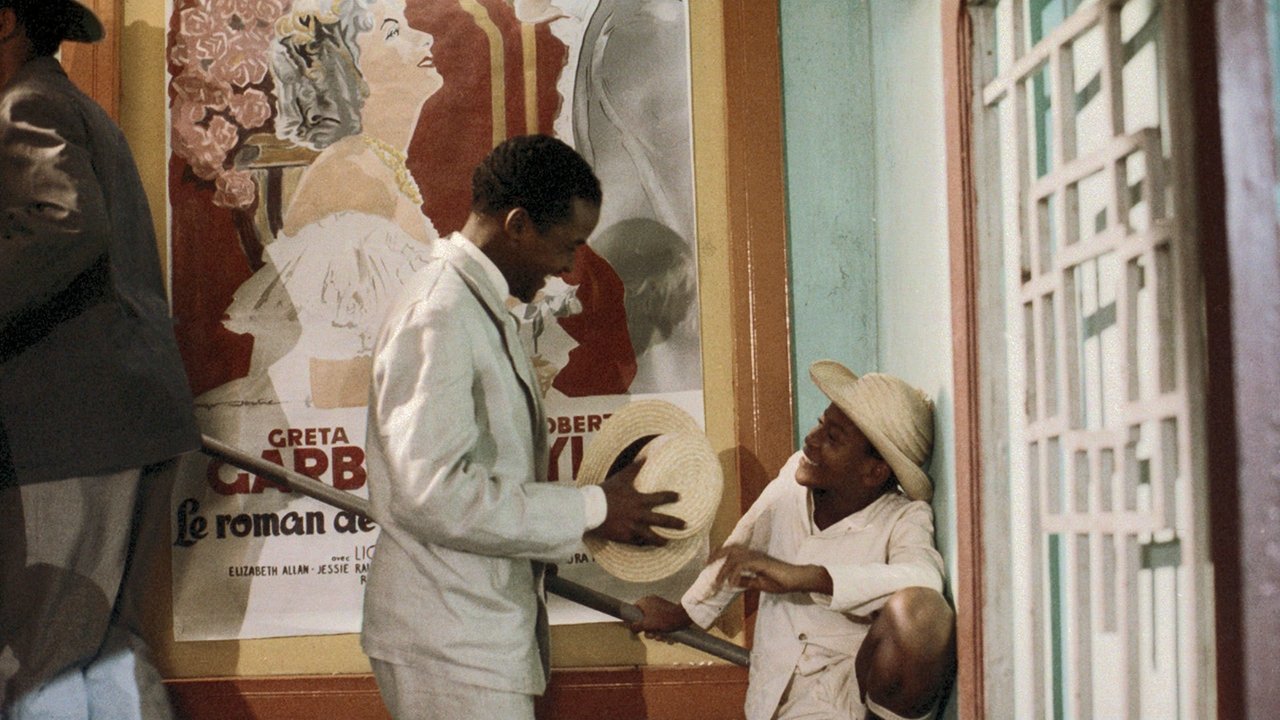
Sugar Cane Alley (French title: La Rue Cases-Nègres) is a 1983 film directed by Euzhan Palcy. It is set in Martinique in the 1930s, when black people working sugarcane fields were still treated harshly by their white employers. It is based on a semi-autobiographical novel by Joseph Zobel of the same title (alternatively translated as Black Shack Alley – literally, "Street of the Houses of Negroes").
Read the full article (4k characters)
Sugar Cane Alley (French title: La Rue Cases-Nègres) is a 1983 film directed by Euzhan Palcy. It is set in Martinique in the 1930s, when black people working sugarcane fields were still treated harshly by their white employers. It is based on a semi-autobiographical novel by Joseph Zobel of the same title (alternatively translated as Black Shack Alley – literally, "Street of the Houses of Negroes").
Synopsis
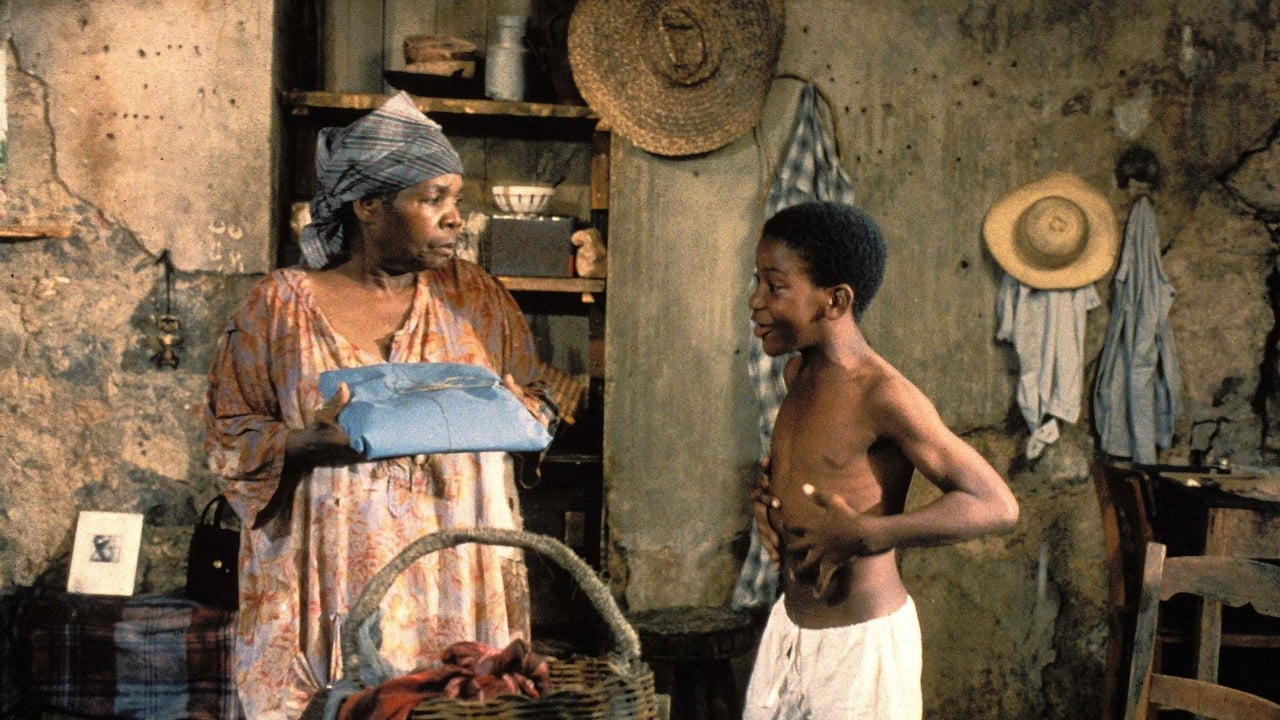
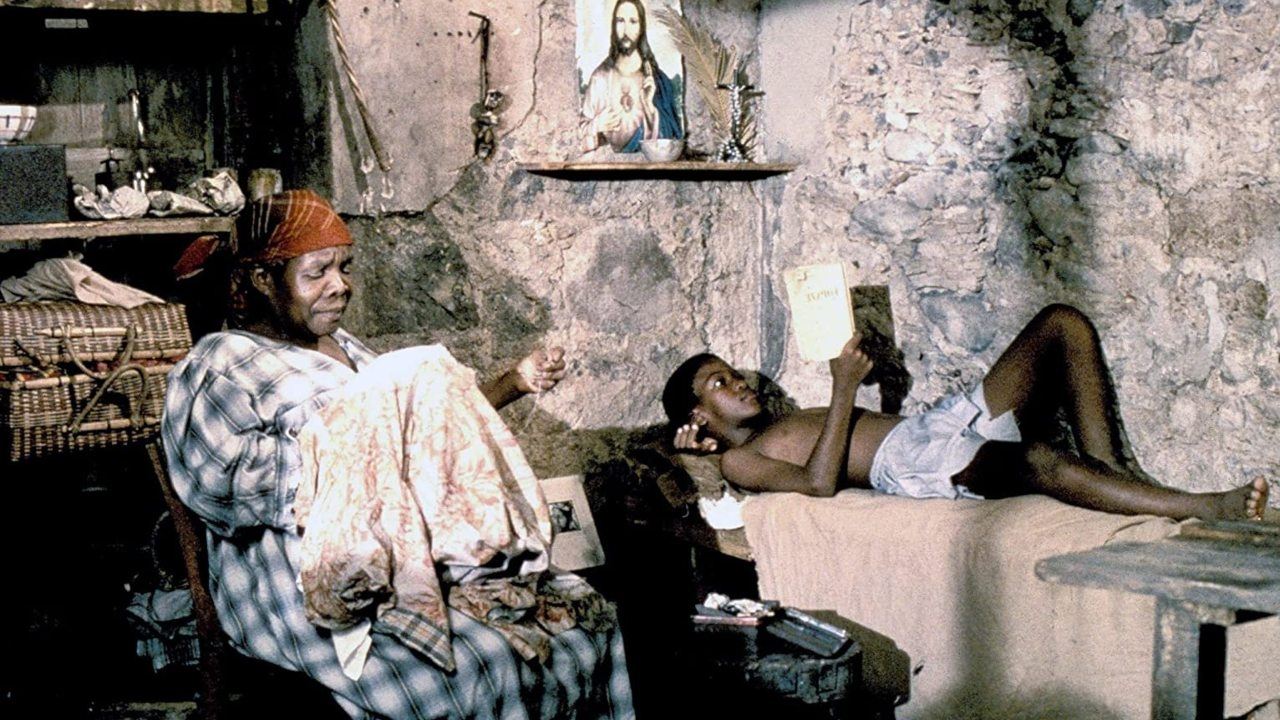
José is a young orphan boy in a rural part of Martinique in the 1930s. Many of the people around him, including his grandmother, Ma'Tine, with whom he lives, work in the sugar cane fields where they are browbeaten and badly paid by the white boss. Ma'Tine is chronically ill, suffering several heart episodes, but she continues to recover from them and continue her work to support José.
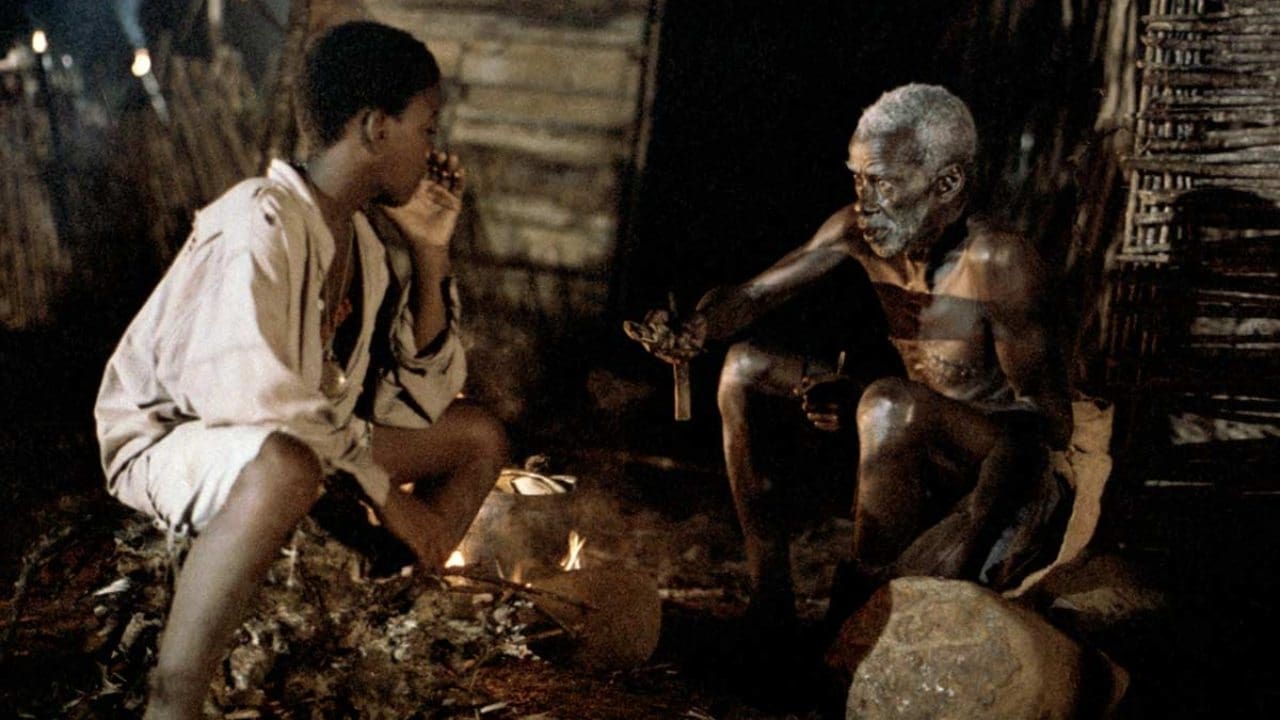
José has a father figure: an elderly man, Medouze, who likes to tell him stories about Africa. José attends school at the insistence of his grandmother, who does not want him to end up working in the fields, the probable fate of most of his class. After Medouze goes missing, José finds him dead in a cane field. In order to earn his lunch, José gets tricked into doing housework for a woman who lives near school, leading to him being repeatedly late for class. Despite this, José excels at his French lessons and in his writing.
At school, José befriends a mulatto boy, Léopold, but Léopold's white father does not want him to associate with the black field workers. When he drives by and sees José and Léopold playing, he orders Léopold to get in the car. However, when trying to retrieve the horse that Léopold was riding, the father is kicked in the stomach by it, leading to great injury. On his deathbed, his father refuses to formally acknowledge Léopold as his son, believing that a mulatto should not carry the family name. Devastated by his father's rejection, Léopold runs away from home and goes missing.
José gets high test scores and earns a partial scholarship to attend high school in Fort-de-France, the capital. Another student, a girl, also wins a place at the school, but her father has already promised her to other people and does not allow her to go. José gives her his pocket watch to express his condolence to her. His grandmother accompanies him to the capital, where she works as a laundrywoman for rich white households to pay the remainder of the school fees and their living costs. They are able to find a small trailer to use as a home thanks to José's friend Carmen who drives the boat between the rural area and Fort-de-France.
José deals with pressure around him, especially from one of his teachers. When he writes an essay on the lives of poor blacks, he is accused of plagiarism, so he runs away from school, back to his small shack in the city. The professor goes to his house and tells José that he was wrongly accused, offering an apology and a full scholarship to the school and stipend monies. The stipend is enough to relieve Ma'Tine from her laundress job.
Later, José returns to Black Shack Alley after his grandmother has a heart attack. José sees Léopold being arrested for stealing the boss' ledger to prove that he was cheating the workers out of their earnings. As his grandmother dies, José is launched into a future he cannot control, but he will continue to write about his home and the suffering of his brethren.
Awards
The film won the Best First Work award at the 1984 César Awards (the equivalent of the Academy Award in France), and won four awards at the 40th Venice Film Festival, including the Silver Lion.
The actress Darling Légitimus, 76 years old at this period, won the Prize of Best Actress (Gold Lion). The film won also the Venice Film Festival Unicef Award and the International Catholic Organization for Cinema and Audiovisual (OCIC) award.
In America, it won the First Prize Critics Award at the Worldfest-Houston International Film Festival. In Africa it won the first Public Award at the Fespaco.
References
External links
Sugar Cane Alley at IMDb
Sugar Cane Alley at Rotten Tomatoes
Text from Sugar Cane Alley on Wikipedia, licensed CC BY-SA 4.0. https://en.wikipedia.org/wiki/Sugar_Cane_Alley
Trivia
- It premiered on September 21, 1983, a Wednesday.
- It runs 1h43 — a typical feature length.
- Its original title is "Rue cases-nègres".
- It won 1 award(s) and received 0 nomination(s) on record at Wikidata — César Award for Best First Film among them.
- This film's quiz has 12 questions — enough to play more than once without repeats.
Production
- StudiosNEF Diffusion, SU.MA.FA., Orca Productions
- CountriesFrance, Martinique
- LanguagesFrench
- StatusReleased
More about this film
Awards
- César Award for Best First Film 1984
Filming locations
- Fort-de-France
Set in
- Martinique
Photos
Cast
- Garry Cadenat Jose
-
 Darling Légitimus
M'Man Tine
Darling Légitimus
M'Man Tine -
 Douta Seck
Medouze
Douta Seck
Medouze - Joby Barnabé Monsieur Saint-Louis
- Francisco Charles Le Géreur
- Marie-Ange Farot Madame Saint Louis
- Marie-Jo Descas La mère de Léopold
- Henri Melon Monsieur Roc - l'instituteur
- Eugène Mona Douze Orteils
- Joël Palcy Carmen
-
 Serge Abattucci
- Samuel Abraham Un enfant de la rue Cases Nègres
- Albert Adea
- Jose Aloha
- Dominique Arfi Le patronne de Carmen
- Dorothee Audibert
- Emmanuel Beaudi
- Louis Luc Bernex
- Emilie Blameble Madame Fusil
- Norita Blamelbe
Quiz about this movie
Questions from the whole catalogue.
Play nowIf you liked this one
-
Mulheres Diabólicas
 7.3
7.3
-
The Sower
 6.0
6.0
-
The Safety of Objects
 6.5
6.5
-
A Felicidade Não Se Compra
 8.3
8.3
-
Meu Anjo
 6.2
6.2
-
Dorothy Dandridge - O Brilho de uma Estrela
 6.4
6.4
-
Lágrimas de Esperança
 7.5
7.5
-
Minha Pequena Princesa
 6.5
6.5
-
O Pequeno Lord Drama from the 1980s
 7.3
7.3
-
Stillwater: Em Busca da Verdade
 6.6
6.6
-
Um Sonho em Pedaços
 6.0
6.0
-
Uma Skatista Radical
 7.2
7.2
Tags
Crew
- Dominique Chapuis Cinematography
- Euzhan Palcy Director
- Marie-Josèphe Yoyotte Editing
- Groupe Malavoi Original music
- Euzhan Palcy Writer
Questions about this film
What is Sugar Cane Alley about?
Sugar Cane Alley: Martinique, in the early 1930s. Young José and his grandmother live in a small village. Nearly everyone works cutting cane and barely earning a living. The overseer can fine a worker for the smallest infraction. The way to advance is to do well in school. José studies hard and succeeds in an exam allowing him to atten…
Who directed Sugar Cane Alley?
Sugar Cane Alley was directed by Euzhan Palcy in 1983.
Who stars in Sugar Cane Alley?
The cast of Sugar Cane Alley includes Garry Cadenat, Darling Légitimus, Douta Seck, Joby Barnabé and Francisco Charles.
How long is Sugar Cane Alley?
Sugar Cane Alley runs for 103 minutes, or 1h43.
What awards did Sugar Cane Alley win?
Sugar Cane Alley has 1 recorded awards, among them César Award for Best First Film.
Similar films
 8.3
8.3
 7.9
7.9
 8.1
8.1
 7.1
7.1
 6.9
6.9
 7.8
7.8
 8.1
8.1
 6.8
6.8
 8.0
8.0
 7.2
7.2
 6.6
6.6
 7.2
7.2
Page updated on 09/17/2026.
Back to the catalogue