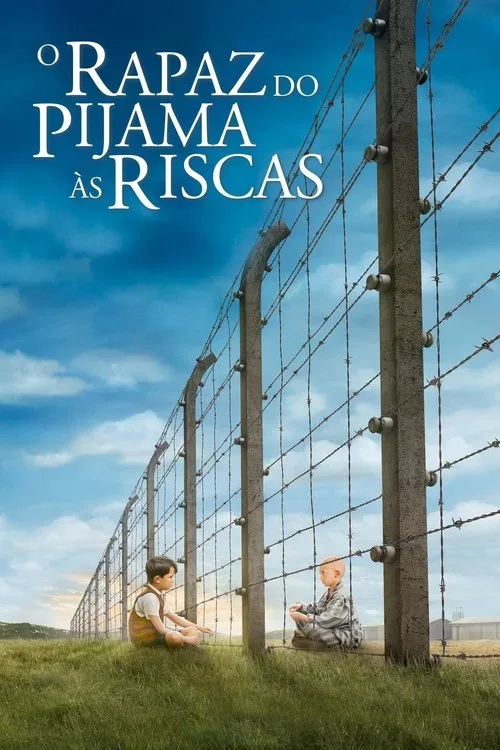



The Boy in the Striped Pyjamas (2008)
The Boy in the Striped Pyjamas (2008), directed by Mark Herman, starring Asa Butterfield and Vera Farmiga.
score
Lines may divide us, but hope will unite us.
Synopsis
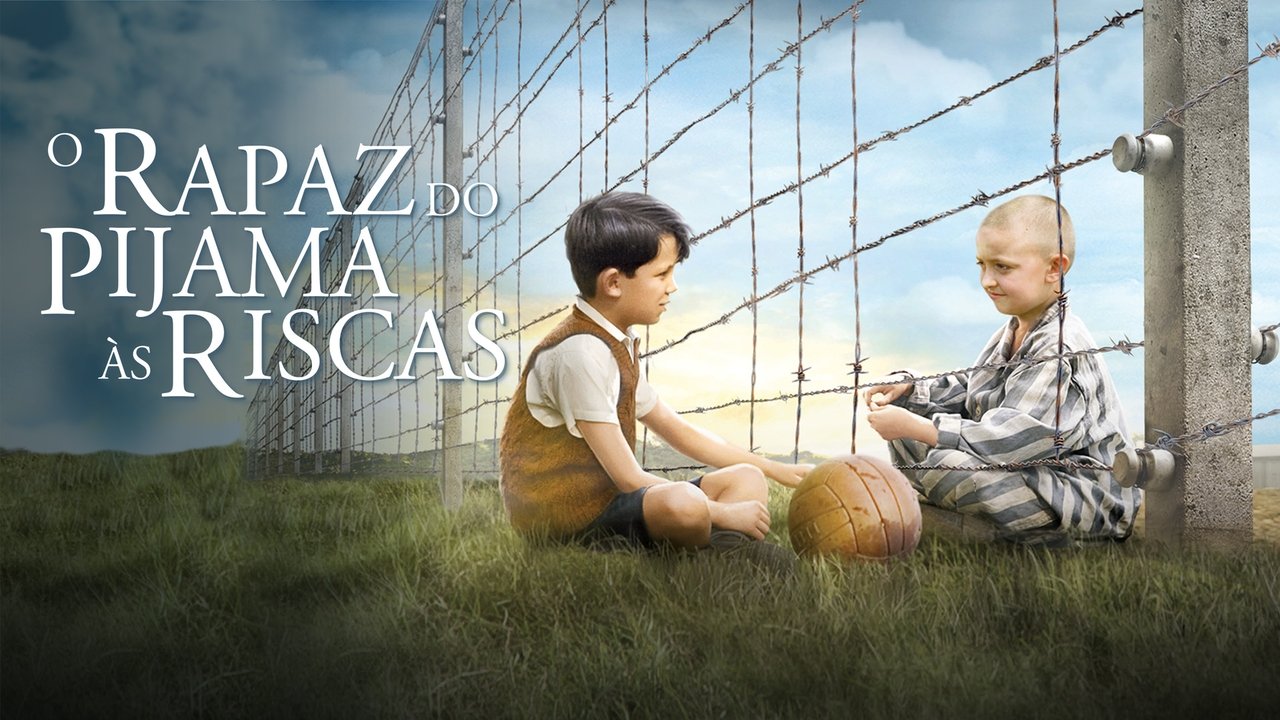
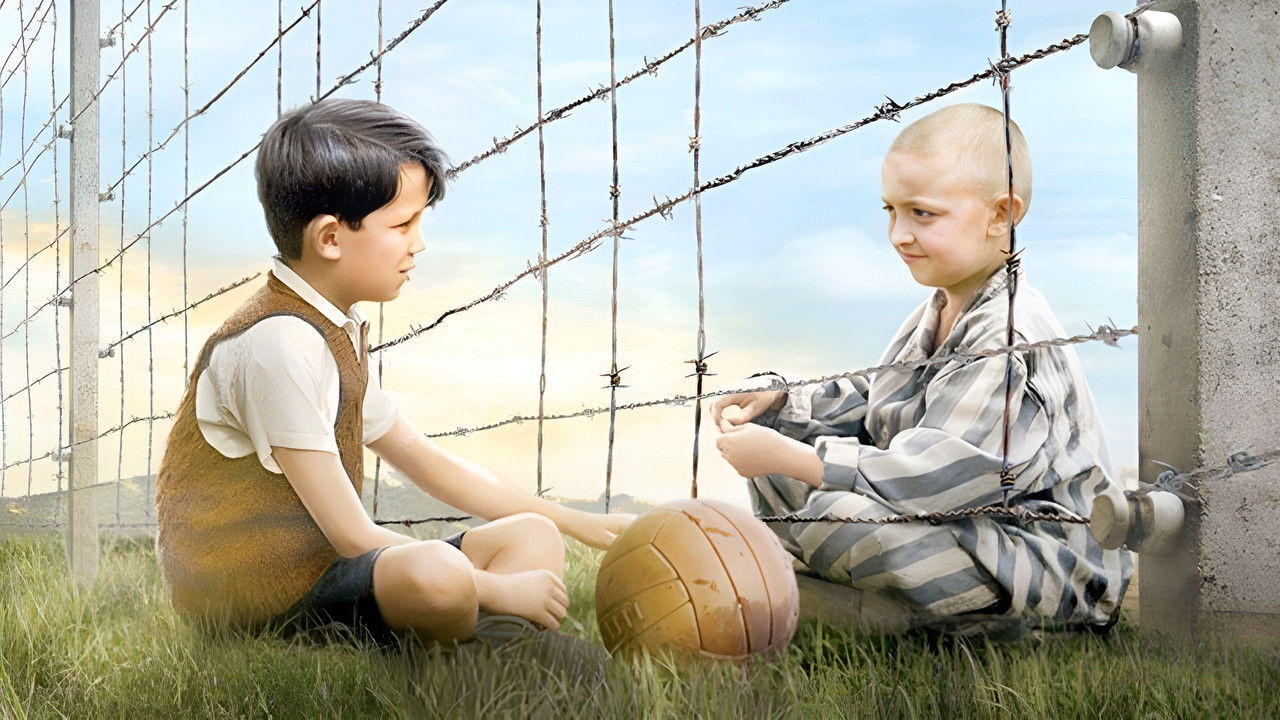
When his family moves from their home in Berlin to a strange new house in Poland, young Bruno befriends Shmuel, a boy who lives on the other side of the fence where everyone seems to be wearing striped pajamas. Unaware of Shmuel's fate as a Jewish prisoner or the role his own Nazi father plays in his imprisonment, Bruno embarks on a dangerous journey inside the camp's walls.
What the catalogue says about this film
- The highest rated of Mark Herman's 5 films here, at 7.8
- Film 5 of 5 by Mark Herman in the catalogue
- Rated 7.8, against a Drama average of 6.6
Every comparison is within the CineQuiz catalogue, not cinema as a whole.
- Benoît DelhommeCinematography
- Mark HermanDirector, Screenplay
- Michael EllisEditing
- David HeymanProducer
About the film
The Boy in the Striped Pyjamas (released as The Boy in the Striped Pajamas in North America) is a 2008 Holocaust historical drama film written and directed by Mark Herman. It is based on the 2006 novel of the same name by John Boyne. Set in Nazi Germany, the film follows the son of a Schutzstaffel (SS) officer who befriends a Jewish prisoner of his age.
It was released in the United Kingdom on 12 September 2008. It received generally positive reviews from critics for its emotional weight, mature themes and acting but was panned by scholars for misrepresenting elements of the Holocaust.
Read the full article (10k characters)
The Boy in the Striped Pyjamas (released as The Boy in the Striped Pajamas in North America) is a 2008 Holocaust historical drama film written and directed by Mark Herman. It is based on the 2006 novel of the same name by John Boyne. Set in Nazi Germany, the film follows the son of a Schutzstaffel (SS) officer who befriends a Jewish prisoner of his age.
It was released in the United Kingdom on 12 September 2008. It received generally positive reviews from critics for its emotional weight, mature themes and acting but was panned by scholars for misrepresenting elements of the Holocaust.
Plot
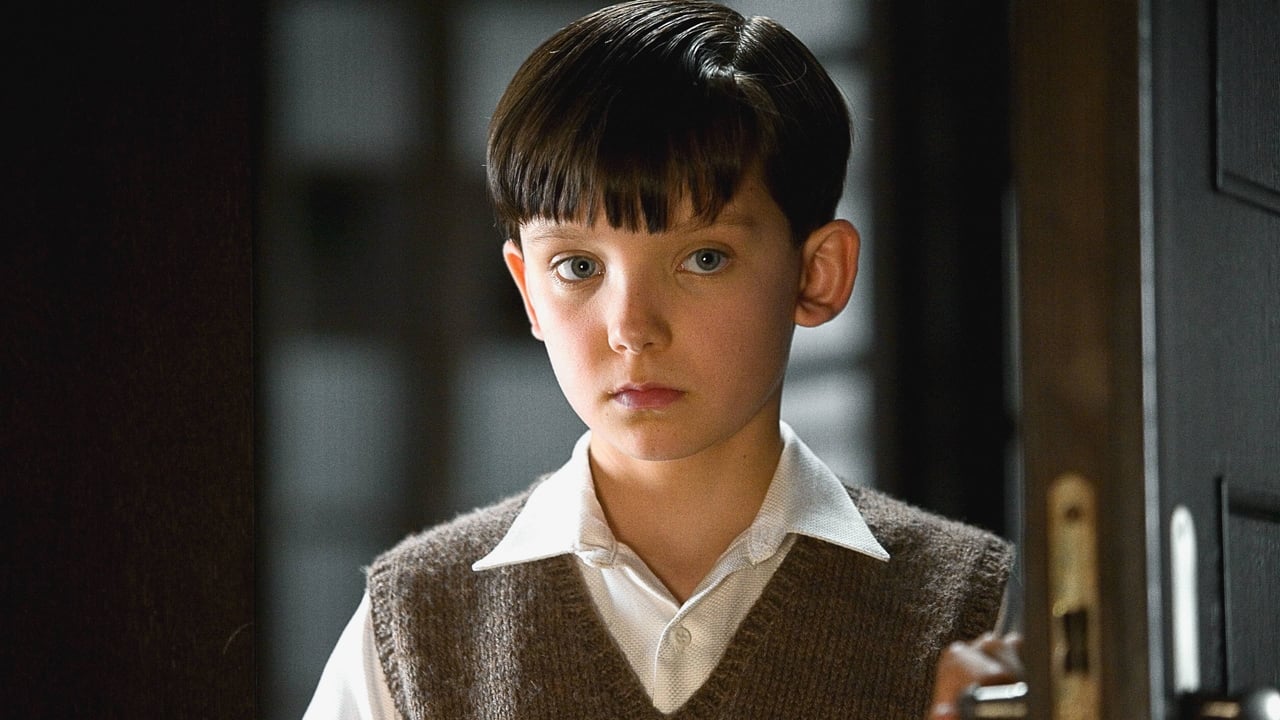
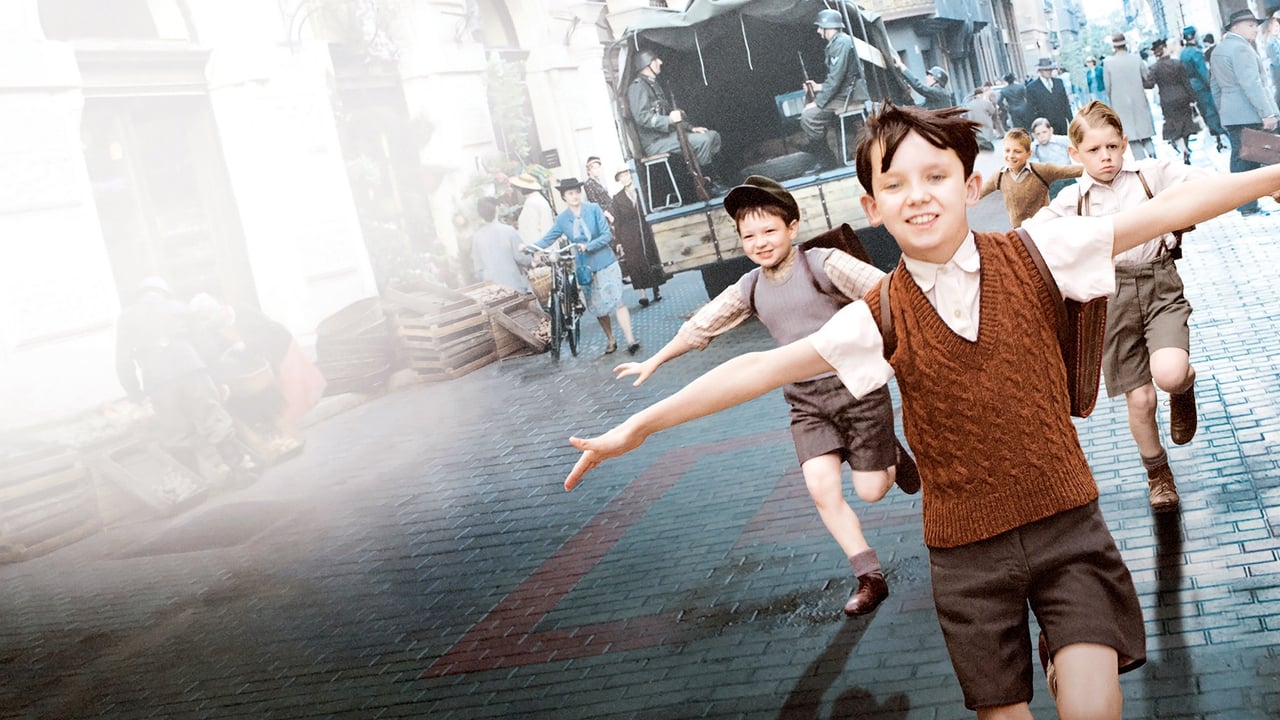
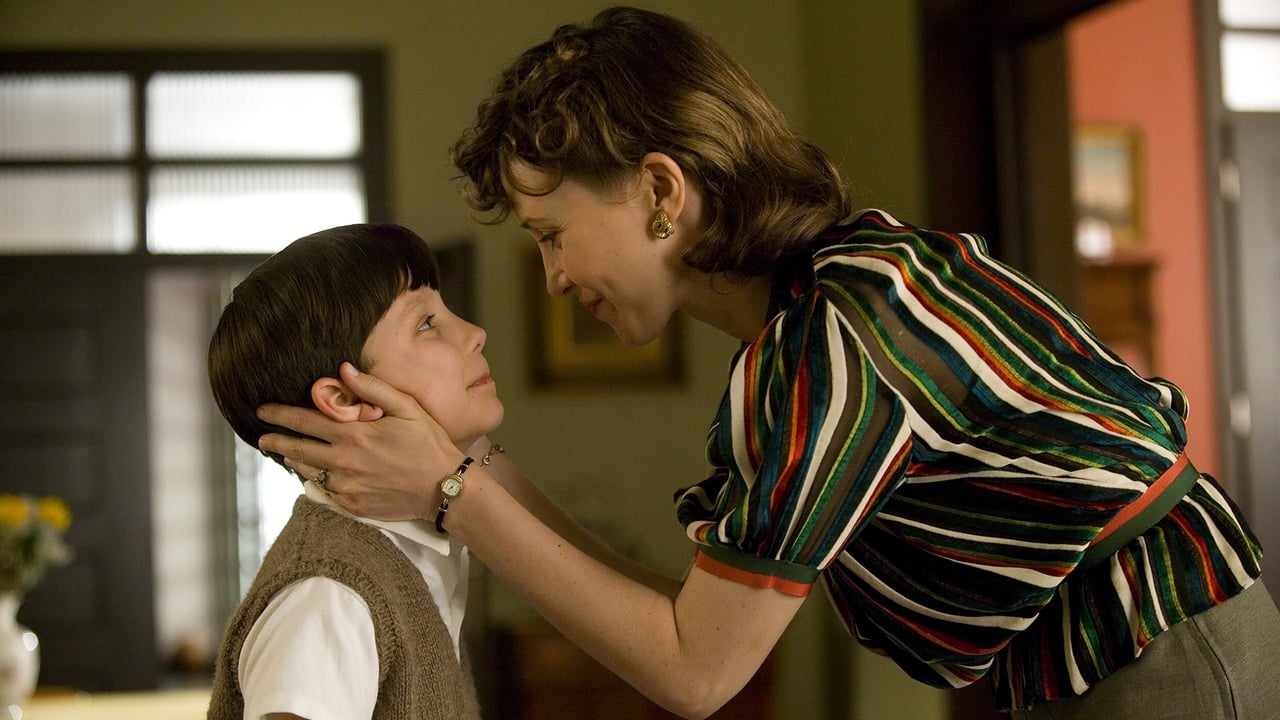
Bruno, an eight-year-old German boy living in Berlin, is uprooted to the countryside with his family after his father Ralf, an SS officer, is promoted. The boy notices an extermination camp from his bedroom window, but believes it to be a farm. His mother Elsa forbids him from going in the back garden.
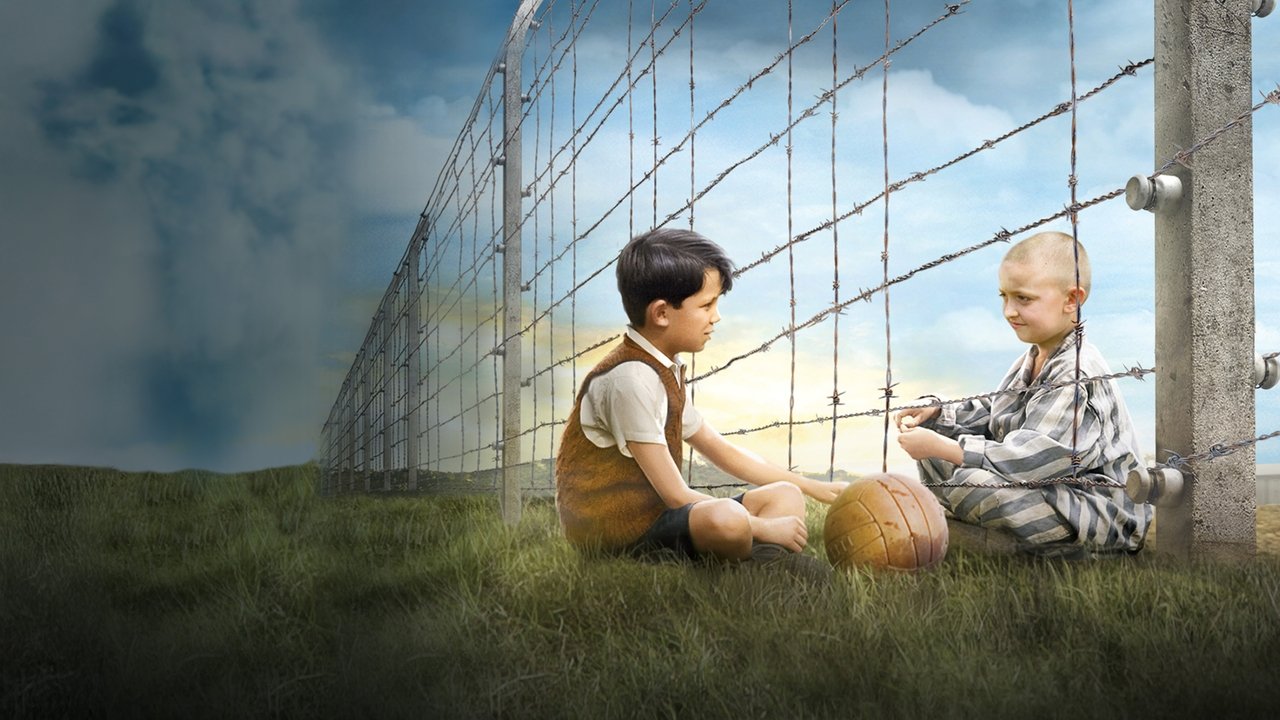
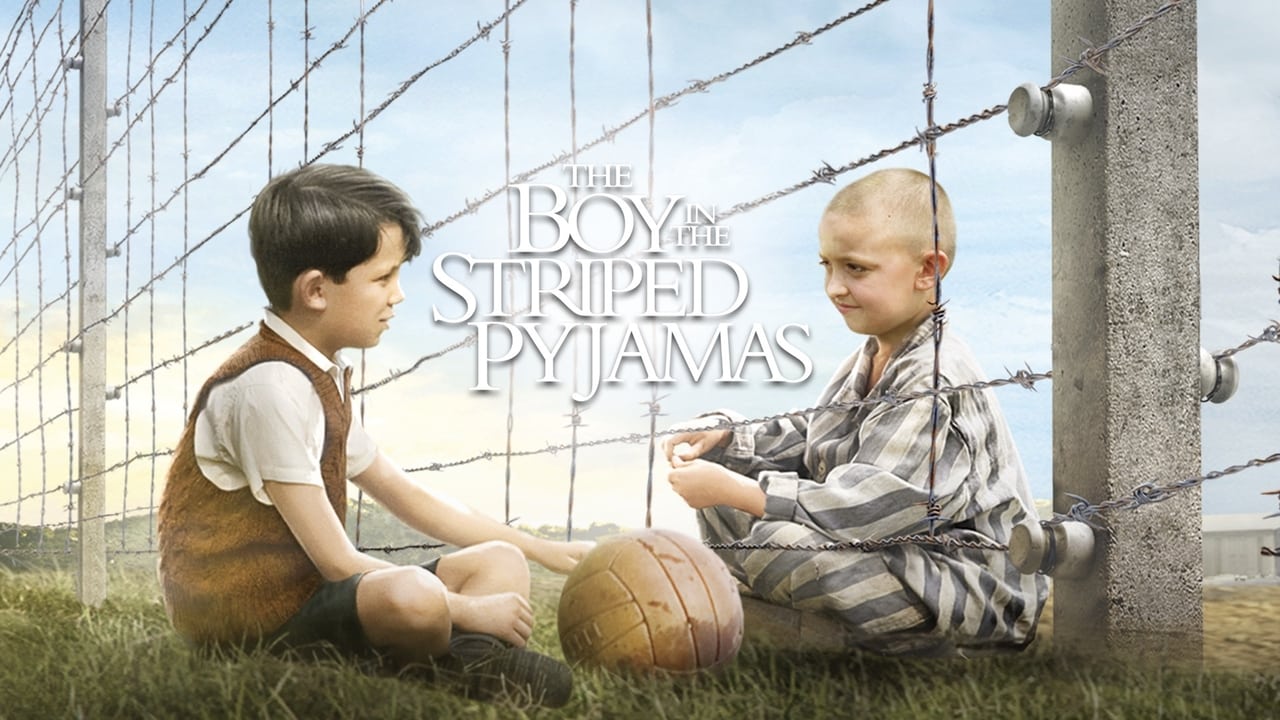
Ralf arranges for Herr Liszt, a private tutor, to home school Bruno and his elder sister, Gretel. Liszt's anti-semitic teachings and Gretel's crush on her father's subordinate, Lieutenant Kurt Kotler, make her a fanatical Nazi supporter. Bruno struggles to absorb the racist rhetoric after Pavel, a doctor-turned-family slave, tends to a minor injury Bruno suffers. Bruno's explorations of nearby woods takes him to a barbed wire fence surrounding the camp where he befriends Shmuel, a boy his age. They meet at the fence regularly, and Bruno learns Shmuel is a Jew brought to the camp with his parents. Bruno sneaks him food.
Kotler inadvertently reveals to Elsa that the smell from the camp is from the crematoria, and she angrily confronts her husband. When Kotler reveals his father left Germany for Switzerland to avoid national service, Ralf berates him, and Kotler in turn beats Pavel for spilling a glass of wine.
Bruno sees Shmuel working in his home and offers him cake. Kotler finds them talking and berates Shmuel. After seeing him eating, Shmuel informs Kotler that Bruno offered the cake, which he fearfully denies. Later, Bruno tries to apologise to Shmuel, but he does not reappear at the fence for several days. A short time after, Bruno clandestinely watches his father and other officers reviewing a propaganda film depicting the camp's conditions as positive. Shmuel eventually reappears at the fence, but with visible injuries. Bruno apologises to Shmuel, who forgives him.
Kotler gets transferred to the Eastern Front for his refusal to renounce his father. And Ralf's mother, who disapproves of the Nazi regime, is killed by an Allied bombing raid on Berlin. At the funeral, Elsa tries to remove a wreath from the Führer out of respect for her and her beliefs. Ralf stops her, and they quarrel. Elsa informs Ralf she does not want the children living in the vicinity of the camp and Ralf tells Bruno and Gretel their mother is taking them to live with their extended family until the war is over. Bruno visits Shmuel before he leaves, and on learning Shmuel's father has disappeared from a work party, decides to help Shmuel find him. Shmuel provides Bruno with a prisoner's striped outfit and cap, but they are captured by the guards after Bruno digs into camp under the fence.
Gretel and Elsa burst into Ralf's office during a meeting when they realise Bruno is missing. A search dog tracks Bruno's scent to his discarded clothing by the wire. Ralf enters the camp as a group of prisoners are processed in a gas chamber for extermination by pesticide gas. Bruno and Shmuel have been killed, leaving Ralf, Elsa, and Gretel devastated.
Cast
Asa Butterfield as Bruno, a young German boy
Vera Farmiga as Elsa, Bruno's mother
David Thewlis as Ralf, Bruno's father
Jack Scanlon as Shmuel, a young Jewish boy
Amber Beattie as Gretel, Bruno's older sister
Rupert Friend as Lieutenant Kurt Kotler
David Hayman as Pavel, a concentration camp prisoner
Sheila Hancock as Nathalie, Bruno's grandmother
Richard Johnson as Matthias, Bruno's grandfather
Cara Horgan as Maria
Jim Norton as Herr Liszt
Production
Filming
Filming occurred during 29 April 2007 to 7 July 2007, in Hungary. Locations included Kerepesi Cemetery in Budapest, Sacelláry Castle in Budafok and several other areas of Budapest. Interiors were filmed at Fót Studios, Budapest. Post-production was completed in London. The total cost of the production was approximately $12.4 million.
Soundtrack
The Boy in the Striped Pyjamas: Original Motion Picture Soundtrack is the licensed soundtrack album to the film. The score was composed by James Horner. It was released through Hollywood Records in 2008.
Track list
Reception
Box office
The film opening on 12 September 2008 in the United Kingdom with $253,085 at the box office in 17 theatres. It later opened for a limited time on 26 November 2008 in North America.
The Boy in the Striped Pyjamas grossed a worldwide total of $44.1 million.
Critical response
The Boy in the Striped Pyjamas has a 65% approval rating on Rotten Tomatoes, based on 145 reviews, with an average rating of 6.30/10. The site's critical consensus reads, "A touching and haunting family film that deals with the Holocaust in an arresting and unusual manner, and packs a brutal final punch of a twist." On Metacritic, the film has a normalised score of 55 out of 100, based on 28 critics, indicating "mixed or average reviews".
James Christopher, of The Times, referred to the film as "a hugely affecting film. Important, too". Manohla Dargis, of The New York Times, said the film "trivialized, glossed over, kitsched up, commercially exploited and hijacked [the Holocaust] for a tragedy about a Nazi family".
In the Chicago Sun-Times, Roger Ebert gave the film three and a half out of four and said that it is not simply a reconstruction of Germany during the war, but is "about a value system that survives like a virus".
Kelly Jane Torrance in the Washington Times said the film was moving and beautifully told. In spite of some criticism, Ty Burr of The Boston Globe filed this conclusion: "what saves The Boy in the Striped Pajamas from kitsch is the cold, observant logic of Herman's storytelling".
Scholarly reception
Scholars have criticised the film, saying that it obscures the historical facts about the Holocaust and creates a false equivalence between victims and perpetrators. For example, at the end of the movie, the grief of Bruno's family is depicted, encouraging the viewer to feel sympathy for Holocaust perpetrators. Michael Gray wrote that the story is not very realistic and contains many implausibilities, because children were murdered when they arrived at Auschwitz and it was not possible for them to have contact with people on the outside. However, according to Nazi records there were 619 male children at the camp; all female and many other male children were gassed upon arrival. A study by the Centre for Holocaust Education at University College London found that The Boy in the Striped Pyjamas "is having a significant, and significantly problematic impact on the way young people attempt to make sense of this complex past". However, a more recent study found that the film's reception is strongly based on the viewers' previous knowledge and beliefs.
Research by Holocaust educator Michael Gray found that more than three-quarters of British schoolchildren (ages 13–14) in his sample had engaged with The Boy in the Striped Pyjamas, significantly more than The Diary of Anne Frank (1947). The film was having a significant effect on many of the children's knowledge and beliefs about the Holocaust. The children believed that the story contained a lot of useful information about the Holocaust and conveyed an accurate impression of many real-life events. The majority believed that it was based on a true story. He also found that many students drew false inferences from the film, such as assuming that Germans would not have known anything about the Holocaust because Bruno's family did not, or that the Holocaust had stopped because a Nazi child had accidentally been gassed. Other students believed that Jews had volunteered to go to the camps because they had been fooled by Nazi propaganda, rather than being violently rounded up and deported. Gray recommended studying the book only after children had already learned the major facts about the Holocaust and were less likely to be misled by it, while the University of Huddersfield's Holocaust centre and others recommended that the film be taught only as fiction, with its factual inaccuracies made clear, and recommended that true accounts and works from Jewish authors should be prioritised.
Accolades
References
Further reading
Canani, Marco (16 March 2022). "John Boyne's Representation of the Shoah in The Boy in the Striped Pyjamas : A Paradigm of Transgression and Linguistic Uncertainties". English Literature (1). doi:10.30687/EL/2420-823X/2021/08/012. hdl:2434/1155388. ISSN 2420-823X. Retrieved 30 June 2026.
Gray, Michael (3 June 2015). "The Boy in the Striped Pyjamas: A Blessing or Curse for Holocaust Education?". Holocaust Studies. 20 (3): 109–136. doi:10.1080/17504902.2014.11435377. S2CID 143231358.
External links
The Boy in the Striped Pyjamas at IMDb
The Boy in the Striped Pyjamas at Box Office Mojo
The Boy in the Striped Pyjamas at Rotten Tomatoes
Production notes
"The Problem with The Boy in the Striped Pyjamas" by Hannah May Randall (31 May 19) about the book
Text from The Boy in the Striped Pyjamas (film) on Wikipedia, licensed CC BY-SA 4.0. https://en.wikipedia.org/wiki/The_Boy_in_the_Striped_Pyjamas_(film)
Trivia
- It cost US$ 13 million and grossed US$ 20 million in theaters — 1.6 times its budget.
- It premiered on May 7, 2008, a Wednesday.
- It runs 1h34 — a typical feature length.
- As of September 20, 2026, it is on no subscription service in Brazil — only to rent or buy on Apple TV Store, Amazon Video, Google Play Movies.
- This film's quiz has 14 questions — enough to play more than once without repeats.
Production
- StudiosBBC Film, Miramax, Heyday Films
- CountriesUnited Kingdom, United States
- LanguagesEnglish, German
- BudgetUS$ 12,500,000
- Box officeUS$ 20,416,563
- StatusReleased
More about this film
Based on
- The Boy in the Striped Pyjamas
Filming locations
- Budapest
Set in
- German Reich
Where to watch
Photos





Cast
-
 Asa Butterfield
Bruno
Asa Butterfield
Bruno -
 Vera Farmiga
Mother
Vera Farmiga
Mother -
 David Thewlis
Father
David Thewlis
Father -
 Jack Scanlon
Shmuel
Jack Scanlon
Shmuel -
 Amber Beattie
Gretel
Amber Beattie
Gretel -
 Rupert Friend
Lieutenant Kotler
Rupert Friend
Lieutenant Kotler -
 David Hayman
Pavel
David Hayman
Pavel -
 Sheila Hancock
Grandma
Sheila Hancock
Grandma -
 Richard Johnson
Grandpa
Richard Johnson
Grandpa -
 Cara Horgan
Maria
Cara Horgan
Maria -
 Jim Norton
Herr Liszt
Jim Norton
Herr Liszt - Zac Mattoon O'Brien Leon
- Domonkos Németh Martin
- Henry Kingsmill Karl
- Zsuzsa Holl Berlin Cook
-
 László Áron
Lars
László Áron
Lars -
 Charlie Baker
Palm Court Singer
Charlie Baker
Palm Court Singer -
 Iván Verebély
Meinberg
Iván Verebély
Meinberg -
 Fesztbaum Béla
Schultz
Fesztbaum Béla
Schultz - Attila Egyed Heinz
Quiz about this movie
Questions from the whole catalogue.
Play nowIf you liked this one
-
Império do Sol
 7.5
7.5
-
Uma História de Sobrevivência
 7.0
7.0
-
Coragem e Esperança
 7.3
7.3
-
Zona de Interesse
 7.0
7.0
-
Caçadores de Obras-Primas
 6.1
6.1
-
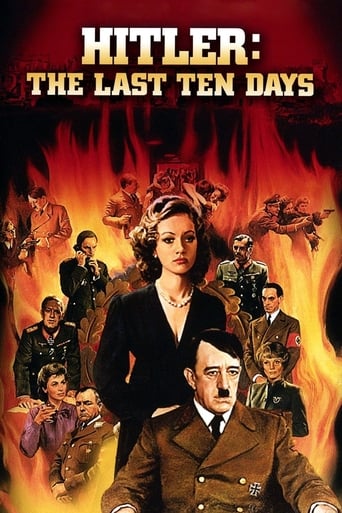
Hitler: Os Últimos Dez Dias
 6.2
6.2
-
Sem Novidade no Front
 7.8
7.8
-
Fugindo do Inferno
 7.9
7.9
-
Pássaro Branco: Uma História de Extraordinário
 7.8
7.8
-
Caminho da Liberdade
 7.0
7.0
-
Irmãos de Honra
 7.1
7.1
-
Insurreição Drama from the 2000s
 6.5
6.5
Tags
Crew
- Benoît Delhomme Cinematography
- Mark Herman Director
- Michael Ellis Editing
- David Heyman Producer
- James Horner Original music
- Mark Herman Screenplay
Questions about this film
What is The Boy in the Striped Pyjamas about?
The Boy in the Striped Pyjamas: When his family moves from their home in Berlin to a strange new house in Poland, young Bruno befriends Shmuel, a boy who lives on the other side of the fence where everyone seems to be wearing striped pajamas. Unaware of Shmuel's fate as a Jewish prisoner or the role his own Nazi father plays in his imprisonment, Bru…
Who directed The Boy in the Striped Pyjamas?
The Boy in the Striped Pyjamas was directed by Mark Herman in 2008.
Who stars in The Boy in the Striped Pyjamas?
The cast of The Boy in the Striped Pyjamas includes Asa Butterfield, Vera Farmiga, David Thewlis, Jack Scanlon and Amber Beattie.
How long is The Boy in the Striped Pyjamas?
The Boy in the Striped Pyjamas runs for 94 minutes, or 1h34.
How much did The Boy in the Striped Pyjamas cost and how much did it make?
The Boy in the Striped Pyjamas had a budget of US$ 12,500,000 and took US$ 20,416,563 at the box office — 1.6 times its cost.
Where can I watch The Boy in the Striped Pyjamas?
The Boy in the Striped Pyjamas is available on Apple TV Store, Amazon Video and Google Play Movies. Availability changes often: the list on this page is the most recent we received.
What is The Boy in the Striped Pyjamas based on?
The Boy in the Striped Pyjamas is based on The Boy in the Striped Pyjamas.
Similar films
 8.0
8.0
 8.6
8.6
 8.2
8.2
 8.2
8.2
 8.0
8.0
 7.9
7.9
 6.9
6.9
 7.1
7.1
 7.2
7.2
 7.9
7.9
 7.3
7.3
 6.0
6.0
Page updated on 09/08/2026.
Back to the catalogue