The Password Is Courage (1962)
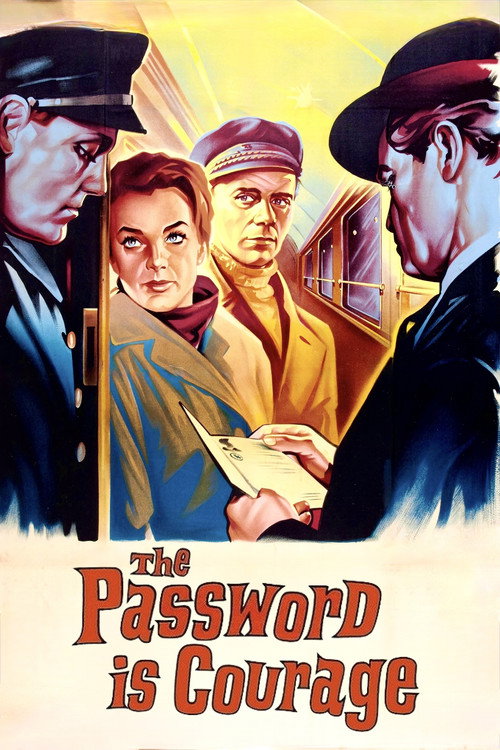
The Password Is Courage (1962), directed by Andrew L. Stone, starring Dirk Bogarde and Maria Perschy.
score
The only man ever awarded the Iron Cross by the enemy!!!
Synopsis
Sergeant-Major Charles Coward, a brave British soldier is captured by German forces during World War II. When he's thrown into a prisoner of war camp, he immediately plans his escape. Masquerading as a wounded German soldier, he makes it as far as the medical tent, where the deceived enemy forces award him the Iron Cross. Though he is ultimately discovered, he goes on to courageously pursue his freedom with a whimsical and undying audacity.
- Davis BoultonCinematography
- Andrew L. StoneDirector, Producer, Screenplay
- Noreen AcklandEditing
- Virginia L. StoneProducer, Original music
About the film
The Password Is Courage is a 1962 British comedy-drama war film written, produced, and directed by Andrew L. Stone and starring Dirk Bogarde, Maria Perschy, and Alfred Lynch. It was based on The Password Is Courage, the 1954 World War II biography/novel about Sergeant-Major Charles Coward by Ronald Payne and John Williams Garrod (written under the joint pseudonym John Castle, authors of the novelization of Flight into Danger). It was distributed by Metro-Goldwyn-Mayer.
Read the full article (10k characters)
The Password Is Courage is a 1962 British comedy-drama war film written, produced, and directed by Andrew L. Stone and starring Dirk Bogarde, Maria Perschy, and Alfred Lynch. It was based on The Password Is Courage, the 1954 World War II biography/novel about Sergeant-Major Charles Coward by Ronald Payne and John Williams Garrod (written under the joint pseudonym John Castle, authors of the novelization of Flight into Danger). It was distributed by Metro-Goldwyn-Mayer.
Plot
Sergeant-Major Charles Coward is a senior British NCO incarcerated in the prisoner of war camp Stalag VIII-B. He encourages his fellow inmates to escape, and tries to humiliate the German guards at every opportunity.
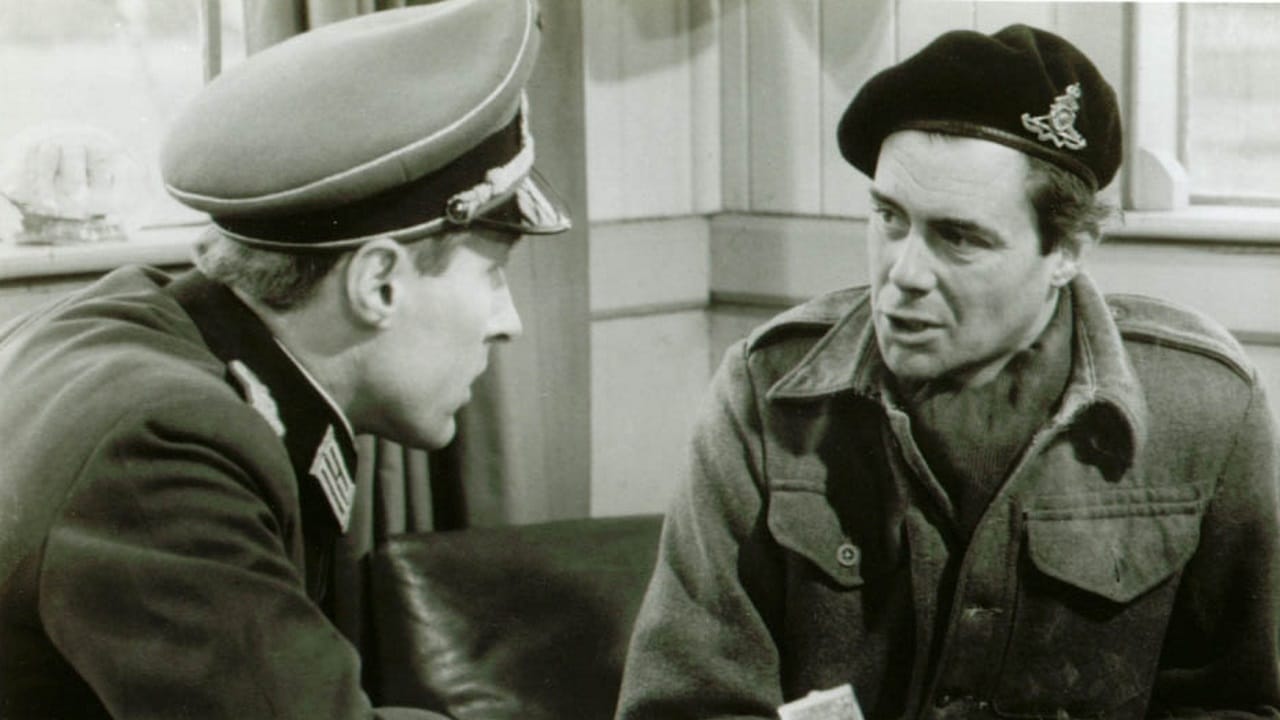
When he is being transferred to Stalag VIII-B, the injured Coward escapes from a forced march, finding refuge in a French farmhouse and barn that is soon requisitioned by a German army unit setting up a field hospital. Believed to be a wounded German soldier, Coward is taken to a hospital, where his identity is discovered, but not before he is awarded the Iron Cross as he lies in his hospital bed.
Coward is sent on to Stalag VIII-B. On the way to the camp, he engineers the total destruction of an enemy ammunition train: He and his fellow prisoners toss flaming bundles of straw, set on fire with his cigarette lighter, into the passing rail cars.
At the camp, he and his fellow prisoner Bill Pope become involved in an elaborate escape plan. The Germans find a tunnel – but it is an old and abandoned one. Coward then attempts to deceive his camp commander and Luftwaffe officials, indicating that he has knowledge of a secret allied bomb sight. He receives special favours, which he uses to bribe the camp guards to get vital materials needed for the coming escape.
When his ruse is discovered, Coward and his friend Pope are transferred to a work camp in occupied Poland. The camp's commanding officer says Coward is a traitor, hoping his fellow prisoners will kill him. The Nazi scheme fails.
The prisoners trick the Unteroffizier, into thinking he was responsible for a devastating fire that Coward actually engineered. Using this, Coward extracts an extraordinary privilege: going to and from the neighboring town without an escort. He makes contact with Irena, an attractive Polish resistance agent, who provides him with maps and other information. He also joins his fellow prisoners in acts of sabotage, including wrecking a huge supply train. He and Pope are sent back to their old Stalag, smuggling the papers past the initial strip search inspection by pretending to be infested with lice.
The escape plan proceeds apace, with every detail accounted for, and the day comes for the 100 chosen men to escape. Coward is the one to break open the vertical access tunnel into a pine grove. He strikes thick tree roots delaying the escape. This leaves 20 men stuck in the tunnel and 180 in the hut. A guard is seen approaching. The men decide to cover up by singing, pretending a party is going on. The concertina player sacrifices his place in line and goes outside, pretending to be drunk. The guard takes him away, not unkindly.
Coward breaks through, but they are short of the woods. The men must run for the trees when the searchlight passes. At the train station. Irena suddenly appears and helps Coward get on the train for Vienna. Once there, they kiss and he promises to return after the war. She goes to buy his ticket, but Coward must surrender to guards in order to protect her. He finds several of his captured comrades, including Pope, waiting under guard in the station's office.
Coward and Pope are assigned to the IG Farben work camp, near the Belsen concentration camp. Coward's narration says of Belsen “[its] name is now a symbol for the most bestial depravity in the entire history of mankind.” The war progresses and they eventually escape. While posing as workmen clearing rubble, they meet a jeep full of American G.I.s who tell them the front line is only a mile away, but there is a “road full of krauts” in their way. They steal a nearby abandoned fire engine and firemen uniforms and speed down the road, bell ringing. A German convoy on that road moves aside, and they drive off to freedom, singing “There is a Tavern in the Town”. A full chorus of men’s voices joins in the verse: “Adieu kind friends, adieu, adieu…”
Cast
Dirk Bogarde as Sergeant-Major Charles Coward
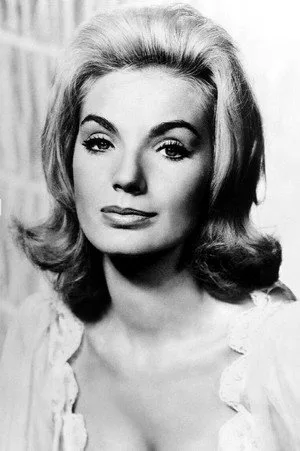
Maria Perschy as Irena
Alfred Lynch as Corporal Bill Pope
Nigel Stock as Cole
Reginald Beckwith as Unteroffizier
Richard Marner as Schmidt
Ed Devereaux as the Aussie
Lewis Fiander as Pringle
George Mikell as Necke
Richard Carpenter as Robinson
Bernard Archard as first prisoner of war
Ferdy Mayne as first German officer at French farm
George Pravda as second German officer at French farm
Olaf Pooley as German doctor
Michael Mellinger as Feldwebel
Colin Blakely as first German goon
Margaret Whiting as French farm woman
Mark Eden as second prisoner of war
Douglas Livingstone as Bennett
Arnold Marlé as old man on train
Charles Durning as American GI (uncredited)
Cast notes: Richard Marner appeared in the role of German officer Schmidt; he later played another German officer in the 1980s BBC comedy 'Allo 'Allo!.
Production
It was the first in a three picture deal between Andrew Stone and MGM.
Sergeant-Major Charles Coward served as technical advisor during the filming, Coward also has a cameo in the film during a party scene. The film is shot entirely in England; street scenes were filmed in the Chiltern market towns of Amersham and Chesham.
Dirk Bogarde served with distinction during the war, and saw Bergen Belsen immediately after it was liberated.
The film raised some debate among ex-prisoners of war. There are no known survivors of any of Coward's escapes, and the National Ex-Prisoner of War Association (in its Autumn 2006 newsletter) suggested that some of the stories in his biography might have happened to other men in the camps, with some events "borrowed" for the book and for the film.
In 2013, Shimon Peres, then president of Israel, disclosed that his father, Yitzchak Perski, who immigrated from Poland to Mandatory Palestine in 1932, had joined the British Army in 1939 and was captured by the Germans in Greece in 1941. Perski and Coward had been fellow prisoners, and Peres claimed that some episodes in the film were based on his father's exploits at that time.
The original cinema version of The Password Is Courage contained a sequence set in Auschwitz concentration camp, illustrated by drawings. This sequence has been cut from television broadcast prints, but a credit for the drawings remains listed in the film credits.
Reception
Box office
In October 1962, The Password Is Courage opened in London.
According to Kinematograph Weekly the film was considered a "money maker" at the British box office in 1962.
Critical
The Monthly Film Bulletin wrote: "Andrew Stone's adaptation has gleefully mined the wealth of narrative incident and humour in John Castle's biography. But that account of the wartime career of Charles Coward – for all its adventure story framework – had an element of severity in keeping with its subject, and its main character emerged as a man of genuinely heroic proportions. By concentrating on the lighthearted image of the British cockney – password courage, trademark humour – the film version, however, looks more like a Boy Scouts' charade: a frivolous tribute to a man who could trade in dynamite and dead bodies to evacuate live ones from Auschwitz. The script, in fact, skids over these intolerable passages in his experience by the appallingly inappropriate insertion of a series of eye-witness sketches, which serve only to remind one that there was a grimmer side to outwitting the Germans – and that they were not to be fooled by a suave twist of the Bogarde eyebrow and a cocksure grin. ... The most triumphant aspect of Andrew Stone's direction is his ability to inject a life of their own into inanimate objects – the leap of flame, the merriment of an exhaust-pipe bobbing across the screen as a tank charts its own destructive course, the fracturing ribs of an escape tunnel, the splendid pile-up of a disintegrating goods train. But apart from Alfred Lynch's gay, affectionate Billy, the human element is cast in a farcical mould, and the action veers uncomfortably between the conventions of dramatic suspense and near-slapstick comedy – with a perfunctory and fictional dash of romance for makeweight. War is no lark, and only a Renoir can take care of its incidental jokes without obscuring the fact."
Variety noted: "Andrew L. Stone’s screenplay, based on a biog of Sergeant-Major Charles Coward by John Castle, has pumped into its untidy 116 minutes an overdose of slapstick humour. Result is that what could have been a telling tribute to a character of guts and initiative, the kind that every war produces, lacks conviction".
See also
List of British films of 1962
Prisoner of war (List of films is at the end of the article.)
Notes
References
Sources
Further reading
"A Fowler 2-6-4 tank under the M1?". The Railway Magazine. Vol. 159, no. 1345. Horncastle: Mortons Media Group. May 2013. pp. 15–16. ISSN 0033-8923. OCLC 750645684.
External links
The Password Is Courage (1962) by Jeremy Arnold for Turner Classic Movies
Metadata
The Password Is Courage (1962) - catalog.afi.com
The Password Is Courage at the TCM Movie Database (archived)
The Password Is Courage at IMDb
The Password Is Courage at the British Film Institute
Text from The Password Is Courage on Wikipedia, licensed CC BY-SA 4.0. https://en.wikipedia.org/wiki/The_Password_Is_Courage
Trivia
- It premiered on June 1, 1962, a Friday.
- It runs 1h56 — a typical feature length.
- This film's quiz has 13 questions — enough to play more than once without repeats.
Production
- StudiosAndrew L. Stone Productions
- CountriesUnited Kingdom
- LanguagesEnglish
- StatusReleased
Cast
-
 Dirk Bogarde
Sergant-Major Charles Coward
Dirk Bogarde
Sergant-Major Charles Coward -
 Maria Perschy
Irena
Maria Perschy
Irena -
 Alfred Lynch
Corporal Bill Pope
Alfred Lynch
Corporal Bill Pope -
 Nigel Stock
Cole
Nigel Stock
Cole -
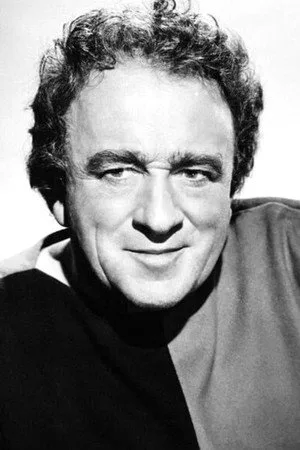 Reginald Beckwith
Unterofficer
Reginald Beckwith
Unterofficer -
 Richard Marner
Schmidt
Richard Marner
Schmidt -
 Ed Devereaux
Aussie
Ed Devereaux
Aussie -
 Lewis Fiander
Pringle
Lewis Fiander
Pringle -
 George Mikell
Necke
George Mikell
Necke -
 Richard Carpenter
Robinson
Richard Carpenter
Robinson -
 Bernard Archard
1st Prisoner of War
Bernard Archard
1st Prisoner of War -
 Ferdy Mayne
1st German Officer at French Farm
Ferdy Mayne
1st German Officer at French Farm -
 George Pravda
2nd German Officer at French Farm
George Pravda
2nd German Officer at French Farm -
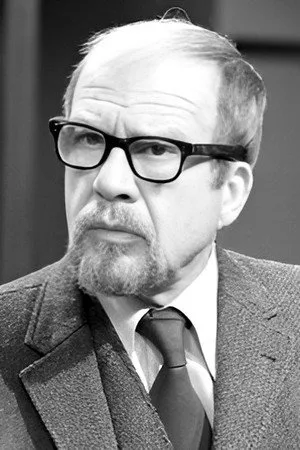 Olaf Pooley
German Doctor
Olaf Pooley
German Doctor -
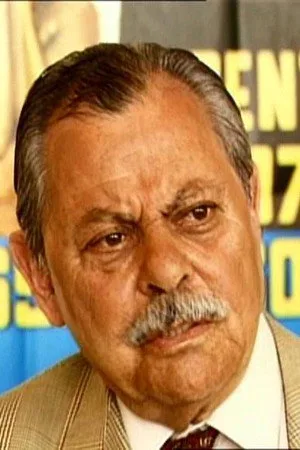 Michael Mellinger
Feldwebel
Michael Mellinger
Feldwebel -
 Colin Blakely
1st German Goon
Colin Blakely
1st German Goon - Margaret Whiting French Farmwoman
-
 Mark Eden
2nd Prisoner of War
Mark Eden
2nd Prisoner of War - Douglas Livingstone Bennett
- John Gardiner 3rd Prisoner of War
Quiz about this movie
Questions from the whole catalogue.
Play nowIf you liked this one
-
O Segredo de Santa Vitória
 6.9
6.9
-
The Kill Team - Dilemas da Guerra
 6.5
6.5
-
Little Boy - Além do Impossível
 7.2
7.2
-
O Último Soldado
 6.7
6.7
-
O Menino e a Guerra
 6.3
6.3
-
Mister Roberts
 7.0
7.0
-
Atrás das Linhas Inimigas 4: Missão África
 6.1
6.1
-
A Fera da Guerra
 7.0
7.0
-
A Cruz de Ferro
 7.1
7.1
-
Operação Cerveja
 7.5
7.5
-
Inferno no Deserto Drama from the 1960s
 6.3
6.3
-
O Preço da Glória
 6.7
6.7
Crew
- Davis Boulton Cinematography
- Andrew L. Stone Director
- Noreen Ackland Editing
- Andrew L. Stone Producer
- Virginia L. Stone Producer
- Christopher L. Stone Original music
- Derek New Original music
- Tommy Reilly Original music
- Virginia L. Stone Original music
- Andrew L. Stone Screenplay
Questions about this film
What is The Password Is Courage about?
The Password Is Courage: Sergeant-Major Charles Coward, a brave British soldier is captured by German forces during World War II. When he's thrown into a prisoner of war camp, he immediately plans his escape. Masquerading as a wounded German soldier, he makes it as far as the medical tent, where the deceived enemy forces award him the Iron Cr…
Who directed The Password Is Courage?
The Password Is Courage was directed by Andrew L. Stone in 1962.
Who stars in The Password Is Courage?
The cast of The Password Is Courage includes Dirk Bogarde, Maria Perschy, Alfred Lynch, Nigel Stock and Reginald Beckwith.
How long is The Password Is Courage?
The Password Is Courage runs for 116 minutes, or 1h56.
Similar films
 8.0
8.0
 7.3
7.3
 5.6
5.6
 6.9
6.9
 6.3
6.3
 7.7
7.7
 6.7
6.7
 7.7
7.7
 7.3
7.3
 8.1
8.1
Page updated on 09/14/2026.
Back to the catalogue