The Piano Teacher (2001)
The Piano Teacher (2001), directed by Michael Haneke, starring Isabelle Huppert and Annie Girardot.
score
Synopsis
Erika Kohut, a sexually repressed piano teacher living with her domineering mother, meets a young man who starts romantically pursuing her.
What the catalogue says about this film
- Michael Haneke and Isabelle Huppert have worked together on 5 films in the catalogue
- Film 12 of 18 by Michael Haneke in the catalogue
- Rated 7.3, against a Romance average of 6.5
Every comparison is within the CineQuiz catalogue, not cinema as a whole.
- Christian BergerCinematography
- Michael HanekeDirector, Screenplay
- Monika WilliEditing
- Nadine MuseEditing
About the film
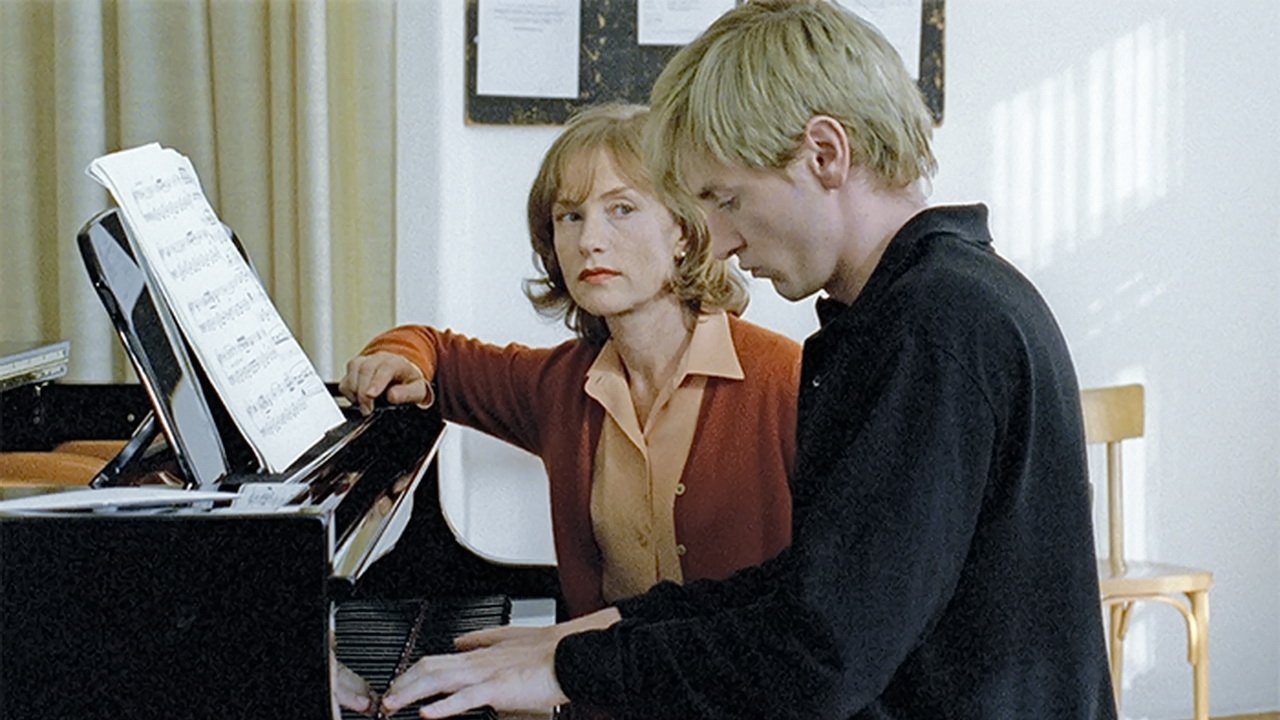
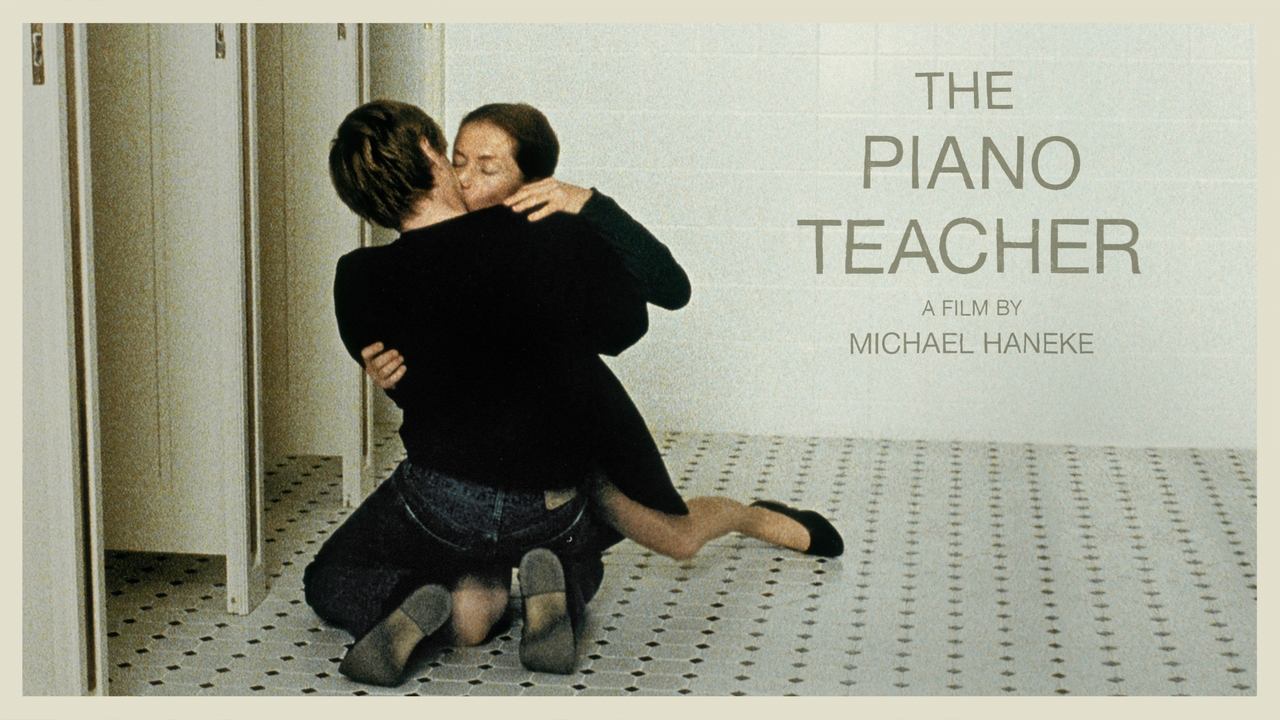
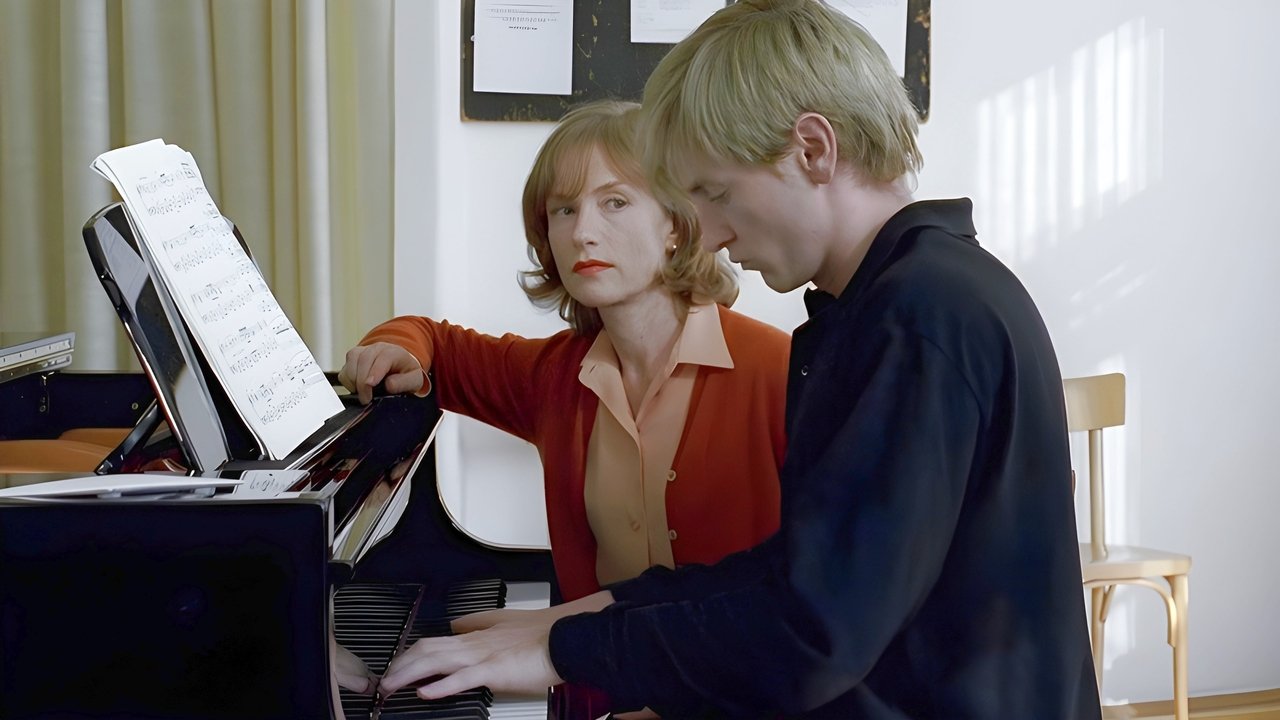
The Piano Teacher (French: La Pianiste, lit. 'The (Female) Pianist') is a 2001 erotic psychological drama film written and directed by Michael Haneke, based on the 1983 novel of the same name by Elfriede Jelinek. It tells the story of an unmarried piano teacher (Isabelle Huppert) at a Vienna conservatory, living with her mother (Annie Girardot) in a state of emotional and sexual disequilibrium, who enters into a sadomasochistic relationship with her student (Benoît Magimel). The film was a co-production between France and Austria. Haneke was given the opportunity to direct after previous attempts to adapt the novel by filmmakers Valie Export and Paulus Manker failed for financial reasons.
At the 2001 Cannes Film Festival, it won the Grand Prix, and the two leads, Huppert and Magimel, won Best Actress and Best Actor, respectively. It went on to receive positive reviews and other awards and nominations.
Read the full article (10k characters)
The Piano Teacher (French: La Pianiste, lit. 'The (Female) Pianist') is a 2001 erotic psychological drama film written and directed by Michael Haneke, based on the 1983 novel of the same name by Elfriede Jelinek. It tells the story of an unmarried piano teacher (Isabelle Huppert) at a Vienna conservatory, living with her mother (Annie Girardot) in a state of emotional and sexual disequilibrium, who enters into a sadomasochistic relationship with her student (Benoît Magimel). The film was a co-production between France and Austria. Haneke was given the opportunity to direct after previous attempts to adapt the novel by filmmakers Valie Export and Paulus Manker failed for financial reasons.
At the 2001 Cannes Film Festival, it won the Grand Prix, and the two leads, Huppert and Magimel, won Best Actress and Best Actor, respectively. It went on to receive positive reviews and other awards and nominations.
Plot
Erika Kohut is a piano professor at the Vienna Music Conservatory who resides in an apartment with her domineering elderly mother. Her late father had been a longstanding resident in a psychiatric asylum. Despite Erika's aloof and assured façade, she is a woman whose sexual repression and loneliness are manifested in her paraphilia, including voyeurism, sadomasochism, and self-harm.
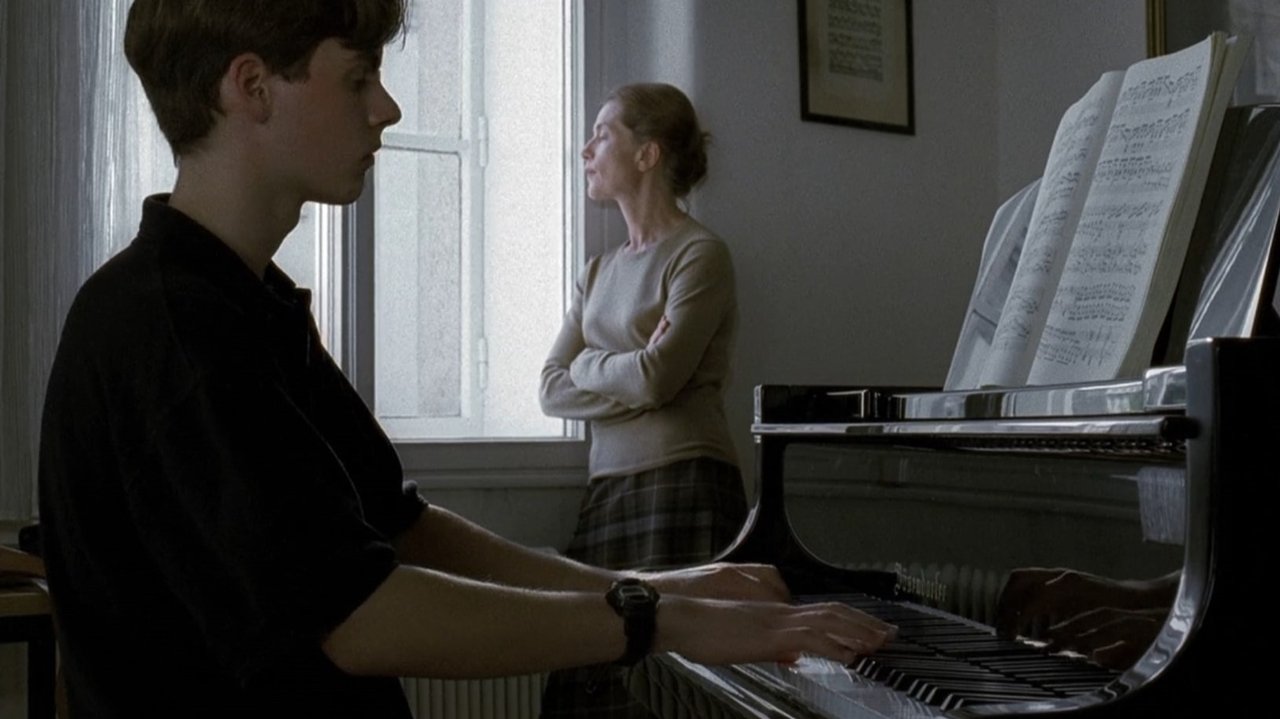
At a recital hosted by the Blonskij couple, Erika meets Walter Klemmer, a young aspiring engineer who also plays piano, and who expresses admiration of her talent for classical music. The two share an appreciation for composers Robert Schumann and Franz Schubert, and he attempts to apply to the conservatory to be her pupil. His audition impresses the other professors, but Erika, though visibly moved by his playing, votes against him; she cites his divergent interpretation of the Andantino from Schubert's Sonata in A major, D. 959, and questions his motivations. Despite this, Walter is admitted as Erika's pupil. Meanwhile, another pupil, Anna Schober, struggles with anxiety while pushed by her own ambitious mother. When Erika witnesses Anna and Walter socialising, she slips to an empty coatroom and smashes a glass, hiding the shards inside one of Anna's coat pockets. This cuts Anna's right hand, preventing her from playing at the forthcoming jubilee concert. Erika claims she feels ill at the sight of blood and runs to the bathroom.
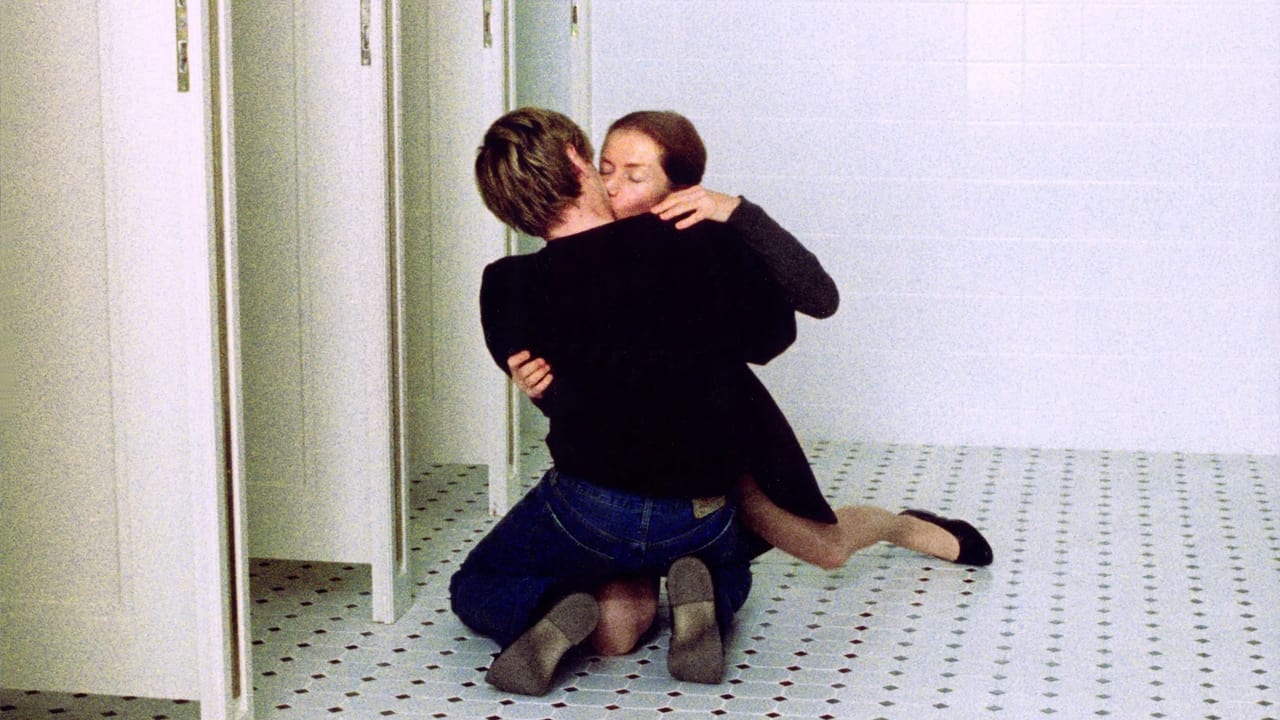
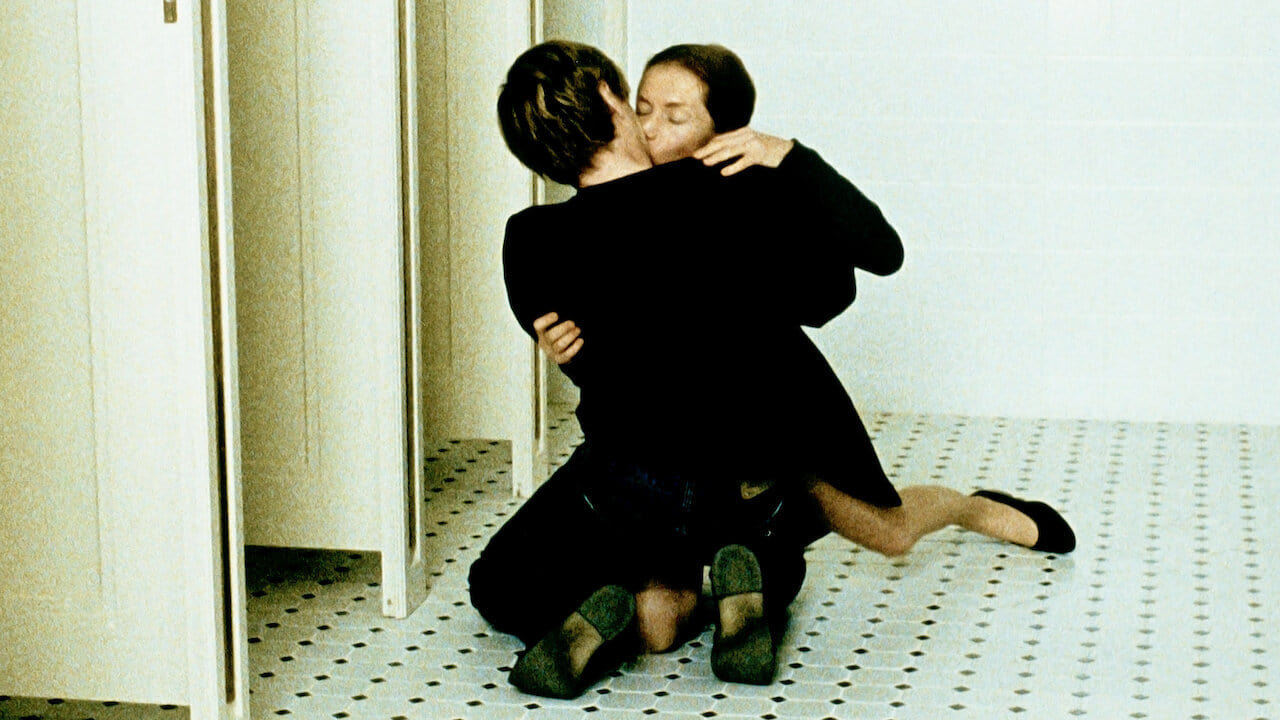
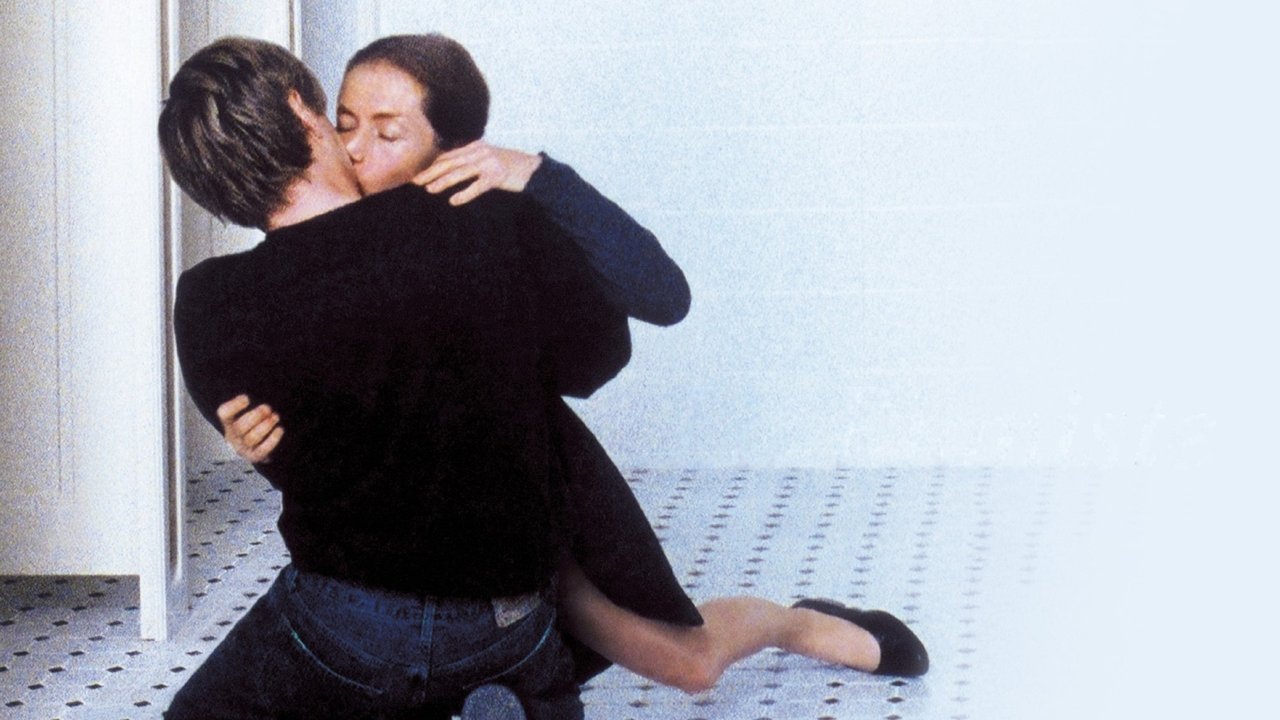
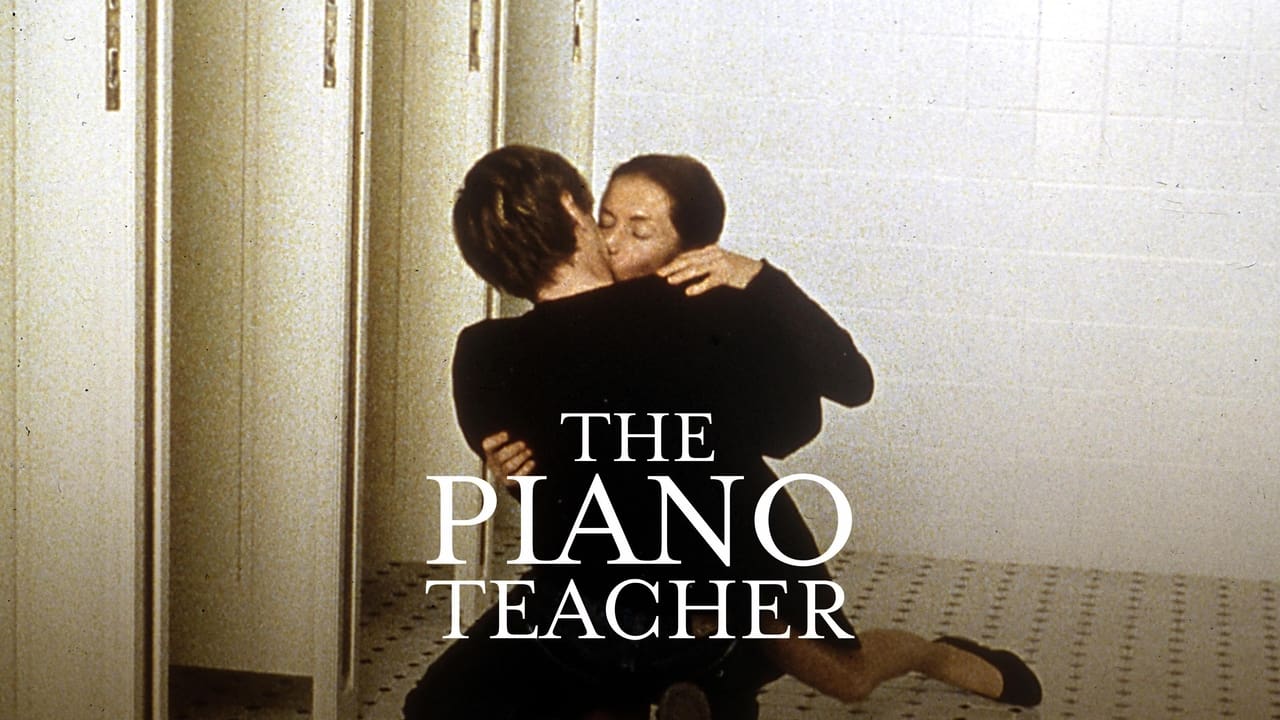
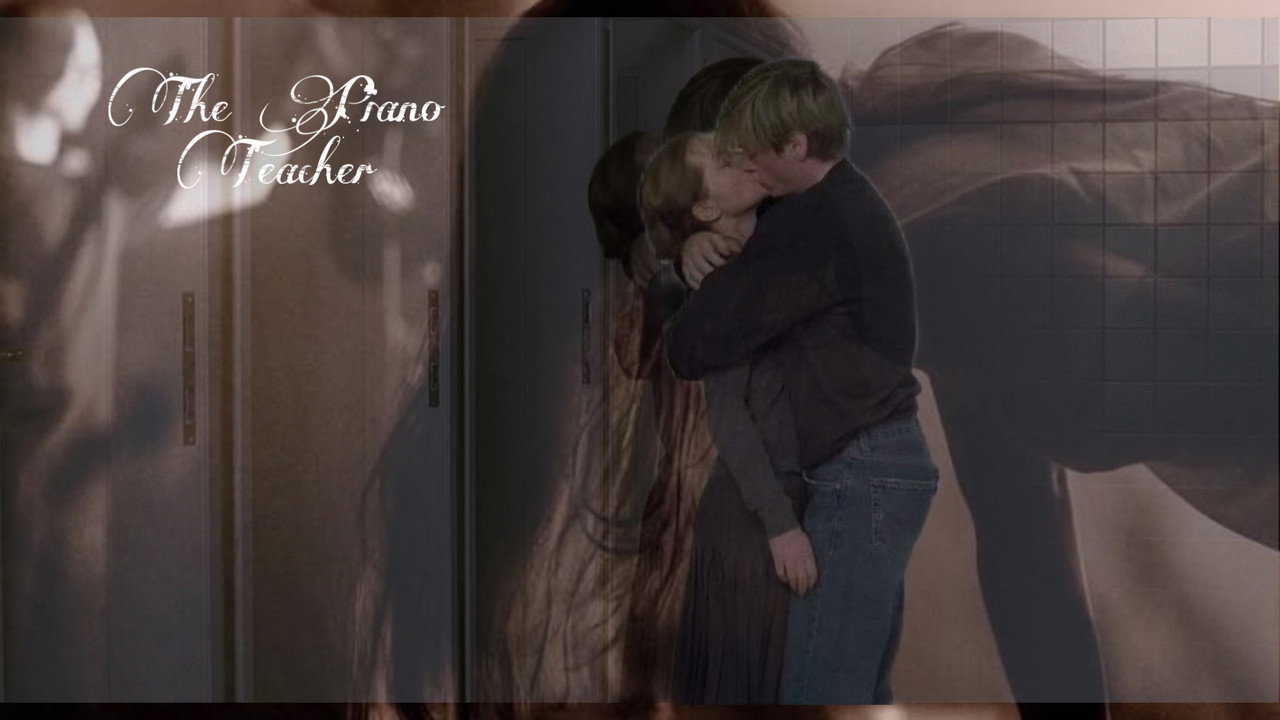
Walter follows Erika, climbs up and over her stall door, and unlocks it. He passionately kisses her and she responds by repeatedly humiliating and frustrating him. She proceeds to give him a handjob before performing fellatio on him, but abruptly stops when he does not abide by her orders to be silent and to look at her and not to touch her. She tells him she will write him a letter outlining her sexual rulebook for their next meeting. Later at the conservatory, Erika feigns sympathy for Anna's mother, who is distraught over her daughter’s injury. Anna’s mother asks who will fill in for her daughter at the forthcoming concert and Erika replies that she herself will play, as no student would play adequately on such short notice.
Walter is increasingly insistent in his desire to initiate a sexual relationship with Erika, but Erika is only willing if he will satisfy her masochistic fantasies. She gives him the letter indicating acts she will consent to. He follows her home and tries to seduce her but she is resistant. She allows him to come inside, where the pair is greeted by Erika’s disgruntled mother. In Erika’s bedroom, Walter attempts to seduce her once more but she insists that he read the letter. He reads the letter aloud, pausing to ask her questions or to get angry with her, while she remains silent. Erika retrieves a box of BDSM paraphernalia from under her bed and takes some of the items out. She asks Walter to think about her request. Walter tells her that she’s sick and he leaves. Later that night, while they lie in bed together, Erika's mother is berating her for letting Walter into her bedroom in the middle of the night. Erika suddenly begins kissing and groping her mother. Her mother resists and tells Erika she is unwell.
Erika finds Walter at an ice rink after his ice hockey practice to apologise. She begins to subjugate herself to him in a janitorial closet. Walter says he loves her and they begin to have sex, but Erika is unable to, and vomits while performing fellatio. Later that night, Walter arrives at Erika's apartment and attacks her in the fashion described in her letter. He locks her mother away in her bedroom before proceeding to beat and rape Erika, despite her pleas for him to stop.
The next day, Erika brings a large kitchen knife to the concert where she is scheduled to substitute for Anna. When Walter arrives, he enters cheerfully, laughing with his family, and flippantly greets her. Moments before the concert is due to start, Erika calmly stabs herself in the shoulder with the kitchen knife and exits the concert hall into the street.
Cast
Isabelle Huppert as Erika Kohut
Annie Girardot as the mother
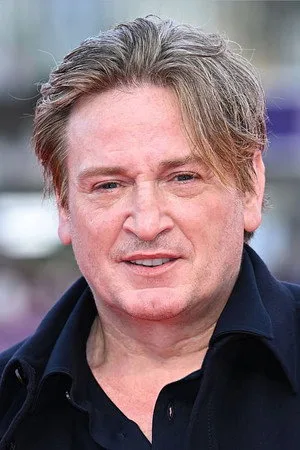
Benoît Magimel as Walter Klemmer
Susanne Lothar as Mrs. Schober
Anna Sigalevitch as Anna Schober
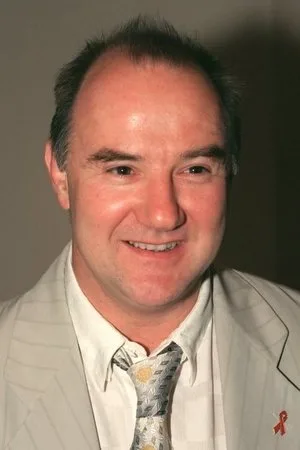
Udo Samel as Dr. Blonskij
Cornelia Köndgen as Mrs. Blonskij
Production
Development
The film is based on the 1983 novel The Piano Teacher by Elfriede Jelinek, who won the 2004 Nobel Prize in Literature. Director Michael Haneke read The Piano Teacher when it was published and aspired to adapt it to transition from making television films to cinema. However, Haneke learned Jelinek and Valie Export had already adapted a screenplay, a project aborted due to lack of investment. Jelinek later abandoned hope for a film version before selling the rights to Paulus Manker, who asked Haneke to adapt the screenplay, though Haneke would not be the director. Manker did not secure a budget, so the producer asked Haneke to direct.
Haneke agreed to take over the directorial helm, though the screenplay had been written with Manker's direction in mind, only if Isabelle Huppert was the star. Haneke also reorganised the novel's story, and developed the characters of Anna Schober and her mother to mirror the Kohuts' mother–daughter relationship at a past stage. In pre-production, Haneke followed Jelinek's choices in costumes, including pleated skirts and Burberry trench coats common in Vienna conservatories.
Casting
Haneke had previously reached out to Huppert to star in his film Funny Games (1997), which she passed on for another professional conflict. When Haneke told her he would not direct The Piano Teacher without her, Huppert skimmed the screenplay and realized its potential. She said she had studied piano as a child, quitting when she was 15, but began playing again for the film. Eva Green has an uncredited role as one of Walter's friends.
Filming
Filming began on 21 August 2000 and ended on 28 October 2000.
For the scene in which Erika cuts herself in the bathtub, tubes and a pump were used for the false blood, which the props artist had to conceal from the camera under Huppert. Huppert also wore a blood bag under her clothing for the self-stabbing scene, taken from the novel. Benoît Magimel studied piano during filming to convincingly simulate his playing scenes at the end of production, while the music is playback. Susanne Lothar performed in German, but her lines were dubbed over with French in co-production.
Reception
Critical response
On the review aggregator website Rotten Tomatoes, 75% of 91 critics' reviews are positive, with an average rating of 7/10. The website's consensus reads: "Though it makes for rather unpleasant viewing, The Piano Teacher is a riveting and powerful psychosexual drama." Metacritic, which uses a weighted average, assigned the film a score of 79 out of 100, based on 26 critics, indicating "generally favorable" reviews.
Roger Ebert of Chicago Sun-Times awarded it three and a half stars, citing Huppert's confidence, writing on hints of revenge against The Mother character and defending the ending, saying "with a film like this any conventional ending would be a cop-out". Peter Bradshaw of The Guardian credited Haneke for aptitude in creating "nerve-jangling disquiet" and Huppert for "the performance of her career". David Denby of The New Yorker praised the film as "audaciously brilliant".
In 2017, Los Angeles Times' critic Justin Chang recalled The Piano Teacher as Huppert's best work in a Haneke film, and "a major achievement in a disturbingly minor key". Mick LaSalle of the San Francisco Chronicle described Huppert as "a rich incarnation of a woman we might see on the street and never guess that she contains fires, earthquakes and infernos", comparing it to her performance in the 2016 film Elle.
In 2025, it was one of the films voted for the "Readers' Choice" edition of The New York Times' list of "The 100 Best Movies of the 21st Century," finishing at number 128.
Accolades
The Piano Teacher won awards on the European circuit, most notably the Grand Prix at the 2001 Cannes Film Festival, with the two leads, Huppert and Magimel, winning Best Actress and Best Actor. The film was Austria's submission for the Academy Award for Best Foreign Language Film, but it was not nominated.
See also
Isabelle Huppert on screen and stage
Sadism and masochism in fiction
List of submissions to the 74th Academy Awards for Best Foreign Language Film
List of Austrian submissions for the Academy Award for Best Foreign Language Film
References
External links
The Piano Teacher at IMDb
The Piano Teacher at Box Office Mojo
The Piano Teacher at Metacritic
The Piano Teacher at Rotten Tomatoes
"The Piano Teacher: Bad Romances", essay by Moira Weigel at The Criterion Collection, 26 September 2017
Text from The Piano Teacher (film) on Wikipedia, licensed CC BY-SA 4.0. https://en.wikipedia.org/wiki/The_Piano_Teacher_(film)
Trivia
- It cost US$ 6.2 million and grossed US$ 6.8 million in theaters — 1.1 times its budget.
- It premiered on September 5, 2001, a Wednesday.
- It runs 2h11 — a typical feature length.
- Its original title is "La Pianiste".
- It won 3 award(s) and received 8 nomination(s) on record at Wikidata — Cannes Film Festival Grand Prix among them.
- As of September 20, 2026, it is available in Brazil by subscription on Filmicca.
- This film's quiz has 14 questions — enough to play more than once without repeats.
Production
- StudiosWega Film, mk2 Films, Les Films Alain Sarde, ARTE France Cinéma, Bavaria Film International, OFI
- CountriesFrance, Austria, Germany
- LanguagesFrench, German
- BudgetUS$ 6,200,000
- Box officeUS$ 6,766,708
- StatusReleased
More about this film
Awards
- Cannes Film Festival Grand Prix 2001
- European Film Award for Best Actress 2001
- César Award for Best Supporting Actress
Nominations
- International Submission to the Academy Awards 2002
- César Award for Best Actress 2002
- European Film Award for Best Film 2001
- European Film Award for Best Actress 2001
- European Film Award - People's Choice Award for Best Director 2001
- European Film Award for Best Screenwriter 2001
- Jameson People's Choice Award for Best Actress 2001
- Jameson People's Choice Award for Best Actor 2001
Based on
- The Piano Teacher
Filming locations
- Vienna
Set in
- Vienna
Where to watch
Videos
Photos

Cast
-
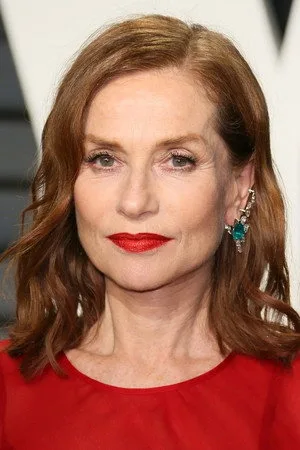 Isabelle Huppert
Erika Kohut
Isabelle Huppert
Erika Kohut -
 Annie Girardot
Erika's Mother
Annie Girardot
Erika's Mother -
 Benoît Magimel
Walter Klemmer
Benoît Magimel
Walter Klemmer -
 Susanne Lothar
Mme Schober
Susanne Lothar
Mme Schober -
 Udo Samel
Dr. George Blonskij
Udo Samel
Dr. George Blonskij -
 Anna Sigalevitch
Anna Schober
Anna Sigalevitch
Anna Schober -
 Cornelia Köndgen
Mme Gerda Blonskij
Cornelia Köndgen
Mme Gerda Blonskij -
 Thomas Weinhappel
Baritone
Thomas Weinhappel
Baritone -
 Georg Friedrich
L'homme en voiture
Georg Friedrich
L'homme en voiture -
 Philipp Heiss
Naprawnik
Philipp Heiss
Naprawnik -
 William Mang
Un professeur
William Mang
Un professeur -
 Rudolf Melichar
Le directeur
Rudolf Melichar
Le directeur -
 Michael Schottenberg
Un professeur
Michael Schottenberg
Un professeur -
 Gabriele Schuchter
Margot
Gabriele Schuchter
Margot -
 Dieter Berner
Le professeur qui chante
Dieter Berner
Le professeur qui chante - Volker Waldegg Teacher
- Martina Resetarits Teacher
- Annemarie Schleinzer Teacher
-
 Karoline Zeisler
Teacher
Karoline Zeisler
Teacher -
 Liliana Nelska
Secretary
Liliana Nelska
Secretary
Quiz about this movie
Questions from the whole catalogue.
Play nowIf you liked this one
-
Lolita
 7.1
7.1
-
Cinquenta Tons de Cinza
 5.9
5.9
-
Notas Sobre um Escândalo Drama from the 2000s
 7.1
7.1
-
O Duque de Burgundy
 6.3
6.3
-
O Leitor Drama from the 2000s
 7.5
7.5
-
Consent
 6.8
6.8
-
Lolita
 7.3
7.3
-
Boa Sorte, Leo Grande
 7.0
7.0
-
Jules e Jim - Uma Mulher Para Dois
 7.5
7.5
-
Cinquenta Tons Mais Escuros
 6.5
6.5
-
Benedetta
 6.6
6.6
-
Cinquenta Tons de Liberdade
 6.7
6.7
Tags
Crew
- Christian Berger Cinematography
- Michael Haneke Director
- Monika Willi Editing
- Nadine Muse Editing
- Alain Sarde Producer
- Marin Karmitz Producer
- Veit Heiduschka Producer
- Francis Haines Original music
- Michael Haneke Screenplay
Questions about this film
What is The Piano Teacher about?
The Piano Teacher: Erika Kohut, a sexually repressed piano teacher living with her domineering mother, meets a young man who starts romantically pursuing her.
Who directed The Piano Teacher?
The Piano Teacher was directed by Michael Haneke in 2001.
Who stars in The Piano Teacher?
The cast of The Piano Teacher includes Isabelle Huppert, Annie Girardot, Benoît Magimel, Susanne Lothar and Udo Samel.
How long is The Piano Teacher?
The Piano Teacher runs for 131 minutes, or 2h11.
How much did The Piano Teacher cost and how much did it make?
The Piano Teacher had a budget of US$ 6,200,000 and took US$ 6,766,708 at the box office — 1.1 times its cost.
Where can I watch The Piano Teacher?
The Piano Teacher is available on Filmicca. Availability changes often: the list on this page is the most recent we received.
What is The Piano Teacher based on?
The Piano Teacher is based on The Piano Teacher.
What awards did The Piano Teacher win?
The Piano Teacher has 3 recorded awards, among them Cannes Film Festival Grand Prix, European Film Award for Best Actress and César Award for Best Supporting Actress.
Similar films
 7.9
7.9
 8.5
8.5
 7.9
7.9
 8.1
8.1
 6.3
6.3
 8.5
8.5
 7.9
7.9
 7.8
7.8
 7.9
7.9
 7.2
7.2
 7.0
7.0
Page updated on 09/08/2026.
Back to the catalogue