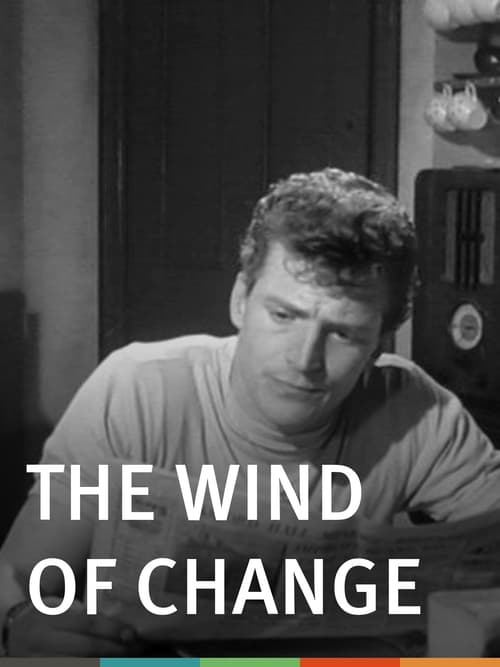
The Wind of Change (1961)
The Wind of Change (1961), directed by Vernon Sewell, starring Donald Pleasence and Johnny Briggs.
score
Synopsis
Taking its title from Harold Macmillan's widely-reported Cape Town speech about the process of decolonisation in Africa, The Wind of Change showed the other side of the coin: the impact of colonial immigration at 'home'. The film deals with the 'colour problem' within the context of Teddy boy violence.
- Basil EmmottCinematography
- Vernon SewellDirector
- Peter PittEditing
- John DarkProducer
About the film
The Wind of Change is a 1961 British drama film directed by Vernon Sewell and starring Donald Pleasence, Johnny Briggs and Ann Lynn. Taking its title from the famous "Wind of Change" speech given by British prime minister Harold Macmillan in South Africa in February 1960, it is one of the earliest British films to tackle race as an issue, focusing on disenchanted working-class white youth finding an outlet for their frustrations in racial hatred. The film is set around the coffee bars and homes of the Notting Hill district of West London, scene of the notorious 1958 Notting Hill race riots.
Sewell called it "a nice movie... not because of me but because it was a bloody good story".
Read the full article (4k characters)
The Wind of Change is a 1961 British drama film directed by Vernon Sewell and starring Donald Pleasence, Johnny Briggs and Ann Lynn. Taking its title from the famous "Wind of Change" speech given by British prime minister Harold Macmillan in South Africa in February 1960, it is one of the earliest British films to tackle race as an issue, focusing on disenchanted working-class white youth finding an outlet for their frustrations in racial hatred. The film is set around the coffee bars and homes of the Notting Hill district of West London, scene of the notorious 1958 Notting Hill race riots.
Sewell called it "a nice movie... not because of me but because it was a bloody good story".
Plot
Frank is an unemployed, discontented and rebellious teenage Teddy Boy, living at home with his mild-mannered father, domineering mother and sister Josie. Frank harbours a deep-seated resentment and hatred towards the black people he sees as flooding Notting Hill and taking all the jobs. He spends his time hanging around with a gang of similar youths who all share his racist views.
After an evening spent wandering round the local coffee bars, the gang go looking for trouble and decide to beat up a black youth for kicks. They are inflamed to see a black boy accompanied by a white girl, and they chase them through the dark streets before cornering them and launching a vicious assault on the couple using fists, feet, knives and bicycle chains. The boy is so brutally beaten that he later dies from his injuries in hospital, and the girl is stabbed during the melee. Frank is horrified when he realises that the injured girl is his sister.
As a police investigation begins, Frank's family are shocked by his involvement and try to discover why he feels the way he does. Josie in particular challenges his racist views and involvement in a gang culture of mindless violence towards those who have done him no harm.
Cast
Donald Pleasence as Pop
Johnny Briggs as Frank
Ann Lynn as Josie
Ken McGregor as the boyfriend
Hilda Fenemore as Gladys
Glyn Houston as Sgt. Parker
David Hemmings as Ginger
Angela Douglas as Denise
Norman Gunn as Ron
Bunny May as Smithy
Patricia Garwood as Lina
Topsy Jane as Peggy
Antonita Dias as Sylvia
Rosemary Frankau as woman in mews
Reputation
Although originally shot as a B-movie, The Wind of Change is considered to be historically significant by British film observers as an example of a smaller studio producing a film centred on subject matter which, at the time, larger studios would not have touched. While some of the racial epithets and abuse used in the film may sound offensive to contemporary viewers, it is regarded as an accurate reflection of the attitudes of its time, and significant in highlighting what Eleni Llarou of the British Film Institute describes as "the underbelly of Macmillan's 'affluent society', in which the delinquency of a teenage culture had more to do with educational failure, lack of occupational aspiration, the 'pall of boredom' and the economic struggles of the English working class than any deep racial clash".
The film is studied alongside other British films of the era, such as Sapphire (1959) and Flame in the Streets (1961), which confronted the subject of racial attitudes in Britain at a time when it was a hot political and social issue, but rarely tackled on screen. The Wind of Change is seen as very much a product of its time, inasmuch as it is presented entirely from the perspective of its white characters. Llarou notes: "Although they are portrayed in a positive light, black characters are very briefly presented. Only white people can speak for and about them, indicating that the 'wind of change' the film was envisaging was still blowing in one direction."
References
External links
The Wind of Change at IMDb
The Wind of Change at BritMovie (archived)
The Wind of Change at the BFI's Screenonline
Text from The Wind of Change (film) on Wikipedia, licensed CC BY-SA 4.0. https://en.wikipedia.org/wiki/The_Wind_of_Change_(film)
Trivia
- It premiered on March 1, 1961, a Wednesday.
- It runs 1h04 — short for a feature film.
- This film's quiz has 10 questions — enough to play more than once without repeats.
Production
- CountriesUnited Kingdom
- LanguagesEnglish
- StatusReleased
More about this film
Set in
- London
Cast
-
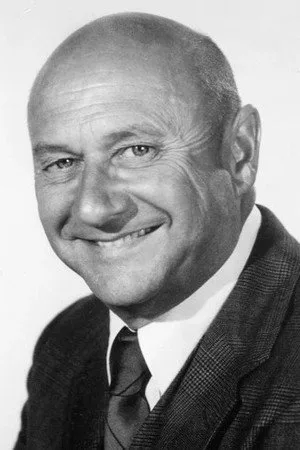 Donald Pleasence
Pop
Donald Pleasence
Pop -
 Johnny Briggs
Frank
Johnny Briggs
Frank -
 Ann Lynn
Josie
Ann Lynn
Josie - Hilda Fenemore Gladys
-
 Glyn Houston
Sgt. Parker
Glyn Houston
Sgt. Parker -
 David Hemmings
Ginger
David Hemmings
Ginger -
 Angela Douglas
Denise
Angela Douglas
Denise - Norman Gunn Ron
- Bunny May Smithy
-
 Patricia Garwood
Lina
Patricia Garwood
Lina - Topsy Jane Peggy
- Antonita Dias Sylvia
-
 Edna Doré
-
 Lennard Pearce
- Ken McGregor
- Rosemary Frankau
- Ted Bushell
- Christopher Balingit
- Bertie Green
- David Gregory
Quiz about this movie
Questions from the whole catalogue.
Play nowIf you liked this one
-
Marcas do Silêncio
 7.1
7.1
-
Mãos de Pedra: A História Verdadeira de Roberto Durán
 6.6
6.6
-
Hardball - O Jogo da Vida
 6.5
6.5
-
Skin
 6.4
6.4
-
O Refúgio
 6.1
6.1
-
A Garota Na Caixa
 6.7
6.7
-
Anorexia: A Ilusão da Beleza
 6.5
6.5
-
O Resgate de Uma Vida
 6.4
6.4
-
O Peso da Vitória
 6.0
6.0
-
Xiu Xiu: The Sent-Down Girl
 7.2
7.2
-
A Visita Drama from the 1960s
 7.2
7.2
-
The Safety of Objects
 6.5
6.5
Crew
- Basil Emmott Cinematography
- Vernon Sewell Director
- Peter Pitt Editing
- John Dark Producer
- Norman Percival Original music
- Alexander Doré Writer
- John McLaren Writer
Questions about this film
What is The Wind of Change about?
The Wind of Change: Taking its title from Harold Macmillan's widely-reported Cape Town speech about the process of decolonisation in Africa, The Wind of Change showed the other side of the coin: the impact of colonial immigration at 'home'. The film deals with the 'colour problem' within the context of Teddy boy violence.
Who directed The Wind of Change?
The Wind of Change was directed by Vernon Sewell in 1961.
Who stars in The Wind of Change?
The cast of The Wind of Change includes Donald Pleasence, Johnny Briggs, Ann Lynn, Hilda Fenemore and Glyn Houston.
How long is The Wind of Change?
The Wind of Change runs for 64 minutes, or 1h04.
Similar films
 8.7
8.7
 8.5
8.5
 8.7
8.7
 7.9
7.9
 8.4
8.4
 8.5
8.5
 8.1
8.1
 8.2
8.2
 8.0
8.0
 8.2
8.2
 8.5
8.5
 8.5
8.5
Page updated on 09/13/2026.
Back to the catalogue