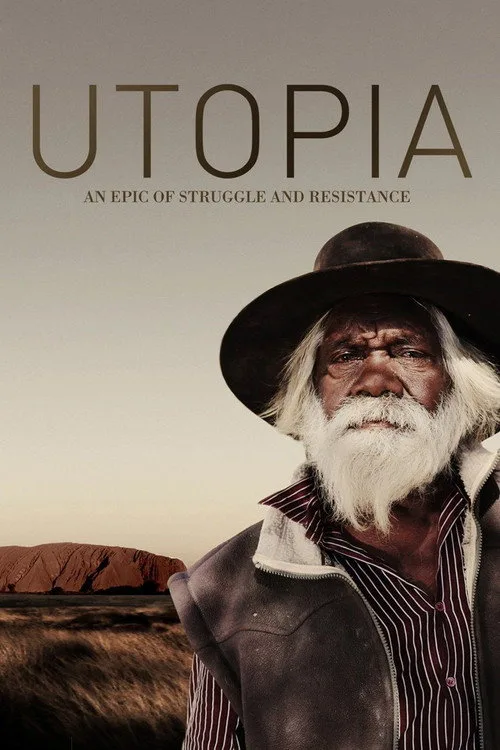
Utopia (2013)
Utopia (2013), directed by John Pilger, starring John Pilger and Jon Altman.
score
An epic story of struggle and resistance
Synopsis
Documentary by John Pilger looks at the awful truth behind white Australia's dysfunctional relationship with Indigenous Australians
- John PilgerDirector
- Joe FrostEditing
- Sandra LeemingProducer
About the film
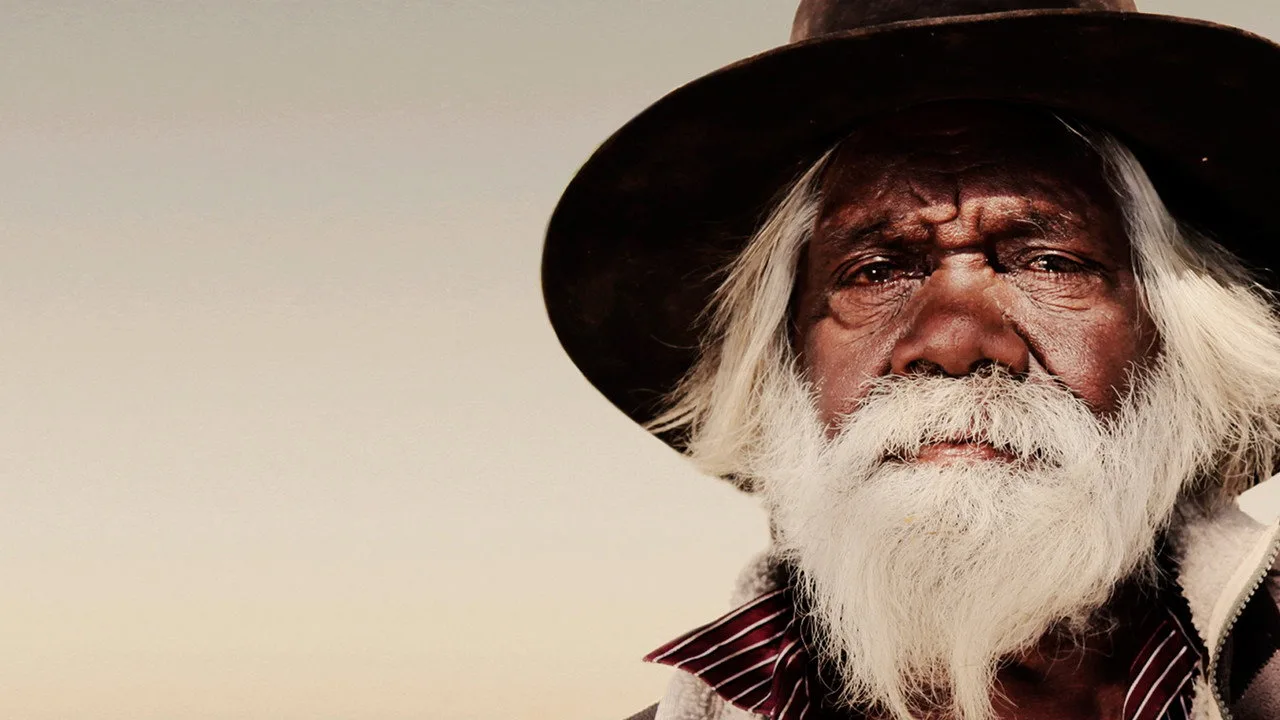
Utopia is a 2013 documentary film written, produced and presented by John Pilger and directed by Pilger and Alan Lowery, that explores the experiences of Aboriginal Australians in modern Australia. The title is derived from the Aboriginal homeland community of Utopia, Northern Territory, one of the poorest and most desolate areas in Australia.
Read the full article (7k characters)
Utopia is a 2013 documentary film written, produced and presented by John Pilger and directed by Pilger and Alan Lowery, that explores the experiences of Aboriginal Australians in modern Australia. The title is derived from the Aboriginal homeland community of Utopia, Northern Territory, one of the poorest and most desolate areas in Australia.
Synopsis
The film begins with Pilger's journey to Utopia to observe the changes that have occurred in Aboriginal Australia between 1985, when he featured the poverty in the documentary The Secret Country and the time of filming, 2013. After almost three decades, Pilger discovers that Aboriginal families are still living in extremely overcrowded and poorly sanitized asbestos shacks, and are plagued by easily curable diseases. The Secretary General of Amnesty International, Salil Shetty, who happens to be in Utopia at the same time as Pilger, ponders why one of the world's richest countries cannot solve the problem of Aboriginal poverty and states that the inequity and injustice could be fixed if the will to do so existed. The film goes on to explore some of the issues currently afflicting Australia such as; failed health policies, Aboriginal deaths in police custody, mining companies failing to share the wealth they have acquired with the first Australians and the disputed allegations made by the media and government that there were pedophile rings, petrol warlords and sex slaves in Aboriginal communities and the resulting 2007 intervention. The film also features a visit to Rottnest Island, Western Australia, where an area that was used as a prison for Aboriginal people until 1931, has now been converted into a luxury hotel where tourists are not even informed of the island's brutal history.
Utopia highlights that Aboriginal Australians in Australia are currently imprisoned at 10 times the rate that South Africa imprisoned black people under apartheid, rates of rheumatic heart disease and trachoma among Aboriginal Australians are some of the highest in the world and suicide rates are increasing, especially among youths. Pilger informs viewers that unlike the US, Canada and New Zealand, no treaty was ever negotiated between the indigenous peoples of Australia and the colonists and that the abandonment of the mining tax in 2010 lost an estimated $60 billion in revenue, which he argues was more than enough to fund land rights and to end all Aboriginal poverty.
Political impact
In Western Australia, the Police Minister was sent to a screening of Utopia by the state government, and the State Premier held discussions with Aboriginal leaders on some of the issues highlighted in the film.
In the Northern Territory, government representatives were advised to defend the existing policies against any concerns raised by the community due to the film.
John Pilger, when discussing the impact and relevance of Utopia stated:
That Australian governments believe they can manipulate and discriminate against Aboriginal communities in a manner that has been described in the UN as 'permissively racist' is astonishing in the 21st century. How ironic that as Nelson Mandela was buried and venerated, another form of the system he fought against was alive and well in Australia.
Reception
On review aggregator Rotten Tomatoes, 100% of 13 critic reviews are positive.
Australia
Peter Galvin in a review for SBS gave the film 3 of 5 stars, commenting "despite its flaws in conception and coverage, this is an angry and sorrowful film about an important subject and it's typical of Pilger." Eden Caceda of Filmink described the documentary as a "bleak but powerful film" in which "Pilger reminds us that resolving the issues of Indigenous people is far from over".
Gerard Henderson, dismissing Pilger as a FIFOE (Fly In, Fly Out Expatriate), wrote in The Australian that the film contains "close to two hours of unremitting propaganda" in which the journalist "states and restates his case." Henderson also wrote that Pilger simply ignored Aboriginal leaders who did not fit into his thesis, those whom he considered "part of the political elite" in Australia.
Kieran Finnane of Alice Springs News criticised the film, writing that "The film cannot rightly be called 'documentary' or 'journalism' if those words are still to have any standards attached to them. It does not ask questions, other than ones Pilger thinks he knows the answers to and to which he can lead his interviewee. It does not seek out or fairly treat a single dissenting point of view. It does not recognise complexity. It has all the irksome smugness – and the sing-song voice to boot – of a man in a pulpit who is quite sure of being right."
AFL player Adam Goodes found the silence about Utopia in mainstream Australia and the assertion that the film doesn't show the good or other side of Aboriginal Australia disturbing and hurtful and wrote in The Sydney Morning Herald that "Utopia has shown me how, over 225 years, the Europeans, and now the governments that run our country, have raped, killed and stolen from my people for their own benefit. The total injustices that have been played out since colonisation are absolutely shameful, and I now find it hard to say I am proud to be Australian."
United Kingdom
David Parkinson, writing in Britain's Empire magazine, commented that "the filmmaker firebrand is in pungent form as he dismantles the hypocrisy of Australia's treatment of its indigenous peoples." Charlotte O'Sullivan of the London Evening Standard wrote that "what brings the material alive is Pilger's visit to Mutitjulu" where an Australian Broadcasting Corporation television programme in 2006 concocted an entirely fictitious story about a pedophile ring run by community leaders, which led to police moving families off their land. "The final shocker is that the territory vacated turned out to be rich in minerals and is now being vigorously mined."
Reviewing the film, Peter Bradshaw wrote: "The awful truth is that Indigenous communities are on mineral-rich lands that cause mouths to water in mining corporation boardrooms." "When the subject and subjects are allowed to speak for themselves – when Pilger doesn't stand and preach – the injustices glow like throbbing wounds", wrote Nigel Andrews in the Financial Times, but the documentary maker "goes on too long. 110 minutes is a hefty time in screen politics, especially when we know the makers' message from scene one.
According to Geoffrey Macnab, this "angry, impassioned documentary [reveals that] indigenous communities still live in 'unchanging, shocking poverty'." Mark Kermode wrote that the film amounts to a searing indictment of the ongoing mistreatment of the first Australians.
Intended audience
Pilger states that Utopia was filmed for both Australian and international audiences. He believes most Australians are mostly unaware of Indigenous history and culture.
Cast
(As themselves)
International broadcasting
See also
The Secret Country (1985)
Welcome to Australia (1999)
References
External links
Official website
Utopia on Facebook
Utopia at IMDb
Text from Utopia (2013 film) on Wikipedia, licensed CC BY-SA 4.0. https://en.wikipedia.org/wiki/Utopia_(2013_film)
Trivia
- It premiered on November 15, 2013, a Friday.
- It runs 1h55 — a typical feature length.
- This film's quiz has 9 questions — enough to play more than once without repeats.
Production
- StudiosNetwork Releasing
- CountriesUnited Kingdom, Australia
- LanguagesEnglish
- StatusReleased
More about this film
Set in
- Australia
Photos

Cast
-
 John Pilger
Himself
John Pilger
Himself - Jon Altman Himself
- Pat Anderson Herself
- Mal Brough Himself
- Michael Degnan Doctor
- Lorna Fejo Herself - Stolen Generation survivor
- Selina Eggington Herself - Dumbartung Aboriginal Corporation
- Robert Eggington Himself - Dumbartung Aboriginal Corporation
- Vince Forrester Himself - Aboriginal elder, Mutitjulu
- Gerry Georgatos Himself - journalist
- Paddy Gibson Himself - Jumbunna Indigenous House of Learning, University of Technology Sydney
- Tjanara Goreng Goreng Herself - senior official, Dept. Indigenous Affairs, 2005-2008
- Chris Graham Himself - journalist
- Lang Hancock Himself (archive footage)
- Olga Havnen Herself - former NT Co-ordinator General, Remote Services
-
 John Howard
Himself (archive footage)
John Howard
Himself (archive footage) - Vince Kelly Himself - President, Police Federation of Australia
- Rosalie Kunoth-Monks Herself - Alyawarr / Arrernte elder
- Vincent Lingiari Himself (archive footage)
- Marianne Mackay Herself
Quiz about this movie
Questions from the whole catalogue.
Play nowIf you liked this one
-
Naqoyqatsi: A Vida Em Guerra
 6.1
6.1
-
Nunca Acaba, Jeff Buckley
 7.8
7.8
-
Avatar: Mergulho Profundo - Edição Especial de 20/20
 7.2
7.2
-
Western Stars Documentary from the 2010s
 7.0
7.0
-
180 Grau Sul Documentary from the 2010s
 7.2
7.2
-
Queen + Adam Lambert: O Show Deve Continuar Documentary from the 2010s
 7.4
7.4
-
Quem é Você, Charlie Brown?
 6.9
6.9
-
Powaqqatsi: Vida Em Transformação
 7.2
7.2
-
Seduzido e Abandonado Documentary from the 2010s
 6.2
6.2
-
Amazing Grace Documentary from the 2010s
 7.1
7.1
-
The Captains Documentary from the 2010s
 6.4
6.4
-
O Legado de Sidney Poitier
 7.0
7.0
Tags
Crew
- John Pilger Director
- Joe Frost Editing
- Sandra Leeming Producer
Questions about this film
What is Utopia about?
Utopia: Documentary by John Pilger looks at the awful truth behind white Australia's dysfunctional relationship with Indigenous Australians
Who directed Utopia?
Utopia was directed by John Pilger in 2013.
Who stars in Utopia?
The cast of Utopia includes John Pilger, Jon Altman, Pat Anderson, Mal Brough and Michael Degnan.
How long is Utopia?
Utopia runs for 115 minutes, or 1h55.
Similar films
-
 7.3
7.3
Harry Potter 20th Anniversary: Return to Hogwarts
2022
-
 6.3
6.3
Jackass: The Movie
2002
-
 7.5
7.5
The Social Dilemma
2020
-
 6.7
6.7
Super Size Me
2004
-
 7.5
7.5
Bowling for Columbine
2002
-
 7.9
7.9
Free Solo
2018
-
 6.6
6.6
Jackass 3D
2010
-
 7.1
7.1
Fahrenheit 9/11
2004
-
 7.8
7.8
Friends: The Reunion
2021
-
 7.7
7.7
Citizenfour
2014
-
 6.6
6.6
Jackass Number Two
2006
-
 7.6
7.6
Amy
2015
Page updated on 09/18/2026.
Back to the catalogue