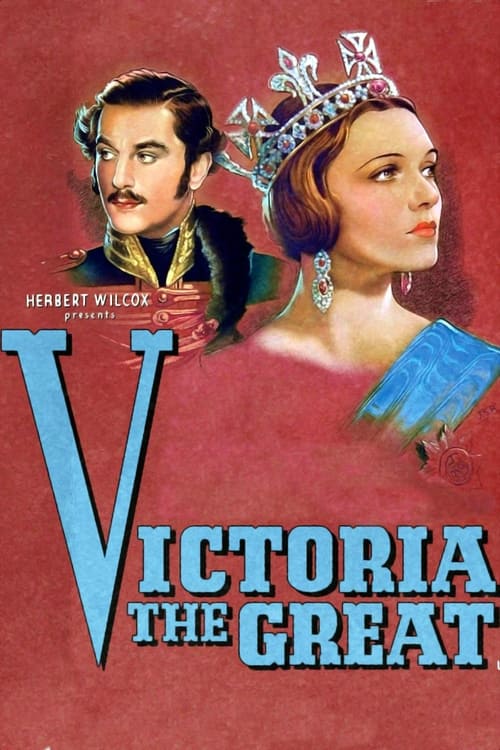
Victoria the Great (1937)
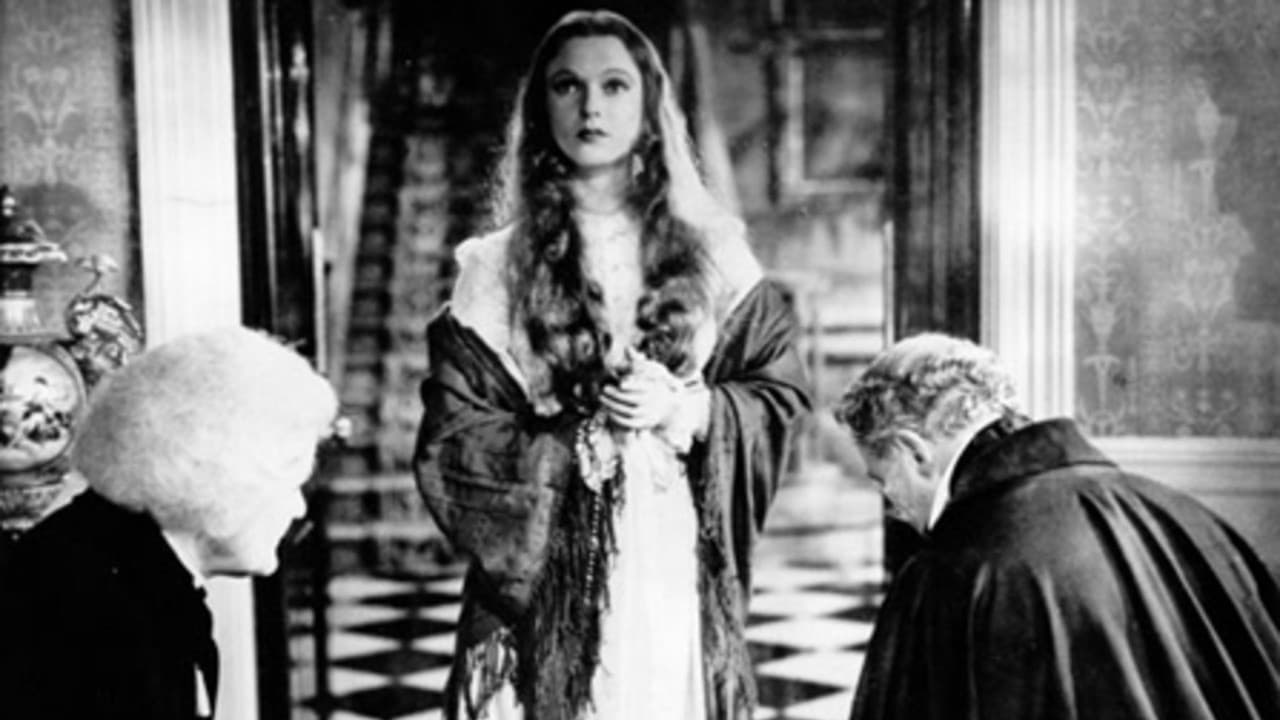
Victoria the Great (1937), directed by Herbert Wilcox, starring Anna Neagle and Adolf Wohlbrück.
score
SIXTY YEARS A QUEEN...and every day a woman...madly in love!
Synopsis
The film biography of Queen Victoria focusing initially on the early years of her reign with her marriage to Prince Albert and her subsequent rule after Albert's death in 1861.
- Freddie YoungCinematography
- William V. SkallCinematography
- Herbert WilcoxDirector, Producer
- Jill IrvingEditing
Queen Victoria Collection
The franchise in release order. 2 films.
-
A Rainha Vitória 1937 · you are here
-
Sixty Glorious Years 1938
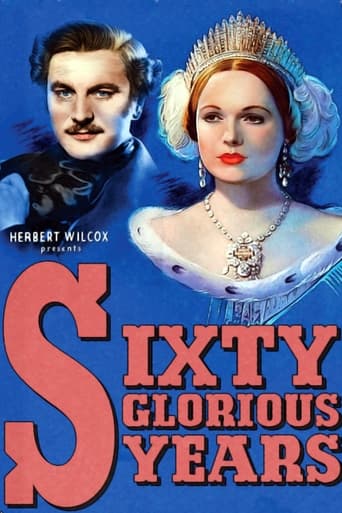
About the film
Victoria the Great is a 1937 British historical film directed by Herbert Wilcox and starring Anna Neagle, Anton Walbrook and Walter Rilla. When Laurence Housman's play Victoria Regina was banned by the Lord Chamberlain (in 1935 the royal family could not be shown on the British stage), its subsequent Broadway success prompted King Edward VIII to commission producer Herbert Wilcox to turn it into a film, commemorating the centenary of Victoria's reign. The film biography of Queen Victoria concentrates initially on the early years of her reign with her marriage to Prince Albert and her subsequent rule after Albert's death in 1861. It was released in the year of Victoria's great-grandson King George VI's coronation, which was also the centennial of Victoria's own accession to the throne. The movie was so successful that a sequel appeared the following year, Sixty Glorious Years.
Read the full article (7k characters)
Victoria the Great is a 1937 British historical film directed by Herbert Wilcox and starring Anna Neagle, Anton Walbrook and Walter Rilla. When Laurence Housman's play Victoria Regina was banned by the Lord Chamberlain (in 1935 the royal family could not be shown on the British stage), its subsequent Broadway success prompted King Edward VIII to commission producer Herbert Wilcox to turn it into a film, commemorating the centenary of Victoria's reign. The film biography of Queen Victoria concentrates initially on the early years of her reign with her marriage to Prince Albert and her subsequent rule after Albert's death in 1861. It was released in the year of Victoria's great-grandson King George VI's coronation, which was also the centennial of Victoria's own accession to the throne. The movie was so successful that a sequel appeared the following year, Sixty Glorious Years.
Plot
In June 1837, 18-year-old Princess Alexandrina Victoria of Kent ascends the throne as Queen Victoria following the death of her uncle, King William IV. She soon shows her independence from the influence of her German mother, the Duchess of Kent, and her Belgian advisor, Baron Stockmar.
Lord Melbourne, her trusted Prime Minister, tells her he is growing old and she needs an advisor. He suggests she marry her German cousin Prince Albert of Saxe-Coburg and Gotha. Victoria considers Albert too straitlaced and serious, while he thinks she is frivolous, self-willed, overly talkative and too fond of dancing. Victoria decides to postpone inviting Albert and his older brother Ernest to visit, but when Melbourne informs her that Albert does not want to come, this immediately changes her mind and she insists he come.
Albert and Ernest's passage across the English Channel is rough and rain-drenched. When they are first presented to the Queen, Albert is not very friendly. Later, at a ball, Albert tells Ernest they are returning home the next day, but after a waltz with Victoria (the orchestra conducted by Johann Strauss), he cancels that plan. In the meantime, Victoria has decided she wants to marry Albert, but as he cannot propose to a sovereign, she decides she must do it herself, and he accepts.
After their marriage, Victoria devotes herself to government, rejecting Albert's offers to help, and he chafes at his life of reading and playing the piano. When Sir Robert Peel talks to Victoria about the merits of an income tax during a party, Albert tries to join the discussion, only to be again rebuffed by his wife. Albert finally rebels, and although Victoria is unyielding at first, she eventually gives in and lets him participate in governing, and slowly grows to rely on him.
During the social unrest and depression of the "Hungry Forties", Albert spots a would-be assassin and shields his wife during an open-carriage ride. The man only manages to shoot Albert's hat before being overpowered.
In November 1841, Victoria and Albert's first male child, Prince Albert Edward, is born.
After an angry mob gathers outside the palace demanding bread, Victoria and Albert support Peel in repealing the Corn Laws.
In 1861, the Trent Affair threatens to bring the United Kingdom in on the side of the South in the American Civil War. Lord Palmerston, the Foreign Minister, is strongly in favour of a strong message to the United States, but Victoria insists otherwise, and Albert rewrites it so that hostilities are avoided.
That same year, Albert dies. Grieving, Victoria goes into seclusion, eventually resulting in public discontent with the monarchy. Finally, Prime Minister William Gladstone pleads with her to resume her public duties, asking her what Albert would have wanted. At this point, the film switches from black and white to colour, as she heeds Gladstone's advice.
Cast
Anna Neagle as Queen Victoria
Anton Walbrook as Prince Albert
Walter Rilla as Prince Ernest
H. B. Warner as Lord Melbourne
Mary Morris as Duchess of Kent
James Dale as Duke of Wellington
Felix Aylmer as Lord Palmerston
Charles Carson as Sir Robert Peel
Gordon McLeod as John Brown
C. V. France as Archbishop of Canterbury
Arthur Young as William Gladstone
Greta Schröder as Baroness Lehzen
Paul Leyssac as Baron Stockmar
Derrick De Marney as Younger Disraeli
Hugh Miller as Older Disraeli
Percy Parsons as President Abraham Lincoln
Hubert Harben as Lord Conyngham
Henry Hallett as Joseph Chamberlain
Clarence Blakiston as the Duke of Sussex
Miles Malleson as Sir James, Albert's physician
Moore Marriott as Train driver
Ivor Barnard as Assassin
Joyce Bland as Florence Nightingale (uncredited)
Angela Braemar as Princess Alice (uncredited)
Julian Royce as the Duke of Cambridge (uncredited)
Critical reception
Variety wrote, "Not cloak-and-cocked-hat historical tedium of pageantry and fancy dramatics, Victoria the Great travels a long way towards a full and clarified explanation of the most popular ruler England ever had...Anna Neagle, in the title role, gives an unwavering performance throughout. Anton Walbrook as Albert, the Prince Consort, is superb...The film wisely puts its prime focus on the private life of Victoria, her romance, marriage, and personal characteristics. Backgrounded is her public life, and her gradual rise to such high estimation of her people. Victoria the Great is done with a lavish hand – the closing sequence is in Technicolor [shot by William V. Skall]. The tinting isn’t too good, but serves effectively as a pointer-up for the climax"; and more recently, the Radio Times wrote, "It's all fairly tame, and a long way from the rough ride given to the royals of today. Yet Neagle's sympathy for the monarch shines through, and the final reel, which bursts into glorious Technicolor for the Diamond Jubilee, is a delightful piece of patriotic pomp."
F. J. C. Hearnshaw noted that "By almost universal consent the film Victoria the Great is a brilliant and conspicuous success. Its reception in London has been one prolonged triumph. Its success is all the more remarkable because, so we are told, it was produced in the amazingly brief period of six weeks. There is, however, a freshness and spontaneity about it that suggests freedom from wearisome iterations". Hearnshaw lists twelve minor deviations from historical fact, but adds "Most of them, ...can be defended on the ground of histrionic desirability. When all is said, the fact remains that Victoria the Great is a supremely fine film, and one that reflects infinite credit upon both producer and actors".
References
Bibliography
The Great British Films, pp. 39–41, Jerry Vermilye, 1978, Citadel Press, ISBN 0-8065-0661-X
External links
Victoria the Great at IMDb
Victoria the Great at the TCM Movie Database (archived)
Victoria the Great at Virtual History
Text from Victoria the Great on Wikipedia, licensed CC BY-SA 4.0. https://en.wikipedia.org/wiki/Victoria_the_Great
Trivia
- It premiered on September 1, 1937, a Wednesday.
- It runs 1h52 — a typical feature length.
- It is film 1 of 2 in the Queen Victoria franchise.
- This film's quiz has 11 questions — enough to play more than once without repeats.
Production
- StudiosHerbert Wilcox Productions
- CountriesUnited Kingdom
- LanguagesEnglish
- StatusReleased
Cast
-
 Anna Neagle
Queen Victoria
Anna Neagle
Queen Victoria -
 Adolf Wohlbrück
Prince Albert
Adolf Wohlbrück
Prince Albert -
 Walter Rilla
Prince Ernest
Walter Rilla
Prince Ernest -
 H.B. Warner
Lord Melbourne
H.B. Warner
Lord Melbourne -
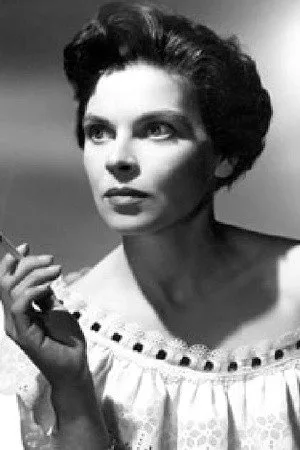 Mary Morris
Duchess of Kent
Mary Morris
Duchess of Kent - James Dale Duke of Wellington
-
 Felix Aylmer
Lord Palmerston
Felix Aylmer
Lord Palmerston -
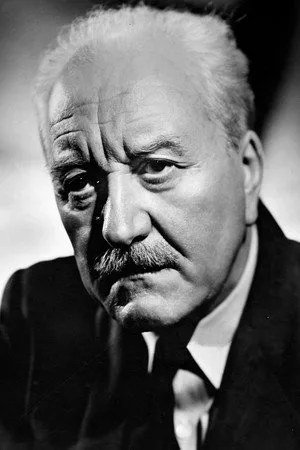 Charles Carson
Robert Peel
Charles Carson
Robert Peel -
 Gordon McLeod
John Brown
Gordon McLeod
John Brown -
 C. V. France
Archbishop of Canterburry
C. V. France
Archbishop of Canterburry -
 Arthur Young
William Gladstone
Arthur Young
William Gladstone -
 Greta Schröder
Baroness Lehzen
Greta Schröder
Baroness Lehzen - Paul Leyssac Baron Stockmar
-
 Derrick De Marney
Younger Diraeli
Derrick De Marney
Younger Diraeli -
 Hugh Miller
Older Disraeli
Hugh Miller
Older Disraeli -
 Percy Parsons
President Lincoln
Percy Parsons
President Lincoln - Hubert Harben Lord Conyngham
- Henry Hallett Joseph Chamberlain
-
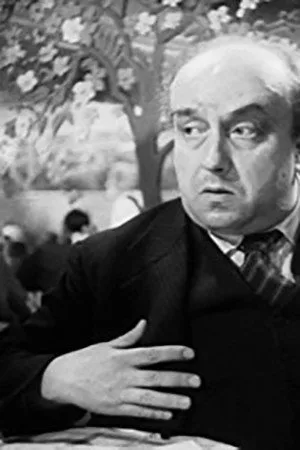 William Dewhurst
John Bright
William Dewhurst
John Bright - Bert Bendon
Quiz about this movie
Questions from the whole catalogue.
Play nowIf you liked this one
-
O Confidente da Rainha
 6.9
6.9
-
A Batalha das Correntes
 6.7
6.7
-
A Rainha
 6.9
6.9
-
Radium Girls
 6.6
6.6
-
As Sufragistas
 7.2
7.2
-
Duas Rainhas
 6.5
6.5
-
Mansfield Park
 6.1
6.1
-
O Matemático
 6.2
6.2
-
Munique: No Limite da Guerra
 6.9
6.9
-
O Discurso do Rei
 7.7
7.7
-
As Irmãs Brontë
 7.3
7.3
-
Giant
 7.0
7.0
Tags
Crew
- Freddie Young Cinematography
- William V. Skall Cinematography
- Herbert Wilcox Director
- Jill Irving Editing
- Herbert Wilcox Producer
- Anthony Collins Original music
- Charles de Grandcourt Writer
- Miles Malleson Writer
Questions about this film
What is Victoria the Great about?
Victoria the Great: The film biography of Queen Victoria focusing initially on the early years of her reign with her marriage to Prince Albert and her subsequent rule after Albert's death in 1861.
Who directed Victoria the Great?
Victoria the Great was directed by Herbert Wilcox in 1937.
Who stars in Victoria the Great?
The cast of Victoria the Great includes Anna Neagle, Adolf Wohlbrück, Walter Rilla, H.B. Warner and Mary Morris.
How long is Victoria the Great?
Victoria the Great runs for 112 minutes, or 1h52.
What is the correct order of the Queen Victoria Collection films?
The Queen Victoria Collection franchise has 2 films in the catalogue. In release order: A Rainha Vitória; Sixty Glorious Years.
Similar films
 8.0
8.0
 8.0
8.0
 8.6
8.6
 8.2
8.2
 8.2
8.2
 8.2
8.2
 8.0
8.0
 7.9
7.9
 7.9
7.9
 8.0
8.0
 8.0
8.0
Page updated on 09/15/2026.
Back to the catalogue