Horizon (1964)
Synopsis
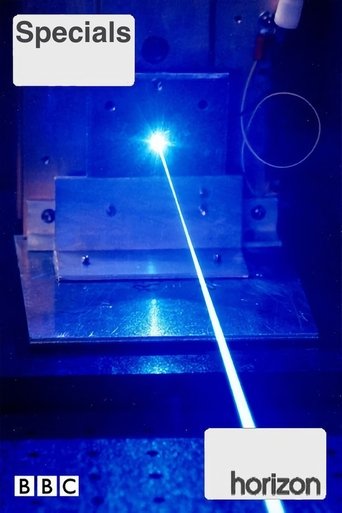
Horizon tells amazing science stories, unravels mysteries and reveals worlds you've never seen before.
About the series
Horizon is an ongoing and long-running British documentary television series on BBC Two that covers science and philosophy.
Read the full article (8k characters)
Horizon is an ongoing and long-running British documentary television series on BBC Two that covers science and philosophy.
History
The programme was first broadcast on 2 May 1964 with "The World of Buckminster Fuller", which explored the theories and structures of inventor Richard Buckminster Fuller and included the Horizon mission statement: "The aim of Horizon is to provide a platform from which some of the world's greatest scientists and philosophers can communicate their curiosity, observations and reflections, and infuse into our common knowledge their changing views of the universe". Horizon continues to be broadcast on BBC Two, and in 2009 added a series of films based on the rich Horizon archive, called Horizon Guides, on BBC Four.
In December 2016, it was announced that Horizon would no longer be made exclusively by the BBC's in-house production division, BBC Studios, and the BBC invited independent production companies to pitch to make episodes of the strand.
Episodes
There have been 57 series and more than 1,200 episodes produced.
Broad coverage of science topics
Horizon has investigated an eclectic mix of subjects and controversial topics. It opened the awareness of consumers to the use of whale meat in pet food in 1972 ("Whales, Dolphins, and Men"), and produced award-winning documentary-dramas such as Life Story in 1987, which dramatised the discovery of the structure of DNA. A 1978 programme about the silicon chip documented the decline of the Swiss watch industry. In 1993, an Emmy-winning episode about decreasing male fertility ("Assault on the Male") was given a special screening at the White House.
Format
The format of the series has varied over the years.
1960s–1980s
The first ever Horizon was "The World of Buckminster Fuller", produced and directed by Ramsay Short, and broadcast on 2 May 1964. It set the style; running time 50 minutes, no in-vision presenter, interviewees speaking off camera (in practice, almost always to the producer/director whose questions were usually edited out). Until the 1980s Horizon, in common with all BBC documentaries, was shot on 16 mm film. Only rare programmes had a specialist writer – in most cases the producer/director was also the writer.
The first Horizon in colour was "Koestler on Creativity", produced by Robert Vas, was shown on 5 December 1967.
The Public Broadcasting Service's (PBS) Nova series was created in 1974, after Michael Ambrosino, who had served a year-long fellowship with the BBC, was inspired to create an American program based on the same model.
1990s
Since the early 1990s, Horizon has developed a distinctive narrative form, typically employing an underlying "detective" metaphor, to relate scientific issues and discoveries to the lives of its viewers. Many episodes of Horizon are structured in a format that starts with a tease or menu laying out what the show has in store, followed by two "acts" with a "plot twist" around 25–35 minutes into the show. The twist frequently propels the story line from a focus on an individual scientist's human and intellectual journey of discovery through to explore the impact of that insight while, at the same time, providing a change of "texture" and filmic pace. Often, episodes of Horizon end up with a montage of "talking heads" as experts and people affected by the implications of the science covered are intercut to create a sense of summary.
2000s
Until early 2008, the length was standardised at 50 minutes, which was extended in the latter half of 2008 to 60 minutes. Some episodes are adapted from documentaries by other broadcasters such as PBS's Nova, and episodes of Horizon are in turn adapted by PBS (to American English) and other broadcasters around the world in their own languages.
No new episodes were broadcast between July 2022 and 2024. In January 2024, a special episode on the Artemis program in conjunction with the American series Nova and the Open University was announced.
Popularity
Horizon has enjoyed high viewing figures, even though it covered subjects as complex as molecular biology and particle physics. It has shown a change of direction since June 2006, offering a more light-hearted approach, though the subjects it covers remain serious. For instance, an episode broadcast in 2019 entitled "We Need To Talk About Death" features Kevin Fong talking to palliative care clinician Mark Taubert and some of his patients who are facing terminal illness.
Criticism
The down-side to Horizon's recent focus on "Pure Science, Sheer Drama" and the occasionally forced narrative this engenders has led to some accusations of dumbing down in recent years, with one former editor writing a newspaper article about how the programme concentrates too much on human stories, and not enough on the science.
One programme "Chimps are people too" was entirely presented by a non-scientist, Danny Wallace. Editor Andrew Cohen addressed the reasons why the programme went down this route on the Horizon web page.
In October 2014, a three-part special – "Cat Watch: the New Horizon Experiment" – was broadcast, following up on Horizon's 2013 "The Secret Life of the Cat". At the end of the first hour-long broadcast the findings of the experiment so-far were summarised on screen by presenter Liz Bonnin as: "Our cats can cope with change but you have to introduce them to it gently". Private Eye was critical of the scientific value of the programme saying: "By all means, if the BBC wants to, make a series called The Secret Life of Cats; but don't insult the history of television by branding it, however obliquely, as a Horizon".
Awards
In the period of "Pure Science, Sheer Drama", Horizon won an unprecedented series of the world's top awards, including a BAFTA, an Emmy for Best Documentary, a Royal Television Society Award and a Grierson Trust Award. Other Emmy winning programmes are: "Chernobyl's Sarcophagus" (1991), "Assault on the Male" (1993) and "The Fall of the World Trade Centre" (2003). In 1988, Horizon won a BAFTA for Best Drama, "Life Story" (about the elucidation of the structure of DNA), another in 1996 for Best Documentary, "Fermat's Last Theorem" (which also won a Prix Italia) and another in 2001 for Best Factual Series or Strand.
Home media
Three Horizon episodes were included on The Wonders Collection Special Edition DVD and Blu-ray. The episodes were "Do You Know What Time It Is?", "Can We Make A Star On Earth?" and "What on Earth is Wrong With Gravity?"
See also
Q.E.D. – 1980s and 1990s documentary series on BBC1, focusing on more populist science topics than Horizon
Equinox – Channel 4 science programme, similar to Q.E.D. and last produced in 2001
List of Horizon episodes
References
Further reading
"The origins and practice of science on British television" in The Routledge Companion to British Media History, pp. 470–483
External links
Horizon at BBC Online
Horizon (1996–2008) at BBC Online (Archived BBC page)
"Horizon". BBC World News.
Horizon at IMDb
"Horizon - Show Summary". TV.com. Archived from the original on 3 September 2011. Retrieved 19 November 2006.
"Episode list since 1964". BFI. Archived from the original on 12 April 2009.
"Horizon". Subtitles. SubSaga.
Simon Campbell-Jones. "Horizon at 50 - Alec Nisbett". History of the BBC. BBC Online.
Video clips
"Death of the Working Classes" BBC Archive – first broadcast February 1988
Text from Horizon (British TV programme) on Wikipedia, licensed CC BY-SA 4.0. https://en.wikipedia.org/wiki/Horizon_(British_TV_programme)
Seasons
-
Temporada 1 1964 · 9 episodes
-
Temporada 2 1965 · 24 episodes
-
Temporada 3 1966 · 23 episodes
-
Temporada 4 1967 · 23 episodes
-
Temporada 5 1968 · 24 episodes
-
Temporada 6 1969 · 37 episodes
-
Temporada 7 1970 · 37 episodes
-
Temporada 8 1971 · 32 episodes
-
Temporada 9 1972 · 33 episodes
-
Temporada 10 1973 · 32 episodes
-
Temporada 11 1974 · 33 episodes
-
Temporada 12 1975 · 26 episodes
-
Temporada 13 1976 · 30 episodes
-
Temporada 14 1977 · 23 episodes
-
Temporada 15 1978 · 24 episodes
-
Temporada 16 1979 · 25 episodes
-
Temporada 17 1980 · 25 episodes
-
Temporada 18 1981 · 27 episodes
-
Temporada 19 1982 · 22 episodes
-
Temporada 20 1983 · 24 episodes
-
Temporada 21 1984 · 22 episodes
-
Temporada 22 1985 · 16 episodes
-
Temporada 23 1986 · 22 episodes
-
Temporada 24 1987 · 22 episodes
-
Temporada 25 1988 · 25 episodes
-
Temporada 26 1989 · 20 episodes
-
Temporada 27 1990 · 20 episodes
-
Temporada 28 1991 · 23 episodes
-
Temporada 29 1992 · 19 episodes
-
Temporada 30 1993 · 21 episodes
-
Temporada 31 1994 · 21 episodes
-
Temporada 32 1995 · 20 episodes
-
Temporada 33 1996 · 16 episodes
-
Temporada 34 1997 · 15 episodes
-
Temporada 35 1998 · 18 episodes
-
Temporada 36 1999 · 14 episodes
-
Temporada 37 2000 · 19 episodes
-
Temporada 38 2001 · 11 episodes
-
Temporada 39 2002 · 18 episodes
-
Temporada 40 2003 · 19 episodes
-
Temporada 41 2004 · 18 episodes
-
Temporada 42 2005 · 20 episodes
-
Temporada 43 2006 · 19 episodes

-
Temporada 44 2007 · 9 episodes

-
Temporada 45 2008 · 17 episodes

-
Temporada 46 2009 · 18 episodes

-
Temporada 47 2009 · 14 episodes

-
Temporada 48 2010 · 15 episodes
-
Temporada 49 2011 · 13 episodes
-
Temporada 50 2012 · 16 episodes
-
Temporada 51 2013 · 11 episodes
-
Temporada 52 2014 · 18 episodes

-
Temporada 53 2016 · 16 episodes
-
Temporada 54 2017 · 15 episodes
-
Temporada 55 2018 · 13 episodes

-
Temporada 56 2019 · 6 episodes
-
Temporada 57 2020 · 8 episodes

-
Temporada 58 2021 · 4 episodes
-
Temporada 59 2022 · 4 episodes

-
Temporada 60 2024 · 1 episodes
-
Temporada 61 2025 · 4 episodes
-
Temporada 62 2026 · 1 episodes
-
Especiais 1966 · 111 episodes
Cast
-
Richard Branson

-
Nicholas Soames

-
Bob Brier
-
Robert Winston

-
Robert Gallo

-
Trevor R. Bryce
-
Joshua Wurman
-
Bill Paterson

-
Michio Kaku

-
Lori Schappell
-
Gary England
-
Reba Schappell
-
Kelly Hunter Herself - Narrator

-
Andrew Scott Narrator
-
Helen McCrory Narrator

-
Rupert Penry-Jones Himself - Narrator

-
Adrian Lester Himself - Narrator

-
Dr Adam Rutherford Presenter
Production
- StatusReturning
- NetworkBBC Two
- CountriesUnited Kingdom
- First aired02/04/1964
- votes35
Crew
- Brian Gibson Director
- David Stewart Director
- Toby Macdonald Director
- Charles Colville Director
- Philip Martin Director
- Ben Fox Director
- Helen Sage Director
- Tristan Quinn Director
- Christopher Sykes Director
- Nic Young Director
- Serena Davies Director
- Naomi Austin Director
Tags
Questions about the series Horizon
What is Horizon about?
Horizon: Horizon tells amazing science stories, unravels mysteries and reveals worlds you've never seen before.
How many seasons does Horizon have?
Horizon has 62 seasons, with 1174 episodes in total.
Is Horizon still running?
Horizon is still running, with new episodes expected.
How long is each episode of Horizon?
Each episode of Horizon runs about 60 minutes.
Who stars in Horizon?
The cast of Horizon includes Richard Branson, Nicholas Soames, Bob Brier, Robert Winston and Robert Gallo.
Similar shows
-
 8.5
8.5
Cosmos
2014
-
 8.2
8.2
Mayday
2003
-
 7.7
7.7
Seven Deadly Sins
2008
-
 7.5
7.5
De viaje con los Derbez
2019
-
 7.4
7.4
Marvel Studios Legends
2021
-
 8.2
8.2
Formula 1: Drive to Survive
2019
-
 7.1
7.1
Ancient Aliens
2010
-
 8.3
8.3
Prehistoric Planet
2022
-
 6.9
6.9
Tiger King
2020
-
 6.9
6.9
Pandemic: How to Prevent an Outbreak
2020
-
 7.8
7.8
Making a Murderer
2015
-
 8.0
8.0
The Jinx
2015
Trivia
- It premiered on February 4, 1964, a Tuesday.
- It has 62 season(s) and 1174 episode(s) — about 19 per season, and it is still in production.
- It originally aired on BBC Two.
- It is a production from: United Kingdom.
- This series' quiz has 7 questions.
Page updated on 09/13/2026.