NOVA (1974)
Synopsis
PBS' premier science series helps viewers of all ages explore the science behind the headlines. Along the way, NOVA demystifies science and technology, and highlights the people involved in scientific pursuits.
About the series
Nova (stylized as NOVΛ) is an American popular science television program produced by WGBH in Boston, Massachusetts, since 1974. It is broadcast on PBS in the United States, and in more than 100 other countries. The program has won many major television awards.
Nova often includes interviews with scientists doing research in the subject areas covered and occasionally includes footage of a particular discovery. Some episodes have focused on the history of science. Examples of topics covered include the following: Colditz Castle, the Drake equation, elementary particles, the 1980 eruption of Mount St. Helens, Fermat's Last Theorem, the AIDS epidemic, global warming, moissanite, Project Jennifer, storm chasing, Unterseeboot 869, Vinland, Tarim mummies, and the COVID-19 pandemic.
The Nova programs have been praised for their pacing, writing, and editing. Websites that accompany the segments have also won awards.
Read the full article (4k characters)
Nova (stylized as NOVΛ) is an American popular science television program produced by WGBH in Boston, Massachusetts, since 1974. It is broadcast on PBS in the United States, and in more than 100 other countries. The program has won many major television awards.
Nova often includes interviews with scientists doing research in the subject areas covered and occasionally includes footage of a particular discovery. Some episodes have focused on the history of science. Examples of topics covered include the following: Colditz Castle, the Drake equation, elementary particles, the 1980 eruption of Mount St. Helens, Fermat's Last Theorem, the AIDS epidemic, global warming, moissanite, Project Jennifer, storm chasing, Unterseeboot 869, Vinland, Tarim mummies, and the COVID-19 pandemic.
The Nova programs have been praised for their pacing, writing, and editing. Websites that accompany the segments have also won awards.
History
Nova was first aired on March 3, 1974. The show was created by Michael Ambrosino, inspired by the BBC 2 television series Horizon, which Ambrosino had seen while working in the UK. In the early years, many Nova episodes were either co-productions with the BBC Horizon team, or other documentaries originating outside of the United States, with the narration re-voiced in American English. Of the first 50 programs, only 19 were original WGBH productions, and the first Nova episode, "The Making of a Natural History Film", was originally an episode of Horizon that premiered in 1972. The practice continues to this day. All the producers and associate producers for the original Nova teams came from either England (with experience on the Horizon series), Los Angeles or New York. Ambrosino was succeeded as executive producer by John Angier, John Mansfield, and Paula S. Apsell, acting as senior executive producer.
Episodes
Reception
Rob Owen of Pittsburgh Post-Gazette wrote, "Fascinating and gripping." Alex Strachan of Calgary Herald wrote, "TV for people who don't normally watch TV." Lynn Elber of the Associated Press wrote for the miniseries "The Fabric of the Cosmos", "Mind-blowing TV." The Futon Critic wrote of the episode "Looking for Life on Mars", "Astounding [and] exhilarating."
Awards
Nova has been recognized with multiple Peabody Awards and Emmy Awards. The program won a Peabody in 1974, citing it as "an imaginative series of science adventures," with a "versatility rarely found in television." Subsequent Peabodys went to specific episodes:
"The Miracle of Life" (1983) was cited as a "fascinating and informative documentary of the human reproductive process," which used "revolutionary microphotographic techniques." This episode also won an Emmy.
"Spy Machines" (1987) was cited for "neatly recount[ing] the key events of the Cold War and look[ing] into the future of American/Soviet SDI competition."
"The Elegant Universe" (2003) was lauded for exploring "science's most elaborate and ambitious theory, the string theory" while making "the abstract concrete, the complicated clear, and the improbable understandable" by "blending factual story telling with animation, special effects, and trick photography." The episode also won an Emmy for editing.
The National Academy of Television Arts and Sciences (responsible for documentary Emmys) recognized the program with awards in 1978, 1981, 1983, and 1989. Julia Cort won an Emmy in 2001 for writing "Life's Greatest Miracle." Emmys were also awarded for the following episodes:
1982 "Here's Looking at You, Kid"
1983 "The Miracle of Life" (also won a Peabody)
1985 "AIDS: Chapter One", "Acid Rain: New Bad News"
1992 "Suicide Mission to Chernobyl", "The Russian Right Stuff"
1994 "Secret of the Wild Child"
1995 "Siamese Twins", "Secret of the Wild Child"
1999 "Decoding Nazi Secrets"
2001 "Bioterror"
2002 "Galileo's Battle for the Heavens", "Mountain of Ice", "Shackleton's Voyage of Endurance", "Why the Towers Fell"
2003 "Battle of the X-planes", "The Elegant Universe" (also won a Peabody)
2005 "Rx for Survival: A Global Health Challenge"
In 1998, the National Science Board of the National Science Foundation awarded Nova its first-ever Public Service Award.
References
External links
Official website
Nova at IMDb
Text from Nova (American TV program) on Wikipedia, licensed CC BY-SA 4.0. https://en.wikipedia.org/wiki/Nova_(American_TV_program)
Seasons
-
Temporada 1 1974 · 13 episodes

-
Temporada 2 1974 · 17 episodes

-
Temporada 3 1976 · 20 episodes

-
Temporada 4 1977 · 19 episodes

-
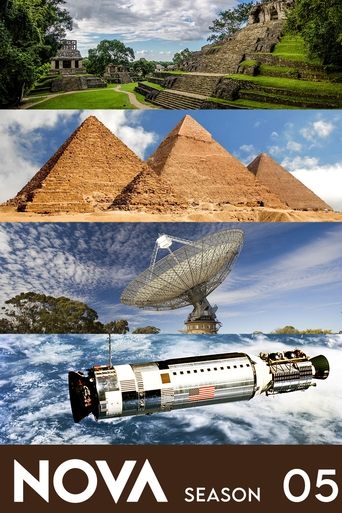
Temporada 5 1978 · 21 episodes
-
Temporada 6 1979 · 19 episodes

-
Temporada 7 1980 · 20 episodes

-
Temporada 8 1981 · 20 episodes

-
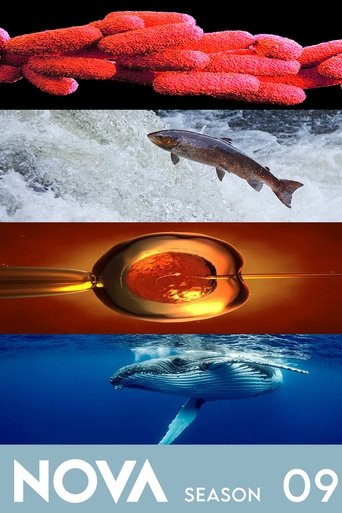
Temporada 9 1982 · 19 episodes
-
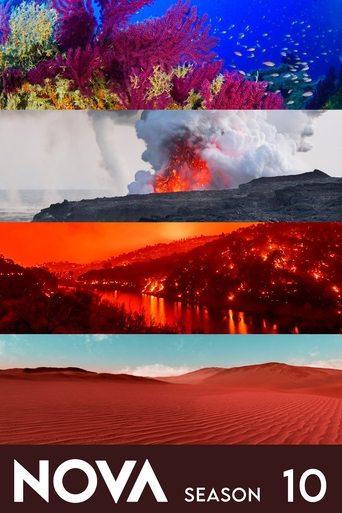
Temporada 10 1983 · 21 episodes
-
Temporada 11 1984 · 20 episodes

-
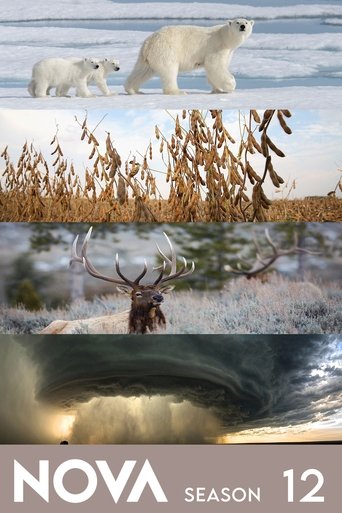
Temporada 12 1985 · 20 episodes
-
Temporada 13 1986 · 21 episodes

-
Temporada 14 1987 · 21 episodes

-
Temporada 15 1988 · 22 episodes

-
Temporada 16 1989 · 20 episodes

-
Temporada 17 1990 · 20 episodes

-
Temporada 18 1991 · 19 episodes

-
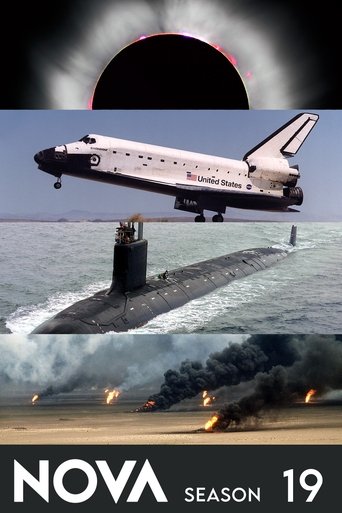
Temporada 19 1992 · 20 episodes
-
Temporada 20 1993 · 20 episodes

-
Temporada 21 1994 · 20 episodes

-
Temporada 22 1995 · 13 episodes

-
Temporada 23 1995 · 19 episodes

-
Temporada 24 1996 · 21 episodes
-
Temporada 25 1997 · 20 episodes

-
Temporada 26 1998 · 20 episodes

-
Temporada 27 1999 · 21 episodes

-
Temporada 28 2000 · 17 episodes
-
Temporada 29 2001 · 17 episodes

-
Temporada 30 2002 · 16 episodes

-
Temporada 31 2003 · 18 episodes

-
Temporada 32 2004 · 18 episodes
-
Temporada 33 2005 · 20 episodes

-
Temporada 34 2006 · 15 episodes

-
Temporada 35 2007 · 17 episodes

-
Temporada 36 2008 · 17 episodes

-
Temporada 37 2009 · 18 episodes

-
Temporada 38 2010 · 18 episodes

-
Temporada 39 2011 · 19 episodes

-
Temporada 40 2012 · 20 episodes

-
Temporada 41 2013 · 22 episodes

-
Temporada 42 2014 · 22 episodes
-
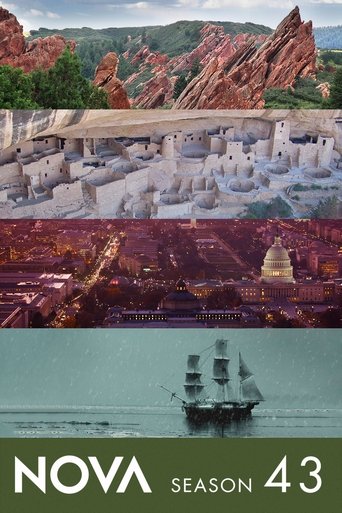
Temporada 43 2015 · 22 episodes
-
Temporada 44 2016 · 28 episodes

-
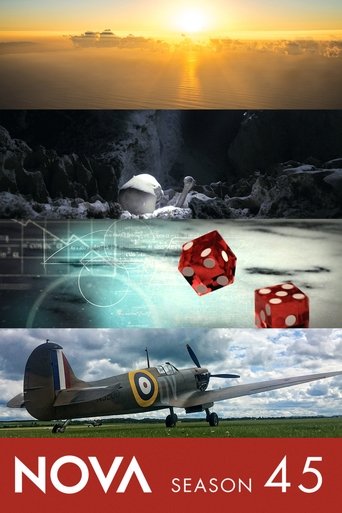
Temporada 45 2018 · 23 episodes
-
Temporada 46 2019 · 23 episodes

-
Temporada 47 2020 · 16 episodes

-
Temporada 48 2021 · 25 episodes

-
Temporada 49 2022 · 19 episodes

-
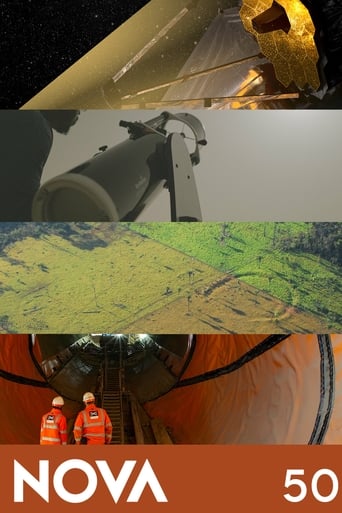
Temporada 50 2023 · 18 episodes
-
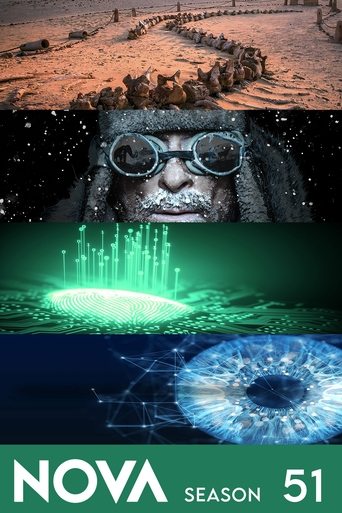
Temporada 51 2024 · 18 episodes
-
Temporada 52 2025 · 20 episodes
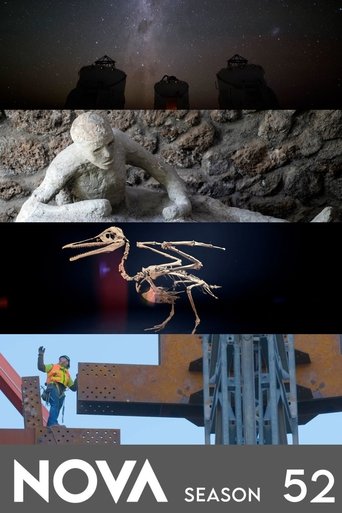
-
Temporada 53 2026 · 17 episodes
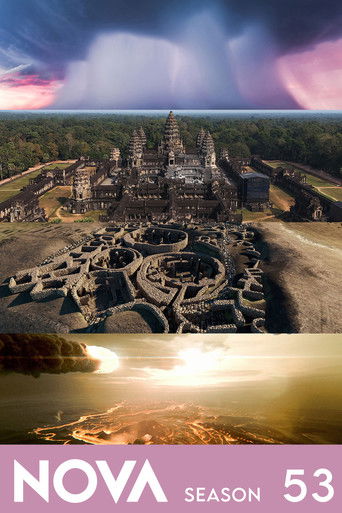
-
Especiais 1999 · 13 episodes
Cast
-
Courtney B. Vance Narrator

-
Corey Johnson Narrator

-
Jay O. Sanders Self - Narrator (voice)

-
Demetri Goritsas Narrator

-
Richard Smith Host
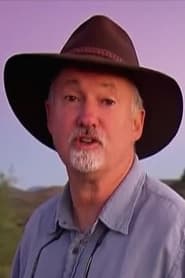
-
Bray Poor Narrator

-
Lance Lewman Narrator (voice)

-
Michael Scott Narrator

-
Ted Marcoux Narrator

-
Peter Thomas Narrator
-
Jim Carter Narrator

-
Kenichi Nakamaru Reporter
-
Shu Morino Reporter
-
Brian Greene Host

-
Jamie Effros Narrator

-
Eric Meyers Narrator

-
John Lithgow Narrator

-
John McKenzie Narrator
Production
- StatusReturning
- NetworkPBS
- CountriesUnited States
- First aired03/03/1974
- votes141
Crew
- Sarah Holt Director
- Kirk Wolfinger Director
- Liesl Clark Director
- Doug Hamilton Director
- Gary Glassman Director
- Michael Barnes Director
- Julia Cort Director
- Larry Klein Director
- Graham Townsley Director
- Rushmore DeNooyer Director
- Joseph McMaster Director
- Ian Duncan Director
Tags
Questions about the series NOVA
What is NOVA about?
NOVA: PBS' premier science series helps viewers of all ages explore the science behind the headlines. Along the way, NOVA demystifies science and technology, and highlights the people involved in scientific pursuits.
How many seasons does NOVA have?
NOVA has 53 seasons, with 1025 episodes in total.
Is NOVA still running?
NOVA is still running, with new episodes expected.
How long is each episode of NOVA?
Each episode of NOVA runs about 55 minutes.
Who stars in NOVA?
The cast of NOVA includes Courtney B. Vance, Corey Johnson, Jay O. Sanders, Demetri Goritsas and Richard Smith.
Similar shows
-
 8.5
8.5
Cosmos
2014
-
 8.2
8.2
Mayday
2003
-
 7.7
7.7
Seven Deadly Sins
2008
-
 7.5
7.5
De viaje con los Derbez
2019
-
 7.4
7.4
Marvel Studios Legends
2021
-
 8.2
8.2
Formula 1: Drive to Survive
2019
-
 7.1
7.1
Ancient Aliens
2010
-
 8.3
8.3
Prehistoric Planet
2022
-
 6.9
6.9
Tiger King
2020
-
 6.9
6.9
Pandemic: How to Prevent an Outbreak
2020
-
 7.8
7.8
Making a Murderer
2015
-
 8.0
8.0
The Jinx
2015
Trivia
- It premiered on March 3, 1974, a Sunday.
- It has 53 season(s) and 1025 episode(s) — about 19 per season, and it is still in production.
- It originally aired on PBS.
- It is a production from: United States.
- This series' quiz has 7 questions.
Page updated on 09/13/2026.