A Geisha (1953)
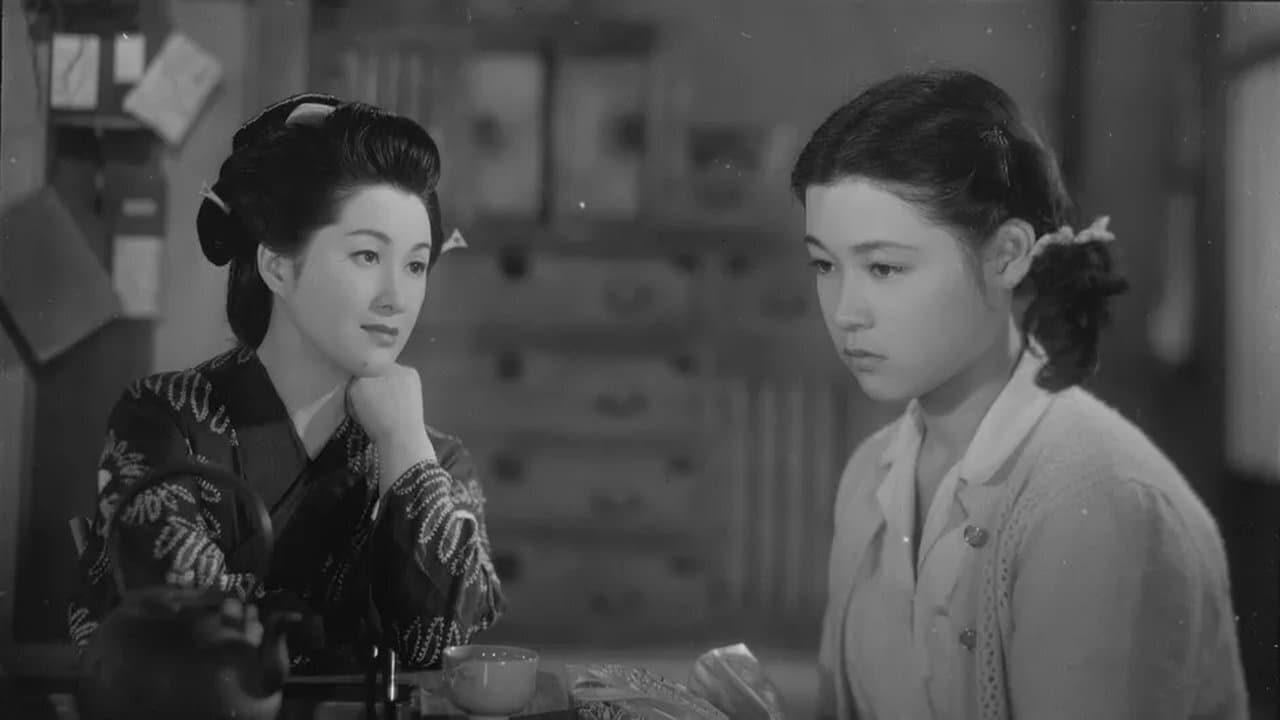
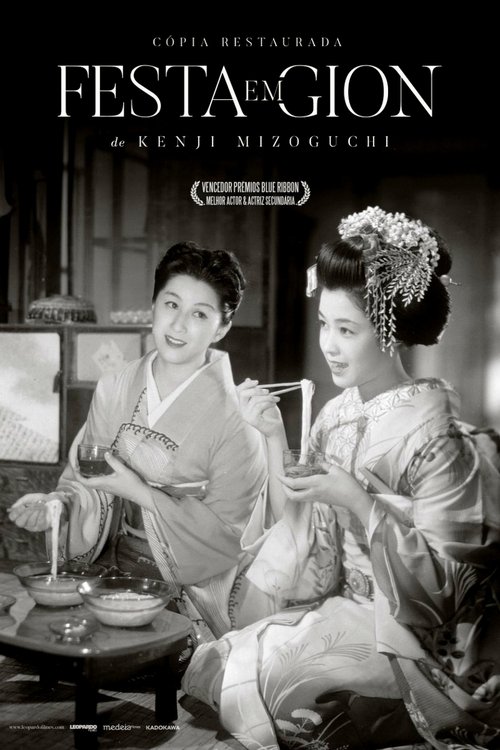
A Geisha (1953), directed by Kenji Mizoguchi, starring Michiyo Kogure and Ayako Wakao.
score
Synopsis
Fleeing a distressing family situation, Eiko, a very young girl, becomes an apprentice to Miyoharu, a veteran geisha. Both, determined to preserve their professional integrity, must face the selfishness and ambition of several petty people.
- Kazuo MiyagawaCinematography
- Kenji MizoguchiDirector
- 宮田味津三Editing
- Hisakazu TsujiProducer
About the film
A Geisha or Gion Festival Music (祇園囃子, Gion Bayashi) is a 1953 Japanese drama film directed by Kenji Mizoguchi, centred on the geisha milieu in post-war Gion, Kyoto. It is based on a novel by Matsutarō Kawaguchi.
Read the full article (6k characters)
A Geisha or Gion Festival Music (祇園囃子, Gion Bayashi) is a 1953 Japanese drama film directed by Kenji Mizoguchi, centred on the geisha milieu in post-war Gion, Kyoto. It is based on a novel by Matsutarō Kawaguchi.
Plot
Eiko is in the search of the okiya (geisha house) run by the geisha Miyoharu. As she approaches the screen doors, she witnesses an exchange between Miyoharu and a client. The client, greatly indebted and unable to afford Miyoharu's services, is coldly and mockingly berated by Miyoharu for his presumptuousness. Enraged by the sudden demise of her affected desire for him and her mercenary attitude, he tries to assault her but is thwarted and summarily evicted by Miyoharu's servants. As he sees the client off the premises, one of the servants finds Eiko at the door and invites her inside.
In supplication, Eiko reveals that the death of her mother has left her at the mercy of her uncle, who demands that Eiko repay the debt incurred by her mother's funeral expenses by rendering sexual services to him. She pleads with Miyoharu to take her on as a maiko (apprentice geisha). Miyoharu attempts to dissuade her, on the grounds that life as a geisha is difficult and the training exceptionally arduous, but in the face of Eiko's determination she finds sympathy for the girl's situation and concedes. She sends her servant to procure the formal consent of Eiko's father, a struggling businessman, but he refuses to grant permission on the grounds that Eiko has shamed him by choosing to enter her mother's profession.
Eiko has achieved the necessary level of training to be formally introduced as a maiko under her professional name Miyoei. In order to make the arrangements for her debut. Okimi, the proprietor, grudgingly assents to assist her with the money. In Okimi's teahouse, the two geisha are seated with Kusuda and his associate, who are in the process of convincing a manager on the verge of promotion to the directorship of another prosperous company.
Kanzaki is instantly taken with Miyoharu and strokes her arm during a subsequent dance recital performed by other attending geisha. Kusuda preys upon the vulnerable Miyoei, by pouring her consecutive glasses of sake that she is obliged by etiquette to drink, despite Miyoharu's remonstrations.
Miyoei asks her instructor about her rights as set out under the post-war constitution, and on her rights should a client desire to force himself upon her. The instructor answers that while she does indeed have these rights, it would be unthinkable for her to refuse a client. Miyoharu is extremely resistant to the proposal, although when Okimi reveals that she borrowed the money for Miyoei's debut from Kusuda on the promise that he would be entitled to take her on later, Miyoharu is obliged to take it under consideration. Okimi also suggests that Miyoharu herself take on a patron, to assure her future and Miyoei's.
Later, at the teahouse, Okimi tries to directly persuade the recalcitrant Miyoei to accede to Kusuda's proposal. Miyoei manages to remain aloof and promises to think on it. While Miyoharu entertains Kanzaki, Kusuda forces himself on Miyoei, causing Miyoei to bite him off to defend herself.
They encounter Miyoei's father, who has fallen on extremely hard times and tells Miyoharu that his debts have become so crippling that suicide will soon be his only resort.
Kusuda's associate explains to Okimi that while they are prepared to 'forgive' Miyoei for her treatment of Kusuda, their principal concern is with Miyoharu's reluctance to aid them in seducing Kanzaki, which must be remedied before they can continue to patronise the teahouse. Okimi arranges a meeting with Miyoharu, who she sharply criticises for her insolence in thwarting a client's desires and demeaning her profession. Okimi flaunts her influence over Miyoharu, threatening to cut off her custom, but Miyoharu refuses to relinquish either herself to Kanzaki or Miyoei to Kusuda.
As a consequence of her refusal, all Miyoharu's engagements are called off by teahouse proprietors afraid of Okimi's influence, despite district regulations prohibiting the inhibition of other establishments' custom by any one proprietor. Miyoei's father, in a pathetic state, also pays Miyoharu a visit as his last recourse to secure a loan and save his life from his debtors. While highly critical of his hypocrisy in seeking assistance from the earnings of the daughter he disowned, she offers him her last remaining possessions.
Despite Miyoharu's support for her actions to defend her rights and insistence that she maintain her dignity, Miyoei defies her and presents herself to Okimi to be taken to Kusuda. Okimi is obliged to call Miyoharu to obtain her formal consent, which Miyoharu denies.
Miyoharu returns to the okiya laden with gifts for Miyoei. Wary of the sudden change in their fortunes, Miyoei demands to know whether Miyoharu prostituted herself to Kanzaki and threatens to leave if her suspicions are confirmed. Miyoharu is forced to admit that she did, but it was just to protect Miyoei because she is the closest person she has to family, and the two reconcile.
Cast
Michiyo Kogure as Miyoharu
Ayako Wakao as Eiko/Miyoei
Seizaburō Kawazu as Kusuda
Eitarō Shindō as Sawamoto
Ichirō Sugai as Saeki
Kanji Koshiba as Kanzaki
Chieko Naniwa as Okimi
Sumao Ishihara as Kōkichi
Saburō Date as Imanishi
Haruo Tanaka as Ogawa
Kikue Mōri as Instructor at geisha school
Midori Komatsu as O-ume
Emiko Yanagi as Kaname
Reception and legacy
A Geisha received the 1954 Blue Ribbon Award for Best Supporting Actor (Eitarō Shindō) and for Best Supporting Actress (Chieko Naniwa).
The film is regarded as one of Mizoguchi's major works by critics and historians, described as "elegantly made [...] and poignant in the extreme" (Geoff Andrew, Time Out), "incredibly beautiful" and "compassionate but completely unsentimental" (Vincent Canby, The New York Times), and "a very severe criticism of the geisha tradition" (Donald Richie/Joseph L. Anderson, The Japanese Film – Art & Industry). The New York Times included the film in its The Best 1,000 Movies Ever Made list.
References
External links
Jacoby, Alexander (April 2008). "Mizoguchi Kenji: Artist Of The Floating World". Sight & Sound Magazine. Archived from the original on 2008-05-30. Retrieved 2008-07-12.
A Geisha at Rotten Tomatoes
A Geisha at IMDb
Text from A Geisha on Wikipedia, licensed CC BY-SA 4.0. https://en.wikipedia.org/wiki/A_Geisha
Trivia
- It premiered on August 12, 1953, a Wednesday.
- It runs 1h25 — short for a feature film.
- Its original title is "祇園囃子".
- This film's quiz has 11 questions — enough to play more than once without repeats.
Production
- StudiosDaiei Film
- CountriesJapan
- LanguagesJapanese
- StatusReleased
More about this film
Set in
- Japan
Cast
-
 Michiyo Kogure
Miyoharu
Michiyo Kogure
Miyoharu -
 Ayako Wakao
Eiko
Ayako Wakao
Eiko -
 Seizaburô Kawazu
Kusuda
Seizaburô Kawazu
Kusuda -
 Eitarô Shindô
Sawamoto
Eitarô Shindô
Sawamoto -
 Ichirô Sugai
Saeki
Ichirô Sugai
Saeki -
 Kanji Koshiba
Kanzaki
Kanji Koshiba
Kanzaki - Sumao Ishihara Kokichi
-
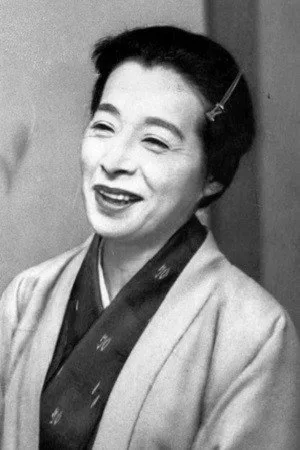 Chieko Naniwa
Okimi
Chieko Naniwa
Okimi - Kikue Mōri Arts Teacher
-
 Saburo Date
Imanishi
Saburo Date
Imanishi - Teruko Fuji Girl
- Kyōko Hisamatsu Girl
- Tadashi Iwata Tomisaka
-
 Kanae Kobayashi
Hairdresser
Kanae Kobayashi
Hairdresser -
 Midori Komatsu
Oume
Midori Komatsu
Oume -
 Keiko Koyanagi
Geisha
Keiko Koyanagi
Geisha - Kazuko Maeda Handmaiden
- Ryusuke Maki Sakitani
-
 Tokiko Mita
Maiko
Tokiko Mita
Maiko -
 Teruko Ōmi
Yae
Teruko Ōmi
Yae
Quiz about this movie
Questions from the whole catalogue.
Play nowIf you liked this one
-
As Irmãs de Gion Same director: Kenji Mizoguchi
 7.1
7.1
-
O Sabor do Chá Verde Sobre o Arroz Drama from the 1950s
 7.5
7.5
-
Era Uma Vez em Tóquio Drama from the 1950s
 8.1
8.1
-
A Rotina Tem Seu Encanto
 7.9
7.9
-
Lady Snowblood: Vingança na Neve
 7.5
7.5
-
Da Colina Kokuriko
 7.5
7.5
-
Zatoichi
 7.2
7.2
-
Assunto de Família
 7.8
7.8
-
Céu e Inferno
 8.4
8.4
-
A Mulher Inseto
 7.2
7.2
-
Tabu
 6.6
6.6
-
Duelo em Hiroshima
 7.3
7.3
Tags
Crew
- Kazuo Miyagawa Cinematography
- Kenji Mizoguchi Director
- 宮田味津三 Editing
- Hisakazu Tsuji Producer
- 斎藤一郎 Original music
- Matsutarô Kawaguchi Screenplay
- 依田義賢 Screenplay
Questions about this film
What is A Geisha about?
A Geisha: Fleeing a distressing family situation, Eiko, a very young girl, becomes an apprentice to Miyoharu, a veteran geisha. Both, determined to preserve their professional integrity, must face the selfishness and ambition of several petty people.
Who directed A Geisha?
A Geisha was directed by Kenji Mizoguchi in 1953.
Who stars in A Geisha?
The cast of A Geisha includes Michiyo Kogure, Ayako Wakao, Seizaburô Kawazu, Eitarô Shindô and Ichirô Sugai.
How long is A Geisha?
A Geisha runs for 85 minutes, or 1h25.
Similar films
 8.7
8.7
 8.5
8.5
 8.7
8.7
 7.9
7.9
 8.4
8.4
 8.5
8.5
 8.1
8.1
 8.2
8.2
 8.0
8.0
 8.2
8.2
 8.5
8.5
 8.5
8.5
Page updated on 09/10/2026.
Back to the catalogue