Crack in the Mirror (1960)
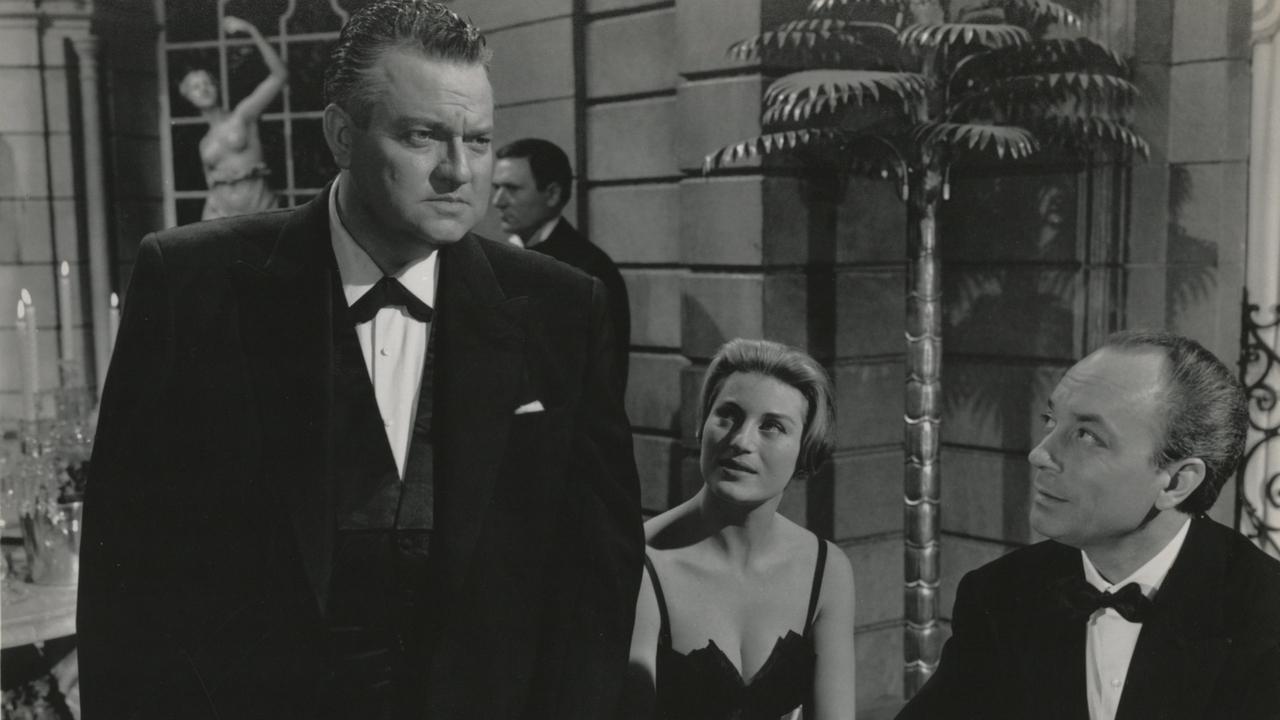
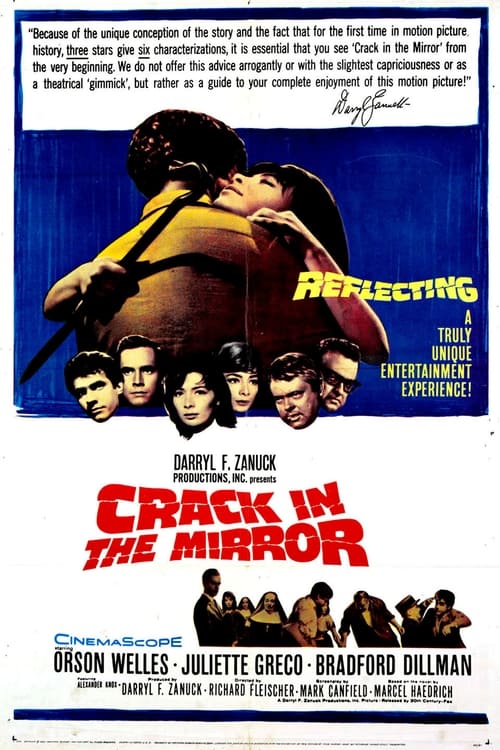
Crack in the Mirror (1960), directed by Richard Fleischer, starring Orson Welles and Juliette Gréco.
score
Synopsis
Three stars appear in two separate but intertwined stories of romantic triangles gone wrong in this ambitious drama. In the first segment, Hagolin is a loutish construction worker with an unhappy wife, Eponine. The wife becomes involved with a swarthy working man, Larnier, and their passion knows no boundaries of caution or safety. Eventually, Eponine's and Larnier's lust drives them to madness, and they murder Hagolin. The second tale concerns an up-and-coming young lawyer, Claude, whose mentor is a highly successful veteran attorney, Lamerciere, with a beautiful young wife named Florence. Claude finds himself defending Larnier and Eponine, while Lamerciere dies of a heart attack after he discovers that Florence has been unfaithful to him with Claude.
- William C. MellorCinematography
- Richard FleischerDirector
- Roger DwyreEditing
- Darryl F. ZanuckProducer, Writer
About the film
Crack in the Mirror is a 1960 American drama film directed by Richard Fleischer. The three principal actors, Orson Welles, Juliette Gréco, and Bradford Dillman, play dual roles in two interconnected stories as the participants in two love triangles.
The film was released by 20th Century Fox on May 19, 1960.
Read the full article (3k characters)
Crack in the Mirror is a 1960 American drama film directed by Richard Fleischer. The three principal actors, Orson Welles, Juliette Gréco, and Bradford Dillman, play dual roles in two interconnected stories as the participants in two love triangles.
The film was released by 20th Century Fox on May 19, 1960.
Plot
In a run-down Paris dwelling, an angry Hagolin accuses mistress Eponine of seeing a man named Robert Larnier behind his back. In a party at a stately home, prosperous attorney Lamerciere's guests include his longtime mistress Florence and his young law partner Claude Lancaster.
Eponine attempts to murder Hagolin but fails. Larnier intervenes on her behalf and Eponine strangles the man with a scarf. The body is dismembered and dumped, then Eponine is placed under arrest.
Claude, who is secretly Florence's lover, feels that he deserves credit for much of Lamerciere's courtroom success. He leaps at the opportunity when Eponine asks him to defend her. Lamerciere remarks that Claude and Florence could do to him exactly what the accused woman and lover Larnier did to Hagolin.
In court, Lamerciere persuades Claude to allow him to deliver the closing argument. He paints such a lurid picture of Eponine's crime that results in her conviction. His gaze at Florence makes it clear that he knows that she has been unfaithful.
Cast
Credits from the AFI Catalog of Feature Films.
Production
The script was credited to by producer Darryl F. Zanuck (under his frequent pseudonym "Mark Canfield"), but in his 1993 autobiography Just Tell Me When to Cry, Fleischer revealed that it was ghostwritten by the blacklisted Jules Dassin. Fleischer, Derode, and John Shepridge also contributed to the script, but were all uncredited.
Filming took place at various locations around Paris, including the Palais de Justice, the Gare de Lyon, and the Seine. Interiors were shot at Billancourt Studios and Boulogne Studios.
In an interview with American Legends, Bradford Dillman said Welles could be "hell on wheels" and that director Fleischer "didn't fool around with Orson. Nobody fooled around with Orson. He did his own thing."
Reception
In a contemporary review for The New York Times, critic Howard Thompson wrote: "A determined try for something different—three performers playing six roles, as two adulterous triangles explode in a murder trial—misfires coldly and rather hollowly ... There is certainly no cause to evaluate this extremely devious, visual charade by such a brilliant courtroom yardstick as Compulsion, also involving director Fleischer, Messrs. Welles and Dillman and the Zanuck production banner. ... [T]he picture is a peculiarly bloodless affair (for all the lovingly detailed gore of the murder), archly juggling some arid dialogue and even the characterizations."
In a letter to the editors of Playboy magazine in April 1967, Darryl F. Zanuck, president of 20th Century-Fox Film Corporation, observed that "when I won three prizes for a very second-rate film called Crack in the Mirror," at the Cannes Film Festival, "[t]his dubious victory was achieved by the political activities of a group of friends who accompanied me to the festival (Orson Welles, Juliette Gréco and Françoise Sagan)."
See also
List of American films of 1960
References
External links
Crack in the Mirror at IMDb
Crack in the Mirror at the TCM Movie Database (archived)
Text from Crack in the Mirror on Wikipedia, licensed CC BY-SA 4.0. https://en.wikipedia.org/wiki/Crack_in_the_Mirror
Trivia
- It premiered on May 19, 1960, a Thursday.
- It runs 1h37 — a typical feature length.
- This film's quiz has 11 questions — enough to play more than once without repeats.
Production
- Studios20th Century Fox
- CountriesUnited States
- LanguagesEnglish, French
- StatusReleased
Cast
-
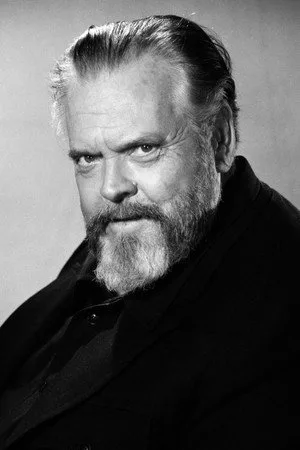 Orson Welles
Hagolin / Lamerciere
Orson Welles
Hagolin / Lamerciere -
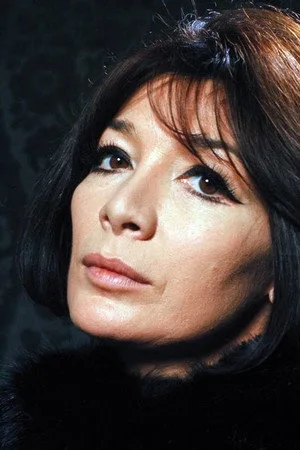 Juliette Gréco
Eponine / Florence
Juliette Gréco
Eponine / Florence -
 Bradford Dillman
Larnier / Claude
Bradford Dillman
Larnier / Claude -
 Alexander Knox
President
Alexander Knox
President -
 Catherine Lacey
Mother Superior
Catherine Lacey
Mother Superior -
 Yves Brainville
Prosecutor
Yves Brainville
Prosecutor -
 William Lucas
Kerstner
William Lucas
Kerstner -
 Maurice Teynac
Doctor
Maurice Teynac
Doctor -
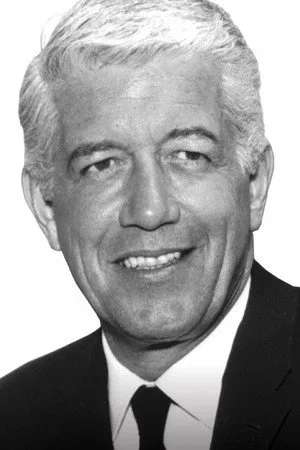 Austin Willis
Hurtelaut
Austin Willis
Hurtelaut -
 Cec Linder
Murzeau
Cec Linder
Murzeau -
 Eugene Deckers
Magre
Eugene Deckers
Magre -
 Vivian Matalon
Young man at Buvette
Vivian Matalon
Young man at Buvette -
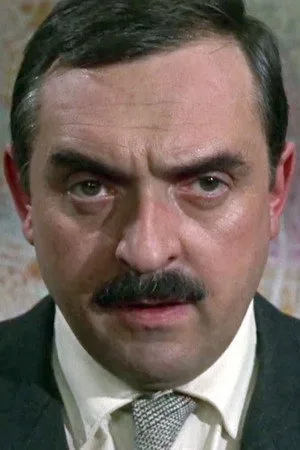 Jacques Marin
Watchman
Jacques Marin
Watchman -
 Martine Alexis
Doctor's Wife
Martine Alexis
Doctor's Wife -
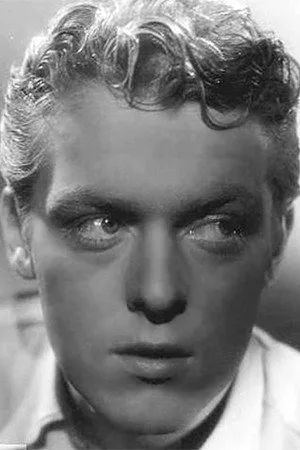 Marc Doelnitz
Journalist
Marc Doelnitz
Journalist -
 Colin Drake
Zanuck (uncredited)
Colin Drake
Zanuck (uncredited) -
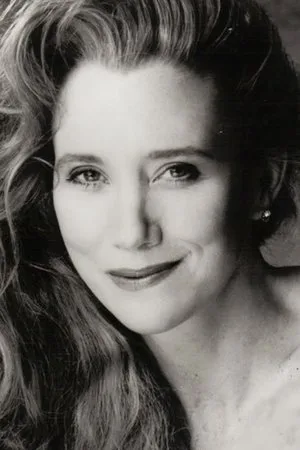 Sally Kirkland
Bit Part (uncredited)
Sally Kirkland
Bit Part (uncredited) -
 Dominique Zardi
(uncredited)
Dominique Zardi
(uncredited)
Quiz about this movie
Questions from the whole catalogue.
Play nowIf you liked this one
-
Justiça Corrupta
 6.2
6.2
-
Pânico
 6.2
6.2
-
Plunder Road
 7.0
7.0
-
Assassino Americano
 5.9
5.9
-
O Efeito da Fúria
 5.9
5.9
-
American Skin
 7.0
7.0
-
O Assassino Perfeito
 7.0
7.0
-
Barron's Cove
 7.2
7.2
-
Suburbicon: Bem-vindos ao Paraíso
 5.9
5.9
-
O Passado
 6.5
6.5
-
Infiltrado na Máfia
 6.1
6.1
-
Educação Siberiana
 6.8
6.8
Crew
- William C. Mellor Cinematography
- Richard Fleischer Director
- Roger Dwyre Editing
- Darryl F. Zanuck Producer
- Maurice Jarre Original music
- Darryl F. Zanuck Writer
- Jules Dassin Writer
Questions about this film
What is Crack in the Mirror about?
Crack in the Mirror: Three stars appear in two separate but intertwined stories of romantic triangles gone wrong in this ambitious drama. In the first segment, Hagolin is a loutish construction worker with an unhappy wife, Eponine. The wife becomes involved with a swarthy working man, Larnier, and their passion knows no boundaries of caut…
Who directed Crack in the Mirror?
Crack in the Mirror was directed by Richard Fleischer in 1960.
Who stars in Crack in the Mirror?
The cast of Crack in the Mirror includes Orson Welles, Juliette Gréco, Bradford Dillman, Alexander Knox and Catherine Lacey.
How long is Crack in the Mirror?
Crack in the Mirror runs for 97 minutes, or 1h37.
Similar films
-
 8.7
8.7
The Shawshank Redemption
1994
-
 8.7
8.7
The Godfather
1972
-
 8.1
8.1
Joker
2019
-
 8.0
8.0
The Wolf of Wall Street
2013
-
 8.5
8.5
The Green Mile
1999
-
 7.8
7.8
The Dark Knight Rises
2012
-
 7.7
7.7
Batman Begins
2005
-
 8.2
8.2
The Departed
2006
-
 8.3
8.3
Léon: The Professional
1994
-
 8.6
8.6
The Godfather Part II
1974
-
 8.0
8.0
Catch Me If You Can
2002
-
 8.5
8.5
GoodFellas
1990
Page updated on 09/15/2026.
Back to the catalogue