Flap (1970)
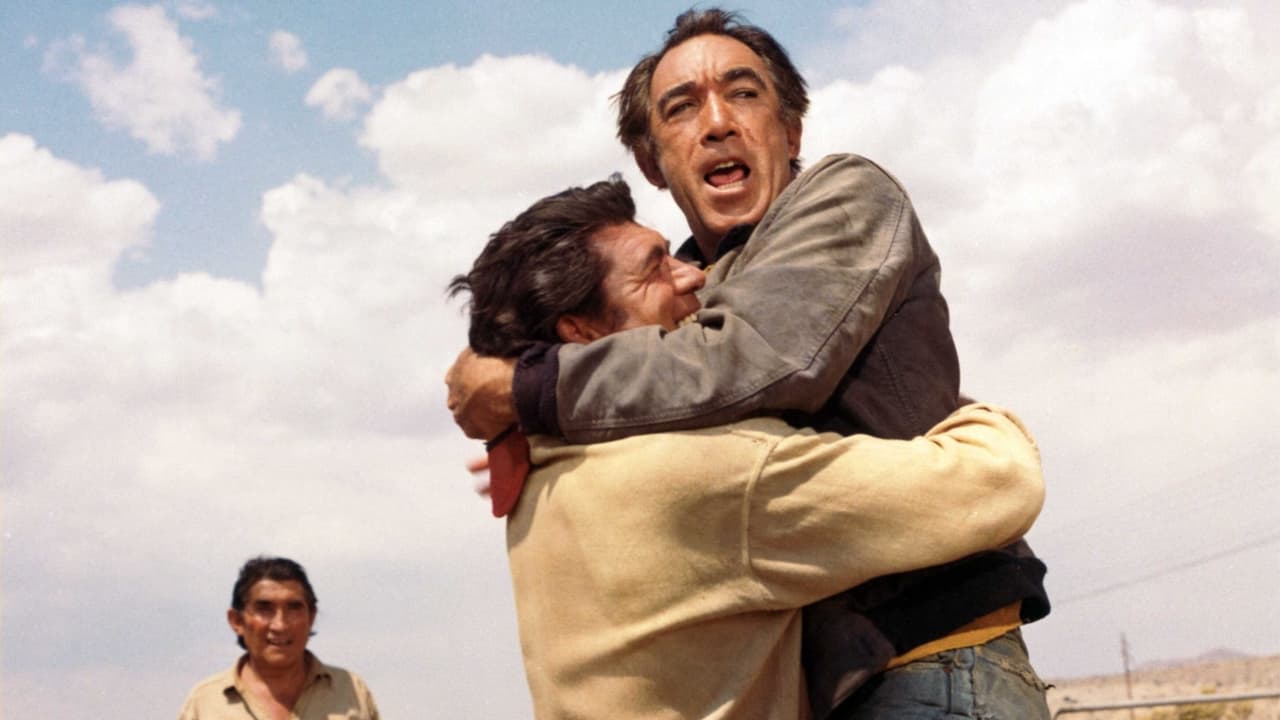
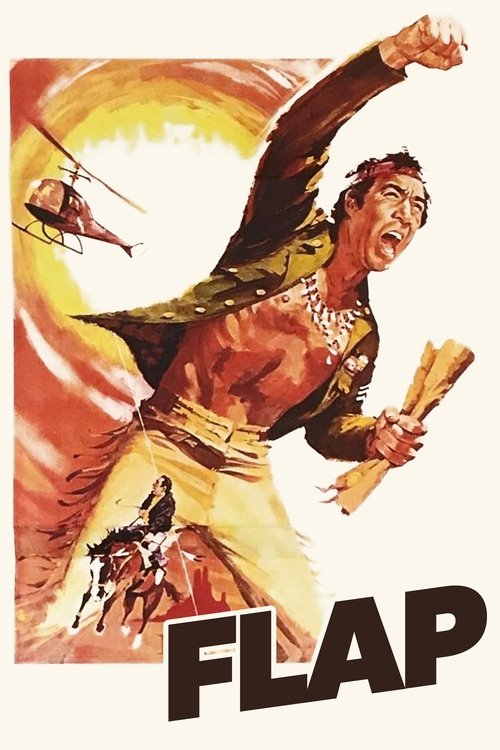
Flap (1970), directed by Carol Reed, starring Anthony Quinn and Claude Akins.
score
A warning to the Mayor: FLAP is here! The Indians have already claimed Alcatraz. City Hall may be next. You have been warned.
Synopsis
Comedy based on the plight of modern Native Americans living on reservations.
- Fred J. KoenekampCinematography
- Carol ReedDirector
- Frank BrachtEditing
- Marvin HamlischOriginal music
About the film
Flap (distributed in Britain as The Last Warrior) is a 1970 American Western film directed by Carol Reed and starring Anthony Quinn, Claude Akins and Shelley Winters. Set in a modern Native American reservation, it is an adaptation of the novel Nobody Loves a Drunken Indian by Clair Huffaker.
Read the full article (6k characters)
Flap (distributed in Britain as The Last Warrior) is a 1970 American Western film directed by Carol Reed and starring Anthony Quinn, Claude Akins and Shelley Winters. Set in a modern Native American reservation, it is an adaptation of the novel Nobody Loves a Drunken Indian by Clair Huffaker.
Plot
Flapping Eagle lives on an Indian reservation in the southwestern United States. He drinks too much, one of many sources of disagreement between Flap and his sweetheart, Dorothy Bluebell. He also has on-going trouble with Sgt. Rafferty, a police officer in the city, who is brutal and seemingly bigoted (although criticized late in the story by Flap for being, as Flap puts it, only "half Indian").
Flap supports himself by making deliveries with an old pickup and help from his buddies. Spillage of a box of "Indian dolls" intended for sale as tourist souvenirs results in a ticket from Rafferty leading to the introduction of Flap's lawyer, Wounded Bear Mr. Smith. Rather than law books, Wounded Bear's office is filled with ridiculous stacks of parchments, eventually shown to represent the many treaty promises made to the tribe. Such treaties inform Wounded Bear's counsel to Flap in the incidents that follow.
Flap stumbles into activism, first disrupting a construction crew blasting and building a highway through Indian land (Interstate 25 was being completed through the location's pueblos at that time) and accidentally destroying the crew's brand new front loader, then stealing a train after Wounded Bear leads him to believe the train would become legal Indian property once it is "abandoned" in their territory.
Rafferty is violently beaten by Flap after a series of insults and abuses and the last straw, the shooting of a dog belonging to a poor, pitifully lonely, old Indian. Now a fugitive-cum-Indian activist whose protests have gained him publicity and popularity, again under counsel of a treaty that in this case suggests that unwarranted police action against him has reverted the city back to the tribe, Flap leads a march into the city to establish their claim. From a hospital window, Rafferty aims a handgun and assassinates him.
Cast
Anthony Quinn as Flapping Eagle
Claude Akins as Lobo
Tony Bill as Eleven Snowflake
Shelley Winters as Dorothy Bluebell
Victor Jory as Wounded Bear Mr. Smith
Don Collier as Mike Lyons
Victor French as Rafferty
Rodolfo Acosta as Storekeep
Susana Miranda as Ann Looking Deer
Anthony Caruso as Silver Dollar
William Mims as Steve Gray
Rudy Diaz as Larry Standing Elk
Pedro Regas as She'll-Be-Back-Pretty-Soon
John War Eagle as Luke Wolf
J. Edward McKinley as Harris
Robert Cleaves as Gus Kirk
Production
Intending to avoid cinema stereotypes of Native Americans, producer Jerry Adler hired Sir Carol Reed because the British director had not had exposure to the clichéd portrayal of American Indians in American Westerns.
Richard Harris (A Man Called Horse, 1970) was originally cast as Flapping Eagle, but withdrew from the production over creative differences, and was replaced by Anthony Quinn. Himself part Mexican-Indian, "Hollywood's favorite Indian warrior", Quinn had made several stereotypical Old West American Indian portrayals, including Crazy Horse in They Died with Their Boots On, a Cheyenne Indian in The Plainsman, and a fictional portrayal of Chief Yellow Hand in Buffalo Bill.
The role of Flapping Eagle was directed with American patriotic elements to communicate that the character did not hold total animosity towards the United States and was in fact a dutiful citizen; the character had been a decorated sergeant in the United States Army and wore a hat and shirt for the New York Yankees as well as a sea jacket (author Clair Huffaker was a US Navy veteran of WWII). The portrayal of Flapping Eagle as a heavy drinking veteran hero of WWII invited comparison to Ira Hayes. When wearing his full U.S. Army dress uniform in the final scenes, Flap also wore a coup feather, such as was awarded to some tribal members upon return from wartime service in the U.S. Military.
The movie was filmed in 1969 on locations in Albuquerque, Madrid, Puye Cliffs (Santa Clara Pueblo), Santa Fe, and Santo Domingo Pueblo.
After completion, concerned about reception, Warner Bros. kept the movie on the shelf for 18 months before general release. The November following production, 89 American Indians and their supporters occupied Alcatraz Island. Quinn was among the several celebrities who visited the Occupation. After this, the movie was promoted in connection and the Occupation, with posters proclaiming "The Indians have already claimed Alcatraz."
The film production drew protests, given the original title was Nobody Loves a Drunken Indian, particularly from local Indians when the production was on location in and near pueblo reservations. The name was changed to Nobody Loves Flapping Eagle before later being shortened after filming to Flap.
Release
The movie was given a special premiere on November 19, 1970, in the Cinema East Theater of Albuquerque with Anthony Quinn making a personal appearance. Admission was $100 per seat with all proceeds establishing a $75,000 creative arts scholarship fund for Native American students.
Reception
Reception of the film varied; on one hand the film was praised for illuminating the plight of Indians in America, while Anthony Quinn's bumbling caricature (including a few of his signature dance steps from Zorba the Greek) drew criticism, inviting comparisons to his previous ethnic characters, e.g., a "Zorba the Navajo". A group of Native Americans who were surveyed about the film in the Democrat and Chronicle newspaper of Rochester, New York said that "this picture made a joke of Indian rights. We don't mind a laugh at ourselves but this picture made us look like idiots."
Music
The song "If Nobody Loves" was written by Marvin Hamlisch with lyrics by Estelle Levitt. It is performed by Kenny Rogers & The First Edition.
See also
List of American films of 1970
References
Bibliography
Evans, Peter William. Carol Reed. Manchester University Press, 2005.
External links
Flap at IMDb
Flap at the AFI Catalog of Feature Films
Flap at the TCM Movie Database (archived)
Flap at Rotten Tomatoes
Flap at TV Guide (revised form of this 1987 write-up was originally published in The Motion Picture Guide)
Characters at the switch in Kewa Pueblo, Placer Mountain in the background right.
Text from Flap (film) on Wikipedia, licensed CC BY-SA 4.0. https://en.wikipedia.org/wiki/Flap_(film)
Trivia
- It premiered on November 13, 1970, a Friday.
- It runs 1h46 — a typical feature length.
- This film's quiz has 11 questions — enough to play more than once without repeats.
Production
- StudiosCine Vesta Associates, Warner Bros. Pictures
- CountriesUnited States
- LanguagesEnglish
- StatusReleased
Cast
-
 Anthony Quinn
Flapping Eagle
Anthony Quinn
Flapping Eagle -
 Claude Akins
Lobo Jackson
Claude Akins
Lobo Jackson -
 Tony Bill
Eleven Snowflake
Tony Bill
Eleven Snowflake -
 Shelley Winters
Dorothy Bluebell
Shelley Winters
Dorothy Bluebell -
 Victor Jory
Wounded Bear Mr. Smith (Attorney at Law)
Victor Jory
Wounded Bear Mr. Smith (Attorney at Law) -
 Victor French
Sgt. Rafferty (Sheriff's Dept.)
Victor French
Sgt. Rafferty (Sheriff's Dept.) -
 Rodolfo Acosta
Mr. Storekeeper / Ann's Father
Rodolfo Acosta
Mr. Storekeeper / Ann's Father -
 Susana Miranda
Ann Looking Deer
Susana Miranda
Ann Looking Deer -
 Anthony Caruso
Silver Dollar (Tribal Chief)
Anthony Caruso
Silver Dollar (Tribal Chief) - William Mims Steve Gray (District Attorney's Office)
- Rudy Diaz Larry Standing Elk (Tribal Policeman)
-
 Robert Cleaves
Gus Kirk
Robert Cleaves
Gus Kirk -
 Nadia Sanders
Annette (uncredited)
Nadia Sanders
Annette (uncredited)
Quiz about this movie
Questions from the whole catalogue.
Play nowIf you liked this one
-
Desbravando o Oeste
 6.1
6.1
-
Bater ou Correr
 6.4
6.4
-
Maverick
 6.9
6.9
-
O Indomado
 7.3
7.3
-
Onde Começa o Inferno
 7.8
7.8
-
Willie Boy
 5.8
5.8
-
Banzé no Oeste Comedy from the 1970s
 7.2
7.2
-
Três Amigos!
 6.3
6.3
-
Dança com Lobos
 7.8
7.8
-
O Diabo Feito Mulher
 6.5
6.5
-
Silverado
 7.0
7.0
-
Gerônimo: Uma Lenda Americana
 6.3
6.3
Tags
Crew
- Fred J. Koenekamp Cinematography
- Carol Reed Director
- Frank Bracht Editing
- Marvin Hamlisch Original music
- Clair Huffaker Screenplay
Questions about this film
What is Flap about?
Flap: Comedy based on the plight of modern Native Americans living on reservations.
Who directed Flap?
Flap was directed by Carol Reed in 1970.
Who stars in Flap?
The cast of Flap includes Anthony Quinn, Claude Akins, Tony Bill, Shelley Winters and Victor Jory.
How long is Flap?
Flap runs for 106 minutes, or 1h46.
Similar films
-
 7.1
7.1
The Ballad of Buster Scruggs
2018
-
 6.8
6.8
The Sisters Brothers
2018
-
6.9
Maverick
1994
-
 8.0
8.0
El Infierno
2010
-
 6.8
6.8
Ravenous
1999
-
 7.4
7.4
Little Big Man
1970
-
 7.1
7.1
Seven Brides for Seven Brothers
1954
-
 6.1
6.1
The Frisco Kid
1979
-
 5.7
5.7
The Cowboy Way
1994
-
 6.1
6.1
The Electric Horseman
1979
-
 6.9
6.9
The Mercenary
1968
-
 5.3
5.3
Damsel
2018
Page updated on 09/14/2026.
Back to the catalogue