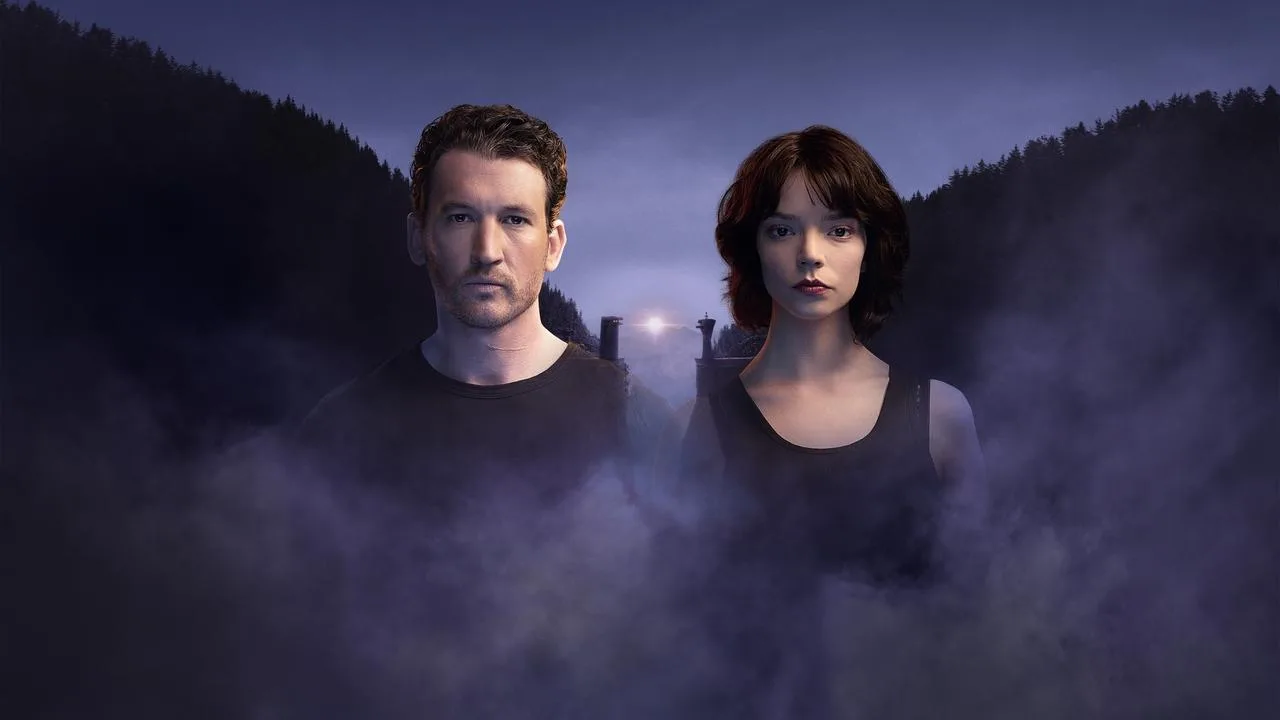
I must confess that I still feel a little embarrassed when I speak of romance, as if I am still learning the language of longing after years spent dismissing it as a lesser genre. The premise of The Gorge—two elite operatives stationed on opposite rims of a fog-shrouded canyon, gradually drawn together despite an unseen threat—places the genre in a stark laboratory. There is no explosion to hide a flaw; the chemistry must survive the interval of silence between the characters’ glances.
How does the budget shape the intimacy of a sci-fi romance?
The film was made on a reported US$ 70 million budget, a figure that in a romance‑driven story feels almost extravagant. That amount allowed director Scott Derrickson to construct a towering set that mimics the oppressive isolation of the gorge, a physical obstacle that mirrors the emotional distance the protagonists must cross. With a runtime of 127 minutes, the narrative does not rush the hesitation that builds when a gesture is met with a lingering stare. The budget, therefore, becomes a tool that can either amplify the unsaid or drown it in spectacle; in this case, it leans toward the former, giving space for the delay that fuels longing.
What does the pairing of Teller and Taylor‑Joy promise for the unsaid?
The casting of Miles Teller as Levi and Anya Taylor‑Joy as the female operative is a deliberate design. Both actors have demonstrated a capacity to convey depth with minimal dialogue, an essential skill when the story relies on what is left between the lines. Their proximity on screen is constantly measured by the canyon’s breadth, turning each shared glance into a study of tension. Supporting talent such as Sigourney Weaver, playing the female operative’s superior, adds a gravitas that underscores the obstacle not just as a physical threat but as a narrative device that tests the characters’ resolve to bridge distance.
Why does the setting of a mysterious gorge test the obstacle of distance?
The gorge itself functions as more than a backdrop; it is the embodiment of the genre’s hardest test. Romance, unlike a thriller, cannot hide a lack of connection behind gunfire or explosions. Here, the environment forces the characters to confront the unsaid, to negotiate the interval between duty and desire. The design of the canyon—its fog, its sheer walls—creates a natural delay, a waiting room where longing can either blossom or wither. The film’s premise, that an “evil below” forces cooperation, turns the obstacle into a catalyst for intimacy rather than a mere plot device.
When The Gorge opened on 13 February 2025, it earned a modest 7.7 rating from 4,163 votes. The reception suggests that audiences were moved by the subtlety of the romance, even as the thriller elements provided a familiar tension. I would argue that the modest score reflects the film’s willingness to let the unsaid speak louder than any explosion could. The mixed genre—romance, science‑fiction, thriller—allows the story to linger in the space where a single gesture can change everything, a space that many romantic films avoid for fear of exposing their own fragility.
The film’s ambition lies in its restraint: it does not rush to resolve the hesitation, nor does it hide the obstacle behind a deus ex machina. Instead, it places the characters in a prolonged interval, letting the audience feel the weight of each unspoken word. In a genre where the lack of a spectacular set‑piece can reveal a hollow core, The Gorge offers a structure sturdy enough to support the delicate architecture of love, built on the very distance it seeks to overcome.
The last shot lingers on the canyon’s edge, where the fog swallows the sound of footsteps before they even begin.