that animation can only be a child’s plaything.
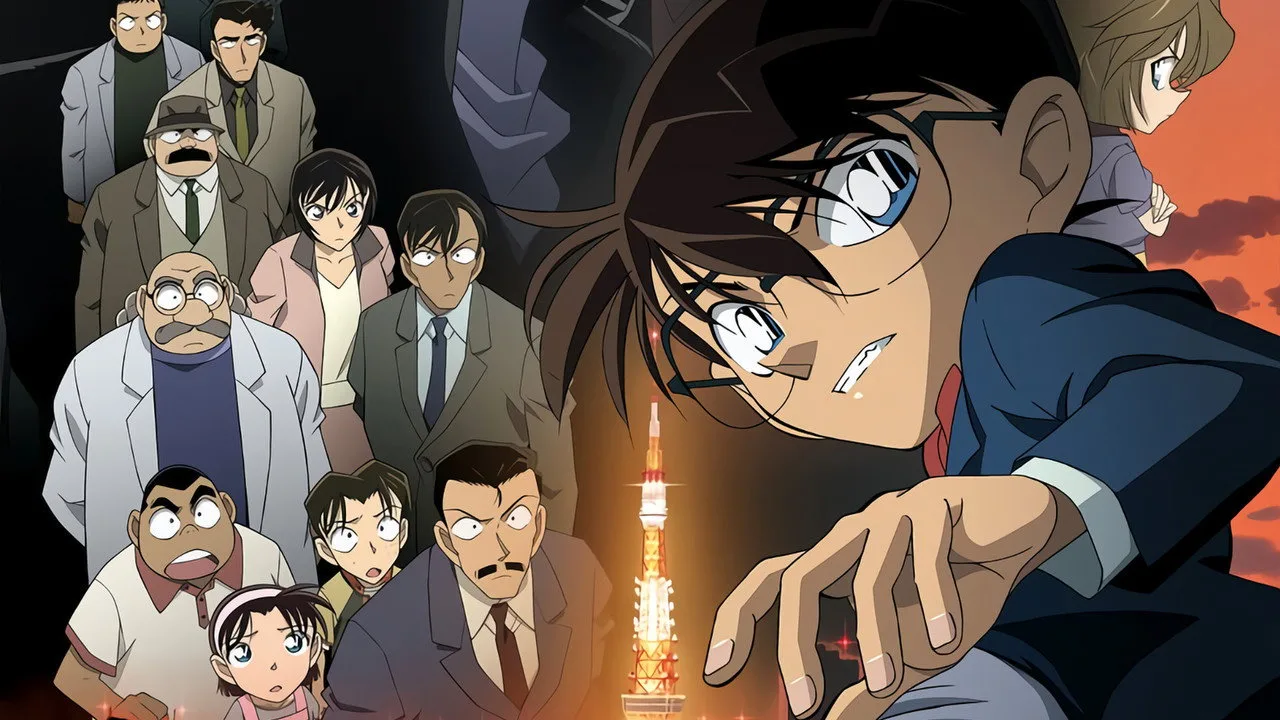
SUBTITULO: *Detective Conan: The Raven Chaser* (2009), directed by Yasuichiro Yamamoto, and running 111 minutes—a runtime that refuses to apologize for its ambition.
FECHO: 1
---
Why does a detective story need to be drawn?
Animation is often treated as a delivery system for stories that could just as easily exist in live action—*but* Detective Conan: The Raven Chaser isn’t one of them. It’s a mystery thriller, not a fairy tale. The premise alone—an unseen organization hunting a detective who’s been shrunk to a child’s size—demands a visual language that live action cannot match. The Black Organization’s shadowy presence, the shifting scales of danger, the way memory and reality blur—these are problems that require animation’s expressiveness, not its imitation of photography.
Here’s the prejudice we need to defend against: the idea that animation is just *cartooning*, a lesser form of storytelling. 111 minutes is a long time to ask an audience to sit through something that feels like a shortcut. But this film doesn’t take that shortcut. It leans into the technique. The tension isn’t just in the plot—it’s in the *frames*. The way a character’s face distorts when they’re lying, the way a room’s perspective shifts when a memory takes over, the way a gunshot’s recoil isn’t just a sound effect but a *physical* disruption of the line—these are choices that live action would either ignore or over-explain.
To me, this is what animation does best: it doesn’t just tell a story, it *thinks* in line and volume. The film’s $40 million box office suggests audiences didn’t just tolerate it—they *saw* it. And that’s the point: Detective Conan: The Raven Chaser isn’t pretending to be live action. It’s using animation’s tools to do something live action can’t.
---
What happens when a mystery relies on what you can’t see?
The Black Organization is the villain here, but it’s never fully visible. That’s the genius of the premise: the threat isn’t just in the plot, it’s in the *gaps* between frames. Animation excels at suggesting what’s unseen—the way a character’s shadow stretches too long, the way a door creaks before it’s opened, the way a face flickers between two expressions. These aren’t just tricks; they’re the language of a medium that doesn’t need to show everything to make you feel it.
I would argue that this film’s real challenge isn’t the mystery itself, but the *timing* of the reveal. In animation, the reveal isn’t just a moment—it’s a *cadence*. The way a character’s eyes widen, the way their body language shifts, the way the background suddenly *pops* into focus—these are the beats that live action would either miss or overplay. Detective Conan: The Raven Chaser doesn’t just solve a case; it makes you *feel* the moment of solving it, frame by frame.
And here’s the thing about animation: it’s not just about what’s on screen. It’s about what’s *not*. The way a character’s voice cracks before they lie, the way a room’s lighting dims when someone’s hiding something—these are the invisible work of hundreds of people. The animators, the layout artists, the ink-and-paint (or digital equivalent) teams—they’re the ones who decide what gets emphasized and what gets left in the shadows.
---
Who is the real artist here?
This isn’t just Yasuichiro Yamamoto’s film. It’s the work of Minami Takayama, who voices Conan, and Kappei Yamaguchi, who voices Shinichi—but more than that, it’s the work of the animators who gave those voices *volume*. It’s the background artists who turned Tokyo into a character. It’s the editors who shaped the pacing. It’s the sound designers who made silence as loud as a gunshot.
Animation isn’t just a genre. It’s a *collaboration*. And Detective Conan: The Raven Chaser proves it. The film doesn’t just move; it *breathes*. The way a character’s chest rises and falls, the way their hair sways in a gust of wind, the way their fingers tremble when they’re nervous—these aren’t just details. They’re the proof that animation isn’t a shortcut. It’s a craft.
---
Rewatch for the moments where the line breaks
The best animation isn’t about perfection. It’s about *expressiveness*. So next time you watch Detective Conan: The Raven Chaser, don’t just follow the plot. Look at the frames where the line *stutters*. Notice the moments where the background *moves* against the character. Pay attention to the way a character’s silhouette changes when they’re lying.
That’s where the real story is. And that’s why this film isn’t just a mystery. It’s a masterclass in what animation can do when it stops pretending to be something it’s not.