Jesse Owens
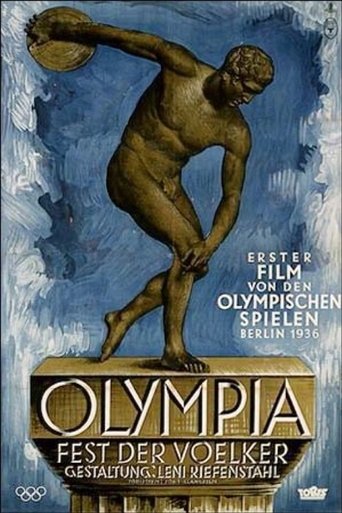
Jesse Owens is known for Ace of Aces (1982), Olympia Part One: Festival of the Nations (1938), The Negro Soldier (1944).
Biography
James Cleveland "Jesse" Owens (September 12, 1913 – March 31, 1980) was an American track and field athlete who won four gold medals at the 1936 Olympic Games.
Owens specialized in the sprints and the long jump and was recognized in his lifetime as "perhaps the greatest and most famous athlete in track and field history". He set three world records and tied another, all in less than an hour, at the 1935 Big Ten track meet in Ann Arbor, Michigan—a feat that has never been equaled and has been called "the greatest 45 minutes ever in sport".
He achieved international fame at the 1936 Summer Olympics in Berlin, Germany, by winning four gold medals: 100 meters, long jump, 200 meters, and 4 × 100-meter relay. He was the most successful athlete at the Games and, as a black American man, was credited with "single-handedly crushing Hitler's myth of Aryan supremacy".
The Jesse Owens Award is USA Track and Field's highest accolade for the year's best track and field athlete. Owens was ranked by ESPN as the sixth greatest North American athlete of the 20th century and the highest-ranked in his sport. In 1999, he was on the six-man short-list for the BBC's Sports Personality of the Century.
Jesse Owens, originally known as J.C., was the youngest of ten children (three girls and seven boys) born to Henry Cleveland Owens (a sharecropper) and Mary Emma Fitzgerald in Oakville, Alabama, on September 12, 1913. He was the grandson of a slave. At the age of nine, he and his family moved to Cleveland, Ohio for better opportunities as part of the Great Migration (1910–40) when 1.6 million African Americans left the segregated and rural South for the urban and industrial North. When his new teacher asked his name to enter in her roll book, he said "J.C.", but because of his strong Southern accent, she thought he said "Jesse". The name stuck, and he was known as Jesse Owens for the rest of his life.
As a youth, Owens took different menial jobs in his spare time: he delivered groceries, loaded freight cars, and worked in a shoe repair shop while his father and older brother worked at a steel mill. During this period, Owens realized that he had a passion for running. Throughout his life, Owens attributed the success of his athletic career to the encouragement of Charles Riley, his junior high school track coach at Fairmount Junior High School. Since Owens worked after school, Riley allowed him to practice before school instead.
Owens and Minnie Ruth Solomon (1915–2001) met at Fairmont Junior High School in Cleveland when he was 15 and she was 13. They dated steadily through high school. Ruth gave birth to their first daughter Gloria in 1932. They married on July 5, 1935, and had two more daughters together: Marlene, born in 1937, and Beverly, born in 1940. They remained married until his death in 1980.
Owens first came to national attention when he was a student of East Technical High School in Cleveland; he equaled the world record of 9.4 seconds in the 100 yards (91 m) dash and long-jumped 24 feet 9+1⁄2 inches (7.56 m) at the 1933 National High School Championship in Chicago. ...
Source: Article "Jesse Owens" from Wikipedia in English, licensed under CC-BY-SA 3.0.
Questions about Jesse Owens
How many Jesse Owens films are in the catalogue?
The CineQuiz catalogue has 15 films with Jesse Owens, from 1938 to 2012.
What is the best rated Jesse Owens film?
The best rated Jesse Owens film in the catalogue is Ace of Aces (1982), rated 7.1.
What was the first Jesse Owens film?
The first Jesse Owens film in the catalogue is Olympia Part One: Festival of the Nations, from 1938.
People data: TMDb.
Known for
-
 7.1
7.1 Ace of Aces
1982
-
 6.9
6.9 Olympia Part One: Festival of the Nations
1938
-
 6.8
6.8 Swastika
1974
-
 5.0
5.0 Mom and Dad
1945
-
 7.6
7.6 Genocide
1982
-
 7.0
7.0 The Century Is Fifty
1950
-
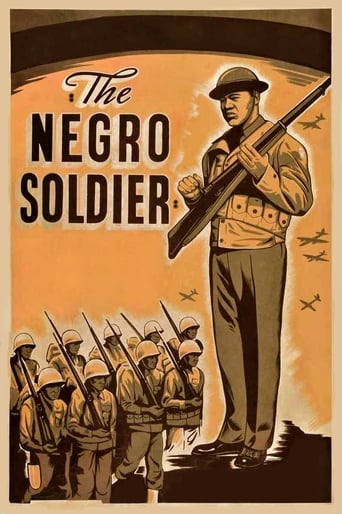 6.2
6.2 The Negro Soldier
1944
-
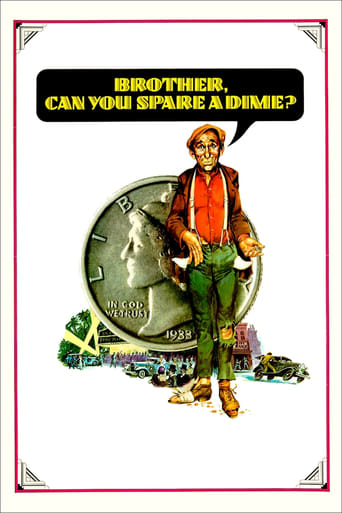 6.3
6.3 Brother, Can You Spare a Dime?
1975
-
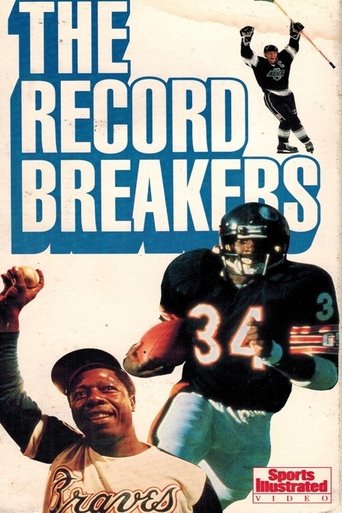
The Record Breakers
1991
-
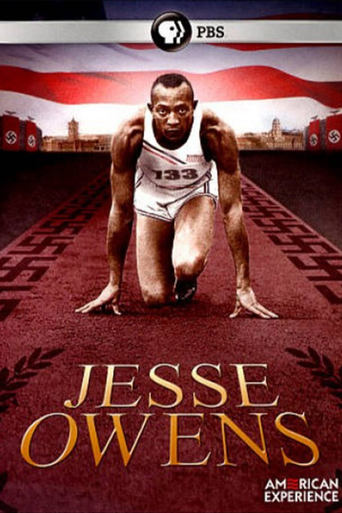 8.0
8.0 Jesse Owens
2012
-
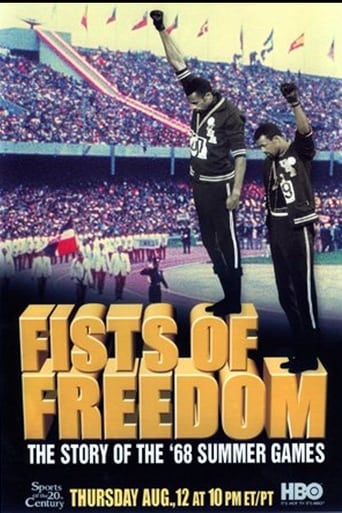 7.8
7.8 Fists of Freedom: The Story of the '68 Summer Games
1999
-
 6.0
6.0 The Grand Olympics
1961
Full filmography
20 films — 15 in the catalogue
-
6.5
Der wahre Champion: Siegen mit Hightech
2016 · Self (archive footage)
-
 8.0
8.0 Jesse Owens et Luz Long : le temps d'une étreinte
2015 · Self (archive footage)
-
8.0
Jesse Owens
2012 · Self (archive footage)
-
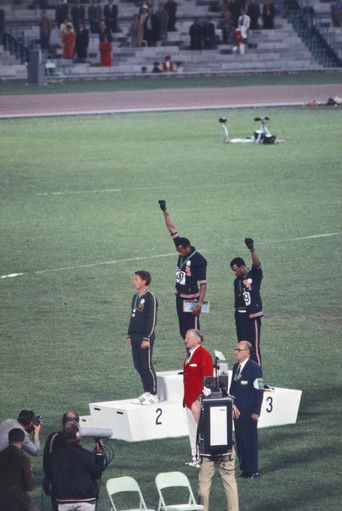
Black Power Salute
2008 · Self (archive footage)
-
7.8
Fists of Freedom: The Story of the '68 Summer Games
1999 · Self (archive footage)
-
 10.0
10.0 Hitler's Forgotten Victims
1997 · Self (achive footage)
-
The Record Breakers
1991 · Self (archive footage)
-
7.1
Ace of Aces
1982 · Self (archive footage) (uncredited)
-
7.6
Genocide
1982 · Self (archive footage)
-
6.3
Brother, Can You Spare a Dime?
1975 · Self (archive footage)
-
6.8
Swastika
1974 · Self (archive footage)
-
7.1
Jesse Owens Returns to Berlin
1966 · Host / Narrator
-
6.0
The Grand Olympics
1961 · Himself
-
7.0
The Century Is Fifty
1950 · Self (archive footage)
-
Olympic Cavalcade
1948 · Himself
-
Kings of the Olympics
1948 · Self
-
 9.0
9.0 Easy to Get
1947 · Self (archive footage)
-
5.0
Mom and Dad
1945 · Lecturer (live on stage during intermissions, black demographic screenings only)
-
6.2
The Negro Soldier
1944 · Himself
-
6.9
Olympia Part One: Festival of the Nations
1938 · Self (uncredited)
Series and TV shows
6 titles
-
 8.3
8.3
The U.S. and the Holocaust
2022 · Self (archive footage)
-
 7.4
7.4
Explained
2018 · Self - Four-Time Olympic Gold Medalist (archive footage)
-
 6.5
6.5
American Experience
1988 · Appearance
-
 5.8
5.8
The Mike Douglas Show
1961 · Appearance
-
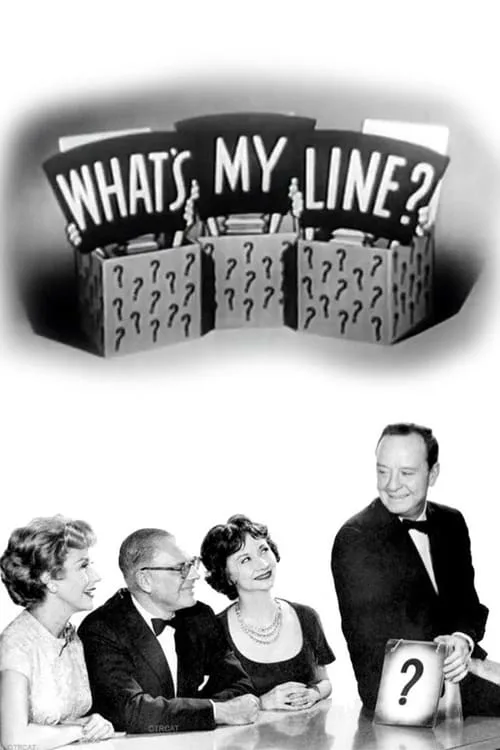 7.0
7.0
What's My Line?
1950 · Self - Mystery Guest
-
 6.8
6.8
The Ed Sullivan Show
1948 · Appearance
People data: TMDb.
Cast